

In the contemporary economic landscape, financial requirements vary significantly from one individual to another. While some consumers actively seek urgent liquidity through various loan options to cover unexpected expenses, others focus on long-term goals such as homeownership, optimizing their savings through investment vehicles, or simply streamlining their daily banking operations for better efficiency. In an era defined by rapid digital transformation and a high-inflation environment, accessing accurate, up-to-date financial information has become a necessity. Comparing banking campaigns and scrutinizing the myriad advantages offered by financial institutions is no longer just a recommendation; it is a critical component of personal wealth management.
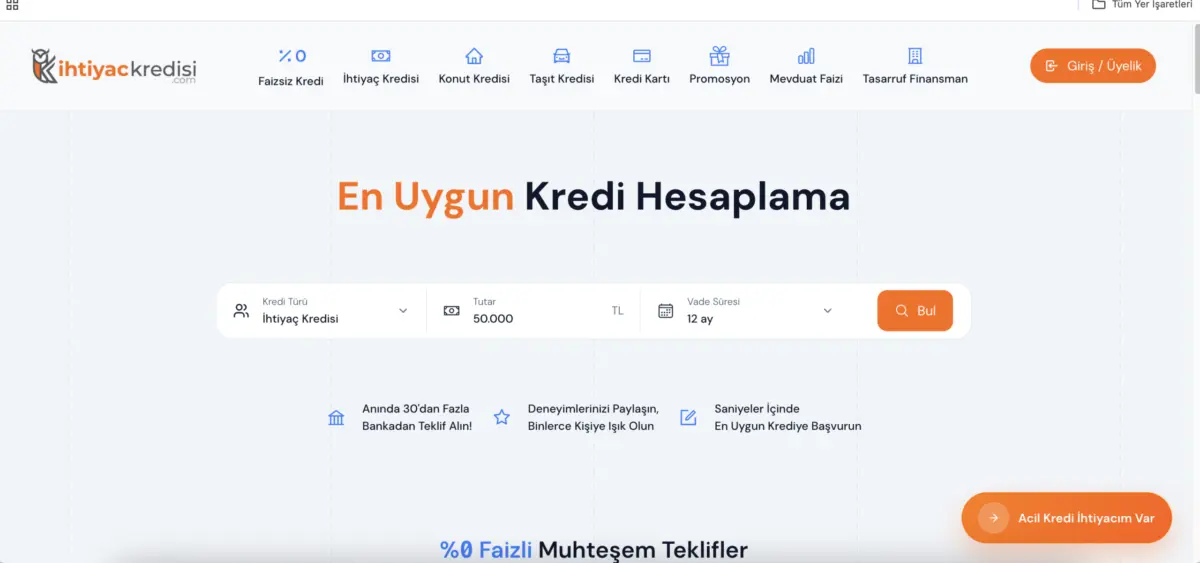
Platforms such as ihtiyackredisi.com have emerged as essential resources in this complex environment. Serving as a comprehensive financial guide, these platforms address the most pressing questions regarding personal loans, time deposits, debit cards, cash advances, and broader banking products. When evaluating the campaigns presented by banks, financial experts emphasize that consumers must look beyond the nominal interest rate. A truly informed decision requires a deep dive into details such as maturity periods, insurance costs, allocation fees, and the flexibility of repayment schedules.
The Strategic Search for Interest-Free Loan Opportunities
One of the most frequently searched topics in the current financial sector is the availability of interest-free loans. As competition for market share intensifies, many banks have turned to zero-interest loan campaigns, interest-free cash advances, and fee-free credit options as a primary tool for new customer acquisition. These offers are typically designed to entice individuals who do not yet have an account with the specific institution, encouraging them to enter the bank’s ecosystem via mobile applications.
However, these attractive "zero-interest" offers are almost always governed by specific conditions that consumers must navigate carefully. When assessing such campaigns, it is vital to examine the maximum loan amount—which is often kept relatively low for interest-free products—and the number of installments allowed. Furthermore, the channel of application is often restricted to mobile platforms, and the "new customer" status is strictly enforced. From a financial perspective, a loan that appears interest-free may still carry secondary costs. File expenses, mandatory insurance premiums, or various transaction fees can affect the total cost of credit. Therefore, instead of focusing solely on the "zero percent" headline, borrowers should calculate the total repayment amount to understand the true financial impact.
The Mechanics of 0% Interest and Zero-Interest Campaigns
In the banking industry, the distinction between various "zero-interest" products is a frequent point of confusion for consumers. These campaigns are generally categorized into two streams: direct personal loans and installment-based cash advances. Most banks currently utilize these offers as "loss leaders" within their digital banking strategies. By offering a small, interest-free loan to a user who downloads their app and completes the remote identification process, banks aim to establish a long-term relationship where the user eventually utilizes other, more profitable services.
The duration of these campaigns is another factor that requires constant monitoring. Interest-free offers are rarely permanent; they are often launched for specific periods or until a certain customer quota is reached. Because the terms and conditions can shift from one week to the next, consumers are advised to act quickly once they find a suitable offer, while remaining vigilant about the fine print. The eligibility for these loans is also tied to the individual’s creditworthiness, meaning that a zero-interest offer is not a guarantee of approval but rather an invitation to apply.
Navigating Interest-Free Cash Advances and Credit Card Limits
For existing credit card holders, interest-free cash advances represent one of the most convenient short-term liquidity tools. This product allows a user to withdraw a certain portion of their credit card limit as cash and repay it in equal installments without incurring interest charges. This is particularly advantageous for those facing minor, immediate cash flow gaps that can be resolved within a few months.
Despite the lack of interest, the use of cash advances requires strict financial discipline. Users must be acutely aware of their payment deadlines, the number of installments, and their remaining card limits. Even in campaigns marketed as interest-free, a single day of delay in repayment can trigger default interest rates and late fees, which are often significantly higher than standard loan rates. Additionally, over-utilizing cash advances can impact one’s credit utilization ratio, a key factor in the calculation of credit scores. Therefore, maintaining a well-structured payment plan is essential to ensure that a "free" financial tool does not become a costly burden.
The Value Proposition of Interest-Free Personal Loans
Interest-free personal loans (ihtiyaç kredisi) are particularly beneficial for consumers who need a modest amount of capital for immediate needs without the long-term weight of interest accumulation. These loans are typically characterized by lower principal amounts and shorter maturity terms, often ranging from six to twelve months. Banks frequently link these offers to their mobile ecosystems, rewarding users for choosing digital-first banking.
When considering an interest-free personal loan, potential borrowers must evaluate their own financial health, including their credit score and debt-to-income ratio. It is a common misconception that interest-free loans are easier to obtain; in reality, banks apply the same rigorous credit scoring criteria to these products as they do to high-interest loans. A history of consistent, on-time payments and a stable income remain the primary requirements for approval. For the eligible consumer, however, these loans provide a rare opportunity to use the bank’s capital for free, provided they adhere strictly to the terms of the agreement.
Finding the Most Suitable Mortgage Options
For those aspiring to transition from renting to homeownership, finding the most suitable housing loan (konut kredisi) is a monumental task. Unlike short-term personal loans, a mortgage is a long-term financial commitment that can span decades. Consequently, even a minor difference in the interest rate or the associated fees can result in a massive difference in the total amount paid over the life of the loan.
When evaluating mortgage options, the monthly installment is only one piece of the puzzle. Prospective homeowners must also account for appraisal fees (ekspertiz), various insurance costs (such as DASK and life insurance), file fees, and the overall cost of credit. Furthermore, the flexibility of the loan—such as the ability to make interim payments or close the loan early without excessive penalties—can provide significant financial relief in the future. Experts suggest that performing a thorough comparison of different banks’ mortgage portfolios can lead to substantial savings, potentially shaving off years of payments or thousands of units of currency from the total debt.
The Necessity of Accurate Interest Calculations
Before committing to any debt, performing a detailed interest calculation is perhaps the most critical step in the borrowing process. This calculation allows the consumer to visualize the monthly installment, the total repayment amount, and the effective annual interest rate (APR). In many cases, a loan with a slightly higher nominal interest rate but lower fees may actually be more affordable than a "low-interest" loan burdened with heavy insurance and administrative costs.
A comprehensive calculation should include not only the principal and interest but also taxes (such as BSMV and KKDF in certain jurisdictions) and all one-time fees. By focusing on the "annual cost ratio," borrowers can compare different products on an equal footing. This level of transparency is vital for maintaining a healthy budget and avoiding the "debt trap" where hidden costs accumulate faster than the borrower can repay.
Optimizing Savings Through Time Deposits
While loans address the need for capital, time deposits (vadeli mevduat) serve those looking to protect and grow their existing wealth. A time deposit account involves depositing a specific amount of money for a fixed period in exchange for a guaranteed interest return. In a fluctuating market, this remains one of the safest ways to ensure a predictable yield on one’s savings.
When opening a time deposit account, the choice of maturity—whether it be 32 days, three months, or a year—should be aligned with the individual’s liquidity needs and market expectations. Factors such as the gross interest rate, withholding tax (stopaj) deductions, and the net profit at the end of the term must be calculated. Some banks offer "welcome" rates for new depositors, which are significantly higher than standard rates, making it beneficial to occasionally move funds between institutions to capture the best yields.
Managing Liquidity with Daily Interest Accounts
For investors who prioritize flexibility and immediate access to their funds, daily interest accounts (günlük faiz) have become a popular alternative to traditional time deposits. These products allow the balance in an account to earn interest on a nightly basis, while still permitting the user to withdraw or deposit money at any time without losing the interest already earned.
Daily interest calculation is a valuable tool for those who want their idle cash to work for them without locking it away for a month or more. While the interest rates on these accounts may be slightly lower than fixed-term deposits, the benefit of liquidity often outweighs the difference for many users. However, it is important to check if there is a "minimum balance" requirement to earn interest and to account for any daily tax withholdings that might apply.
The Role of Modern Bank Accounts and Debit Cards
At the heart of every individual’s financial life is the standard bank account. It serves as the primary hub for receiving salaries, executing money transfers (EFT/Havale), paying bills, and accessing other financial products. When selecting a bank for a primary account, consumers should look for institutions that offer low or zero transaction fees, high-quality mobile banking interfaces, and robust customer service.
Closely linked to the bank account is the debit card (banka kartı). Unlike credit cards, which involve borrowing money, a debit card uses the existing balance in a vadesiz (current) account. This makes it an excellent tool for budget control, as it prevents the user from spending money they do not have. Many modern debit cards now come with rewards programs, such as points or cashback on specific purchases, mirroring the benefits once reserved for credit cards. When opening a new account, evaluating these "perks" can add incremental value to one’s daily spending habits.
The Emergence of Point-of-Sale Shopping Loans
A relatively new development in consumer finance is the shopping loan (alışveriş kredisi). This product is often integrated directly into the checkout process of major e-commerce platforms and physical retail stores. It allows consumers to finance specific purchases—such as electronics, appliances, or furniture—through a bank loan rather than using a credit card’s installment feature.
Shopping loans can be particularly useful when a consumer’s credit card limit is insufficient for a large purchase or when the store offers a special interest-rate agreement with a partner bank. However, because these are individual loans, they come with their own set of terms, interest rates, and impact on the user’s credit report. Comparing the total cost of a shopping loan against a standard credit card installment plan is a necessary step before clicking "buy."
The Power of Financial Comparison and Informed Decision-Making
The common thread across all banking products—whether it is a mortgage, a zero-interest loan, or a time deposit—is the necessity of comparison. The banking sector is highly competitive, and the "best" offer is rarely found at the first institution one visits. By using specialized financial guides and comparison tools, consumers can gain a bird’s-eye view of the market, identifying outliers and hidden gems that offer superior value.
ihtiyackredisi.com serves as a vital bridge between complex banking data and the everyday consumer. By providing clear, structured information on interest-free campaigns, mortgage structures, and deposit yields, it empowers users to take control of their financial destinies. In a world where financial literacy is directly correlated with economic stability, being an informed consumer is the most effective way to navigate the challenges of the modern economy.
Ultimately, choosing the right banking product requires a holistic approach. One must balance the immediate need for cash with long-term repayment capabilities, and the desire for high yields with the need for liquidity. By examining every detail—from the headline interest rate to the smallest administrative fee—individuals can make decisions that not only solve their current financial problems but also lay the groundwork for future prosperity. Consistent monitoring of market trends and bank campaigns ensures that one’s financial strategy remains as dynamic and resilient as the market itself.