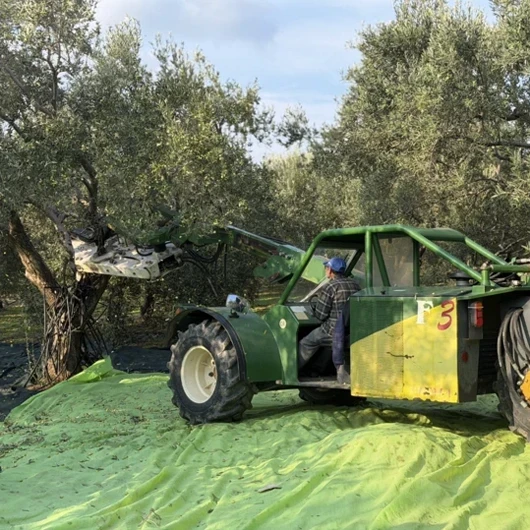
The bustling agricultural fields of Akhisar, home to roughly 15 million olive trees, are currently alive with the intensive activity of the table olive harvest. As baskets fill and processing plants run at full capacity, the region remains a vital anchor for Turkey’s domestic agricultural economy. However, beneath the surface of a remarkably fruitful season lies a complex economic reality for local farmers, who are grappling with the pressures of high production costs despite a dramatic surge in total yield.
Recent evaluations from local agricultural leadership shed light on both the immense production power of the district and the structural challenges facing producers today. Akhisar Chamber of Commerce and Industry (ATSO) Board Chairman has offered detailed insights into the district’s preeminent standing within Turkey’s olive sector, emphasizing its critical role in national supply chains and the ongoing concerns voiced by cultivators on the ground.
At the heart of the region’s agricultural identity is its staggering volume of production. Akhisar single-handedly meets approximately 70 percent of Turkey’s total demand for table olives, establishing itself as an industrial and agricultural powerhouse. The district boasts a robust infrastructure dedicated entirely to the cultivation, processing, and distribution of olives and olive oil. Among its crowning achievements is the Akhisar Olive and Olive Oil Specialized Organized Industrial Zone, which stands out as a pioneering, singular development of its kind within Turkey. This dedicated hub, combined with the vast expanse of orchards and a high concentration of processing enterprises, injects substantial economic vitality into the surrounding region.
When examining the broader provincial landscape, Manisa proudly holds the top position in Turkey regarding overall olive tree assets. This distinction is largely attributable to Akhisar’s immense contribution, which anchors the province’s agricultural prominence. The sheer density of orchards creates a landscape where olive farming is not merely an economic activity, but a defining cultural and commercial way of life for thousands of families.
This season has brought extraordinary natural conditions that directly benefited the groves. Favorable weather patterns, characterized by regular and timely rainfall, have fostered a remarkably productive agricultural cycle. According to agricultural representatives, the district is witnessing a harvest yielding nearly triple the volume compared to the previous year. This bumper crop represents a phenomenal natural bounty, showcasing the profound fertility of the region’s soil when nurtured by adequate precipitation.
Yet, this unprecedented abundance has introduced a distinct economic paradox for the farming community. Despite the tripling of the harvest volume, market prices for the produce have remained at comparatively low levels. Concurrently, the financial burden of agricultural inputs—ranging from fertilizers and fuel to labor and irrigation expenses—has remained persistently high. As a result, local producers frequently find themselves struggling to cover their basic operational costs, turning what should be a time of unmitigated celebration into a period of financial anxiety.
In response to these mounting pressures, producers are actively looking toward governmental mechanisms for relief. Industry representatives have emphasized the urgent need for targeted state intervention to safeguard the livelihoods of farmers. Specifically, the agricultural community is calling for the implementation of dedicated premium supports for both table olive and olive oil production. Such financial instruments, stakeholders argue, are vital to stabilizing producer incomes and ensuring that the agricultural sector remains viable in the face of fluctuating market dynamics.
A significant driver of Akhisar’s agricultural fame is the Domat olive variety, which takes center stage in the district’s table olive output. The region accounts for roughly 70 percent of Turkey’s entire production of this specific cultivar. Renowned primarily for its exceptional qualities as a table olive, the Domat variety also holds significant value for oil production under specific processing conditions.
Agricultural experts note that Domat olives can be effectively utilized for oil extraction, particularly during the early harvest period. In these initial phases of the season, yields typically range from approximately 15 to 20 kilograms of olives to produce a single kilogram of high-grade oil. This versatility allows producers a degree of flexibility in how they market their crop, depending on prevailing market demands and processing capacities.
Beyond its economic and industrial dimensions, the olive sector in Akhisar remains deeply tied to the nutritional value of its yield. Industry leaders frequently describe high-quality olive oil as a natural fruit juice, highlighting its irreplaceable role in healthy dietary habits and human nutrition. The pure, unadulterated nature of the product underscores why consumer demand remains steady, even as supply-side economics challenge the producers.
As the harvest of Domat olives continues across the groves of Akhisar, the primary focus for the regional leadership and farming community remains the long-term sustainability of the sector. While the trees have delivered an extraordinary harvest fueled by favorable weather, the survival and prosperity of the growers who tend to those 15 million trees will depend heavily on how effectively rising operational costs and pricing imbalances are addressed in the near future.