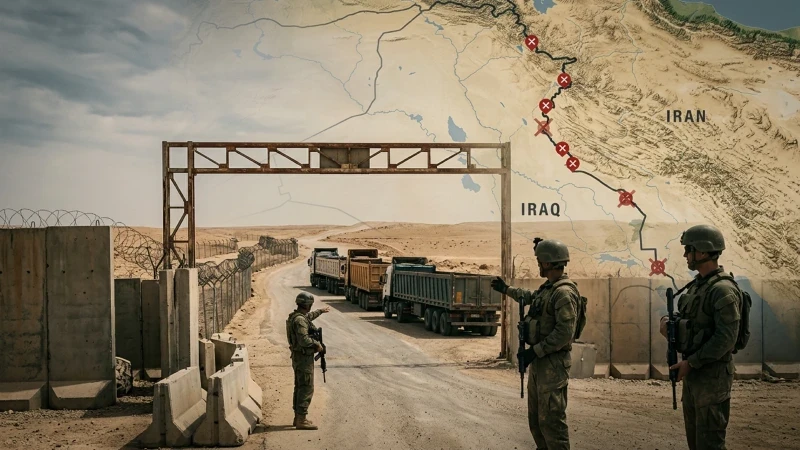
WASHINGTON — In a significant escalation of its strategic containment policy against Tehran, the United States Central Command (CENTCOM) has announced the establishment of a specialized new unit aimed at cutting off Iran’s land-based and Caspian Sea supply lines. Designated as "Task Force Iron Gate," the newly formed entity represents a major operational shift, extending Washington’s long-standing maritime blockades deep into continental transit corridors to choke off the flow of advanced weaponry, dual-use technology, and illicit financial revenues.
Headquartered in Tampa, Florida, the specialized unit comprises approximately 20 military and civilian personnel. According to announcements released by CENTCOM, the cross-functional team has been tasked with working in close coordination with a broad spectrum of other US government agencies and international partners. The overarching mission of Task Force Iron Gate is to dismantle the multifaceted logistical networks that Tehran has increasingly relied upon to bypass existing international sanctions and military restrictions.
The formation of the new unit underscores a growing concern within American defense circles regarding Iran’s ability to diversify its supply chains. While US-led naval operations have heavily restricted traditional maritime routes in the Persian Gulf and surrounding waters, intelligence assessments indicate that Iranian authorities have sought alternative pathways through land borders and the Caspian Sea basin. These alternative routes have frequently been utilized to smuggle sensitive military hardware, manufacturing components for weapon systems, and restricted materials necessary for sustaining domestic military production and regional proxy operations.

Extending the Reach of US Containment Operations
Elaborating on the strategic rationale behind the creation of the unit, CENTCOM Commander Admiral Brad Cooper emphasized that Task Force Iron Gate is designed to complement and reinforce the successes already achieved through Washington’s rigorous maritime enforcement actions.
"The establishment of Task Force Iron Gate reinforces the success of our robust maritime blockade against Iran," Admiral Cooper stated in the command’s official briefing. He further underscored that enhanced cooperation between CENTCOM and interagency domestic partners will serve to systematically constrain Tehran’s operational latitude. According to the CENTCOM commander, the intensified oversight and targeted disruption capabilities provided by the new unit will directly limit Iran’s financial capacity to sponsor regional militant groups, reconstruct domestic arms factories, and systematically replenish its conventional military stockpiles.
The launch of the land-focused task force builds upon months of aggressive economic and military interdiction efforts by the United States and its allies. In recent months, Washington has placed primary emphasis on enforcing comprehensive maritime restrictions designed to cripple Iran’s primary source of state revenue: petroleum exports.

Significant Financial Impact from Maritime Interdictions
According to figures highlighted by military officials alongside the announcement of Task Force Iron Gate, the comprehensive maritime blockade maintained by US forces over recent months has successfully prevented the export of more than 25 billion dollars worth of Iranian crude oil. This substantial financial deprivation has severely strained the Iranian economy, directly impacting state budgets allocated toward military modernization and foreign interventions.
Naval forces operating under CENTCOM command have maintained a relentless schedule of strict inspections, boarding commercial vessels and monitoring all maritime traffic entering and departing Iranian ports. These rigorous protocols have created a high-risk environment for commercial shippers willing to risk secondary sanctions or direct interception, effectively forcing Tehran to explore overland transit corridors and Caspian Sea shipping lanes as alternative logistical arteries.
However, the creation of Task Force Iron Gate signals that Washington is actively closing these alternative avenues. By pooling intelligence, interagency law enforcement resources, and specialized surveillance capabilities, the 20-person team in Tampa is expected to map, monitor, and disrupt illicit networks operating across multiple international borders.

The operational focus of the new task force highlights the complex nature of contemporary counter-proliferation efforts, where state actors under heavy sanctions increasingly rely on grey-market commercial networks, front companies, and porous land borders to acquire dual-use technologies. As Task Force Iron Gate begins its operations, US military and intelligence authorities anticipate that the combined pressure of maritime and terrestrial interdiction will place unprecedented strain on Tehran’s strategic supply chains, further isolating the nation economically and militarily in the months ahead.