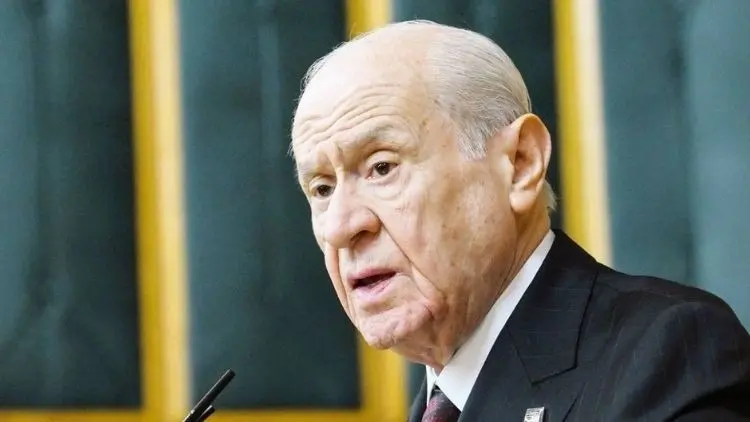
ANKARA — In a wide-ranging and firm address to his party’s parliamentary group, Devlet Bahçeli, the Chairman of the Nationalist Movement Party (MHP), underscored the urgent necessity for a moral and structural overhaul within the Turkish political landscape. Speaking on November 4, 2026, Bahçeli articulated a vision for the nation’s future that prioritizes "purification and clearing" in politics, the definitive end of terrorism, and a reinforced commitment to the Turkic world and regional sovereignty.
Bahçeli’s speech, delivered at the Turkish Grand National Assembly (TBMM), touched upon the most pressing domestic and international issues facing the country. Central to his message was the idea that Turkey stands at a critical juncture where the integrity of the political system and the security of the state must be defended against both internal discord and external pressure.
The Imperative of Political Purification
Devlet Bahçeli opened his address by focusing on the ethical standards of Turkish governance. He asserted that the current era demands a departure from the "polluted" practices of the past, emphasizing that the restoration of public trust is not merely a preference but an unavoidable requirement for the health of the republic.
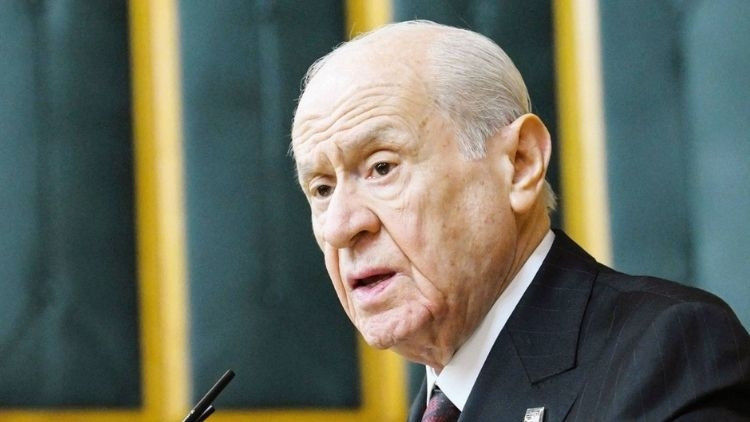
"In politics, purification and clearing have become an indispensable necessity that can no longer be postponed," Bahçeli told the gathered lawmakers and party members. He argued that the political arena must be liberated from the "shadow of personal accounts, party bigotry, and sterile squabbles." By doing so, he suggested, the nation could finally align its political conduct with a higher moral standard that serves the collective interest rather than individual or factional ambitions.
The MHP leader called for a shift toward a political culture rooted in ethics, tranquility, and hope. He noted that the citizens of Turkey have a limited patience for political maneuvers that prioritize short-term gains over long-term stability. "It is time to leave behind corruption, impurity, and all the burdens that weigh down upon politics," he stated, urging all political actors to meet the public’s expectation for transparency and integrity.
Safeguarding Social Order and the Vision for a Terror-Free Turkey
Turning to domestic security, Bahçeli reiterated the MHP’s unwavering stance on the total eradication of terrorism. He framed the goal of a "Turkey without terror" as a strategic imperative, one that is essential for the safety and prosperity of future generations. According to Bahçeli, the fight against terrorism is not just a military or police matter, but a foundational requirement for national survival.
"The goal of a terror-free Turkey is a strategic matter concerning the security of our future generations," he remarked. He warned that as the state moves toward these vital objectives, there are those who seek to undermine national unity by inciting social unrest. Bahçeli was particularly critical of rhetoric that encourages citizens to take to the streets, characterizing such calls as irresponsible and dangerous.

He cautioned that turning the streets into venues for tension and conflict is an affront to the democratic process. "Attempting to make the streets the address of tension and conflict cannot be a subject of politics," Bahçeli said. He emphasized that the primary duty of political leaders is to unify the populace rather than provoke divisions. He warned that any "wrong calculations" regarding the nation’s resilience would fail, particularly as the People’s Alliance (Cumhur İttifakı) continues to foster a "climate of brotherhood and solidarity" under the leadership of President Recep Tayyip Erdoğan.
Strengthening the Bonds of the Turkic World
A significant portion of Bahçeli’s speech was dedicated to the geopolitical and cultural significance of the Turkic world. For the MHP leader, the deepening cooperation among Turkic states represents a cornerstone of Turkey’s 21st-century strategy. He expressed a profound desire for "unity and vitality" across the vast geography stretching from the Adriatic to the Great Wall of China.
Bahçeli spoke poetically about the connection between various Turkic landmarks, symbolizing a broader geopolitical integration. "Our desire is to end the longing between the Caspian and the Mediterranean, to bring together Lake Issyk-Kul and Lake Van, and to unite the Selenga and the Sakarya rivers," he said. These references to historic and geographical markers highlight the MHP’s long-standing vision of a unified Turkic sphere that shares a common destiny.
Invoking the historic motto "Unity in language, thought, and work," Bahçeli argued that the Organization of Turkic States must continue to increase its global influence. He believes that a unified Turkic strategy is essential for contributing to global peace and stability. "The hearts that turn toward the same qibla, the tongues that think in Turkish and call out in Turkish, must give direction to their own destiny through a common development strategy," he declared. He envisioned this cooperation growing from "seeds of hope" into a "forest of brotherhood," equipped with the necessary tools of the modern age.

Defending National Sovereignty Against European Pressure
Bahçeli also addressed recent developments in the Eastern Mediterranean and North Africa, specifically praising the approval of the memorandum of understanding between Turkey and Libya by the Libyan House of Representatives. He described this as a "gratifying development" that reinforces Turkey’s legal and strategic position in the region.
However, the MHP leader used this context to launch a scathing critique of the European Union and regional actors like Greece, Southern Cyprus, and Israel. He accused these entities of attempting to hem Turkey in and ignore its legitimate rights. Bahçeli was particularly firm in his rejection of European attempts to dictate Turkish foreign policy.
"Brussels officials must understand that shaking a finger at Turkey, trying to determine its direction, or giving instructions on what it can and cannot do is not within the capacity of Europe, nor anyone else," Bahçeli asserted. He argued that the EU’s "solidarity" with Greece and Cyprus often manifests as an unfair bias against Turkish interests, and he made it clear that Ankara would not be swayed by such pressure. His rhetoric signaled a defiant stance against any external interference in Turkey’s sovereign decisions regarding its maritime borders and regional alliances.
Addressing Regional Aggression and the Houthi Conflict
In the final section of his speech, Bahçeli turned his attention to the ongoing instability in the Middle East, specifically citing the conflict involving Houthi rebels. He pointed to the "Mecca Agreement" as a critical framework for de-escalating violence and preventing further civilian casualties in the region.

Bahçeli called for the full mobilization of all available resources within the scope of this agreement to put an end to "Houthi aggression." He emphasized that the protection of civilian lives must be a priority and that regional stability depends on the adherence to such diplomatic frameworks. His comments reflect a broader Turkish concern regarding the ripple effects of regional conflicts on international security and humanitarian conditions.
A Call for National Resilience
Throughout his address, Bahçeli maintained a tone of high-stakes urgency, positioning the MHP and the People’s Alliance as the guardians of Turkey’s national interests. By linking domestic political reform with regional strength and Turkic unity, he provided a comprehensive roadmap for his party’s priorities in the coming legislative period.
The speech served as a reminder of Bahçeli’s role as a senior statesman within the Turkish government structure, often setting the tone for the nationalist and security-oriented policies of the administration. His emphasis on "clearing" the political system suggests that the MHP may push for new legislative measures or internal party reforms aimed at addressing long-standing public concerns regarding political ethics and governance.
As the session concluded, the MHP leader’s remarks were met with strong support from his party members, signaling a unified front as Turkey navigates a complex array of challenges both at home and abroad. The call for "purification" in politics, combined with a defiant foreign policy and a vision for Turkic integration, remains the centerpiece of Bahçeli’s political agenda for 2026 and beyond.