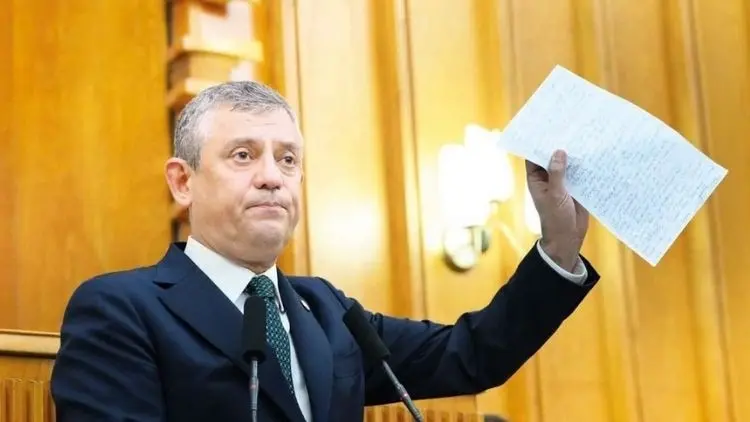
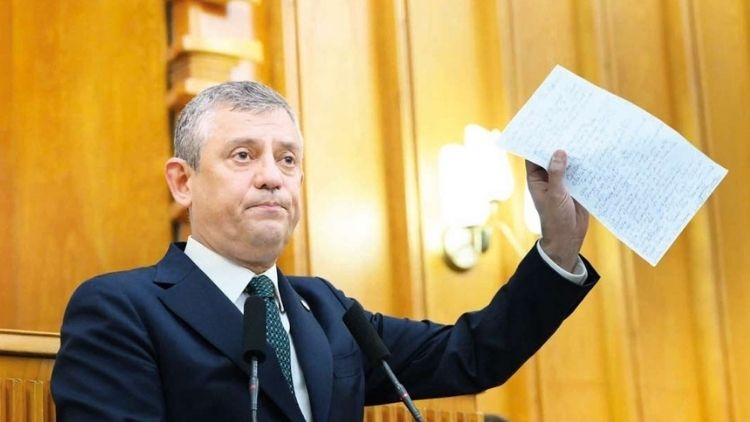
Speaking at the Grand National Assembly of Türkiye (TBMM) on November 4, 2026, Özel characterized the accusations as a calculated attempt by the ruling administration to tarnish his reputation and dismantle the political opposition. He framed the controversy not as an isolated legal matter, but as part of a broader strategy to distract the public from a deepening economic crisis and systemic failures in governance.
Allegations of Financial Impropriety
The controversy centers on testimony provided by Emir Sarıgül during a separate investigation. According to the claims, Mustafa Sarıgül allegedly provided $600,000 to Özgür Özel in three distinct installments intended to support the establishment of the YENİ Party.
Emir Sarıgül’s testimony detailed a specific series of transactions. He alleged that $250,000 was delivered to Özel’s vehicle in the Ümitköy district of Ankara, specifically intended to fund the interior furnishing of the party’s general headquarters. A second installment, also amounting to $250,000—potentially in Euros, according to the testimony—was purportedly handed over directly to Özel for the purchase or maintenance of a party bus.
The most peculiar of the claims involves a third payment of $100,000. Emir Sarıgül alleged that his father instructed him to purchase two scarves from the luxury retailer Vakko. He claimed that $100,000 in cash was placed inside the scarf packaging before being delivered to Özel.
"My father told me about various sums of money given to the YENİ Party," Emir Sarıgül reportedly stated in his deposition. "He told me he left $250,000 in Özgür Özel’s car for the headquarters’ decoration. He also mentioned giving another $250,000 for a bus. Finally, just last month, he said another $100,000 was given. He had me buy scarves from Vakko and put the money inside the gift box."
Özel’s Rebuttal: "A Question of Character"
Addressing his supporters and the media from the parliamentary rostrum, Özgür Özel dismissed the claims as illogical and fabricated. He particularly targeted the detail regarding the luxury scarf box, using it to highlight what he described as the absurdity of the narrative being constructed against him.
"Look at the claim: they say a scarf was given in August, and money was hidden inside it," Özel remarked. "Go and ask Vakko—do they even sell scarves in August? It is a ridiculous detail, yet they take this testimony and spread it as if it were a proven fact. They want to ensure that the public talks about these ‘funds’ rather than the real issues facing the country."
Özel’s defense rested heavily on his decades-long reputation in public life. He challenged his detractors to investigate his history, spanning from his school years in Manisa to his career in pharmacy and his tenure as a Member of Parliament.
"Go and ask anyone who knows me," Özel said. "Go back to my middle school and high school teachers. Ask those I shared a dormitory with. Ask those I served with in the military. Ask any citizen in Manisa about my business dealings or my political conduct. You will hear one thing and one thing only: ‘Özgür Özel has nothing to do with money.’ You will not hear a single word to the contrary."
He argued that the timing and nature of the allegations were a testament to the government’s desperation. "When they find themselves sinking into a swamp of their own making, they try to smear the mud on everyone around them. They attack the reputation of the opposition leader because they want to leave the Turkish people without an alternative."
A Nation in Economic Distress
Throughout his speech, Özel consistently tied the attacks on his character to the broader economic hardships currently being felt across Türkiye. He argued that the "smear campaign" is a smokescreen designed to hide a "black order" of mismanagement and incompetence.

"Everywhere we go in Türkiye, we hear a different cry of despair," Özel stated, pivoting to the agricultural crisis. "In these fertile lands that have fed humanity for thousands of years, we are now facing a crisis of production, a crisis of nutrition, and skyrocketing food inflation. This is the result of a lack of merit, a lack of planning, and rampant favoritism."
He noted that the current economic structure harms both the producer and the consumer, leaving 86 million citizens struggling to make ends meet. According to Özel, the government’s inability to manage the economy has led them to resort to "intimidation tactics" against political rivals.
"They have tried to institutionalize the destruction of our party," he said, referring to the appointment of state trustees (kayyum) to various positions. "Now, they have moved on to attacking the leader’s reputation. They find anyone they can and tell them, ‘Slander Özgür Özel. Give us a statement against him, and we will let you go from the police station or the prosecutor’s office.’ This is the level to which they have descended."
The "Fund Scandal" and the Nasreddin Hodja Metaphor
Özel also addressed a burgeoning financial scandal, referred to as a "fund fraud" (fon vurgunu), which he claims has been ongoing for 48 days without adequate government transparency. He accused the Justice and Development Party (AKP) of orchestrating a large-scale operation to protect those involved.
He challenged the government to answer a simple question: "Did you know about this, or did you not? If you knew, you must resign immediately. If you didn’t know, you must take the country to an election immediately and hand over power to those capable of governing."
The YENİ Party leader criticized the lack of transparency regarding the lists of investors involved in the scandal. He noted that while a list of 245 primary investors exists, it has not been released. Furthermore, a smaller list of 80 names has been circulating, which the government has neither confirmed nor denied.

Özel likened the government’s proposed legislative solutions for the financial crisis to a famous tale of Nasreddin Hodja. In the story, the Hodja stretches a wire across a path, hoping that passing sheep will leave wool on the thorns, which he will then collect, spin, sell, and eventually use the proceeds to pay his debts.
"The people are wary of such ‘Nasreddin Hodja’ laws," Özel said. "They are waiting for sinners and those who gave in to their greed to put money back into accounts as a form of ‘repentance,’ hoping that the Ministry of Justice will stop pursuing them. They expect the public to believe that this will somehow fix a $195 billion volume of financial discrepancy. The nation sees through this."
Political Implications and Future Outlook
The speech in the TBMM serves as a pivotal moment for the YENİ Party as it seeks to maintain its momentum in the face of legal and personal challenges. By addressing the bribery allegations head-on, Özel is attempting to pivot the conversation back to his party’s core platform: economic reform and the restoration of meritocracy in the civil service.
The allegations by Emir Sarıgül remain a part of a legal process, and it is yet to be seen how the judiciary will proceed with the testimony. However, for Özel and his supporters, the battle is as much about public perception as it is about legal facts. By invoking his personal history and contrasting it with the "absurdity" of the scarf-box claim, Özel seeks to consolidate his base and project an image of an unshakeable leader.
The session concluded with Özel reiterating his commitment to the "86 million people suffering from the cost of living." He emphasized that the YENİ Party would not be intimidated by "slander" or "trustee appointments," and would continue to challenge the ruling party’s "kara düzen" (black order).
As the investigation into the financial claims continues, the political atmosphere in Ankara remains tense. The clash between the YENİ Party’s leadership and the allegations brought forth by the Sarıgül family represents a significant chapter in the ongoing struggle for political dominance in Türkiye, set against a backdrop of severe economic uncertainty.