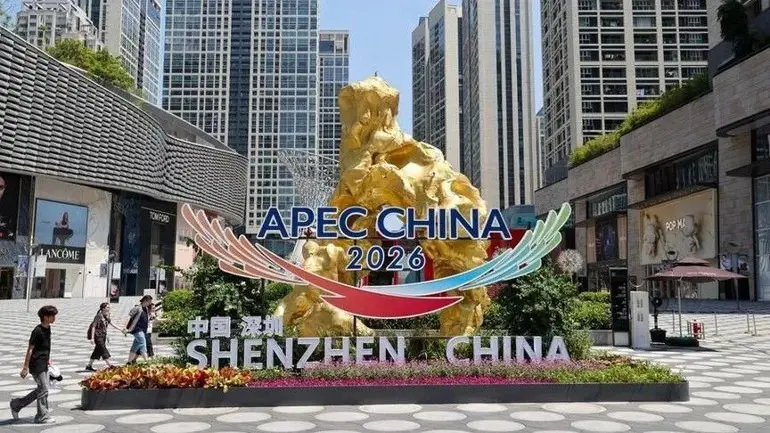
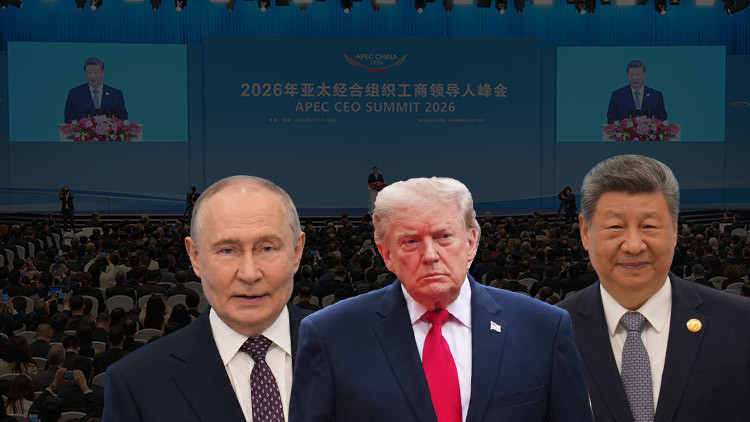
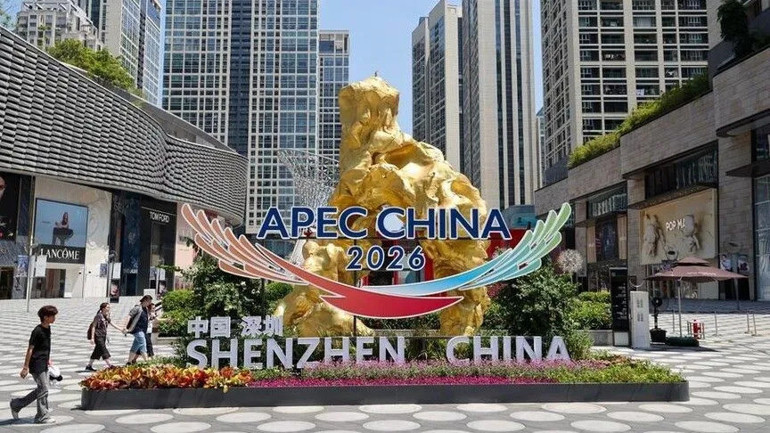
In a development that signals a potential sea change in the international order, the three most influential actors in global politics are set to meet at the same table for the first time in history. U.S. President Donald Trump, Russian President Vladimir Putin, and Chinese President Xi Jinping are scheduled to hold a trilateral meeting on the sidelines of the Asia-Pacific Economic Cooperation (APEC) Summit in the Chinese city of Shenzhen. This unprecedented gathering is expected to address a volatile agenda, including the limitation of nuclear weapons, the escalating situation in Iran, and the ongoing conflict in Ukraine—a topic Trump has signaled he will approach with significant pressure.
The prospect of these three giants discussing the fate of regions and actors not present at the table has sparked intense debate among diplomats and historians. The meeting’s structure has already drawn comparisons to the 1945 Yalta Conference, where the post-World War II "spheres of influence" in Europe were determined by the leaders of the era. However, prominent political analysts suggest that while the meeting is undeniably historic, the "Yalta 2.0" label may be a misleading framework for understanding the complex dynamics at play in the modern era.
The Flaws in the Yalta Comparison
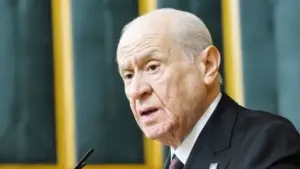
Dr. Barış Adıbelli, a faculty member of the Department of International Relations at Kütahya Dumlupınar University, has voiced skepticism regarding the historical parallel. While acknowledging the significance of the meeting, Adıbelli argues that the current geopolitical climate bears little resemblance to the closing days of the Second World War. He dismisses suggestions that the three leaders are meeting to "redraw the map of Europe" or fundamentally dismantle the existing global system in a single afternoon.
"There is a narrative that the fate of the world will be reshaped and the map of Europe will be redrawn. These comments are largely unrealistic," Adıbelli stated. He emphasized that this is not a standalone summit dedicated to a new world order, but rather a meeting taking place within the margins of the APEC Summit. "We are talking about three leaders coming together for perhaps 30 minutes to an hour. It is important as a starting point for dialogue, but we should not expect a total systemic overhaul or a division of Europe."
Adıbelli further pointed out a fundamental difference in the relationship between the participants. In 1945, the Soviet Union, the United States, and the United Kingdom were allies united against Nazi Germany. Today, the U.S., Russia, and China are not allies; they are fierce rivals. In the recent past, Washington has officially designated both Moscow and Beijing as adversaries. Therefore, the cooperative spirit of Yalta is replaced here by a cautious, competitive diplomacy between states that view each other with deep suspicion.
Dr. Murat Jane, from the Department of Political Science and International Relations at Istanbul Aydın University, echoes this sentiment. He notes that while identifying historical patterns is a common tool in diplomacy, the conditions of 2024 and 1945 are vastly different. "To evaluate this as ‘Yalta 2.0’ is quite ambitious under current circumstances," Jane remarked. He reminded that Roosevelt, Churchill, and Stalin were fighting a common enemy. Today, there is no shared target or agreed-upon goal between the U.S., China, and Russia that would facilitate a Yalta-style agreement.

A High-Stakes Agenda: Nuclear Security and Regional Conflicts
Despite the brevity of the scheduled talks, the topics on the table are among the most pressing in contemporary security. Central to the discussions will be the limitation of nuclear weapons. This has become a critical issue following the expiration of the New START Treaty in 2026, which was the last remaining agreement limiting the strategic nuclear arsenals of the U.S. and Russia. With the treaty gone, there is a growing risk of a new nuclear arms race, making the resumption of high-level diplomacy an urgent necessity.
Dr. Jane highlighted the complexity of these nuclear negotiations. He noted that Russia has recently hinted at the possibility of using nuclear weapons in Ukraine if the U.S. were to use them against Iran, creating a dangerous ladder of escalation. Furthermore, China’s growing nuclear capacity adds a third dimension to what was once a bilateral issue. "China’s nuclear arsenal is expanding, yet it still lags behind the U.S. and Russia. It is unlikely that Beijing will agree to the same limitations as the two nuclear superpowers, making a trilateral agreement exceptionally difficult to achieve," Jane explained.
Beyond nuclear arms, the leaders are expected to discuss military support provided to Iran and the prevention of Tehran’s acquisition of nuclear weapons. The agenda also includes the limitation of ballistic missile capacities and the cessation of indirect support for the Houthi rebels in Yemen. The inclusion of the Houthis suggests that the U.S. believes both Russia and China may be providing some level of support or leverage to the group, which has disrupted global maritime trade in the Red Sea.

Trump’s Strategic Pivot and the ‘Greater Eurasian Partnership’
One of the most striking theories regarding this meeting comes from Dr. Adıbelli, who suggests that Donald Trump is seeking to move the United States toward a "Greater Eurasian Partnership." This concept, often championed by Russia and China, envisions a integrated economic and security space across the Eurasian landmass. Adıbelli argues that Trump’s well-documented friction with European allies and his transactional approach to foreign policy indicate a desire to join this new power center.
"Trump is considering whether he can establish a new cooperation with these countries. His goal appears to be the creation of a tri-polar world order," Adıbelli observed. According to this view, Trump has implicitly accepted that the U.S.-led international system is failing or has reached its expiration date. By sitting at this table, Trump is essentially telling Putin and Xi, "Let’s manage the world together."
However, Adıbelli warns that this "three-pole" vision may not be welcomed by Moscow or Beijing. While Trump might want to be "first among equals," Russia and China have long advocated for a multi-polar world with a strengthened United Nations at its center, supported by the Global South. Xi Jinping’s vision of global governance is rooted in a system where no single power—or even a small group of powers—holds absolute sway. "America is trying to ‘makeup’ the old world order to maintain its power, while Russia and China are talking about a fundamentally different world," Adıbelli added.

The End of Russia’s Diplomatic Isolation
For Vladimir Putin, the meeting in Shenzhen represents a significant diplomatic victory. Since the invasion of Ukraine, Russia has faced unprecedented sanctions and efforts by the West to isolate it from the international community. Dr. Murat Jane points out that Putin’s presence at a table with the U.S. and Chinese presidents proves that Russia remains an indispensable actor in global politics.
"Russia faced a massive backlash after the Ukraine war, being excluded from everything from sports competitions to international credit systems. However, Putin sitting at the same table as Trump and Xi shows that the effect of diplomatic isolation is fading," Jane said. Nevertheless, he cautioned that diplomatic visibility does not always translate into concrete gains. Putin’s primary objective remains the protection of Russia’s territorial gains in Ukraine and the easing of economic sanctions. To achieve this, he views a direct line of communication with Washington as more valuable than any trilateral forum.
Bilateral Tensions: The U.S.-China Friction
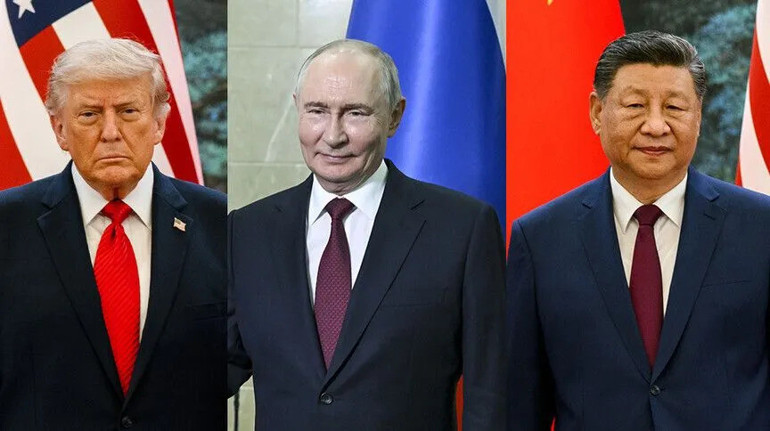
While the trilateral meeting captures the headlines, the bilateral relationship between the U.S. and China remains fraught with economic and territorial tensions. Issues such as trade tariffs and the status of Taiwan will likely be discussed in separate, one-on-one sessions between Trump and Xi.
Adıbelli noted that significant economic promises remain unfulfilled. "There were expectations for a $60 billion mutual tariff reduction and a $17 billion purchase of American agricultural products by China, neither of which has materialized," he said. China’s stance is firm: it will not take steps toward purchases until the U.S. moves on tariff reductions. Furthermore, the issue of Taiwan remains a "red line" for Beijing. Xi Jinping is expected to reiterate that China will not tolerate arms sales to Taiwan or any treatment of the island as an independent state.
The Fragile Russia-China Alliance
Finally, the meeting will shed light on the evolving relationship between Moscow and Beijing. While they currently stand together against U.S. hegemony, Dr. Jane suggests that a future power struggle between the two is possible. Russia’s heavy dependence on China for energy exports and economic support has limited its room for maneuver.
"Putin is aware that being too dependent on China could turn Russia into a junior partner," Jane explained. "If U.S. global power were to decline significantly, we might see a power struggle emerge between Russia and China. For now, Putin will try to maintain his closeness with Beijing while using the diplomacy table with the U.S. to increase his bargaining power against both."
As the world looks toward Shenzhen, it is clear that while a "Yalta 2.0" agreement is unlikely, the mere fact that these three leaders are meeting signals the end of the post-Cold War era. Whether this leads to a more stable tri-polar world or a new period of intense competition remains to be seen, but the dialogue initiated at the APEC Summit will undoubtedly dictate the pace of global politics for years to come.