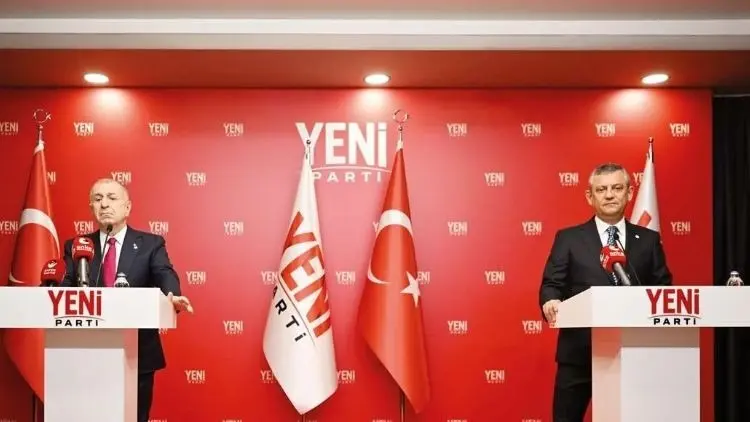
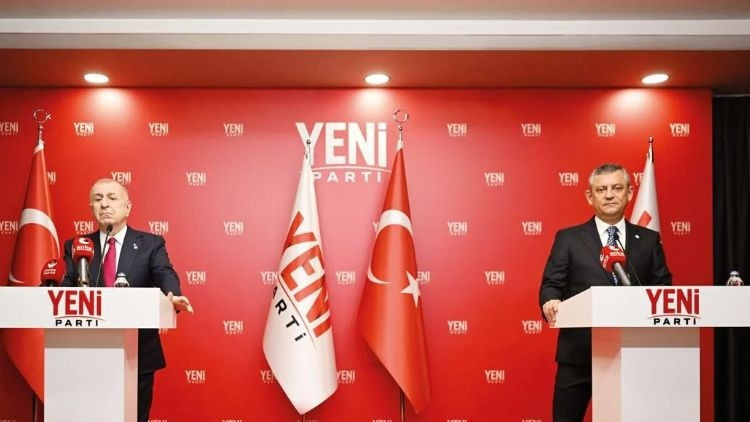
The meeting, held on November 20, 2026, was ostensibly a congratulatory visit. Ümit Özdağ visited Özel to offer his felicitations following Özel’s successful election at his party’s recent convention and his subsequent receipt of the official mandate for the chairmanship. However, the dialogue quickly transitioned from formal pleasantries to a serious deliberation on the state of Turkish democracy, election integrity, and the government’s controversial roadmap for ending terrorism.
A Unified Front on Election Security
During the joint press conference that followed their private meeting, both leaders highlighted shared concerns regarding the sanctity of the electoral process. Özgür Özel revealed that a significant portion of their discussion focused on election security, a perennial concern for the Turkish opposition. According to Özel, the Zafer Party leader provided specific warnings and data points regarding suspicious discrepancies in national population registries.
"Mr. Özdağ shared findings that suggest certain data within the population records are both suspicious and alarming," Özel told reporters. "We view these discrepancies not merely as administrative errors but as potential threats to the integrity of the will of the people. Ensuring that every vote is cast by a legitimate citizen and counted accurately remains a cornerstone of our shared mission."
The emphasis on election security comes at a time of heightened political sensitivity, as opposition parties seek to coordinate efforts to monitor ballot boxes and verify voter lists ahead of upcoming electoral cycles. The collaboration between the YENİ Party and the Zafer Party on this front suggests a burgeoning "security-first" alignment among opposition factions.
The Exodus of Local Leaders: Allegations of Coercion
One of the most provocative segments of Özel’s address involved a detailed critique of the AK Party’s recent acquisition of local government officials. Özel claimed that since the last local elections, 117 mayors who were originally elected under the banners of various opposition parties have transitioned to the ruling AK Party.
Özel did not characterize these defections as voluntary political shifts but rather as the result of systematic administrative and legal pressure. He pointed specifically to ongoing investigations in major municipalities as a tool for political engineering.
"We are witnessing a process where the state’s investigative powers are being used as a bargaining chip," Özel asserted. "In the Antalya Metropolitan Municipality, we see inspectors creating a ‘cloud of dust,’ and for three months, we have watched the same pattern in Tekirdağ. We know exactly what is being whispered behind closed doors: ‘Join us, and we will make these files disappear.’"
To illustrate his point, Özel shared a specific anecdote involving a mayor who recently defected from the YENİ Party to the AK Party. According to the Chairman, the mayor in question had visited the party headquarters just ten days prior, expressing a desire to serve as a presiding officer at the party’s convention while simultaneously complaining of "heavy pressure" from government authorities.
"Two days before the convention, following a minor local dispute in Tekirdağ, he suddenly decided to leave the party. Two days later, he was wearing an AK Party badge. This is not a change of heart; it is the result of a calculated campaign of intimidation," Özel said.
The "Terror-Free Turkey" Process and the Monitoring Commission
The crux of the current political standoff involves the "Terror-Free Turkey" process—a government-led initiative aimed at ending the decades-long conflict with terrorist organizations. While the YENİ Party had previously signaled support for a legislative framework to end violence, Özel clarified that his party would not participate in the Monitoring Commission intended to oversee the process.
Özel’s reasoning was centered on what he described as the government’s abandonment of democratic principles. He rejected any notion that his party had changed its stance, instead placing the blame for the current impasse squarely on President Recep Tayyip Erdoğan and the AK Party.
"There is nothing in our current attitude that contradicts our past positions," Özel explained. "However, there is a government whose current actions contradict its own promises. We remain committed to the goal of ending terrorism. If democratization is the goal, if weapons are to be laid down, if no more soldiers are to fall as martyrs, and if no more mothers are to cry, we will be there to support it. We are at that same point today."
However, Özel expressed deep skepticism regarding the underlying motives of the commission. He suggested that the government is using the peace process as a facade for a "personal agenda," specifically aimed at amending the constitution to extend President Erdoğan’s term in office.

"If this process is being reduced to a personal agenda—if the goal is to say, ‘Let’s change the constitution together, let’s extend Erdoğan’s term’—then we are not part of it," Özel declared. "No one should try to force us into being a part of a plan they designed for their own benefit. No one should invite us to stand by Erdoğan. Instead, invite Erdoğan to return to democracy."
Parliamentary Diplomacy and the Role of Numan Kurtulmuş
The decision to boycott the commission was not made without internal and external deliberation. Özel revealed details of his conversations with the Speaker of the Grand National Assembly, Numan Kurtulmuş, who has been attempting to build a consensus for the commission’s formation.
According to Özel, Kurtulmuş urged the YENİ Party to reconsider, suggesting that their presence on the commission would be beneficial for both the party and the national process.
"Mr. Kurtulmuş told me, ‘You may be right in your grievances, but staying in the commission is in your interest and the interest of this process.’ He even told me to ‘think carefully’ about the decision," Özel recounted. "Despite these gestures, our position remains unchanged. When we were asked in writing, our response was clear: we will not participate in the commission."
Özel’s refusal highlights a significant challenge for the government: launching a national reconciliation or security process without the participation of the main opposition party risks undermining the commission’s legitimacy and its ability to represent a broad national consensus.
Pressure from the DEM Party: Bakırhan’s Call for Unity
The YENİ Party’s withdrawal has also drawn criticism from other corners of the opposition, most notably from the DEM Party. Co-Chair Tuncer Bakırhan issued a public call to Özgür Özel, urging him to reconsider the decision for the sake of the broader struggle for peace and democracy.
Speaking at the Turkish Grand National Assembly, Bakırhan emphasized that staying outside the process would not lead to democratic gains.

"I want to state that Mr. Özgür Özel and the YENİ Party should review this decision," Bakırhan said. "He should continue the discourse he put forward in the past—that the struggle for peace and democracy must be carried out together. You cannot achieve results by saying ‘I am not here’ at a time when millions of people, particularly our Kurdish citizens, are insistently calling for peace."
Bakırhan argued that the YENİ Party, as a major political force, should not be a bystander but a "fundamental actor" that directs and shapes the process from within. He noted that while his party also has severe criticisms of how previous reports and processes have been handled, withdrawing only serves to frustrate the hopes and expectations of the public.
"By distancing ourselves from this process, it will not be easy to take the steps we have discussed," Bakırhan added. "The role of the YENİ Party should be to stay inside, to guide, and to play the role of a primary actor."
The Road Ahead for Turkish Politics
The refusal of the YENİ Party to join the Monitoring Commission marks a pivotal moment in the "Terror-Free Turkey" initiative. It underscores a fundamental lack of trust between the government and the main opposition, with the latter viewing every olive branch as a potential political trap.
Özgür Özel’s insistence that the government must first prove its commitment to democracy before receiving opposition cooperation sets a high bar for future negotiations. By framing the issue as a choice between "Erdoğan’s personal agenda" and "true democratization," the YENİ Party is attempting to reclaim the narrative on national security and peace.
As the political dust settles in Ankara, the focus remains on whether the government will proceed with a truncated commission or if it will make the democratic concessions necessary to bring the YENİ Party back to the table. For now, the path toward a "Terror-Free Turkey" appears increasingly complicated by the very domestic political divisions it seeks to resolve.
The meeting between Özel and Özdağ, meanwhile, serves as a reminder that the opposition is increasingly focused on the mechanics of power—election security and local governance—as much as the high-level policy debates dominating the halls of Parliament. With the 2026 political calendar moving forward, the strategies defined in these meetings will likely shape the trajectory of the country’s next major democratic test.