

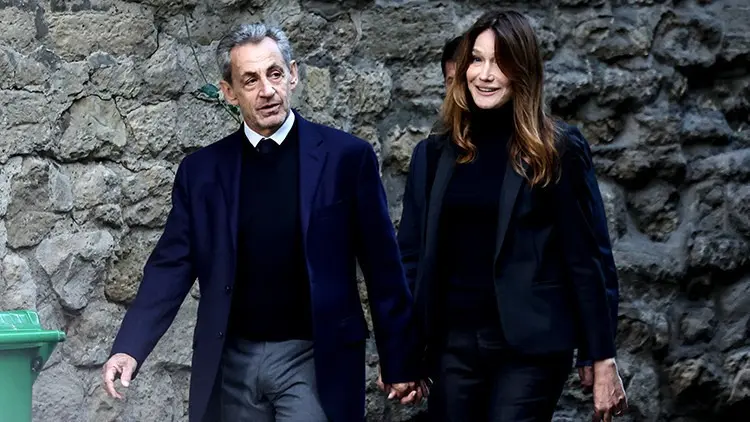
PARIS — In a development that further complicates the extensive legal history of France’s 23rd president, judicial authorities in Paris have announced that Nicolas Sarkozy and his wife, Carla Bruni-Sarkozy, will stand trial in late 2027. The proceedings, scheduled to take place between November 3 and December 2, 2027, involve serious charges of "criminal conspiracy" and "witness tampering." This trial represents a new chapter in the long-running and multifaceted judicial saga often referred to as the "Libya Case," which has shadowed the former leader for over a decade.
According to reports from the French national press, investigating magistrates in Paris have concluded their inquiry into whether the former president and his inner circle employed illegal methods to influence a key witness. Along with the former First Couple, nine other individuals have been ordered to appear before the court, bringing the total number of defendants in this specific branch of the investigation to eleven. The core of the case rests on allegations that Sarkozy and his associates orchestrated a scheme to pressure a primary accuser into retracting testimony that linked the former president’s 2007 election campaign to illicit funding from the late Libyan leader Muammar Gaddafi.
The 2027 trial will focus specifically on the events surrounding a dramatic 2020 reversal by Ziad Takieddine, a Franco-Lebanese businessman and a central figure in the original Libya investigation. For years, Takieddine had maintained that he delivered suitcases of cash from Tripoli to Paris to fund Sarkozy’s rise to power. However, in late 2020, he suddenly retracted these claims during high-profile interviews, asserting that Sarkozy had never received Libyan money. The judiciary is now investigating whether this retraction was the result of a coordinated and illegal effort involving witness manipulation and criminal association.
The Origins and Evolution of the "Libya Case"
The broader legal battle, which has become one of the most significant political scandals in modern French history, dates back to the mid-2000s. Nicolas Sarkozy, who served as President of the Republic from 2007 to 2012, has long been accused of accepting illegal financial support from the regime of Muammar Gaddafi. The allegations first surfaced in detail in 2012 and 2013, following the fall of the Gaddafi government, leading to the formal opening of a judicial investigation into "passive corruption," "illegal campaign financing," and "misappropriation of public funds."
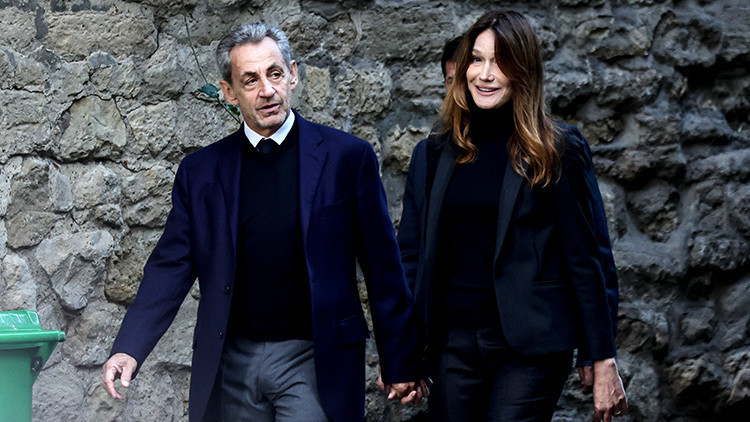
The cornerstone of these allegations was the testimony of Ziad Takieddine. The businessman claimed that between late 2006 and early 2007, he acted as a middleman, transporting approximately 5 million euros in cash from Libya to the French Ministry of the Interior, which Sarkozy headed at the time. These funds were allegedly intended to bolster Sarkozy’s presidential bid. While Sarkozy has consistently and vehemently denied these claims, labeling them as "grotesque" and a form of political persecution, the French judiciary has spent years piecing together a complex web of financial transactions and testimonies.
The investigation took a dramatic turn in November 2020 when Takieddine, then residing in Lebanon, appeared in an interview with the magazine Paris Match and the news channel BFMTV. In a stunning reversal, he declared that Sarkozy had "not received a penny" of Libyan money for the 2007 election. While Sarkozy initially hailed this as proof of his innocence, French investigators quickly grew suspicious of the circumstances surrounding the retraction. They began investigating whether the witness had been paid or pressured to change his story, eventually leading to the charges of witness tampering and criminal conspiracy that now form the basis of the upcoming 2027 trial.
The Role of Carla Bruni-Sarkozy and the 11 Defendants
The inclusion of Carla Bruni-Sarkozy in the trial marks a significant escalation in the legal pressure on the Sarkozy family. While the former First Lady has occasionally been questioned in relation to her husband’s various legal matters, this trial represents the first time she will face major charges in a criminal court. Investigators are reportedly looking into her potential involvement in the communications and logistical efforts that led to Takieddine’s 2020 statement.
The 2027 trial will not only feature the former president and his wife but also a roster of nine other defendants. These individuals are suspected of playing various roles in the alleged conspiracy, ranging from acting as intermediaries to facilitating the media rollout of Takieddine’s retraction. The prosecution argues that this was not a series of coincidences but a structured "criminal conspiracy" designed to mislead the justice system and clear the former president’s name in the original Libya case.
This upcoming trial is distinct from the primary Libya case, which deals with the actual receipt of funds in 2007. Instead, it focuses on the alleged attempts to subvert the course of justice years later. The complexity of the case is underscored by the sheer number of defendants and the volume of electronic and financial evidence gathered during the multi-year investigation into the 2020 retraction.

The Death of a Key Witness and Previous Legal Rulings
The legal landscape surrounding the Sarkozy trials has been further complicated by the death of Ziad Takieddine. The 75-year-old businessman passed away in Beirut, Lebanon, on September 23, 2025. As the "key witness" whose shifting statements triggered both the original investigation and the subsequent witness tampering inquiry, his absence in the 2027 courtroom will be a significant factor. However, the prosecution intends to rely on his prior recorded statements, financial records, and the testimonies of the other eleven defendants to prove their case.
The 2027 trial follows a period of intense legal activity for the former president. On September 25, 2025, the Paris Criminal Court delivered a landmark ruling in the primary Libya case. In that verdict, Sarkozy was acquitted of the charges of "passive corruption," "concealing the embezzlement of public funds," and "illegal campaign financing." However, the court found him guilty of "forming a criminal organization" (criminal conspiracy) and sentenced him to five years in prison.
The 2025 ruling was a historic moment for the French judiciary, as it saw a former head of state receive a significant custodial sentence. Despite filing an appeal against the conviction, the nature of the court’s decision meant that Sarkozy was required to begin serving his sentence while the appeal process continued. On October 21, 2025, Nicolas Sarkozy entered prison, making him the first former French president in modern history to be incarcerated. His stay, however, was brief; he was released 20 days later under strict judicial control, pending the outcome of his appeal.
The Path Forward: Appeals and Future Court Dates
As the legal community looks toward the 2027 trial, another crucial date looms on the horizon. A decision regarding Sarkozy’s appeal in the original Libya case is expected to be delivered on November 30. This ruling will determine whether the five-year sentence handed down in 2025 will be upheld, overturned, or modified. The outcome of this appeal will likely set the tone for the 2027 proceedings, as both cases are fundamentally linked by the same core allegations and the same cast of characters.

The announcement of the 2027 trial dates ensures that Nicolas Sarkozy will remain a central figure in the French judicial system for years to come. For the former president, the stakes could not be higher. Having already experienced a brief period of incarceration and facing a five-year sentence from a previous ruling, the outcome of the witness tampering trial could have profound implications for his liberty and his historical legacy.
For the French public, the ongoing legal saga represents a test of the country’s judicial independence and the principle that no individual, regardless of their former rank, is above the law. The 2027 trial, featuring a former president and a former first lady together in the dock, is expected to be one of the most closely watched legal events in European history.
As the legal teams for the eleven defendants begin their preparations for the November 2027 start date, the French judiciary continues to sift through the remnants of a decade-long investigation. The trial will seek to answer a fundamental question: did the former president use the power of his office and his network to manipulate the truth, or is he the victim of a long-running effort to discredit his political career? With the scheduled testimony of dozens of witnesses and the examination of thousands of pages of evidence, the Paris court will eventually provide a definitive answer to a scandal that has defined French politics for nearly twenty years.