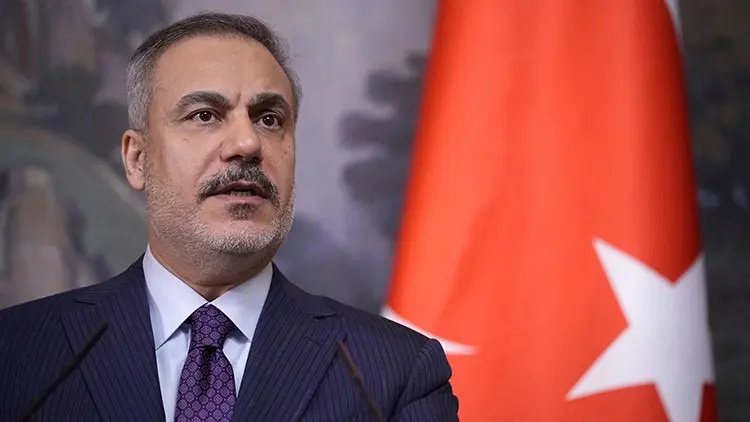
In a detailed policy assessment, Foreign Minister Hakan Fidan underscores that the defense pact between Turkey, Pakistan, and Saudi Arabia serves regional stability and remains open to all regional states committed to collective peace.
Turkish Foreign Minister Hakan Fidan has articulated an extensive strategic vision behind the newly forged Mecca Defense Alliance, framing the multilateral security initiative as a cornerstone of Turkey’s contemporary diplomatic doctrine and an indispensable mechanism for regional self-reliance. Writing in a comprehensive analysis for the November issue of AA Brifing, the monthly policy publication of Anadolu Agency, Fidan detailed how the trilateral pact signed between Turkey, Pakistan, and Saudi Arabia embodies the guiding principle of "regional solutions to regional problems."
In his article, titled "The Role of Regional Ownership in Our Foreign Policy: The Mecca Defense Alliance," the foreign minister emphasized that the initiative was deliberately engineered to bolster collective deterrence, thereby securing long-term regional stability amid intensifying geopolitical fragmentation. Fidan stressed that far from being an exclusive or insular bloc, the alliance is structurally inclusive, inviting participation from other regional nations that share a common vision of peaceful coexistence, sovereign integrity, and shared security responsibilities.
According to Fidan, the establishment of the alliance comes at a historical juncture characterized by severe friction within the global governance system, where the broader Middle Eastern geography finds itself situated directly at the epicenter of compounding systemic crises. In response to these vulnerabilities, Turkey, Saudi Arabia, and Pakistan formalized their strategic partnership through the "Mecca Agreement for Joint Defense," establishing a collaborative framework designed to shield regional assets, enhance defense capabilities, and project stability across adjoining geographies.
The Doctrine of Regional Ownership
At the core of Fidan’s analysis is the concept of "regional ownership"—a diplomatic and strategic philosophy that has increasingly defined Ankara’s foreign policy orientation over recent years. Fidan noted that the international community has entered an acutely painful phase of transition, marked by the systemic dysfunction of conventional global governance architectures. As legacy international institutions struggle or fail to mediate crises, prevent conflict, and enforce international law, the burden of stability falls increasingly on regional actors.
For decades, the Middle East and its adjacent maritime and terrestrial corridors have been vulnerable to external interventions, proxy competitions, and imported security paradigms that have often exacerbated local rivalries rather than resolving them. By contrast, the Mecca Defense Alliance is rooted in the conviction that sustainable peace cannot be imported from outside the region; it must instead be cultivated, institutionalized, and defended by the nations that directly inhabit it.
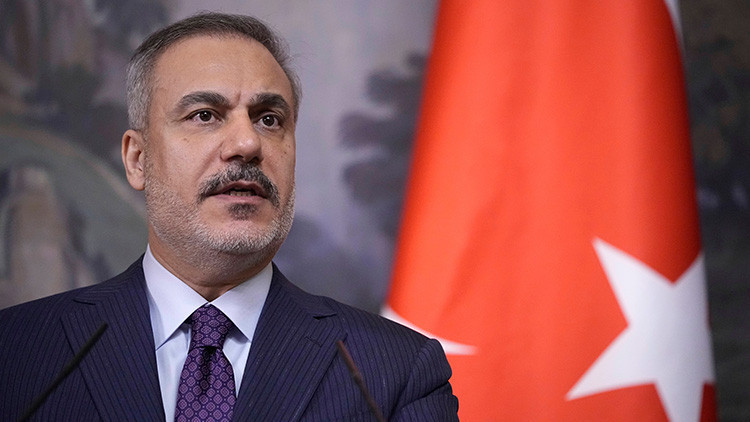
Fidan elaborated that the tripartite alignment among Turkey, Pakistan, and Saudi Arabia represents a practical manifestation of this philosophy. By coming together under the banner of the Mecca Agreement for Joint Defense, the three nations are seeking to pool their diplomatic, operational, and deterrence capabilities. The choice of Mecca as the conceptual and symbolic foundation of the pact reinforces the shared cultural, historical, and strategic affinities that link the participating states, while establishing an institutional baseline for future security cooperation.
Strengthening Deterrence to Anchor Regional Stability
Throughout the assessment, Fidan placed deliberate emphasis on the correlation between credible military deterrence and the preservation of peace. In the foreign minister’s assessment, deterrence is not an instrument of unilateral power projection or regional hegemony, but rather an essential prerequisite for preventing armed aggression, dissuading adventurism, and maintaining the territorial equilibrium necessary for diplomatic dialogue to flourish.
The security architecture envisioned under the Mecca Defense Alliance is designed to bridge critical defensive capabilities across the three partner states. By integrating aspects of strategic deterrence, the signatories aim to create a protective umbrella that deters regional escalation while allowing the constituent nations to concentrate their resources on domestic growth, technological sovereignty, and economic modernization.
Fidan noted that instability in one corner of the regional map inevitably reverberates across neighboring subregions, linking the strategic vulnerabilities of South Asia, the Persian Gulf, and the wider Eastern Mediterranean and Levant. By coordinating their defense posture through formalized channels, Turkey, Pakistan, and Saudi Arabia intend to neutralize security vacuums that might otherwise be exploited by non-state armed actors, external powers, or destabilizing regional dynamics.
An Inclusive Architecture Open to Regional Partners
A prominent theme running through Fidan’s contribution to AA Brifing is the non-exclusionary character of the Mecca Defense Alliance. While the initial agreement was forged among Turkey, Pakistan, and Saudi Arabia, Fidan underscored that the institutional framework is neither zero-sum nor directed against any specific state. Instead, it is conceived as an open architecture available to all regional countries willing to commit to the underlying principles of joint security and regional ownership.

Fidan explicitly stated that any regional state that aligns with the common vision of collective peace, mutual respect for sovereignty, and cooperative problem-solving can take its place within this framework. This open-door policy reflects Turkey’s broader approach to multilateralism, which favors comprehensive, dialogue-driven frameworks over rigid, confrontational military alignments.
By inviting neighboring states to participate in the mechanism, the founding members seek to gradually establish a broader regional security dialogue. The ultimate goal, as outlined in Fidan’s writing, is to foster an environment where regional states themselves arbitrate, de-escalate, and resolve local disputes, steadily diminishing the reliance on external security guarantees that historically carried destabilizing political conditionalities.
The Intersection of Four Strategic Foreign Policy Priorities
In defining the precise place of the alliance within Turkey’s grand strategy, Fidan characterized the initiative as the nexus of four major foreign policy priorities that steer Ankara’s international engagement.
First, the alliance is oriented toward the direct consolidation of regional peace and security through collaborative deterrence. By establishing a cooperative defense umbrella, the partner nations aim to reduce systemic vulnerabilities and avert potential conflicts before they manifest on the ground.
Second, the foreign minister pointed to the vital relationship between regional security and socioeconomic development. Fidan observed that genuine prosperity, cross-border commerce, infrastructure integration, and sustainable economic transformation cannot take root in an atmosphere plagued by persistent security threats. The Mecca Defense Alliance is thus viewed as an enabling foundation that protects trade corridors, secures energy transit routes, and builds the confidence required for cross-border investments across the Middle East, North Africa, and South Asia.

Third, Fidan highlighted the imperative to broaden and strengthen the institutional foundation of Turkey’s foreign relations. Rather than relying solely on ad-hoc crisis management or temporary bilateral understandings, the formalization of defense pacts such as the Mecca Agreement establishes institutionalized, predictable mechanisms for sustained cooperation. This legal and institutional framework enables the participating states to engage in routine joint consultations, coordinated planning, and long-term strategic alignment.
Fourth, Fidan situated the initiative within the ongoing transformation of the global system. As power balances shift toward a multipolar reality and international governance bodies face structural stalemates, the emergence of indigenous regional frameworks contributes directly to recalibrating the international order. By demonstrating that regional states can independently manage their security challenges and craft durable defense solutions, the alliance serves as a practical model for a more equitable, decentralized, and representative global governance architecture.
Navigating Global Turmoil and Looking Forward
Fidan’s detailed assessment offers rare insight into how Turkey interprets the current global geopolitical environment and its own evolving responsibilities within it. The foreign minister warned that the world is traversing an exceptionally precarious period, characterized by systemic erosion, geopolitical competition, and escalating regional flashpoints. In this volatile setting, passivity or over-reliance on traditional international arrangements represents a profound strategic vulnerability.
By advancing the Mecca Defense Alliance, Turkey and its partners seek to establish proactive instruments of stability tailored to the acute realities of the present decade. Fidan concluded his assessment by reaffirming Turkey’s unwavering commitment to shaping a foreign policy that pairs principled diplomacy with robust institutional capability, ensuring that regional actors assume primary responsibility for the future of their shared neighborhood.