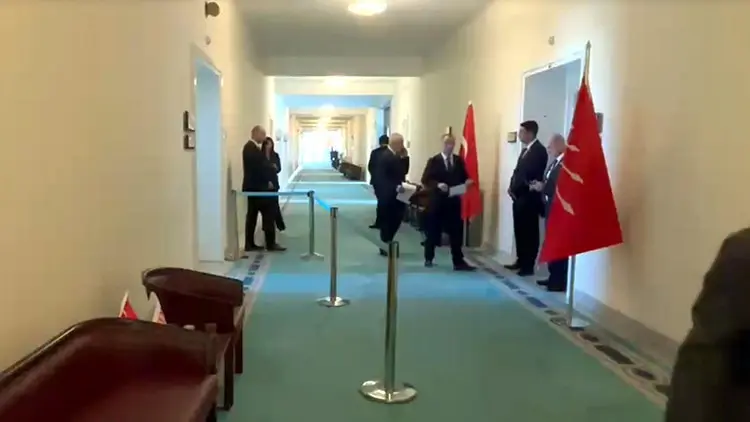
ANKARA — In an unusual development within the corridors of the Turkish Grand National Assembly (TBMM), a physical barrier has been established to manage the flow of traffic in the administrative wing of the parliament building. The measure, which involves the placement of security tape, was initiated by Murat Emir, the Group Deputy Chairman of the Yeni Parti (New Party), whose office is located directly across from that of former Republican People’s Party (CHP) Chairman Kemal Kılıçdaroğlu.
The decision to install the barrier tape serves as a response to the persistent and high volume of visitors congregating in the hallway, a phenomenon primarily driven by the continued political activity and public interest surrounding Kılıçdaroğlu. According to reports from the assembly, the sheer number of people seeking audiences, meetings, or simply a glimpse of the former opposition leader had begun to create significant logistical challenges, effectively obstructing the entrance to neighboring offices and hindering the daily operations of parliamentary staff.
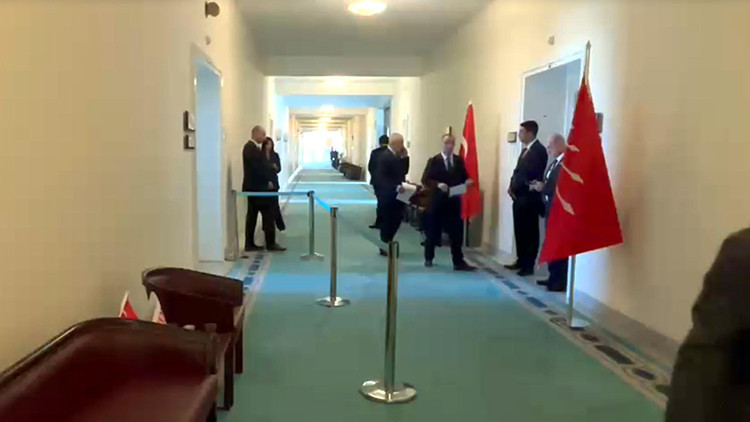
Murat Emir of the Yeni Parti Implements Corridor Restrictions Outside Kemal Kılıçdaroğlu’s TBMM Office
The physical layout of the Turkish Grand National Assembly is designed to facilitate a degree of proximity between various political factions, with offices for deputies and party leadership often situated in close quarters. However, this architectural openness has recently clashed with the practical realities of high-profile political life. Murat Emir, representing the Yeni Parti, found his workspace at the center of a bustling thoroughfare as supporters, delegations, and constituents flocked to the office of Kemal Kılıçdaroğlu.
The installation of the barrier tape is being characterized not as a political statement, but as a necessary administrative intervention. Sources within the parliament indicate that the corridor had become frequently impassable due to the density of the crowds. By sectioning off the area immediately in front of his office door, Emir aims to ensure that his staff and visitors can enter and exit the premises without having to navigate through the stationary crowds waiting for Kılıçdaroğlu.
The phenomenon of "visitor density" is a well-known aspect of life at the TBMM, yet it rarely reaches the level where physical barriers are required within the building’s internal hallways. Kemal Kılıçdaroğlu, despite transitions in party leadership, remains a figure of immense interest for a broad spectrum of the Turkish electorate. His office continues to serve as a hub for political consultations, grassroots engagement, and symbolic visits from various NGOs and local representatives from across the country.
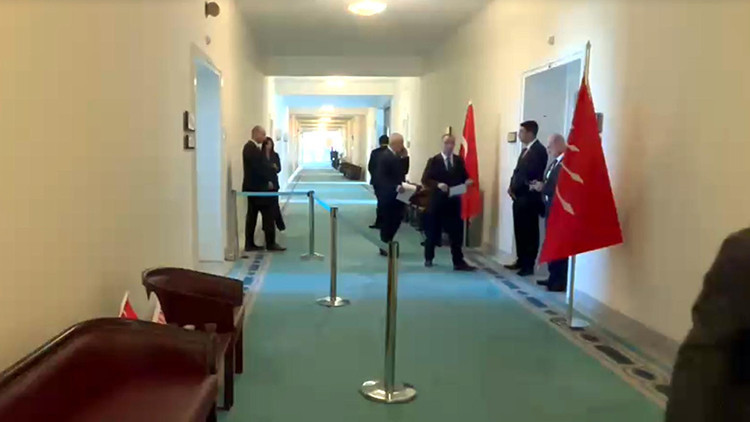
This sustained level of engagement has turned the narrow corridor into a de facto waiting room. On any given day, dozens of individuals may be found lining the walls, waiting for scheduled appointments or hoping for an impromptu word with the former CHP leader. While this reflects Kılıçdaroğlu’s enduring influence within the political landscape, it has placed a strain on the "neighboring" offices. For Murat Emir and the Yeni Parti delegation, the primary concern cited was the maintenance of a professional environment where official legislative business could be conducted without the constant interruption of a crowded hallway.
The use of barrier tape—typically seen at public events or crime scenes—inside the hallowed halls of the TBMM has drawn considerable attention from observers and the press. It highlights the unique challenges faced by the parliamentary administration in balancing the public’s right to access their representatives with the need for order and security. In the TBMM, the halls are meant to be spaces of movement and deliberation, but the magnetic pull of certain political figures can occasionally transform these transit zones into static points of congestion.
Administrative officials within the parliament have noted that while deputies are generally responsible for the management of their own office environments, the corridors fall under a broader jurisdiction. However, in cases where the overflow from one office begins to infringe upon the functional capacity of another, individual deputies sometimes take localized measures to preserve their workspace. The move by Murat Emir is seen as a pragmatic, albeit visually striking, solution to a persistent logistical bottleneck.

The situation also sheds light on the broader infrastructure of the Turkish Parliament. Built to reflect the dignity and openness of the republic, the TBMM often struggles to accommodate the modern reality of high-intensity political mobilization. When a figure of Kılıçdaroğlu’s stature maintains an active presence in the assembly, the existing visitor management systems are often tested to their limits. The "visitor intensity" mentioned in the initial reports is a testament to a political culture that prizes face-to-face interaction with leaders, a tradition that frequently results in overcrowded legislative buildings.
The Yeni Parti, for which Murat Emir serves as Group Deputy Chairman, is a relatively new entity in this environment, and establishing its own operational rhythm is essential for its legislative goals. Having an office located at a "crossroads" of political traffic presents both opportunities for visibility and challenges for productivity. By demarcating a clear boundary with the barrier tape, Emir’s office is attempting to signal a distinction between the public gathering space and the private workspace of the party leadership.
As the news of the barrier spread through the capital, it sparked discussions regarding the etiquette of parliamentary office management. Some observers noted that the incident underscores the need for more robust visitor centers or designated meeting areas within the TBMM complex to prevent such congestion in the future. Until such structural changes occur, however, individual offices are likely to continue employing ad hoc measures to manage the flow of the public.

There have been no official reports of friction between the offices of Murat Emir and Kemal Kılıçdaroğlu regarding this measure. Instead, the focus remains on the logistical necessity of the barrier. The tape serves as a visual guide, encouraging visitors to remain within the designated areas of the corridor and leaving a clear path for those needing to access the Yeni Parti’s headquarters.
In the fast-paced world of Turkish politics, even the smallest changes in the physical environment of the parliament can be seen as reflective of larger trends. The density of the crowd outside Kılıçdaroğlu’s door speaks to his continued relevance and the loyalty of his base, while the barrier tape outside Emir’s door speaks to the growing pains of a legislative body trying to maintain order amidst shifting political dynamics.
The TBMM security and administrative departments have not yet issued a formal statement on whether such barriers will be permitted to remain as a permanent fixture or if a more integrated solution for crowd control will be implemented. For now, the tape remains a testament to the bustling, often chaotic nature of Turkish democracy, where the path to a politician’s door is frequently paved with a sea of constituents.

As the legislative session continues, the situation in the corridor will likely be monitored by parliamentary ushers and security personnel. The goal remains to ensure that the Turkish Grand National Assembly remains a place where the people can meet their representatives, but also where those representatives can carry out the work of the nation without undue hindrance. The small strip of tape in the hallway is a reminder that in the heart of Ankara, politics is not just about speeches and votes, but also about the physical space where those ideas meet the public.