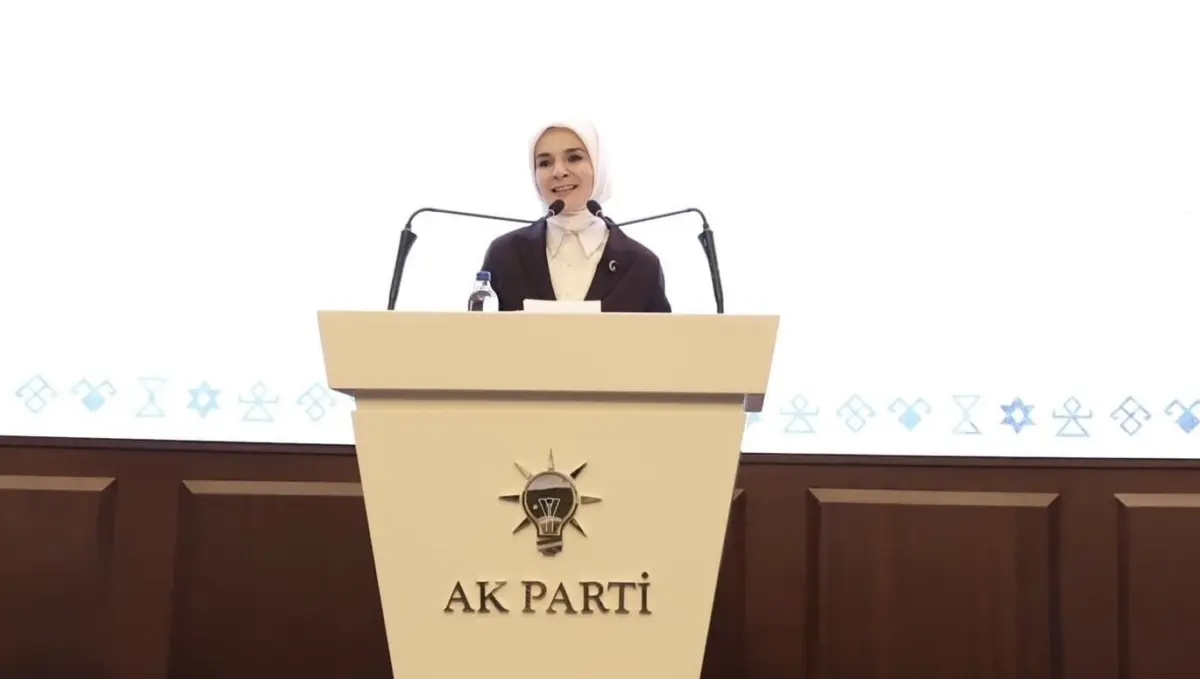
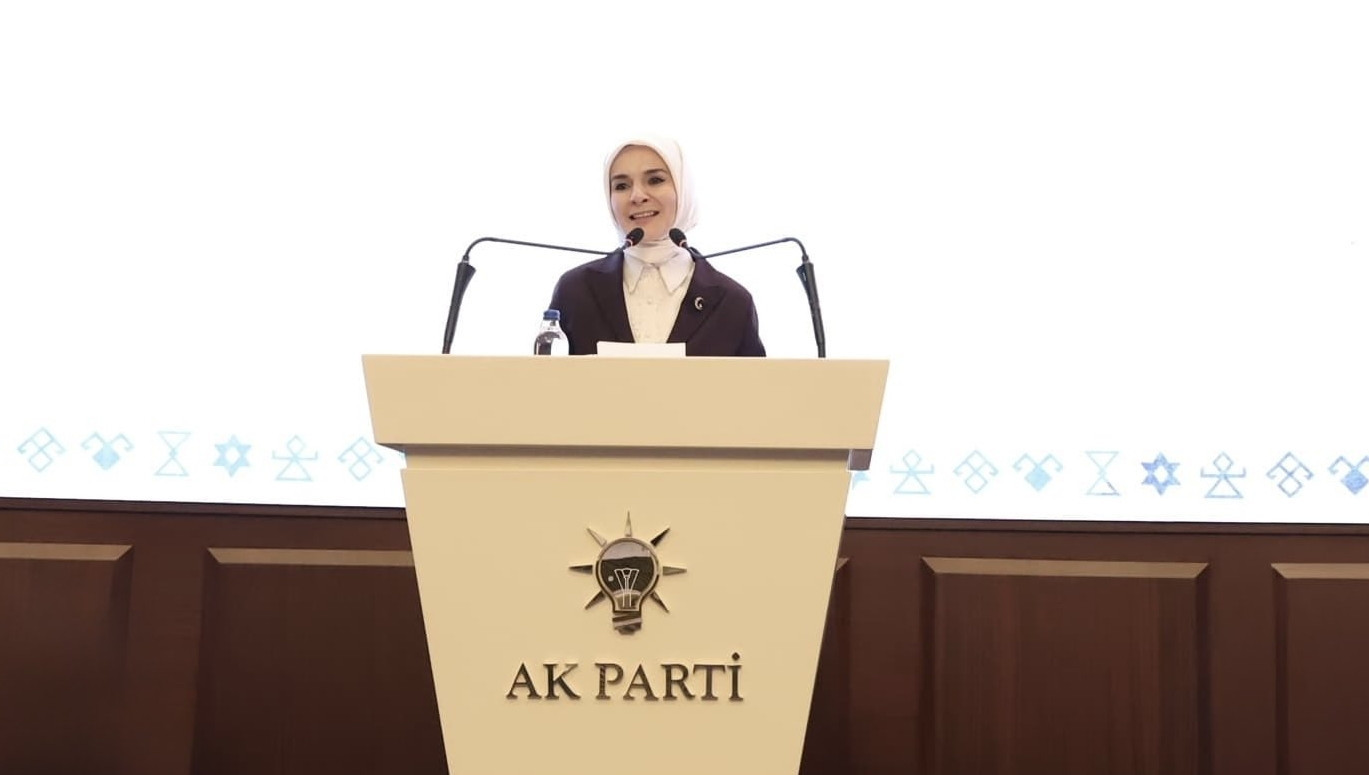
ANKARA — In a significant gathering that brought together female leaders and representatives from across the Turkic world, Mahinur Özdemir Göktaş, Turkey’s Minister of Family and Social Services, delivered a powerful address emphasizing the foundational role women have played in Turkish history and statecraft. Speaking at the "Being a Woman in Politics: Our Stories, Our Struggle, and Our Common Future" program, Minister Göktaş asserted that the participation of women in governance is not a modern innovation but a return to the historic roots of the Turkish people.
The event, organized by the AK Party Headquarters Women’s Branch in Ankara, served as a platform for dialogue among women from various member states of the Organization of Turkic States (OTS). The program focused on the challenges, successes, and future trajectories of women in the political sphere, framing their involvement as a critical component of national and regional development.
“In our history, women have been present in the founding will of the state since the very beginning,” Minister Göktaş told the audience. “Today, under the leadership of our President, Mr. Recep Tayyip Erdoğan, we are making this will even stronger at every level of politics.”
The program was attended by high-profile figures, including Tuğba Işık Ercan, the Head of the AK Party Headquarters Women’s Branch, and Kürşad Zorlu, the AK Party Deputy Chairman responsible for Relations with Turkic States. The audience included a diverse delegation of visitors from across the Turkic world, representing a shared cultural and political heritage that spans from Central Asia to the Mediterranean.
‘Our Shared Story is the Same’
During her keynote speech, Minister Göktaş drew upon the geographical and cultural breadth of the Turkic world to emphasize unity. She noted that while the participants came from different landscapes—from the shores of the Caspian Sea to the foothills of the Tian Shan Mountains, and from the heart of the Mediterranean—their underlying experiences as women in leadership remained deeply interconnected.
“This evening in Ankara, we are the children of a large family whose roots are one, gathered under the umbrella of the Organization of Turkic States,” the Minister said. “The melodies of our languages may differ, but the story we tell is the same. It is the story of women who draw strength from their roots and look to the future with hope.”
Minister Göktaş highlighted that the current gathering was the culmination of a long-term diplomatic and social effort to integrate family and women’s issues into the core agenda of the Turkic world. She recalled the milestones of this journey, starting with the 1st Social Policy Ministers Meeting held in Istanbul in 2024 under the leadership of her Ministry. That meeting marked the first time social policies were explicitly placed on the agenda of the Organization of Turkic States.
The momentum continued in 2025 with the second meeting in Baku, Azerbaijan, which focused specifically on women’s themes and the sharing of institutional experiences. Göktaş noted that this year’s summit, held under the theme of “Unity in Language, Thought, and Work”—a famous motto of Turkic intellectual İsmail Gaspiralı—saw the inaugural steps of the Family and Woman Council. This council is intended to serve as a permanent body to coordinate policies regarding the empowerment of women and the protection of the family unit across member states.

The Responsibility of Representation
Reflecting on her own political career, Minister Göktaş shared personal anecdotes about the weight of representation. Before her appointment as a minister in Turkey, Göktaş made history as the first woman to wear a headscarf in a European parliament, having been elected to the Brussels Parliament in her twenties.
“If you ask what it means to be a woman in politics, my first answer would be this: being at the table and carrying to that table not only your own voice but the words of those whose voices are not heard,” she explained.
She recalled her early days in the Brussels Parliament, stating that every time she took the podium, she felt the presence of countless women who did not have the same platform. “I knew I was not speaking only for myself. I was carrying the words of many women whose voices could not reach that hall.”
Minister Göktaş argued that this concept of female participation is deeply embedded in the ancient Turkic political tradition. She referenced the Orkhon Inscriptions—the oldest known written records of the Turkic people—noting that when the resurrection and reorganization of the state are described, the name of Ilbilge Hatun is mentioned alongside Ilterish Qaghan.

“This means that in our history, the woman was there at the very inception of the state’s executive power,” Göktaş said. “We are not introducing something foreign to our culture; we are revitalizing a strength that has always been part of our identity. Under the leadership of President Erdoğan, we have transformed this historical awareness into a modern political reality, ensuring women are active participants in every decision-making process.”
‘A Common Path for a Common Root’
A significant portion of the Minister’s speech was dedicated to the practical requirements of empowering women in the modern world. She argued that political representation cannot be separated from economic participation, education, and social support systems.
“Being at the table brings a great responsibility, and fulfilling that responsibility requires education. It requires being part of the workforce. It requires being part of decision-making processes,” Göktaş stated.
She emphasized that the Ministry of Family and Social Services views the harmonization of work and family life not just as a policy heading, but as a fundamental social necessity. According to Göktaş, a woman who knows her children are safe and who can balance her professional duties with her family responsibilities becomes a much more powerful voice in society.

“Strengthening care services and making work and family life compatible is more than just a bureaucratic goal for us,” she said. “Because we know very well that a supported woman takes her place in society more easily.”
The Minister praised the stories of women who traveled from Kazakhstan, Kyrgyzstan, Uzbekistan, and the Turkish Republic of Northern Cyprus (TRNC) to attend the program. She noted that while each woman’s journey was born from a different field and a different struggle, they all shared the same courage and faith.
“These stories will be the greatest wealth of the Council we are establishing,” Göktaş concluded. “Because for those whose roots are one, the path is also one.”
The "Being a Woman in Politics" program concluded with a series of panel discussions where representatives from the visiting Turkic delegations shared their own national experiences regarding women’s rights and political participation. The event was seen as a major step forward in the institutionalization of the Family and Woman Council within the Organization of Turkic States, signaling a new era of regional cooperation focused on social development and gender equality.
As the program ended, the participants emphasized the importance of maintaining this dialogue to ensure that the "common story" of Turkic women continues to evolve into a shared future of political and social influence. The Ministry of Family and Social Services indicated that it would continue to lead these efforts, using Turkey’s own legislative and social models as a basis for further collaboration within the Turkic world.