A catastrophic collision between a passenger minibus and a heavy commercial truck on a major transit corridor west of the Egyptian capital has left at least 10 people dead and 24 others injured, according to initial reports.
CAIRO — A violent collision between a passenger minibus and a commercial freight truck on a major highway interchange west of Cairo has left at least 10 people dead and 24 others injured, according to an official statement issued by the Egyptian Ministry of Health and Population. The disaster, which unfolded at a critical junction connecting regional transit routes in the Giza Governorate, represents one of the deadliest road traffic incidents reported on the perimeter of the capital region in recent months.
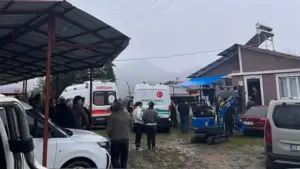
Emergency medical services, civil defense teams, and traffic authorities were dispatched immediately to the crash site after receiving reports of a mass casualty collision involving a public passenger carrier and a heavy transport vehicle. Initial assessments provided by health authorities confirmed that 10 individuals succumbed to catastrophic injuries at the scene or during initial transport to emergency facilities. Among the 24 survivors who sustained injuries of varying severity, at least 10 were listed in unstable and critical condition, prompting healthcare authorities across the region to enter an emergency response posture.
The Ministry of Health announced that specialized trauma teams, surgical units, and support staff across local receiving hospitals were placed on high alert. The ministry confirmed that all available logistical and medical resources were being mobilized to treat the wounded, including the rapid provisioning of essential pharmaceuticals, blood units, plasma bags, and emergency surgical supplies to prevent further loss of life among the severely wounded.
Disaster at the Intersection of Key Arterial Highways
The collision occurred within the administrative boundaries of the 6th of October district, situated in the Giza Governorate west of central Cairo. Specifically, the crash took place in the district’s Second Zone, at the major interchange where the Middle Ring Road intersects with the regional Dabaa Road corridor.
The intersection serves as a pivotal nexus for both daily metropolitan commuters and long-distance commercial freight. The Middle Ring Road forms a massive multi-lane arterial loop designed to channel vehicular traffic around the periphery of the Greater Cairo conurbation, linking satellite cities and industrial sectors while bypassing congested inner-city avenues. Meanwhile, the Dabaa corridor functions as a high-speed regional route extending northwest from the Cairo metropolitan fringe toward the Mediterranean coast, frequently utilized by heavy transport trucks, intercity logistics fleets, and regional commuters.
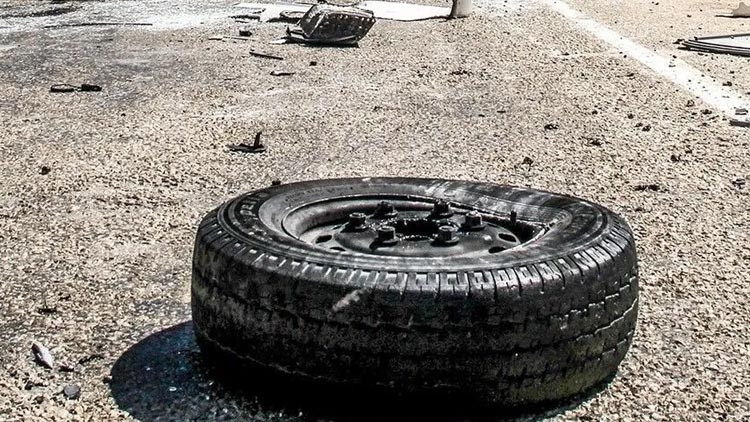
According to preliminary official information, the two vehicles collided with severe force as the minibus, which was carrying passengers along a commuter route, crossed paths with a large freight truck traveling along the interchange. The impact tore through the passenger compartment of the minibus, crumpling the lighter chassis and trapping numerous passengers inside the wreckage. The structural disparity between a heavy multi-axle commercial truck and a standard commuter minibus resulted in extensive devastation, leaving emergency crews with complex extrication challenges upon their arrival.
Dozens of ambulances were mobilized to the crash site to establish a field triage protocol, prioritize patients based on trauma severity, and coordinate urgent transfers to the nearest equipped medical facilities in Giza and the 6th of October urban center. First responders worked amid heavy highway debris to stabilize victims suffering from acute polytrauma, head injuries, internal hemorrhaging, and complex fractures before expediting transport to intensive care units.
Emergency Mobilization Across Regional Hospitals
Following the scale of the disaster, the Egyptian Ministry of Health and Population activated an integrated medical crisis management plan. Hospital administrations in the western metropolitan area were instructed to clear surgical suites, ensure the immediate availability of operating rooms, and recall off-duty trauma surgeons, orthopedic specialists, and anesthesiologists.
The ministry affirmed that regional blood supply networks were instructed to direct sufficient stocks of all blood types and blood components directly to the receiving clinical centers. Blood banking centers coordinated immediate transfers to replenish emergency department inventories as surgical teams commenced urgent interventions on patients arriving in hemorrhagic shock.
Particular clinical focus has been directed toward the 10 patients whose conditions were categorized as medically unstable. These victims sustained severe injuries typical of violent high-speed kinetic collisions, including crushed limbs, traumatic brain injuries, and chest trauma. The health ministry assured that medical teams were monitoring vital parameters continuously, utilizing advanced intensive care and life-support monitoring systems to navigate the critical 48-hour post-trauma period.
Family members of commuters known to travel the 6th of October transit corridors gathered outside local emergency departments and morgue facilities seeking information about their loved ones. Social workers and hospital liaison personnel were assigned to assist families with identification processes and provide updates regarding patients undergoing surgery or receiving care in intensive care units.
The Role of Commuter Minibuses in Greater Cairo Transit
The tragedy once again underscores the heavy reliance of millions of residents on informal and semi-formal passenger minibuses across Greater Cairo’s sprawling urban footprint. The satellite community of 6th of October City, established decades ago as an industrial and residential hub in the desert west of the Nile, is home to hundreds of thousands of workers, students, and families who commute daily to and from central Cairo, Giza, and neighboring production zones.
While the city is connected to the metropolitan core by a network of modern highways, public transportation needs are predominantly met by microbuses and medium-capacity passenger vans. These vehicles offer an indispensable, low-cost, and frequent transit service, navigating regional highways at high intervals throughout the morning and evening rush periods.
However, the intersection of small, high-occupancy passenger vans with massive commercial transport vehicles on high-speed ring roads presents ongoing operational hazards. Commercial logistics vehicles, carrying raw materials, manufactured goods, and construction supplies, share the same thoroughfares with high-density commuter transport, creating continuous disparities in acceleration, braking distances, and vehicle mass.
The interchange between the Middle Ring Road and the Dabaa Road carries substantial traffic volumes throughout the day and night. Despite extensive infrastructure upgrades designed to streamline vehicular movement and eliminate bottlenecks, the sheer volume of mixed traffic creates complex navigational demands for drivers transitioning between high-speed straightaways and interchange feeder lanes.

Infrastructure Development and Road Safety Context
Over the past decade, Egypt has engaged in an ambitious, multi-billion-dollar national road development initiative aimed at transforming the country’s transportation infrastructure. Thousands of kilometers of new expressways, expanded bypasses, elevated bridges, and ring corridors have been constructed across the nation, specifically surrounding the Greater Cairo urban core.
The development of projects like the Middle Ring Road and the regional Dabaa highway system was intended to alleviate chronic congestion inside central Cairo, reduce transit times between governorates, and provide heavy transport vehicles with direct bypass routes around dense residential quarters. These multi-lane highways feature improved pavement engineering, modern signage, and expanded lane capacity compared to older arterial roads.
Nevertheless, road traffic accidents remain a prominent public safety concern in Egypt. While official statistics have indicated declines in overall incident frequency following recent highway modernization projects, severe collisions involving public passenger transport and heavy freight haulers continue to pose severe challenges.
Traffic safety experts and urban planners frequently observe that while infrastructure expansion significantly increases traffic speed and capacity, long-term safety improvements depend equally on robust regulatory enforcement, strict speed compliance, regular technical inspections of commercial and passenger fleets, and effective management of lane discipline for heavy freight vehicles. When collisions occur on modern high-speed expressways, the elevated kinetic energy involved often increases the likelihood of catastrophic outcomes and mass casualties.
Aftermath and Recovery Operations
In the hours following the crash, traffic police and emergency recovery vehicles moved heavy crane equipment to the 6th of October intersection to clear the crushed minibus and remove the damaged freight truck from the roadway. Highway management crews cleared scattered debris, fuel spills, and vehicular fragments to restore normal traffic flow on the Middle Ring Road and Dabaa link, preventing secondary accidents on the busy transit artery.

Specialized investigative personnel were dispatched to the site to document physical evidence, assess roadway conditions, examine skid patterns, and evaluate vehicle mechanics to ascertain the sequence of events leading up to the catastrophic impact.
As the physical site was cleared, the primary focus of provincial and national authorities remained fixed on the survival and recovery of the injured passengers fighting for their lives in trauma wards. The Egyptian Health Ministry reiterated that all state resources necessary to maintain comprehensive intensive care, post-surgical rehabilitation, and psychiatric support for survivors would remain fully deployed until patient conditions stabilize.