For many households, the realization that a water purification system is necessary often begins with a sensory experience. It might be the metallic tang in a morning cup of coffee, the persistent white film of limescale on a tea kettle, or the faint scent of chlorine emanating from the kitchen tap. While these issues are common, the solution is rarely universal. Experts in the field are increasingly emphasizing that the "best" water purification device is not a one-size-fits-all product found on a shelf, but rather a system specifically calibrated to the unique chemical and physical profile of the water entering a particular building.
The modern market for water treatment has shifted away from the simplistic marketing of "more filters equal better water." Instead, industry professionals point toward a data-driven approach where the selection process begins with a comprehensive analysis of the water source. Whether a home is connected to a municipal city network or relies on a private well, the technology required to achieve potability and high-quality taste varies significantly. When the correct system is installed based on accurate data, the difference in water quality is typically noticeable within the first few days of use, manifesting in improved flavor profiles for food and beverages and a reduction in sediment buildup on plumbing fixtures.
Defining the "Best" Through Technical Precision
The pursuit of the ideal water purification system often leads consumers toward products boasting high filter counts. However, experts argue that the number of stages is secondary to the technology used within those stages. A system with twelve filters that are poorly matched to the local water’s Total Dissolved Solids (TDS) level may perform worse than a five-stage system designed specifically for high-hardness environments. Therefore, the "best" device is defined as the one that aligns the treatment technology with the specific drinking and usage needs of the consumer, balanced against the chemical analysis of the local water.
Before a decision is made, several foundational questions must be answered regarding the water source. If a household is utilizing city network water, the primary concerns are usually residual chlorine, sediment from aging infrastructure, and a moderate balance of dissolved minerals. Conversely, those using well water or variable sources must contend with more complex issues, such as fluctuating hardness levels, iron or manganese content, and potential microbiological risks. Without establishing these parameters through a TDS and hardness test, any investment in a purification system carries the risk of either failing to provide the desired water quality or incurring unnecessarily high maintenance costs and efficiency losses.
The Critical Framework for System Selection
To navigate the complexities of water treatment, a specific checklist of criteria has emerged as the industry standard for making an informed purchase. This framework includes water analysis, target quality, flow rate sustainability, and long-term maintenance logistics. For users whose water source is inconsistent, the durability of the system becomes just as important as its initial purification performance. In these scenarios, the focus shifts to how the system will perform in "real-world" conditions over several months, rather than just its laboratory-tested capabilities.
Water analysis serves as the bedrock of this selection process. By measuring parameters such as hardness, TDS, and the presence of heavy metals or chlorine, a technician can determine which membranes and filters are necessary. For instance, active carbon filters are essential for addressing odor and taste issues by absorbing organic compounds and chlorine. Meanwhile, membrane-based systems, such as reverse osmosis, are required when the goal is to significantly reduce dissolved solids and minerals to achieve a specific level of purity.
Beyond the chemistry, the physical requirements of the household play a vital role. One of the most frequent complaints among users of purification systems is a "slow flow" at the tap. This issue is often a result of a mismatch between the system’s daily production capacity and the household’s peak demand. To avoid this, consumers are encouraged to inquire about the actual flow rate (debi) and ensure that the storage tank and pressure settings are optimized for their specific usage patterns, including cooking, drinking, and general utility needs.
Tailoring Solutions to Specific Environmental Scenarios
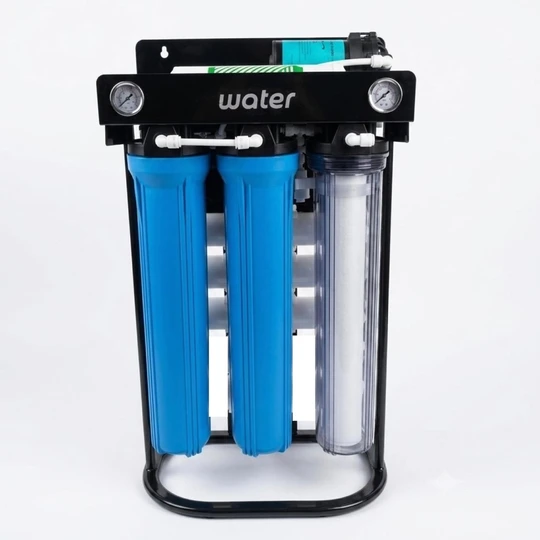
The application of purification technology changes dramatically depending on the environment. In a standard urban setting, where the goal is typically to balance the mineral content and remove the "chemical" taste of municipal treatment, a combination of sediment pre-filters, high-quality carbon blocks, and a standard reverse osmosis membrane is usually sufficient. In this scenario, the objective is a "balanced" water profile—one that is safe and pleasant to drink but retains enough character for a high-quality tea or coffee experience.
However, the challenge increases significantly when dealing with well water or independent sources. These sources are often prone to high turbidity and varying mineral loads. In such cases, the priority shifts to robust pre-treatment. If a system does not include adequate sediment control to protect the sensitive reverse osmosis membrane, the membrane will likely clog or degrade prematurely. This not only leads to a drop in water quality but also increases the frequency and cost of filter replacements. For these users, a system that emphasizes membrane protection and stabilized performance is the only sustainable choice.
There are also specialized scenarios where traditional grid-connected systems are not viable. For off-grid living or areas with limited energy infrastructure, solar-powered pure water purification units have become a transformative solution. These systems allow for independent water production by integrating energy-efficient filtration with renewable power sources. Similarly, for applications requiring laboratory-grade water—where the purity must meet specific scientific standards—the configuration of consumables and filters must be even more precise. In these high-stakes environments, the definition of "purity" must be established at the outset to ensure the system configuration can meet the required target values consistently.
The Economic Reality of Long-Term Maintenance
While the initial purchase price of a water purification device is a major factor for most consumers, the true cost of ownership is determined by the maintenance cycle. A common pitfall in the selection process is ignoring the accessibility and cost of replacement filter cartridges. A device that appears to be a bargain initially may use proprietary filters that are expensive or difficult to source, leading to a situation where the system is eventually abandoned or operated with expired, ineffective filters.
Sustainable water purification requires a clear understanding of the service intervals. This includes knowing how often the pre-filters, membranes, and post-carbon filters need to be changed based on the volume of water processed. Furthermore, the availability of authorized service providers is a critical component of the "best" system. A high-performance device is only as good as the technical support behind it; if a leak occurs or the pressure drops, having a reliable service network ensures the system continues to provide safe water without long periods of downtime.
Waste water management is another economic and environmental consideration. All membrane-based purification systems produce a certain amount of "reject water" as part of the filtration process. Modern, high-quality systems are designed to optimize this ratio, ensuring that the amount of water sent to the drain is minimized. Consumers are increasingly looking for systems that balance high-purity output with responsible water usage, a factor that is often overlooked in lower-end models.
Conclusion: Moving Beyond the "Multi-Filter" Trap
The evolution of home water treatment has reached a point where "the best" is no longer a subjective claim made by manufacturers, but a measurable result of correct engineering. By focusing on the synergy between water analysis and technological application, households can avoid the common mistake of confusing sheer capacity with actual necessity. Whether the goal is to protect a family from contaminants, improve the longevity of kitchen appliances, or achieve a specific water profile for culinary purposes, the path to the ideal system is paved with data rather than marketing slogans.
Ultimately, a successful water purification strategy is one that views the device as a long-term utility rather than a one-time purchase. By establishing the source quality, defining the target purity, and planning for sustainable maintenance, consumers can transform the "best" purification claim into a reality that delivers consistent, high-quality water for years to come. In an era where water quality is increasingly variable, this personalized approach is the only way to ensure that the water flowing from the tap meets the highest standards of safety and taste.