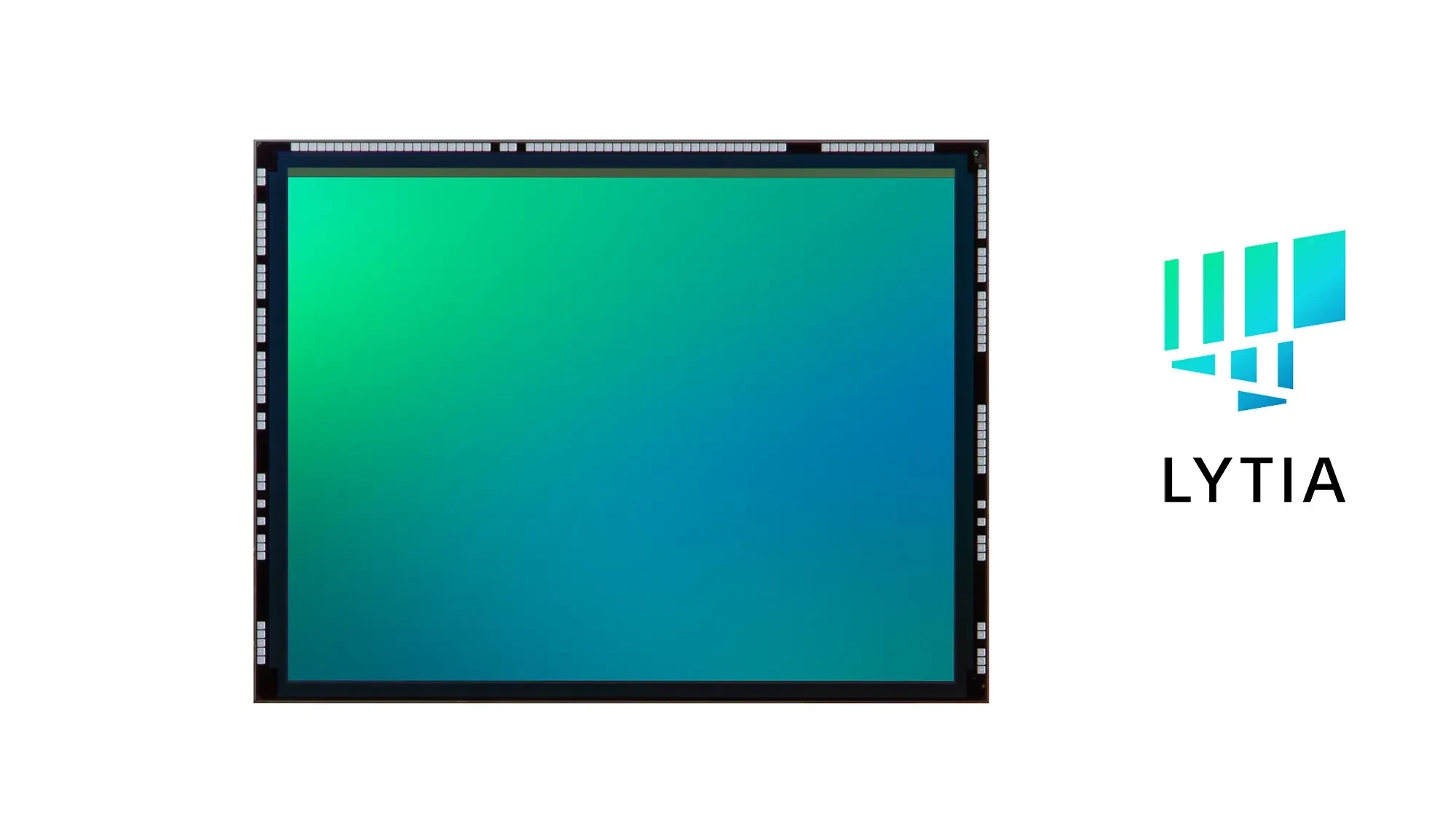
Sony has officially detailed its latest mobile image sensor, the LYTIA 720, marking a significant hardware progression designed to elevate smartphone photography in challenging lighting conditions. Packing a 50-megapixel resolution into a stacked CMOS architecture, the new sensor incorporates targeted architectural enhancements intended to overcome one of mobile imaging’s persistent hurdles: digital noise in low-light environments.
As mobile photography continues to serve as a primary battlefield for smartphone manufacturers, hardware innovations focused on image fidelity, dynamic range, and noise control remain critical. Sony’s LYTIA lineup represents the company’s dedicated brand identity for mobile image sensors, consolidating its imaging technologies into a clear product structure for mobile hardware integration. The LYTIA 720 arrives as a direct refinement in this family, constructed around a widely adopted 1/1.56-inch optical format.
This specific sensor size has emerged as a balanced standard among mobile device designers seeking an effective compromise between physical hardware footprint, optical performance, and light-gathering capability. Featuring an individual pixel pitch of 1.0 micrometers (µm) and supported by a Quad Bayer color filter array, the LYTIA 720 is engineered to operate primarily as a main camera sensor in modern smartphone camera modules, where demand for consistent image quality across diverse lighting conditions is highest.
Sony LYTIA 720 Features and Technical Details
The defining technical advancement of the LYTIA 720 lies in its low-light performance improvements compared to its predecessor, the LYTIA 700. According to official performance metrics released by Sony, the new sensor achieves a 50 percent reduction in random image noise.
In digital image sensors, random noise manifests as random intensity and color fluctuations—frequently visible as grain or visual speckling—especially in shadow areas and dark scenes where light signals are minimal. Reducing this noise at the hardware level allows digital cameras to deliver clearer images with cleaner dark tones and better retention of fine textural detail without relying entirely on aggressive software-based noise suppression, which can sometimes smudge subtle textures.
A core component enabling this 50 percent noise reduction is Sony’s Ultra High Conversion Gain (UHCG) circuitry. In digital sensor operation, light-sensitive photodiodes convert incoming photons into an electrical charge. This accumulated electrical charge must then be converted into a readable voltage signal before being processed by analog-to-digital converters.
Under low-light conditions, the total charge generated by the photodiodes is extremely small. If the conversion gain—the ratio at which charge is translated into voltage—is low, the subtle signal can be overwhelmed by electronic read noise inherent to the sensor’s internal circuits. By integrating UHCG technology, the sensor significantly increases the voltage output produced per unit of charge directly at the pixel node. This boost in signal strength prior to readout effectively elevates the useful image signal high above the baseline circuit noise, yielding a cleaner image signal before further digital processing takes place.
The implementation of UHCG addresses a structural limitation of smartphone camera design. Because smartphone body profiles place tight constraints on lens thickness and camera module depth, physical sensor dimensions cannot expand indefinitely without creating large, protruding camera humps or adding significant bulk to handheld devices. As a result, engineering advances that maximize light-conversion efficiency within standard optical formats, such as the 1/1.56-inch class, are critical for delivering generation-over-generation image quality improvements.
By minimizing hardware-level noise, the LYTIA 720 preserves fine details in the darker regions of a frame that might otherwise be lost to grain or smoothed away by aggressive computational post-processing algorithms. The sensor is built specifically to serve as the primary imaging unit in smartphones, where users expect high reliability and sharp results across daytime, interior, and nighttime shooting conditions.
Advanced Video and HDR Performance Capabilities
Beyond static photography and low-light noise reduction, the LYTIA 720 introduces expanded capabilities for video capture and high dynamic range (HDR) performance. The sensor features Hybrid Frame-HDR technology, enabling a dynamic range of up to 100 dB.
Dynamic range measures the total luminance span between the darkest shadows and the brightest highlights that an image sensor can simultaneously record without clipping light details or crushing dark regions into solid black. A dynamic range capability reaching 100 dB provides substantial latitude when photographing high-contrast subjects, such as indoor settings with bright exterior windows or sunset landscapes where lighting ratios vary dramatically across the scene.
To achieve this expanded range, the sensor’s Hybrid Frame-HDR system merges Dual Conversion Gain-HDR (DCG-HDR) readout data with supplementary short-exposure frames. Dual Conversion Gain allows the sensor to read out pixel data through two distinct gain paths simultaneously within a single frame—one path calibrated for deep shadow detail and the other for high-brightness areas. By combining this simultaneous dual-gain readout with high-speed short-exposure data, the sensor balances intense highlights and deep shadow tones across the image area, preventing blown-out skies while maintaining visibility in shaded subjects.
Video recording capabilities on the LYTIA 720 reflect similar performance considerations across different shooting modes:
- 4K HDR Video: When HDR processing is activated, the sensor supports 4K video recording at up to 60 frames per second (FPS). This enables high-resolution, high-dynamic-range video capture with smooth motion playback for standard frame-rate production.
- 4K Standard Video (Non-HDR): When operating in standard dynamic range mode without active HDR frame combining, the sensor unlocks 4K video recording at up to 120 FPS. This high frame rate provides expanded options for slow-motion playback and crisp temporal tracking of fast-moving action.
The support for 4K video at 120 FPS is particularly valuable for fast-action recording, allowing smooth rendition of high-speed movement without visual tearing or excessive motion blur.
Autofocus performance is supported through a full-pixel autofocus mechanism. By utilizing all individual pixels across the 50-megapixel matrix for phase-detection autofocus assessment, the sensor provides comprehensive focus coverage across the frame. This facilitates fast focus acquisition and reliable tracking of moving subjects during both static photograph capture and high-resolution video recording. Additionally, the sensor supports continuous still-image capture at its full 50-megapixel resolution at speeds up to 30 frames per second, allowing fast burst shooting for action photography without sacrificing frame resolution.
Sony has not yet officially disclosed which smartphone manufacturers will be the first to incorporate the LYTIA 720 into commercial consumer devices. However, the company has confirmed that mass production shipments of the new 50-megapixel sensor are scheduled to begin in November 2026.
The timeline places the physical rollout of the hardware late in the 2026 calendar year, positioning it for potential integration into upcoming device cycles. As mobile manufacturers continue to balance raw sensor specs with computational imaging pipelines, hardware enhancements such as lower signal-to-noise ratios, hardware-level UHCG circuits, and multi-frame HDR methods remain fundamental building blocks for next-generation mobile camera systems.