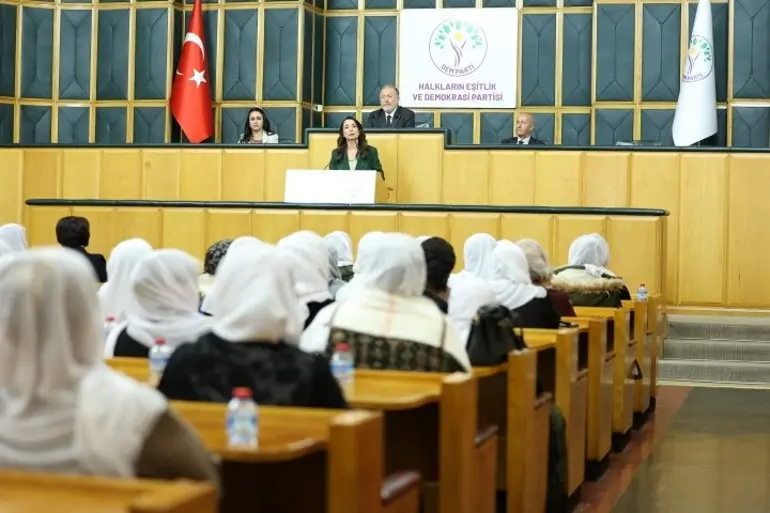
ANKARA — In a comprehensive address during her party’s parliamentary group meeting at the Turkish Grand National Assembly (TBMM), DEM Party Co-Chair Tülay Hatimoğulları provided a detailed roadmap of her party’s current political stance, focusing heavily on the "Urban Consensus" (Kent Uzlaşısı) model and the ongoing developments regarding the Kurdish issue. Speaking to deputies and the press on November 3, 2026, Hatimoğulları emphasized that the party remains firmly rooted in the principles of local inclusivity while simultaneously demanding that the state take concrete steps toward a sustainable peace process.
The Co-Chair’s remarks come at a pivotal moment in Turkish politics, as the DEM Party seeks to transition its electoral successes into a structured governing philosophy at the local level. Hatimoğulları’s speech touched upon several critical themes, ranging from the legal status of former party leaders to the specific conditions of Abdullah Öcalan’s detention and the role of the national parliament in monitoring potential peace initiatives.
The Philosophy and Future of the ‘Urban Consensus’
Central to Hatimoğulları’s address was the concept of the "Urban Consensus," a strategic framework that the DEM Party utilized to navigate the complexities of local representation. Hatimoğulları clarified that for her party, this is not merely a temporary electoral alliance but a fundamental pillar of their political identity.
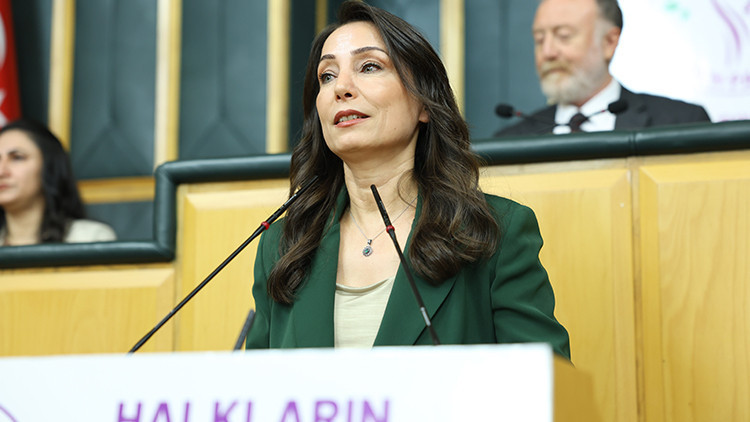
"We stand firmly on the ground of the Urban Consensus," Hatimoğulları told the assembly. "From our perspective, the Urban Consensus represents a formation that will produce answers to the needs of a city by bringing together all the diverse elements and differences within that city. We remain in the same place we started."
The Co-Chair addressed recent shifts in municipal council memberships, which have seen representatives elected under the consensus umbrella moving to join the DEM Party’s formal groups. She framed this transition as a natural progression of the political process rather than a departure from their collaborative goals. Hatimoğulları noted that following the separation of the "New Party" from the Republican People’s Party (CHP), many council members had migrated to the New Party, leading to a physical reorganization of political groups within municipal assemblies.
"We have decided to continue our work within our own group by transitioning our members to their rightful place," Hatimoğulları explained. "This decision is one that will actually sustain our understanding of the Urban Consensus. This approach is about being the voice, the breath, and the spokesperson for a strategy that responds to all the needs of the city. We stand behind our Urban Consensus approach, and I want to underline this particularly."
By emphasizing this continuity, Hatimoğulları sought to reassure both the party’s base and its local partners that the DEM Party intends to remain a constructive force in local governance, focusing on service delivery and pluralism even as it asserts its distinct political identity in municipal chambers.
Calls for a ‘Terror-Free’ Framework and State Responsibility

Turning to the broader national security and peace landscape, Hatimoğulları offered a retrospective and prospective analysis of the "Terror-Free Turkey" process. She referenced a significant turning point on February 27, asserting that a "door was opened" following a call from Abdullah Öcalan. According to the Co-Chair, the response from the PKK was both courageous and definitive.
"The PKK passed through that door with courage," Hatimoğulları claimed. "It dissolved itself, burned its weapons, and withdrew from Turkey. They announced their withdrawal from many camps, most notably Metina. One side took a step and kept its word. Now, the responsibility to keep the word lies with the state and the government."
This narrative places the onus of the next phase of the peace process squarely on the shoulders of the ruling administration. Hatimoğulları argued that the perceived silence or lack of reciprocal action from the state risks stalling a momentum that her party views as a historic opportunity for domestic stability. She suggested that the unilateral actions mentioned were intended to clear the path for a political solution, and that the absence of a corresponding legislative or executive follow-through is currently the primary obstacle to progress.
The Role of Parliament and the Monitoring Committee
A significant portion of the Co-Chair’s speech was dedicated to the institutional role of the Turkish Grand National Assembly. Hatimoğulları criticized the current legislative pace and called for the TBMM to move from a passive observer to an active facilitator of peace.

"A Monitoring Committee (İzleme Kurulu) must finally be established within the Parliament," she urged. "The Parliament must actively assume the role of facilitating peace. It should not be passive; it must be active. The strongest step in building peace is possible through ensuring free working and communication conditions for Öcalan, who is the lead actor in this process."
Hatimoğulları introduced the concept of a "Peace and Political Coordination Office," suggesting that the current framework of detention in Imrali is insufficient for the demands of a modern political solution. She confirmed that Öcalan had been moved to a "new location" within the facility—a move she described as necessary but insufficient if it remains merely a change of cells.
"Of course, this was what should have happened, and he should have moved to this new location already," she said. "However, this new place should not be like moving from an old prison to a new one. Öcalan’s stance regarding this residence is clear. He views it as a working mechanism where he can carry out the duties of a ‘Peace and Political Coordination’ role."
According to Hatimoğulları, Öcalan has long requested the ability to meet with a broad spectrum of society, including academics, politicians, women’s rights activists, human rights defenders, and various political circles. She argued that for the new location to have any genuine political meaning, the government must move to strengthen the communication channels that would allow for such consultations.
Ongoing Legal Battles: Demirtaş and Yüksekdağ

The Co-Chair also highlighted the ongoing imprisonment of former HDP Co-Chairs Selahattin Demirtaş and Figen Yüksekdağ. Despite rulings from the European Court of Human Rights (ECHR) calling for their release, both remain behind bars—a situation Hatimoğulları described as a continuing violation of legal principles and a barrier to political normalization.
In a move to signal the party’s solidarity and continued focus on its imprisoned leadership, Hatimoğulları announced that she would be visiting Selahattin Demirtaş in prison tomorrow. Following the visit, a press conference is expected to be held to share updates and further messages from the former leader.
"We are continuing our work to the end to ensure that Öcalan can reach conditions where he can work and live freely," Hatimoğulları stated during the Q&A session with journalists following the group meeting. "We expect and want the Peace and Political Coordination Office to go to the island as soon as possible. Otherwise, creating this office only with words is not enough. A practical step must be taken. I want to underline that we are waiting for this work to begin, especially in the new residence."
A Call for Practical Steps
As the meeting concluded, the message from the DEM Party leadership was clear: while the party is willing to engage in local consensus-building and acknowledges the logistical shifts in the peace process, it demands a "practical step" from the Turkish state. Hatimoğulları’s rhetoric suggests that the party views the current period as a test of the government’s sincerity regarding a "Terror-Free Turkey."
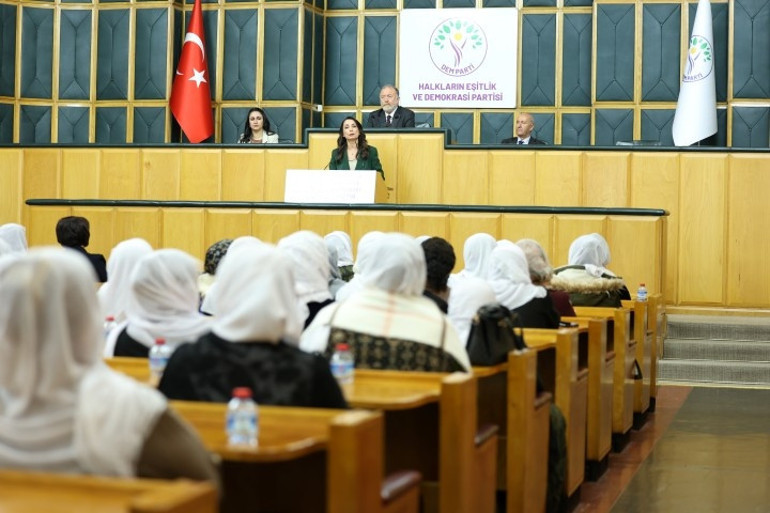
By linking the "Urban Consensus" at the local level with the demand for a "Monitoring Committee" at the national level, the DEM Party is attempting to bridge the gap between municipal governance and high-level peace negotiations. The upcoming visit to Demirtaş and the focus on the "Peace and Political Coordination" role for Öcalan indicate that the party will continue to press for a multidimensional approach to the Kurdish issue, involving both imprisoned figures and active parliamentary oversight.
The government has yet to provide a formal response to Hatimoğulları’s specific demands for the Monitoring Committee or the proposed coordination mechanism in Imrali. However, the Co-Chair’s statements set a firm tone for the party’s legislative agenda in the coming weeks, signaling that the DEM Party will remain a vocal critic of the state’s perceived inaction while holding onto its "Urban Consensus" strategy as its primary tool for local political engagement.