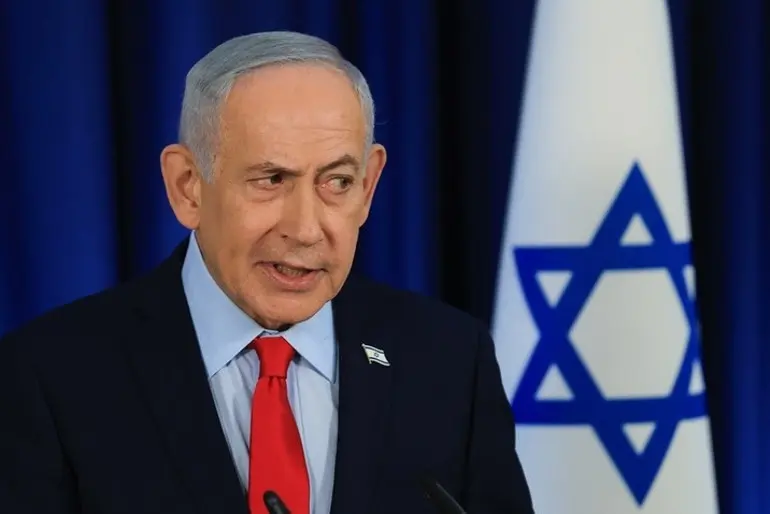
The political landscape in Washington has undergone a seismic shift following the recent midterm elections, a development that is sending ripples far beyond the borders of the United States. As the dust settles on a decisive electoral cycle, the focus of the international community has shifted toward a critical date: January 3. This is the day the new Congress will be sworn in, marking a transition that could fundamentally alter Donald Trump’s approach to the Middle East, specifically regarding the volatile triangle between Washington, Tel Aviv, and Tehran. With the balance of power in the U.S. legislature moving toward the Democrats, the coming two months represent a high-stakes "lame duck" period that may define the future of regional security for years to come.
The election results have created a complex new reality for President Trump. While the executive branch retains significant authority over foreign policy and military operations, the loss of a Republican majority in both the House and the Senate introduces a layer of institutional friction that has been largely absent during the first half of his term. For the administration’s "Maximum Pressure" campaign against Iran and its ironclad support for the current Israeli government, the new congressional makeup suggests that the era of unchecked executive maneuvering may be drawing to a close.
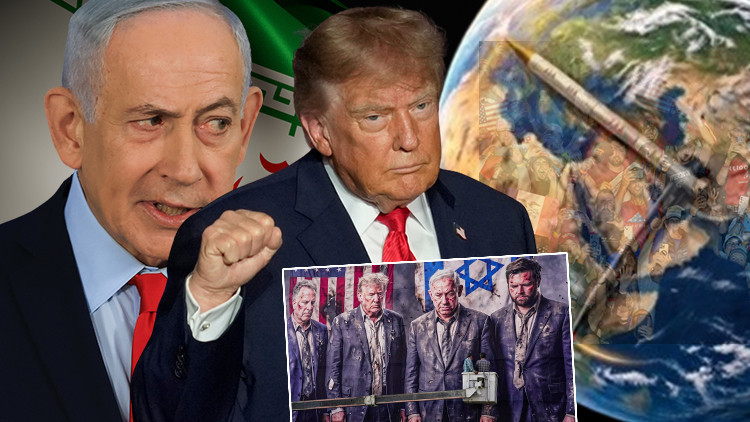
Trump’s Post-Election Admission Regarding the Conflict with Iran
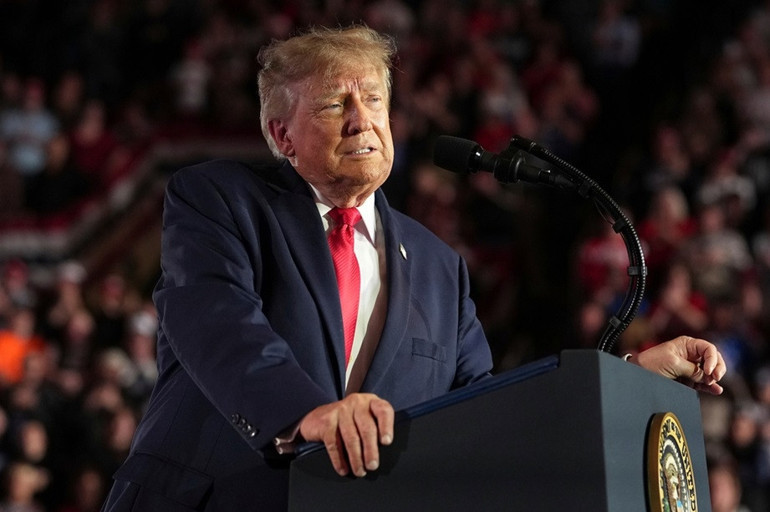
In the immediate aftermath of the election, President Trump provided a rare moment of introspection during an interview with the Wall Street Journal. For the first time, the President acknowledged that the ongoing military and economic confrontation with Iran played a significant role in the Republican Party’s electoral setbacks. The rising costs of energy, the economic fallout of regional instability, and a general sense of "war weariness" among the American electorate were cited as primary factors that alienated key voting blocs.
Despite this admission, Trump remained characteristically defiant. He stated unequivocally that he does not regret the decision to initiate military action, asserting that under the same circumstances, he would make the same choice again. This rhetoric signals that while the President recognizes the political cost of his foreign policy, he does not view the election results as a mandate for a retreat. Instead, he appears to be framing the situation as a necessary struggle, even if it comes at a high domestic price.

However, the reality of a Democrat-controlled Congress means that Trump will soon face a much more rigorous oversight environment. Democratic leaders have already signaled their intent to scrutinize the financial and human costs of the administration’s Middle East policy. With the Pentagon reporting that the cost of the conflict has already surged past the $47 billion mark, the "power of the purse" held by the House of Representatives will become a formidable tool for those seeking to de-escalate the confrontation with Tehran.
The Window of Opportunity: The Process Until January 3
Political analysts and regional experts are zeroing in on the two-month window between now and the inauguration of the new Congress on January 3. According to researchers at the Center for Iranian Studies (IRAM), this period is perhaps the most dangerous and unpredictable phase of the current crisis. While the Democrats have won the elections, they do not yet hold the gavels. For the next several weeks, Trump continues to work with a Republican-controlled Congress, giving him a final opportunity to cement his legacy or take decisive military action before the new legislative constraints take effect.

The IRAM researchers suggest that as Trump’s domestic power is curtailed, his focus will likely shift more heavily toward foreign policy—a realm where he can still act with relative speed. There is a concern that the President might feel compelled to take aggressive steps to maintain his image as a "strong leader" before the January 3 deadline. However, there is a counter-argument: the election results were a clear message from the public against escalation and the high cost of living associated with war. To ramp up the conflict now would be to fly in the face of the very voters he needs to keep on his side for the future.
Recent signals from the administration have been contradictory, reflecting a deep internal debate. On the morning of the election, the U.S. conducted a limited strike on a newly constructed air defense facility on Qeshm Island. Trump described this as a "small attack," and in subsequent comments to the Financial Times, he claimed there were no immediate plans for a massive strike on the Iranian mainland, asserting that the U.S. is already achieving its objectives. Vice President JD Vance has also expressed a degree of optimism regarding a potential deal. Yet, at the same time, military deployments to the region are accelerating. This "dual-track" approach—saber-rattling combined with hints of diplomacy—suggests that Trump is looking for a way to claim victory, whether that comes through a short, intense military campaign or a landmark diplomatic breakthrough in Doha.
The Israeli Front: Is Netanyahu’s Maneuvering Room Shrinking?

The shift in Washington’s political winds is being felt acutely in Tel Aviv. For Prime Minister Benjamin Netanyahu, the prospect of a Democratic Congress is a significant challenge. The Democratic base has become increasingly critical of the humanitarian costs of recent conflicts and the unconditional nature of U.S. military aid to Israel. A Congress that holds the authority over weapons sales and financial assistance is likely to be far more inquisitive than its predecessor.
The situation is further complicated by Trump’s own unpredictable behavior. In a move that shocked Israeli officials, Trump announced on election morning that the annual $4 billion in military aid to Israel would conclude at the end of the year. He claimed this was based on a mutual agreement with Netanyahu—a claim that appeared to catch many in the Israeli security establishment off guard, given that the current aid memorandum is technically valid until 2028. Analysts suggest Trump may have made this announcement to preemptively strip Democrats of an anti-war talking point, but it has nonetheless introduced a new layer of uncertainty into the U.S.-Israel relationship.
Domestically, Netanyahu is also facing a precarious situation. Following the inconclusive elections on October 27, he remains the head of a transition government. This internal political vacuum, combined with a weakening support base in Washington, could force Israel into a difficult choice. It may either push for a swift, joint military operation with the U.S. before January 3 while the "window of opportunity" is still open, or it may have to adopt a much more cautious stance as it prepares for a more restrained relationship with a Democrat-led Congress.
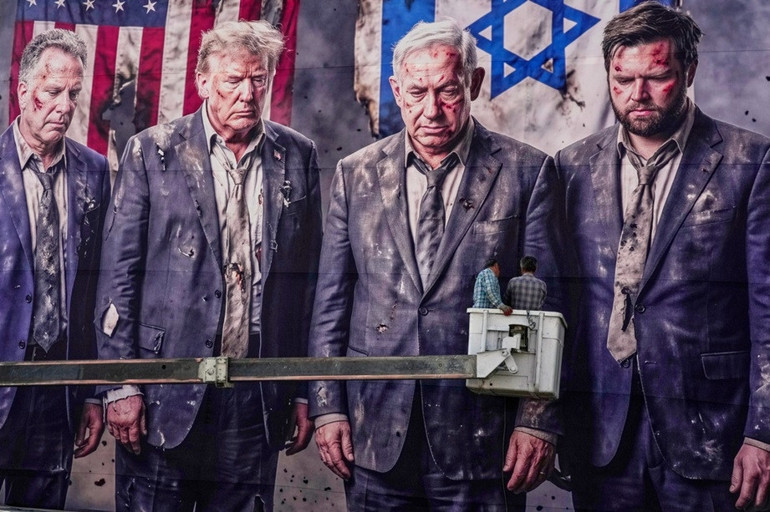
Furthermore, the nature of modern conflict and propaganda is changing the calculus for Israeli leadership. Experts note that Netanyahu’s traditional media strategies are failing to resonate in an era of decentralized information. The rise of independent commentators and the ubiquity of high-definition footage from conflict zones mean that the Israeli government can no longer maintain a monopoly on the narrative. This shift in the "information war" is making it increasingly difficult for Tel Aviv to sustain long-term military operations without facing significant international and domestic backlash.
The Iranian Perspective: Negotiation Amidst Preparation for Conflict
In Tehran, the response to the U.S. elections has been one of calculated pragmatism. The Iranian leadership does not view the shift in Congress as a reason to change its fundamental strategy. To the Iranian government, the U.S. "war" is already ongoing, manifested through economic blockades and airspace restrictions. Therefore, whether a Republican or a Democrat holds the majority in the U.S. House is seen as a secondary detail to the broader reality of American hostility.
Iran is currently pursuing a sophisticated "dual-track" strategy of its own. On one hand, it is strengthening its military deterrence. Supreme Leader Ali Khamenei recently issued instructions to the armed forces to expand their target lists and prepare for a response that knows no geographic boundaries. Reports indicate that missile production, which had been partially paused, has resumed at a rapid pace. Tehran believes that appearing weak would only invite further aggression and weaken its position at the negotiating table.
On the other hand, the diplomatic channels remain open. Iranian negotiators have spent several days in Doha, engaging with mediators from Qatar and Pakistan. A draft text is reportedly being circulated, focusing on a potential "freeze-for-freeze" agreement: the reopening of the Strait of Hormuz in exchange for the lifting of certain sanctions and the release of frozen assets. Foreign Minister Abbas Araghchi has emphasized that Iran is prepared for both defense and diplomacy simultaneously.
For Tehran, the ultimate goal is not necessarily a total peace, but a restoration of economic viability. The Iranian Rial is currently at historic lows, and the domestic pressure caused by the "waiting game" is immense. The Iranian society is paying a heavy price for this geopolitical stalemate, and the leadership knows that the long-term survival of the regime depends on the eventual reconstruction of the national economy. However, they are determined to enter any such reconstruction phase on their own terms, maintaining their regional influence and their control over the vital energy corridors of the Persian Gulf.
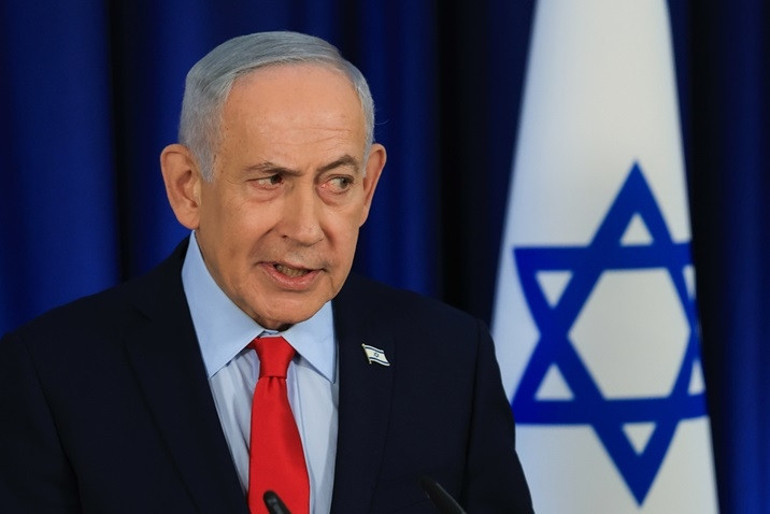
As January 3 approaches, the Middle East remains a tinderbox. The combination of a lame-duck U.S. presidency, a transition government in Israel, and a defiant but economically strained Iran creates a volatile environment where a single miscalculation could lead to a wider conflagration. The world now waits to see if the "strong leader" narrative or the "winner’s" pragmatism will prevail in the final days of the current American political order.