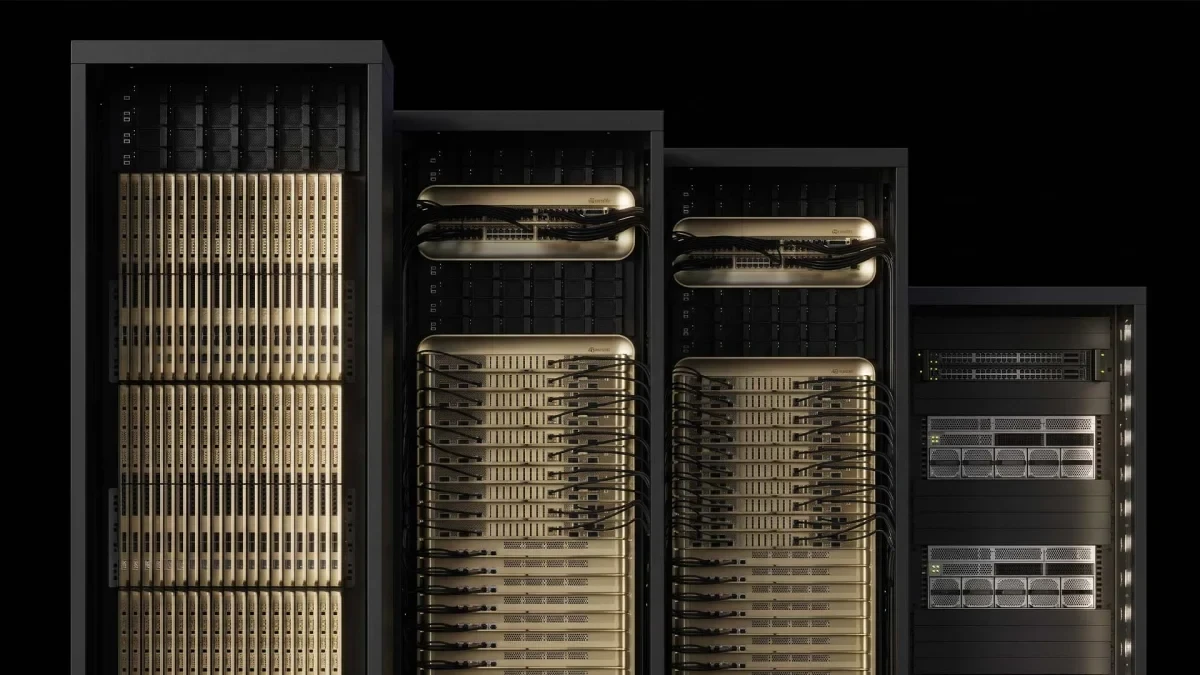
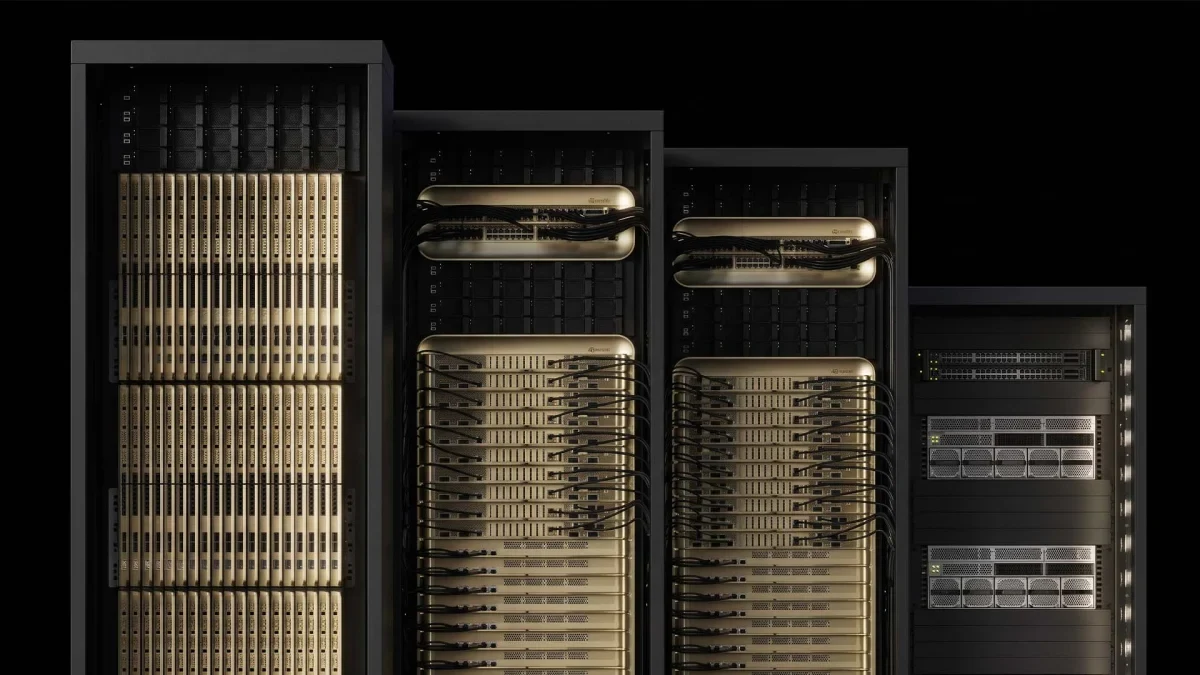
As the rapid evolution of artificial intelligence hardware continues to push high-performance computing to new limits, electrical power requirements per server rack are rising at an unprecedented rate. At the forefront of this industrial shift is NVIDIA’s upcoming liquid-cooled Kyber rack architecture, engineered specifically to support the company’s massive Rubin Ultra NVL576 AI supercomputing infrastructure. Unveiled by NVIDIA Chief Executive Officer Jensen Huang during his keynote presentation at the GTC 2025 conference, the flagship Kyber rack is projected to draw roughly 600 kilowatts (kW) of continuous electrical power for a single rack system.
To contextualize the scale of this energy demand, a single 600 kW Kyber rack will consume approximately as much electricity as 500 average American households combined. This metric, anchored in baseline consumption data provided by the U.S. Energy Information Administration (EIA)—which calculates the average continuous residential power draw at roughly 1.2 kW per home—was highlighted in estimated power demand projections originally shared by technology analyst Jessie Dong and subsequently reported by hardware industry publication Wccftech.
This dramatic jump in power density underscores a growing structural challenge facing the global technology sector: while semiconductor manufacturers continue to engineer increasingly capable AI training and inference systems, modern data center facilities were largely not built to deliver or cool energy loads of this magnitude on a per-rack basis.
Tracing the Exponential Surge in Server Rack Power Requirements
The power profile of enterprise computing hardware has transformed rapidly over just a few product generations. A comparative analysis of NVIDIA’s recent hardware architectures reveals an exponential curve in energy consumption per rack enclosure.
In 2022, high-density server racks configured for NVIDIA’s Hopper architecture drew approximately 40 kW of power. While 40 kW was considered high by historical enterprise IT standards, it remained manageable within modern data center facilities equipped with upgraded air cooling systems or early-stage liquid-assisted infrastructure.
By 2024, the introduction of NVIDIA’s Blackwell NVL72 platform elevated energy requirements significantly, bringing single-rack power consumption to around 120 kW. This tripled the energy demand of the previous high-density standard, forcing major cloud service providers and colocation facility operators to re-evaluate their internal power delivery and cooling designs.
The upcoming Kyber architecture, designed for the Rubin Ultra NVL576 system, represents another steep escalation in power consumption. Requiring 600 kW per unit, the Kyber rack will draw five times the electricity of a Blackwell NVL72 rack and roughly 75 times the power of a standard corporate enterprise server rack, which traditionally operates at around 8 kW.
Beyond its massive electrical appetite, the Kyber architecture introduces notable physical and spatial challenges within the data center environment. To deliver the necessary power conditioning and manage the extreme thermal output generated by a 600 kW load, the Kyber rack is expected to require an accompanying sidecar unit dedicated to power distribution and liquid cooling regulation. Consequently, deploying a single Kyber compute rack will effectively occupy the floor footprint of two standard server racks, fundamentally altering how data center operators plan floor space and compute density.
Why Current Data Center Infrastructure Is Unprepared for 600 kW Racks
The sheer energy requirements of the Kyber rack highlight an expanding gap between next-generation artificial intelligence hardware and the readiness of contemporary data center infrastructure. The core bottleneck involves more than securing adequate power allocation from regional electrical grids, though utility-level power procurement remains a complex hurdle in its own right.
Inside the data center facility, internal power distribution systems and thermal management infrastructure face severe operational limitations. Traditional data centers were constructed around power densities designed for single-digit or low double-digit kilowatt racks. Equipment such as step-down transformers, electrical busways, power distribution units (PDUs), and uninterruptible power supply (UPS) systems within existing facilities were not engineered to route 600 kW directly to individual rack locations on the data center floor.
Cooling infrastructure presents an equally substantial challenge. At a density of 600 kW per rack, traditional air cooling is entirely ineffective. Systems operating at this level rely exclusively on advanced liquid cooling solutions, including direct-to-chip cold plates and specialized coolant distribution units (CDUs) capable of circulating fluid to dissipate immense thermal output continuously.
Converting legacy data center facilities to deliver 600 kW to individual rack bays is widely regarded as impractical and cost-prohibitive for most operators. The structural, electrical, and mechanical overhauls required—ranging from ripping up subflooring to replacing primary power feeds and installing extensive fluid piping—often match or exceed the expense of building new facilities. As a result, cloud service providers seeking to deploy NVIDIA’s Rubin Ultra NVL576 systems early are expected to rely heavily on next-generation, purpose-built data centers designed from the ground up specifically for high-density liquid cooling and extreme electrical throughput.
Release Timelines and Potential Engineering Delays
During its official presentation at GTC 2025, NVIDIA outlined a target release schedule for the Rubin Ultra NVL576 architecture and its accompanying Kyber rack, positioning the commercial debut for the second half of 2027. This schedule aligned with the company’s established practice of advancing its flagship AI hardware architectures on an accelerated development timeline.
However, industry reports indicate that technical complexities could influence the actual timing of widespread deployment. According to a report sourced from industry intelligence firm SemiAnalysis, potential design challenges related to the rack’s complex midplane board design could push the rollout of the Kyber architecture into 2028. Designing a midplane backboard capable of managing ultra-high-speed signal integrity alongside massive electrical currents and high-flow liquid cooling connections presents complex engineering hurdles.
NVIDIA has not confirmed any change to its official timeline, maintaining that the platform remains targeted for a second-half 2027 release. Nevertheless, market observers and data center operators continue to monitor engineering milestones closely, recognizing that bringing 600 kW liquid-cooled racks into production environments represents a critical test for both semiconductor packaging and physical data center design.