In an extensive international study evaluating urban culture across 155 major cities worldwide, the travel publication Brooklyn Of has designated Yeldeğirmeni, situated in Istanbul’s vibrant Kadıköy district, as the city’s "coolest" neighborhood. The global ranking highlights the quarter’s thriving independent culture, striking street art, and rich ecosystem of local, grassroots businesses that distinguish it from heavily commercialized commercial hubs.
The international assessment sought to identify urban quarters across the globe that retain an authentic sense of place while fostering dynamic, contemporary community life. Out of Istanbul’s vast and diverse tapestry of historic and modern neighborhoods, Yeldeğirmeni emerged at the top of the list, lauded for its unique ability to seamlessly merge historic architectural charm with an energetic, youth-driven creative spirit.
The creators of the index emphasized that the survey was conducted with a firm commitment to editorial independence. The project deliberately bypassed major corporate sponsors, promotional deals, and large national chains that often dominate conventional travel guides. Instead, the selection process relied on qualitative local research, field evaluations, and direct insights gathered from influential community figures and local residents who actively shape the social and artistic character of their surroundings.
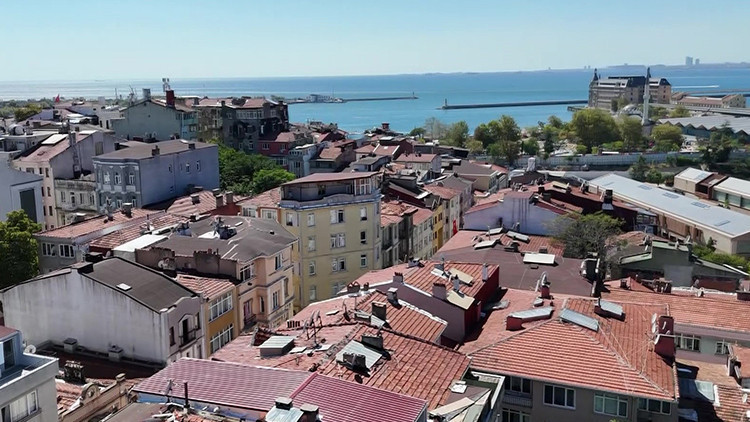
By prioritizing local perspectives over standard commercial metrics, Brooklyn Of aimed to uncover neighborhoods where local identity flourishes organically. In Istanbul, this methodology brought forward a district that embodies the evolving cultural heart of the metropolis—a place where daily neighborhood routines exist side-by-side with contemporary artistic expression.
While Yeldeğirmeni took the top spot, the survey also recognized several other prominent quarters across Istanbul, highlighting the fierce competition among the city’s most dynamic districts. Celebrated neighborhoods such as Moda, Balat, and Karaköy were each noted for their distinct urban characteristics and strong cultural draw during the research process.
Offering context on the selection, Per Stenius, the founder of Brooklyn Of, detailed how Yeldeğirmeni stood out among its famous peers. Stenius noted that Moda, situated just to the south along the Marmara shoreline in Kadıköy, is widely admired for its lush green spaces, relaxed coastal lifestyle, and well-established, tranquil residential structure. Meanwhile, Balat, located along the historic shores of the Golden Horn on the European side, captivates visitors with its deep historical lineage, iconic colorful housing, and rich multicultural heritage. Across the Bosporus, Karaköy has established itself as a bustling destination defined by high-end dining, luxury hospitality, and contemporary boutique spaces.

However, Stenius explained that Yeldeğirmeni was ultimately chosen because it successfully synthesizes these diverse urban qualities into a singular, independent neighborhood culture. Rather than leaning purely into high-end luxury, pure residential quiet, or traditional tourism, Yeldeğirmeni maintains an accessible, self-contained environment that feels historically grounded yet continuously vibrant.
An Open-Air Gallery Defined by More Than 60 Murals
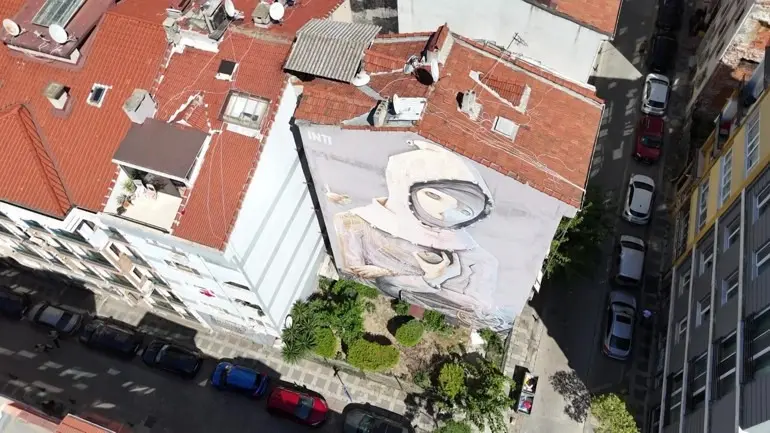
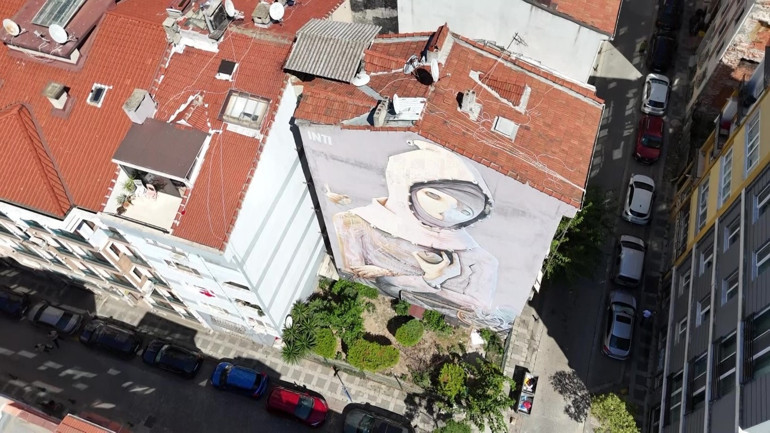
A major factor contributing to Yeldeğirmeni’s recognition is its striking visual character, driven in large part by a flourishing public art movement. Over recent years, the neighborhood has transformed into one of Istanbul’s primary open-air art destinations, featuring more than 60 large-scale mural paintings adorned across the multi-story facades of its historic buildings.
These monumental murals, created by a mix of renowned international street artists and talented local painters, have reshaped the aesthetic fabric of the area. Wandering through Yeldeğirmeni’s sloping grid of streets reveals expansive compositions addressing diverse themes, ranging from nature and abstract surrealism to social narrative and local identity. Aerial footage captured by drones over the district highlights how these colorful visual installations interact with late 19th- and early 20th-century residential architecture, turning ordinary urban blocks into living public canvases.

This dense accumulation of public murals has made Yeldeğirmeni an imperative stop for youth, art enthusiasts, and cultural travelers. Rather than confining artistic expression to formal galleries or museum interiors, the neighborhood integrates visual art directly into public space, fostering daily interaction between residents, shopkeepers, and visitors.
The neighborhood’s ongoing evolution is also deeply felt by those who operate within its historic streets. Local business owners observe that while the area has gained significant international attention, the changes have largely served to revitalize the community while honoring its historical foundations.
Tayfun Parlar, a local business operator in Yeldeğirmeni, spoke about the shifts taking place in the quarter. "Our neighborhood has naturally seen a lot of changes," Parlar noted when discussing the area’s growing profile. "It is a very old and historical place. Some of the things that have been done were good for our neighborhood."

Parlar’s perspective aligns with a broader sentiment among long-standing community members: urban revitalizations, when grounded in art and small-scale enterprise, can bring positive momentum to historic districts without eroding their underlying character.
Historically established as one of Kadıköy’s oldest residential settlements, Yeldeğirmeni—a name that translates to "Windmill"—developed as a diverse, multi-faith urban enclave during the late Ottoman period. Its rich built environment features imposing historic apartment blocks, historic religious sites, and traditional neighborhood bakeries, providing a distinctive historical context for its modern creative identity.
Today, this historical layer functions in harmony with contemporary lifestyle elements. Independent coffee shops, artisan ateliers, vintage clothing stores, record shops, and creative studios occupy the ground floors of historic masonry structures. The notable absence of large shopping centers or international retail chains allows small, owner-operated businesses to thrive, sustaining a close-knit economic structure where shopkeepers know their regulars by name.
The international recognition of Yeldeğirmeni by Brooklyn Of reflects a wider transformation in global travel trends regarding Istanbul. Historically, international travel coverage focused primarily on the iconic monuments of the historic peninsula in Sultanahmet or the commercial thoroughfares of Beyoğlu.
However, the rising prominence of Kadıköy, and Yeldeğirmeni in particular, underscores a growing appetite among international visitors for authentic, neighborhood-centric experiences. By spotlighting Yeldeğirmeni’s fusion of public street art, preserved historical architecture, and independent commercial life, the study highlights how the Anatolian side of the Bosporus has firmly established itself as a vital center of contemporary culture in Istanbul.