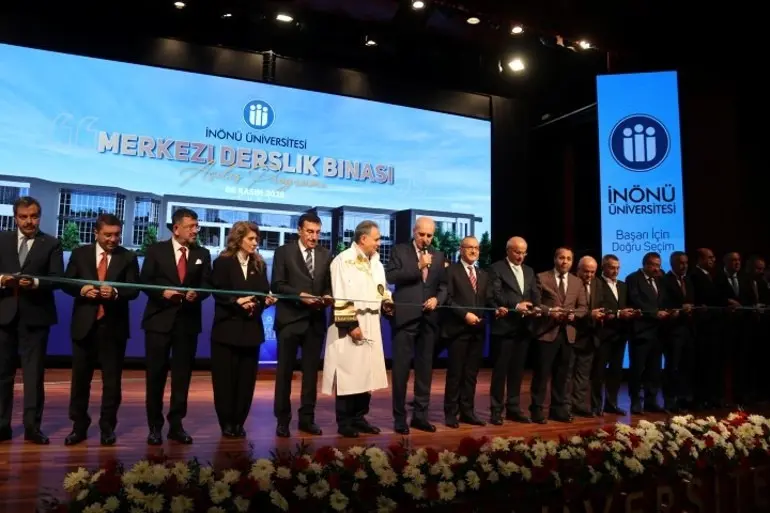
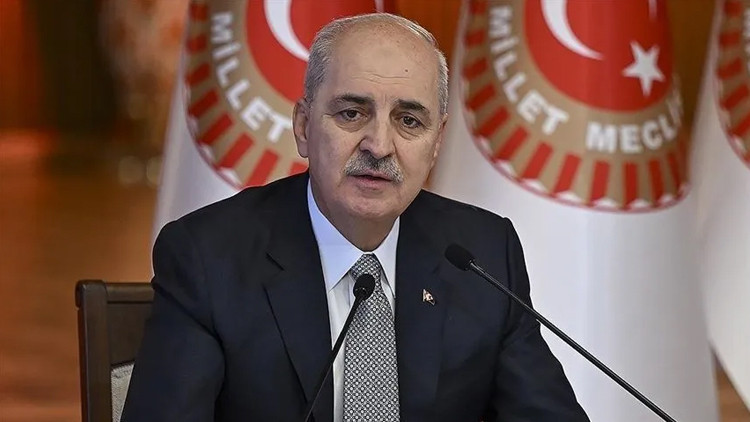
MALATYA — In a landmark address that sought to define the trajectory of the nation’s future, the Speaker of the Grand National Assembly of Turkey (TBMM), Numan Kurtulmuş, has characterized the total eradication of terrorism as the most significant undertaking of Turkey’s second century. Speaking at the opening ceremony of the 2026-2027 Academic Year at İnönü University, Kurtulmuş framed the "Terror-Free Turkey" initiative not merely as a security objective, but as a comprehensive national project essential for the country’s progress and unity.
Addressing a packed audience at the Turgut Özal Congress Center on November 6, 2026, Kurtulmuş reflected on the heavy toll that decades of conflict have taken on the nation. He asserted that while the first century of the Republic was marred by the "burning and heavy" burden of terrorism, the second century—often referred to as the "Century of Turkey"—will be defined by its successful resolution. "Terror-free Turkey was the heaviest issue of our Republic’s history; it will be the most important project of its second century. We will succeed," he declared, signaling a resolute commitment to ending the cycle of violence that has historically hindered the nation’s full potential.
A Resilience Born of Recovery: The Transformation of Malatya
The Speaker’s choice of Malatya as the venue for this declaration was deeply symbolic. The city, which suffered immense devastation during the catastrophic earthquakes of 2023, has become a testament to Turkey’s capacity for reconstruction and national solidarity. Kurtulmuş, who has visited the region multiple times since the disaster, shared his personal observations of the city’s journey from ruin to renewal.
"I have had the opportunity to visit Malatya twice since the earthquake," Kurtulmuş remarked. "I know those days of great destruction, those exceptionally sad and difficult times, very closely. Coming here today, we can say with pride that Malatya is rapidly evolving into a modern, renewed city. This is the strength of each of you; it is the strength of Turkey, the strength of 86 million people."
He emphasized that the rapid recovery of cities like Malatya serves as a blueprint for what the nation can achieve when unified. By successfully rebuilding the physical infrastructure and social fabric of the earthquake-stricken regions, Kurtulmuş argued, the Turkish people have demonstrated the same resolve required to overcome the long-standing challenge of terrorism. During his speech, he also took a moment to offer condolences to the families of those who lost their lives in the earthquakes, acknowledging the deep scars the disaster left on the collective memory of the region.

The Institutional Pillar: İnönü University’s Growth
Central to the Speaker’s address was the role of higher education in the nation’s development. Kurtulmuş praised İnönü University as a cornerstone of Turkey’s academic landscape, noting its transformation from a young institution into a well-established center of excellence. With a student body exceeding 32,000, the university has become a vital engine for growth in Eastern Anatolia.
"The founding of İnönü University feels like it was only yesterday, yet it has already become one of Turkey’s deeply rooted and established universities," Kurtulmuş said. He specifically highlighted the university’s breakthroughs in the medical field and other disciplines, commending the faculty and staff who have contributed to its prestige since its inception. He extended his gratitude to everyone who played a role in the university’s growth, emphasizing that academic institutions are the breeding grounds for the "Turkey Model" of progress and intellectual independence.
The Economic and Human Cost of a Century of Conflict
Transitioning to the core of his message, Kurtulmuş provided a sobering analysis of the impact of terrorism on Turkey’s first century. He described the issue as the most "scorching" and "difficult" problem the Republic has ever faced. The statistics he cited painted a grim picture of lost opportunities and human suffering.

According to Kurtulmuş, the financial burden of terrorism has exceeded $2.3 trillion in economic losses—a staggering figure that represents decades of diverted resources that could have otherwise been invested in education, healthcare, and infrastructure. Beyond the financial impact, the human cost has been immeasurable. "Extremely high prices have been paid," he noted. "Tens of thousands of our people have died, and thousands of our people have been martyred. We faced a scourge that not only drained our economy but, at times, aimed to shatter the hopes of our nation."
The Speaker recalled the "very difficult and very harsh" periods when scenarios of division and separation were frequently discussed, threatening the social cohesion of the country. However, he maintained that those times are now being left behind as Turkey enters a new phase of national confidence. He expressed a vision where the memory of terrorism exists only as a "historical archive," a part of the national memory that serves as a reminder of past struggles rather than a present threat.
The ‘Turkey Model’: A New Paradigm in Conflict Resolution
One of the most significant portions of Kurtulmuş’s speech was his introduction of the "Turkey Model." Speaking not only as a politician but also as an academic who has been involved in these processes from the beginning, he described a unique, domestic approach to resolving internal conflicts and ensuring social peace.

"The model we have put forward and brought to this day is what we call the ‘Turkey Model,’" Kurtulmuş explained. "It is a model that distinguishes itself exceptionally from all other examples of conflict resolution in the world. I say this as an academic and as someone who has been inside this matter from the start: from now on, the process we are managing will be taught as a course in the field of conflict resolution at many universities around the globe."
Kurtulmuş defined the Turkey Model as a "national model" rooted in self-reliance and the collective wisdom of the Turkish people. He argued that the success of this process stems from Turkey’s decision to trust its own internal dynamics rather than relying on external templates or foreign intervention. This self-confidence, he suggested, has allowed the country to make a "formidable start" toward a permanent solution.
Beyond Party Politics: A National Consensus
A key characteristic of the Turkey Model, according to Kurtulmuş, is its status as a "national issue" (Milli Mesele) that transcends the boundaries of partisan politics. While he expressed a personal distaste for the phrase "above politics," he insisted that the project of a terror-free Turkey belongs to every one of the 86 million citizens and cannot be confined to the political agenda of a single party.
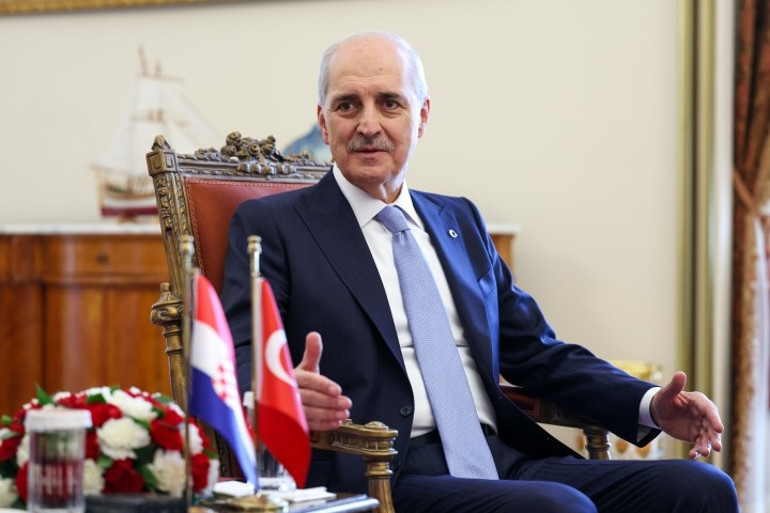
"This is not a matter that can be imprisoned within the narrow molds of politics or presented as the political project of one or a few parties," the Speaker emphasized. "It is a national issue of Turkey, and in this sense, I feel it is a duty to thank all the political parties and social sectors that have supported this process from the beginning."
He lauded the fact that, throughout this critical phase, various groups avoided using the issue as a political argument or a subject of internal domestic debate. Instead, those involved contributed their expertise and resources with a focus on one central question: "How can this process reach success?" This spirit of cooperation, Kurtulmuş argued, is what makes the current momentum different from previous attempts.
Looking Toward the Future
As the 2026-2027 Academic Year begins, the Speaker’s message to the youth and the academic community was one of optimism and responsibility. He framed the current era as a transition point where the "historical memory" of past hardships is being replaced by a proactive "project of the future."
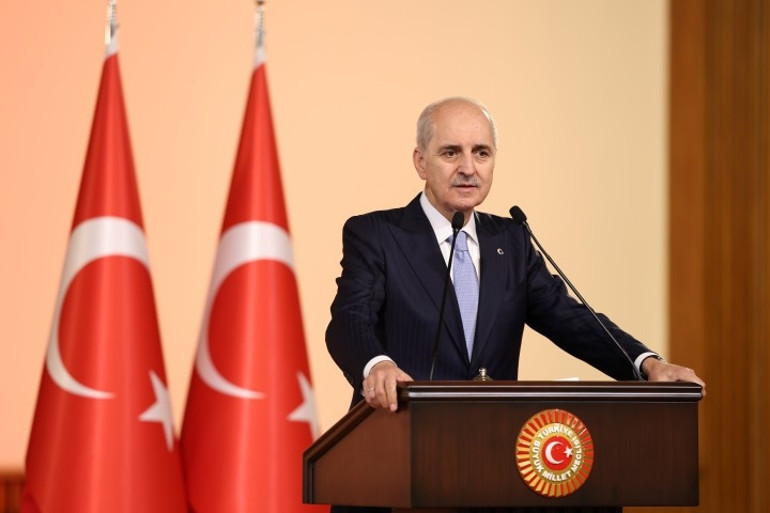
The "Terror-Free Turkey" project, as described by Kurtulmuş, is the foundational requirement for the "Century of Turkey." By removing the obstacles of insecurity and economic drain, the nation aims to unlock its full potential on the global stage. The Speaker concluded his remarks by reaffirming the government’s and the parliament’s dedication to this path, expressing his firm belief that the goal of a peaceful, unified, and prosperous Turkey is within reach.
The ceremony at İnönü University concluded with a sense of renewed purpose, as students and faculty reflected on a speech that sought to bridge the gap between the university’s academic mission and the nation’s highest strategic goals. For Malatya, a city still in the process of rebuilding, the Speaker’s words served as both an acknowledgment of their recent struggles and a promise of a more secure and stable future.