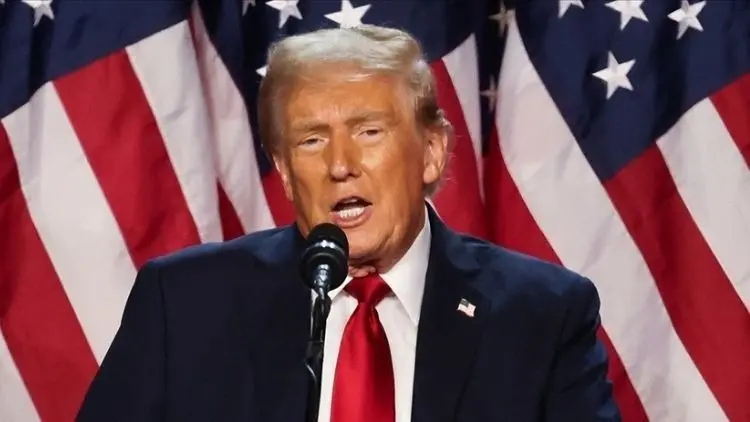
WASHINGTON — In a wide-ranging and defiant speech delivered on the hallowed grounds of Arlington National Cemetery, President Donald Trump marked Veterans Day by declaring that the United States is on the precipice of a "total victory" in its long-standing confrontation with Iran. Speaking before a somber gathering of military families, veterans, and high-ranking officials on November 11, 2026, the President asserted that his administration has successfully neutralized Tehran’s nuclear ambitions and dealt a catastrophic blow to its military infrastructure that will take decades to repair.
The President’s address, which served as both a tribute to the fallen and a status report on recent military engagements in the Middle East, framed the current tensions not as a new conflict, but as the final chapter of a struggle that has spanned nearly half a century. Trump maintained that the United States did not initiate the hostilities, but was rather bringing a definitive end to a shadow war he claims Tehran has waged against Washington since the Islamic Revolution of 1979.
A Legacy of Conflict and the Pursuit of Finality
Standing amidst the rows of white headstones that define the nation’s most sacred burial ground, President Trump sought to provide historical context for the recent surge in military activity. He argued that for too long, previous administrations had allowed the "Iran problem" to fester, failing to take the decisive action necessary to protect American interests and global security.
"America did not start a war with Iran," the President stated firmly. "Iran has been waging a war against America since 1979. This is a situation that should have been handled a long time ago, by many people who came before me, but they didn’t do it. We are doing it now."
The President’s narrative centered on the idea that the U.S. had finally moved from a posture of containment to one of active resolution. He claimed that under his leadership, the military had responded to Iranian provocations with "serious" force, leading to what he described as a series of strategic triumphs. According to Trump, the question is no longer whether the United States will prevail, but rather how and when it chooses to conclude the current operations.
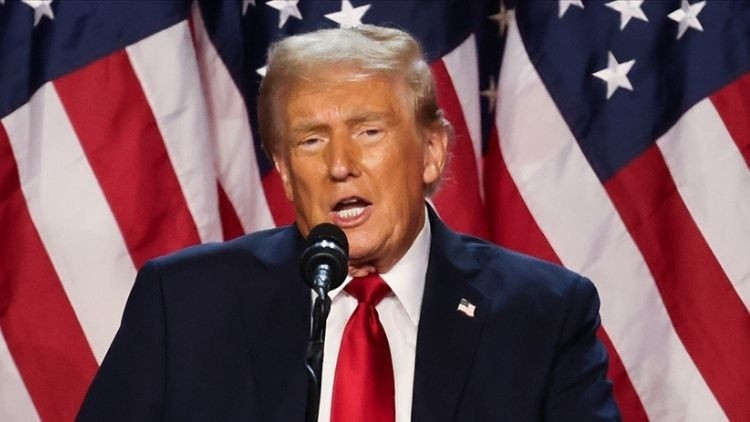
"We responded seriously and we won," Trump told the crowd. "It has now simply become a matter of when we want to bring this situation to an end. We are in control of the timeline."
The Doctrine of ‘Total Victory’
One of the most striking elements of the President’s speech was his insistence on a complete and unconditional outcome. Eschewing the language of traditional diplomacy or incremental de-escalation, Trump introduced a standard he called "total victory." He explicitly rejected the notion of a partial success or a negotiated settlement that would leave Iran’s core military capabilities intact.
"We want to make sure we achieve a total victory," the President emphasized. "I am not looking for a 93 percent victory. That is not enough for the sacrifices our people have made. This will be, absolutely, a total victory."
While the President did not provide specific metrics for what constitutes a "100 percent" victory, his rhetoric suggested a goal of total military degradation and a permanent end to Tehran’s ability to project power or threaten its neighbors. This stance reflects a broader shift in the administration’s foreign policy, which has increasingly favored decisive military pressure over the protracted "forever wars" of previous decades.
Assessing the Military Impact and the Nuclear Threshold
A significant portion of the address was dedicated to the tactical successes the President claims the U.S. military has achieved over the past seven months. Trump asserted that U.S. strikes have systematically dismantled Iran’s military industrial complex, targeting command centers, logistical hubs, and strategic assets.
The President claimed that the damage inflicted on Iran’s military capacity is so severe that it will take the nation at least a quarter of a century to recover its former strength. "We have caused immense damage to their military capacity," he said. "Our assessments show it will take them at least 25 years to even begin to rebuild what has been destroyed. We have set them back a generation."

Furthermore, Trump reiterated that the primary objective of the deployment of U.S. forces in the region remains the prevention of a nuclear-armed Iran. He credited the "brave men and women in uniform" for standing as a bulwark against nuclear proliferation, suggesting that the threat of a nuclear Iran has been effectively neutralized through recent operations.
"I hope we do not have to destroy more parts of that country," Trump added, in a somber warning to the leadership in Tehran. "But we will do what is necessary to ensure the safety of the American people and the world."
The Human Cost of the Seven-Month Campaign
Despite the triumphant tone regarding strategic gains, the President acknowledged the heavy price paid by American service members. He revealed that the current phase of heightened military operations began approximately seven months ago. While the most "intense" period of combat lasted only a few weeks, the campaign has not been without loss.
President Trump confirmed that 18 U.S. soldiers have lost their lives during this period. In the context of Veterans Day, he used this figure to highlight the ongoing bravery of the current generation of service members, linking their sacrifices to those of the veterans buried at Arlington.
"These 18 heroes gave everything for a cause that is just," Trump said. "They were there to make sure that the world’s most dangerous regime never gets its hands on the world’s most dangerous weapon. We owe them a debt we can never fully repay."
He expressed his gratitude to the troops currently stationed in the Middle East, emphasizing that their presence is the only thing standing between regional stability and a catastrophic nuclear escalation. The President argued that by finishing this conflict now, the United States is ensuring that future generations of soldiers will not have to face the same threats.

Historical Echoes: From Beirut to the Present
In a move to anchor his current policies in the collective memory of the U.S. military, President Trump drew a direct line from the current operations back to the 1983 bombing of the U.S. Marine barracks in Beirut, Lebanon. That attack, which claimed the lives of 241 American service members, remains one of the deadliest days in the history of the U.S. Marine Corps.
Trump explicitly blamed the Iran-backed group Hezbollah for the 1983 atrocity, using it as a primary example of why Tehran must be held accountable. By invoking Beirut, the President sought to justify the current military pressure as a long-overdue act of justice for past American casualties.
"We remember the 241 Marines who were murdered in their sleep in Beirut," Trump said. "We know who was behind it. We know who supported it. For decades, there was no accountability. Today, that has changed. We are making sure that those who target Americans pay a price that they will never forget."
A Vision for Global Security
As the ceremony drew to a close, the President painted a picture of a post-conflict world. He argued that the defeat of Iranian influence and the termination of the current war would lead to a "safer and more peaceful" international order.
Trump claimed that the United States has already made significant strides toward this goal, asserting that the global community is closer to a lasting peace than it has been in decades. "When this is over, and it will be over soon, the world will be a different place," he concluded. "It will be a safer place. We have traveled a great distance toward that goal, and we will not stop until the job is done."
The President’s remarks at Arlington leave little room for ambiguity regarding his administration’s intentions. By framing the conflict as a definitive showdown and demanding "total victory," Trump has signaled a commitment to a military-centric resolution that seeks to permanently alter the geopolitical landscape of the Middle East. As the nation observes Veterans Day, the focus remains on the 18 lives lost in recent months and the uncertain timeline for the "imminent" end of a war that, according to the President, has been nearly fifty years in the making.