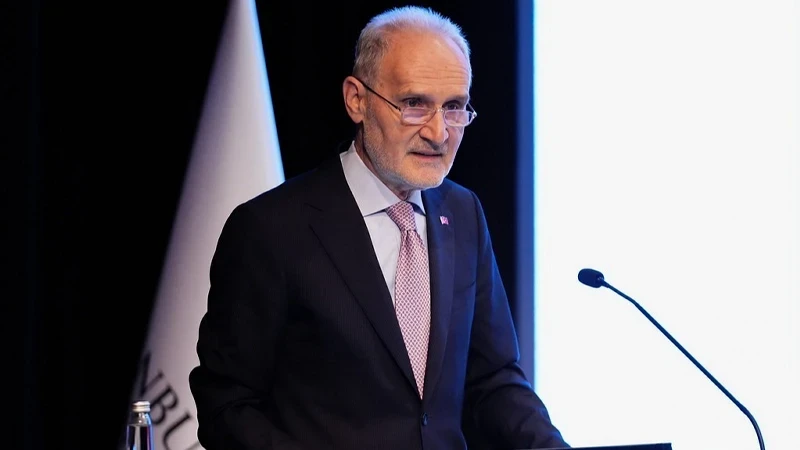
Istanbul Chamber of Commerce (ITO) President Şekib Avdagiç has stated that Turkey must be included within the scope of the European Union’s "Made in EU" policy, which prioritizes products manufactured within Europe for public procurement tenders and incentive programs. Avdagiç emphasized that excluding Turkey from this strategic framework would ultimately harm both sides and undermine Europe’s long-term global competitiveness.
The evaluations made by ITO regarding this critical economic and geopolitical issue were shaped around the European Commission’s ongoing legislative draft for the Industrial Acceleration Act. As European policymakers work to strengthen local manufacturing and reduce external dependencies, the position of major trading partners outside the immediate EU bloc has become a subject of intense debate among member states.
Turkey’s Status in the Legislative Draft
Recalling the details of the Industrial Acceleration Act draft initially introduced by the European Commission, Avdagiç noted that the framework originally envisioned prioritizing goods produced within the European Union for public procurement and various incentive mechanisms. Crucially, the initial draft prepared by the Commission treated content produced in Turkey—a long-standing customs union partner of the EU—as equivalent to EU-origin goods, recognizing the deep integration of supply chains between the two economies.
However, subsequent diplomatic developments have signaled a worrying shift. A compromise reached between France and Germany on October 15-16 strongly indicates an intention to leave Turkey outside the scope of this preferential treatment. Avdagiç pointed out that while this Franco-German understanding marks a significant political signal, the proposal must still navigate the broader and more complex legislative decision-making processes of the European Union before it can be formally enacted into law.
The potential exclusion has raised concerns among Turkish business circles, who view the Customs Union as a foundational pillar of economic cooperation that should naturally extend into modern industrial and procurement policies. Business leaders argue that drawing a hard regulatory line against Turkish manufacturers runs counter to decades of economic convergence and shared industrial production networks.
Shared Future Vision and Strategic Realities
Directing attention to the multifaceted nature of EU-Turkey relations, Avdagiç underscored that Europe cannot realistically build a secure, prosperous, and competitive future while sidelining a key strategic partner. He argued that Turkey possesses critical capabilities that are indispensable to the European continent’s broader security and economic architecture.
"A Europe that does not want to see Turkey—with its robust defense capabilities, energy supply security, strong industrial infrastructure, and high demographic advantage—within a shared future vision cannot build a competitive future," Avdagiç stated. He further elaborated that bypassing Ankara makes it virtually impossible for Brussels to implement effective policies regarding the Middle East, guarantee long-term energy supply security, maintain a strong position against growing competition from China, and position itself correctly in an increasingly multi-polar global order.
According to this perspective, modern geopolitical challenges require tighter integration rather than regulatory fragmentation. European security and economic resilience are deeply intertwined with Turkish manufacturing capacity, logistics corridors, and strategic positioning at the crossroads of Europe, Asia, and the Middle East.
Europe as Turkey’s Primary Export Market
Addressing the economic dynamics at play, Avdagiç emphasized that including Turkey in the "Made in EU" framework—or under a conceptually clearer designation such as "Made by EU"—would serve the mutual interests of both parties rather than just benefiting Ankara. He cautioned that European policymakers might be miscalculating the implications of Turkey’s deep trade ties with the continent.
"It appears that our European friends are trying to keep Turkey outside the scope of ‘Made in EU’—or more understandably, ‘Made by EU’—while drawing strength from the fact that Europe is Turkey’s largest export market," Avdagiç noted. He suggested that European authorities might mistakenly view this trade dependency as leverage, assuming that Turkey would simply have to accept unilateral EU mandates without objection.
However, Avdagiç warned that turning such an approach into a rigid mandate would produce outcomes just as detrimental to Europe as they would be to Turkey. As global supply chains face mounting pressures and regional competition intensifies, economic coercion or the artificial fracturing of deeply integrated industrial ecosystems risks backfiring on the very economies seeking to protect their industrial base.