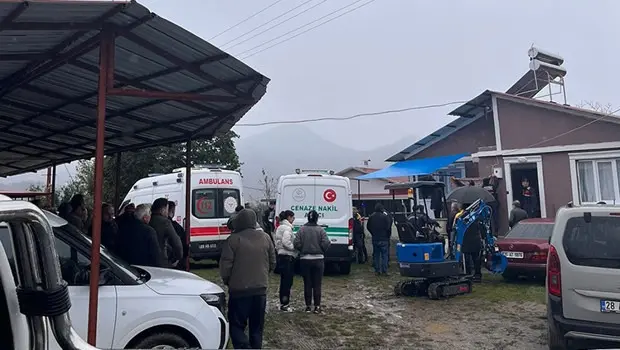
The tranquil atmosphere of the Black Sea region was shattered on a recent morning when a violent domestic dispute in the Piraziz district of Giresun resulted in a tragic loss of life. What began as a verbal disagreement between two brothers escalated with devastating speed into a fatal shooting, leaving a family destroyed and a community in mourning. The incident has once again brought the critical issues of family mediation, anger management, and individual armament to the forefront of public discourse in Turkey.
The event unfolded in the early hours of the day in Piraziz, a district typically known for its scenic hazelnut orchards and quiet coastal life. According to reports, an argument broke out between 63-year-old A.Ş. and his younger brother, 54-year-old O.Ş. While the specific catalyst for the confrontation remains under investigation by local authorities, the dispute quickly intensified beyond the point of verbal reconciliation. In a moment of uncontrolled rage, the elder brother, A.Ş., allegedly produced a firearm and opened fire on his sibling.
Emergency response teams were dispatched to the scene immediately after neighbors and witnesses reported the sound of gunfire. Despite the rapid arrival of medical personnel and their exhaustive efforts to stabilize the victim, the injuries sustained by O.Ş. proved fatal. He was pronounced dead at the scene, a grim conclusion to a conflict that has left the local neighborhood reeling.
Law enforcement officers arrived shortly thereafter, securing the perimeter and beginning their preliminary forensic investigation. The suspect, A.Ş., was apprehended by security forces without further incident. He was taken into custody along with the suspected murder weapon. The efficiency of the police response ensured that the situation did not escalate further, but for the family involved, the damage was already irreparable.
The Complex Dynamics of Intra-Family Violence and Crisis Management
This tragedy in Piraziz is not an isolated event but rather a reflection of a broader, more troubling trend regarding domestic violence and the erosion of traditional conflict resolution mechanisms. Experts who monitor social trends in Turkey have noted a concerning rise in violent disputes between relatives, particularly in rural or semi-rural provinces. The incident in Giresun serves as a stark reminder of how fragile the "peaceful" facade of small-town life can be when deep-seated grievances are left unaddressed.
Sociologists and psychologists point out that in many cases of fratricide or intra-family violence, the root causes are often long-standing. Issues such as the distribution of inheritance, disagreements over land boundaries—a frequent point of contention in the agriculturally rich Black Sea region—or historical personal animosities can simmer for years. When these issues are not mediated by professional counseling, legal arbitration, or effective family communication, they create a volatile environment where a seemingly minor argument can act as the final spark for a violent explosion.
In many rural communities, there is a historical reliance on informal mediation through village elders or family patriarchs. However, as social structures evolve and the authority of these traditional figures wanes, a vacuum is often left in its place. Without accessible professional support for anger management or mental health, individuals may find themselves ill-equipped to handle high-stress emotional crises. The "crisis management" in these scenarios often fails because the individuals involved lack the tools to de-escalate their own emotions, leading to the involvement of the judicial system only after a crime has been committed.
Societal Responsibility in Preventing Violence
The death of O.Ş. has sparked renewed calls for a comprehensive approach to preventing violence within the family unit. Preventing such tragedies requires a multi-faceted strategy that moves beyond simple law enforcement and into the realm of social engineering and education.
One of the most significant factors cited by experts in the wake of the Giresun incident is the danger of individual armament. The transition from a heated argument to a homicide is often made possible by the immediate availability of a firearm. In regions where gun ownership is culturally prevalent or seen as a necessity for protection, the threshold for lethal violence is significantly lowered. Advocacy groups continue to emphasize that reducing the prevalence of firearms in households is a critical step in ensuring that temporary lapses in judgment do not result in permanent loss of life.
Furthermore, there is a pressing need for the promotion of communication skills and emotional intelligence. In many instances of domestic violence, the perpetrators and victims alike suffer from a lack of "emotional literacy"—the ability to express grievances through words rather than actions. Educational programs targeting both youth and adults could play a vital role in teaching de-escalation techniques.
Community-based intervention is another pillar of prevention. Neighbors, friends, and extended family members often witness the warning signs of an escalating feud long before a weapon is drawn. Encouraging a culture where individuals feel empowered to seek help for struggling family members—rather than viewing it as a breach of privacy—could save lives. When the state and civil society work together to provide "protective and preventive" social policies, the likelihood of these disputes reaching a fatal conclusion diminishes.
Judicial Proceedings and the Search for Justice
Following his arrest, 63-year-old A.Ş. was transported to the local police station for processing. After his initial statements were taken, he was transferred to the courthouse to face a judge. The Chief Public Prosecutor’s Office in Giresun has launched a comprehensive investigation into the homicide, seeking to uncover the exact motivations behind the shooting and to determine whether there was any degree of premeditation involved.
The judicial process in such cases is often grueling for the surviving family members, who must grapple with the fact that one relative is dead while another faces a lengthy prison sentence. Forensic teams have completed their work at the crime scene in Piraziz, collecting evidence that will be crucial during the trial. The legal system now carries the burden of ensuring that justice is served, but officials also acknowledge that the court’s verdict cannot heal the communal and familial rift caused by the violence.
Legal experts and social advocates argue that while the swift prosecution of such crimes is necessary for public order, the legal system should also be integrated with social services. This "holistic" approach would involve monitoring families where violence has occurred to prevent "cycle of violence" retaliations and to provide psychological support to the bereaved.
Conclusion and Reflection on the Community
The Piraziz district continues to process the shock of the morning’s events. For a region that prides itself on its strong family bonds and communal solidarity, the news of a brother killing a brother is particularly painful. It serves as a somber lesson on the importance of patience, the danger of unchecked anger, and the necessity of seeking help before a disagreement turns into a disaster.
As the investigation continues, the focus remains on the two primary figures: O.Ş., whose life was cut short at 54, and A.Ş., who at 63 faces the prospect of spending his remaining years behind bars. Their story is a tragic testament to the "worn-down communication channels" that experts warn about. It highlights a desperate need for a societal shift toward non-violent conflict resolution and a more robust support system for those living in the grip of long-term family hostilities.
In the coming weeks, the court proceedings will likely shed more light on the "unknown reasons" mentioned in initial reports. However, for the people of Giresun and the wider Turkish public, the primary takeaway is clear: the prevention of domestic violence is a collective responsibility that begins in the home but must be supported by every level of government and society. Only through a combination of education, stricter control of weaponry, and accessible mental health resources can the recurrence of such heart-wrenching headlines be prevented.