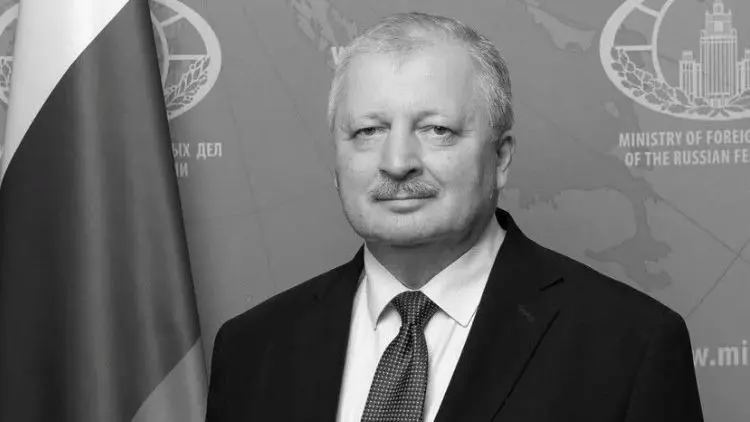
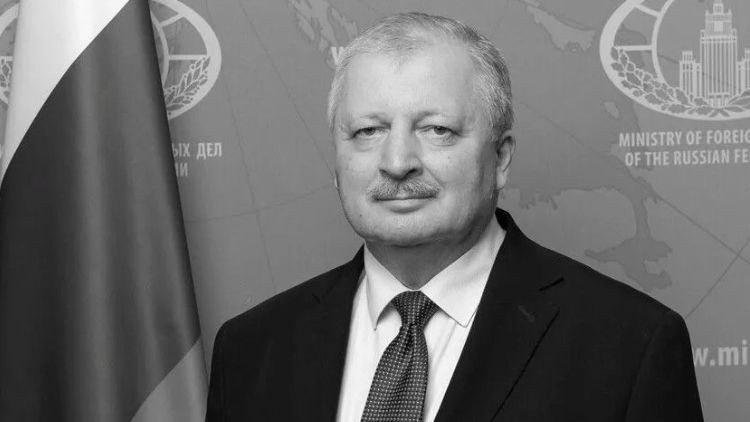
MOSCOW — The Russian Ministry of Foreign Affairs has officially confirmed the passing of Aleksandr Darchiyev, a high-ranking diplomat and a central figure in the complex web of relations between Moscow and Washington. Darchiyev, who served as a vital link between the Kremlin and the White House during a period of intense geopolitical realignment, was 66 years old at the time of his death.
The announcement was made early Wednesday by Maria Zakharova, the spokesperson for the Russian Ministry of Foreign Affairs. According to the official statement, Darchiyev passed away in Moscow following a battle with a chronic illness. While the ministry sought to frame the death as the result of long-standing health issues, the timing and sudden nature of the announcement have sparked significant discussion within international diplomatic circles, particularly given Darchiyev’s indispensable role in ongoing high-stakes negotiations.
As one of the most experienced hands in the Russian diplomatic corps, Darchiyev’s career was defined by his deep understanding of the American political landscape. His death comes at a moment when the relationship between Moscow and Washington is viewed as being at its most critical juncture in decades. Under the leadership of U.S. President Donald Trump and Russian President Vladimir Putin, the two superpowers have been engaged in a delicate and often unpredictable diplomatic dance, with Darchiyev frequently serving as the lead choreographer for the Russian side.
A Critical Juncture in Global Diplomacy
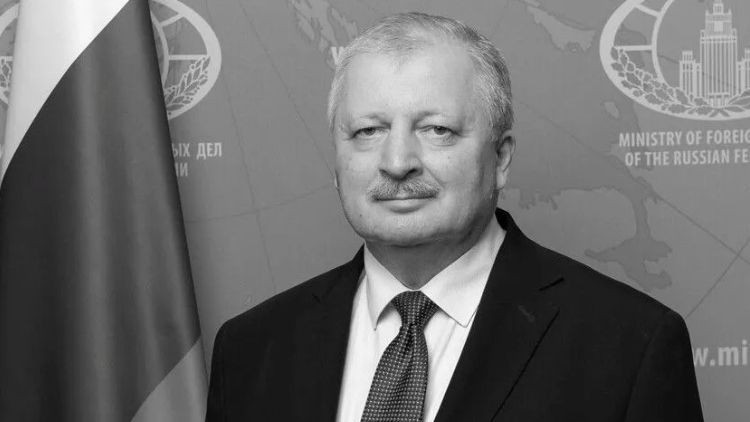
The passing of Aleksandr Darchiyev is not merely the loss of a seasoned civil servant; it represents a potential disruption in the momentum of international peace efforts. Observers have been quick to note the striking timing of his death. Darchiyev’s passing coincided exactly with the day that high-level delegations from Russia, the United States, and Ukraine returned to the negotiating table in Abu Dhabi. These talks are widely considered to be a cornerstone of the current efforts to find a lasting resolution to the ongoing conflict in Eastern Europe and to stabilize the broader security architecture of the continent.
Darchiyev was more than just a participant in these talks; he was a symbol of the possibility of normalization. Throughout his tenure, he maintained a reputation as a pragmatist who could navigate the volatile temperaments of leadership in both the Kremlin and the White House. His ability to maintain open channels of communication during periods of extreme tension made him a cornerstone of the "backchannel" diplomacy that has characterized the Trump-Putin era.
The Abu Dhabi summit was intended to build upon the tentative progress made during previous rounds of discussions. With Darchiyev’s sudden absence, the Russian delegation faces the challenge of continuing these sensitive talks without their most experienced strategist. The loss of such a figure at the very moment the "negotiation table" was being reset in the United Arab Emirates adds a layer of uncertainty to an already fragile process.
The Architect of the Istanbul Dialogue
To understand the weight of Darchiyev’s influence, one must look back to February 2025, a month that many historians may eventually view as the beginning of a new diplomatic era. During that time, Darchiyev traveled to Istanbul to lead the Russian delegation in a series of comprehensive diplomatic talks with United States representatives.
The Istanbul meetings were fraught with difficulty, taking place against a backdrop of global economic instability and shifting military alliances. However, Darchiyev’s leadership was credited with preventing a total breakdown in communication. He was instrumental in drafting the framework for what would become the "Istanbul Protocol," a set of preliminary agreements aimed at reducing direct military friction between NATO and Russian forces and establishing a roadmap for the normalization of bilateral relations.
His role in Istanbul cemented his status as the Kremlin’s preferred interlocutor for Washington. He was a diplomat who understood the nuances of American domestic politics and how they influenced foreign policy decisions. This expertise allowed him to tailor Russian proposals in a way that could be palletable to the administration in Washington, while still firmly defending the national interests of the Russian Federation. For those involved in the Istanbul process, Darchiyev was the steady hand that kept the ship of state on course when the winds of war threatened to capsize it.
A Pattern of Unexplained Losses
While the official cause of Darchiyev’s death has been attributed to a chronic illness, the event has inevitably drawn comparisons to a series of other sudden and high-profile deaths within the Russian diplomatic service over the past decade. The Russian government has a long-standing policy of maintaining a high degree of privacy regarding the health and personal lives of its top officials, a practice that often leads to intense speculation when such figures die unexpectedly while in office or during critical international missions.
Darchiyev’s name now joins a list of prominent diplomats whose departures left behind more questions than answers. In 2025, the sudden death of Aleksandr Matsegora, the Russian Ambassador to North Korea, sent shockwaves through the diplomatic community. Matsegora was a key player in the complex relationship between Moscow and Pyongyang, and his death occurred at a time of heightened activity on the Korean Peninsula.

Similarly, in 2023, the death of Nikolay Kobrinets, a senior official within the Ministry of Foreign Affairs, raised eyebrows. Kobrinets was found dead in his hotel room in Istanbul during a summit, with initial reports remaining vague about the circumstances. Perhaps the most famous of these instances was the 2017 death of Vitaly Churkin, Russia’s Permanent Representative to the United Nations. Churkin, a formidable presence in the UN Security Council, died suddenly in New York City just one day before his 65th birthday. While officials cited a heart attack, the timing of his death—amidst a period of extreme tension over Syria and Ukraine—fueled endless theories.
The recurring nature of these incidents has created a sense of unease within the international community. Each of these men held keys to critical geopolitical puzzles, and their sudden removals from the board have often led to shifts in policy or delays in negotiations. In the case of Darchiyev, the "chronic illness" explanation provided by the Ministry of Foreign Affairs has done little to quell the whispers in Western capitals, where his death is being analyzed through the lens of internal Kremlin power dynamics and the high stakes of the Abu Dhabi negotiations.
The Future of Moscow-Washington Relations
As the Russian Federation prepares for Darchiyev’s funeral, the diplomatic world is left to wonder who will fill the void he has left behind. The relationship between Donald Trump and Vladimir Putin has often relied on personal chemistry and the work of a few trusted advisors. Darchiyev was one of those few. His ability to translate the rhetoric of both leaders into actionable diplomatic steps was a rare skill.
The Ministry of Foreign Affairs has not yet named a successor to Darchiyev’s specific roles, but the pressure to do so is immense. The Abu Dhabi talks cannot afford a long hiatus, and the "Istanbul process" requires a leader who possesses the same level of institutional memory and tactical brilliance that Darchiyev brought to the table.

For now, the focus remains on the official tributes. Maria Zakharova characterized Darchiyev as a "patriot and a professional of the highest order," noting that his contributions to the Russian state would not be forgotten. However, beyond the formal eulogies, there is a palpable sense that a chapter has closed in the history of US-Russia relations. Whether the next chapter will lead toward the normalization Darchiyev worked for, or toward a new period of estrangement, remains to be seen.
The international community will be watching closely to see how the Russian delegation performs in Abu Dhabi in the coming days. The shadow of Aleksandr Darchiyev will undoubtedly hang over the proceedings, serving as a reminder of the fragility of the diplomatic ties that currently hold the global order together. As the investigation—or lack thereof—into the specifics of his "chronic illness" continues to be a topic of quiet debate, the world is left to grapple with the reality that one of the most important bridges between the East and the West has suddenly collapsed.