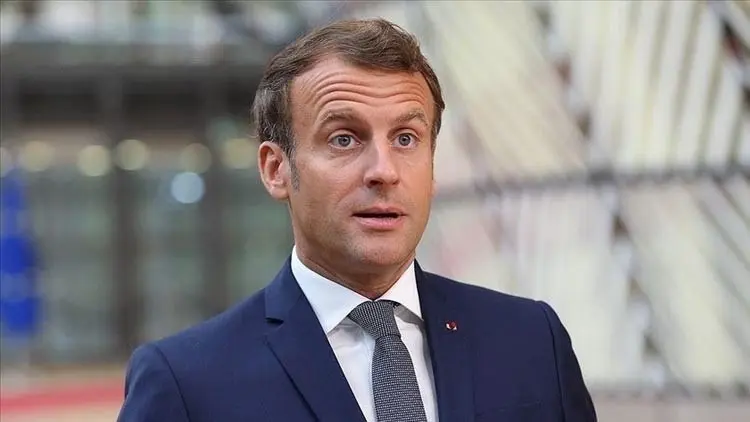
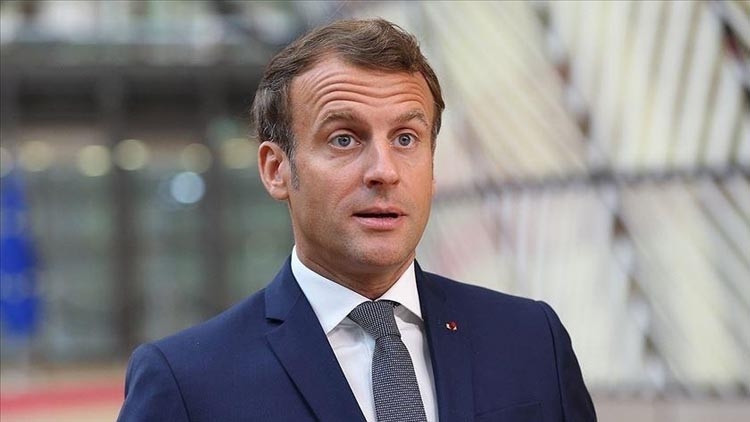
DOHA — French President Emmanuel Macron has concluded an intensive three-day diplomatic tour across the Gulf region, completing high-level engagements that took him to Kuwait, the United Arab Emirates (UAE), Bahrain, and Qatar. Ending his regional mission in the Qatari capital of Doha, the French head of state convened a comprehensive press conference addressing a vast spectrum of critical geopolitical and domestic matters. Over the course of the briefing, Macron delivered detailed policy assessments on national and European energy supply resilience, escalating Middle Eastern military confrontations, ongoing backchannel and diplomatic engagements between Tehran and Washington, expanded defense pacts with Gulf partners, and the erupting street unrest and political friction back home in France.
Reflecting on the wide-ranging conflict that broke out in the Middle East on February 28, Macron pointed to the severe regional and global consequences that have unfolded in its wake, notably Iranian retaliatory strikes, the de facto closure of the strategic Strait of Hormuz, and the acute economic shocks delivered to regional economies. In an unambiguous framing of Paris’s foreign policy stance, Macron reaffirmed France’s diplomatic independence and pursuit of regional de-escalation. "From the very first day, we have stated clearly that this is not our war, that this decision was not ours to take, and that our unwavering priority has always been the peace and stability of the region," Macron underscored.
Reiterating that France maintains its firm opposition to Iranian nuclear proliferation while actively standing by the defensive requirements of regional allies, Macron emphasized that the overriding objectives of his Gulf tour were two-pronged: to sustain active diplomatic pathways out of the present regional impasse, and to insulate France’s domestic economy by securing vital energy supplies ahead of the coming winter.
Winter Gas Supply Bolstered by Monthly 2 TWh LNG Deal with Qatar
Detailing the tangible outcomes of his high-level consultations in Doha, President Macron announced that France had firmly secured a significant share of its approaching winter natural gas requirements through an agreement with Qatar. The Qatari state, one of the world’s leading exporters of liquefied natural gas (LNG), will deliver substantial volumes directly into the French supply chain during the coldest months of the year.
"Throughout the winter period, we have successfully secured the delivery of liquefied natural gas equivalent to 2 terawatt-hours per month," Macron stated. "This arrangement was of crucial importance for us."
Macron elaborated that the bilateral natural gas arrangement serves as an essential pillar in Paris’s overarching strategy to fortify domestic energy security against geopolitical volatility. By proactively engaging Gulf producers, the French administration intends to insulate households and industries against abrupt market shocks and potential supply shortfalls that could emerge in the global hydrocarbon sector over the coming months.
Easing Fuel Prices Expected from Early November Amid Cautious Market Outlook
Turning his attention to the domestic economic impact of global hydrocarbon instability, particularly the fluctuating retail price of automotive fuel at French filling stations, Macron offered a measured assessment. The French president projected a degree of relief for consumers at the pump beginning in early November, provided that regional hostilities do not suffer a sudden and destabilizing flare-up.
Macron warned that any reignition of widespread fighting would immediately reintroduce deep volatility and price instability to international commodity desks. "If prevailing conditions remain unchanged, the situation will improve," Macron noted. "However, should conflicts restart or should regional tensions spike once again, it will be imperative to proceed with the utmost caution."
The administration’s expectations for market relief remain contingent upon stabilizing the primary shipping arteries and maintaining the influx of refined petroleum products into European terminals.
Hormuz Bottleneck Triggers Tenfold Surge in Maritime Shipping Costs
The operational paralysis surrounding the Strait of Hormuz has severely disrupted international maritime logistics and struck at the core of global crude and refined product flows. Addressing the operational realities of the transit chokepoint, Macron revealed that maritime transport expenditures have exploded exponentially since the onset of the crisis.
"Currently, our single greatest challenge lies in transportation costs," Macron remarked. "These freight and transport expenses have escalated ten times over."
The French president explained that the sharp rise in security threats across regional shipping lanes has caused commercial maritime insurers to dramatically scale back their underwriting. As war-risk insurance premiums soared or coverage was pulled altogether, the number of tankers and commercial vessels able to navigate the corridor with adequate financial guarantees dwindled rapidly.
To address the maritime standstill, Macron disclosed that France has launched formal discussions aimed at helping restore safety for merchant vessels traversing these waters. "We have proposed the establishment of a dedicated guarantee mechanism in coordination with regional nations," Macron said, noting that French authorities intend to work closely with regional and commercial stakeholders in the coming days and weeks to systematically depress transport costs and de-risk passage.
Diversifying Regional Infrastructure to Bypass the Hormuz Chokepoint
Beyond emergency maritime insurance and convoy mechanisms, Macron stressed that the Hormuz disruption has exposed an urgent strategic imperative: the structural diversification of regional hydrocarbon transit infrastructure to circumvent vulnerable maritime corridors entirely.
"The final major strategic issue we are actively working on alongside regional nations is the diversification of energy infrastructure," Macron said.
In this context, the French president referenced ongoing diplomatic and technical communications involving Iraq and Syria, underscoring broader multilateral deliberations aimed at expanding overland and alternative pipeline options. The ultimate objective of these long-term logistical adjustments, Macron noted, is to reduce global and regional economic vulnerability to single points of failure like the Strait of Hormuz, thereby ensuring stable exports even during intense military crises.
Continuous Diplomatic Outreach Maintained with Washington and Tehran
Turning to the diplomatic efforts aimed at averting a catastrophic expansion of armed hostilities across the wider Middle East, Macron revealed that the French Republic has kept channels of communication persistently open with key actors on both sides of the divide, including the United States and the leadership of the Islamic Republic of Iran.
The French president confirmed that he has remained in active, unbroken dialogue with Iranian President Masoud Pezeshkian as well as senior leaders in Washington. "We have never broken off our contacts with our ally, the United States, nor with President Pezeshkian," Macron affirmed. "We have continuously endeavored to multiply discussion channels, persistently urging composure, restraint, and the de-escalation of prevailing tensions."
Macron reiterated that sustained diplomatic engagement remains the only viable path to avert a systemic regional confrontation that could destabilize global markets and spark cross-border conflicts.
Proposals on Reopening Hormuz and Backing Qatari Mediation
Building upon these diplomatic channels, Macron underscored that Paris has tabled concrete initiatives intended to secure the full reopening of maritime traffic through the Strait of Hormuz. "We have submitted specific proposals designed to facilitate the reopening of the Strait of Hormuz," Macron affirmed to journalists in Doha. "That proposal remains firmly on the table."
Macron took the opportunity to explicitly praise the diplomatic mediation driven by the State of Qatar, which has acted as a critical conduit among belligerent parties. "Qatar has spearheaded an indispensable mediation initiative. I believe this effort is profoundly important and is moving in the right direction," Macron observed.
The French leader indicated that key diplomatic developments could materialize very rapidly: "I anticipate that over the coming hours and days, we may witness an official response, notably from Iran. How we proceed from that point forward will be calibrated directly against that response."
At the same time, Macron highlighted the delicate timing of global political calendars, pointing directly to upcoming legislative and midterm electoral dynamics in the United States and electoral processes in Israel. In light of these political crosscurrents, Macron cautioned that diplomatic initiatives must be vigorously accelerated to ensure political transitions do not inadvertently derail de-escalation or reignite direct military confrontations.
French Defensive Commitments Extended to Saudi Arabia
Addressing persistent security threats across the Arabian Peninsula, Macron directly highlighted the destabilizing attacks carried out by the Houthi movement in Yemen against strategic energy targets inside the Kingdom of Saudi Arabia. In particular, the French president drew attention to the vulnerability of the crucial cross-country pipeline that transports crude oil from the Persian Gulf directly to the port of Yanbu on the Red Sea coast—an installation whose operational security has become all the more paramount due to the Hormuz impasse.
In response to strikes affecting these vital facilities, Macron announced that France offered operational and technical assistance to restore and protect the damaged Saudi energy installations. "We proposed our direct contribution toward returning these facilities to full operational status and, most critically, toward securing their ongoing protection," Macron stated.
Revealing operational deployments on the ground, Macron added: "For the past eight days, our personnel and specialized assets have been deployed and positioned in the area. We are advancing shoulder-to-shoulder with Saudi Arabia in this direction." Simultaneously, Macron stressed the dual need to reopen diplomatic talks involving the Houthis and defuse escalating maritime confrontations in the wider Red Sea corridor.
Major Defense Pacts Sealed with the UAE and Qatar
Macron’s regional tour also yielded significant advancements in France’s bilateral defense and industrial alliances across the Arabian Peninsula. In the United Arab Emirates, Macron announced the conclusion of a milestone intergovernmental agreement centered on developing a joint strategic framework for the future fifth-generation iteration of the Dassault Rafale combat aircraft.
In Qatar, the defense talks centered on upgrading and enhancing the operational capabilities of Doha’s existing fleet of Rafale fighters, alongside advanced deliberations over the procurement of VBCI (Véhicule Blindé de Combat d’Infanterie) armored vehicles. Macron characterized the armored vehicle negotiations as a premier commercial and military partnership opportunity.

"We are proud to be one of Qatar’s premier defense partners; our bilateral cooperation in this domain is exceptionally substantial and robust," Macron remarked.
Recalling that France had rapidly dispatched and deployed air defense assets to Qatar at the very outbreak of the Middle Eastern hostilities, Macron praised the proficiency of Qatari personnel in integrating and operating those protective shields. Looking ahead, Macron affirmed that bilateral defense collaboration will broaden considerably, extending past existing Rafale modernization to include next-generation fighter capabilities, armored vehicles, advanced radar surveillance installations, and multi-layered air defense systems.
Demands for Israeli Troop Withdrawal and Lebanon’s Sovereignty
Shifting to the acute deterioration of security on Israel’s northern frontier, Macron responded to inquiries regarding the escalating situation in Lebanon by declaring the restoration of Lebanese sovereignty to be an urgent priority for French diplomacy. "Our clear objective is the restoration of Lebanon’s sovereignty, its enduring stability, and the complete disarmament of Hezbollah," Macron asserted.
Addressing the ground operational reality in southern Lebanon, Macron firmly condemned the Israeli military presence south of the Litani River, categorizing it as an unlawful occupation and demanding an immediate military pullout. "The territory south of the Litani River is currently occupied by the Israeli army, and Israeli troops must withdraw," the French president insisted.
Macron also directed sharp criticism toward moves aimed at terminating the mandate of the United Nations Interim Force in Lebanon (UNIFIL), which has historically monitored the Blue Line border zone. "I consider the termination of UNIFIL’s mandate to be an unequivocal mistake," Macron stated bluntly, arguing that dismantling international oversight without viable replacements invites broader regional chaos.
Formulating Multinational Forces and Convening Support for Lebanese Armed Forces
To prevent an operational security vacuum along the Lebanese border, Macron revealed that Paris, in close coordination with Doha, is organizing an international conference specifically dedicated to marshaling logistical, financial, and operational support for the Lebanese Armed Forces (LAF).
Furthermore, Macron announced that France is exploring alternative multinational peacekeeping models with European allies to bridge the gap left by international drawdowns. "Together with Italy and our other international partners, we are actively working on the conceptualization of other multinational forces that we hope will operate under a formal United Nations mandate," Macron stated. "France stands fully prepared to contribute its military capabilities to such an initiative."
Condemnation of Domestic Unrest in France: "No Violence is Legitimate"
Addressing the domestic political firestorm in France sparked by the violent protests of October 17, Macron struck a tone of unyielding condemnation regarding street clashes and property destruction.
"No violence is legitimate," Macron asserted forcefully. "Neither verbal violence nor physical violence, neither against private and public property nor against persons. In a functioning democracy, absolutely nothing can justify violence."
While expressing relief that the street confrontations had resulted in no loss of life despite their intensity, Macron noted that numerous members of the domestic security forces had sustained injuries while restoring public order. The French president maintained that the executive must confront such public disturbances with steady resolve and institutional calmness.
Firm Measures Against Planned Weekend Demonstrations
Turning toward the newly scheduled demonstrations planned for the coming Saturday and an impending mobilization on October 24, Macron issued a stern warning against those attempting to plunge urban areas back into turmoil.
"Those who intend to sow chaos across our city centers this Saturday will be categorically prevented from doing so," Macron cautioned. "Local curfews have already been deployed, and strict bans on public gatherings and assemblies have been instituted."
Macron confirmed that law enforcement agencies will execute their mandates with total firmness, leveraging every existing statutory and legal mechanism to extinguish unrest preemptively.
"Tomorrow morning, I will convene a high-level operational review alongside the Prime Minister, relevant cabinet ministers, and the leadership of all our intelligence services," Macron announced. "I intend to receive a granular, exhaustive briefing detailing precisely how these violent incidents unfolded." This emergency session, he added, will rigorously evaluate the October 17 disturbances and formalize comprehensive security deployment frameworks ahead of the weekend actions and the broader demonstrations slate for October 24.

Strong Rebuttal of Foreign Disinformation and Migrant Infiltration Claims
Macron seized the opportunity to firmly rebut narratives advanced by foreign commentators and international political figures regarding the root drivers of the French domestic protests. Asked directly whether the civil unrest was the byproduct of covert foreign intervention, Macron made a clear distinction between the instigation of the unrest and its subsequent digital exploitation.
"From my standpoint, there is no discernible foreign interference at the origin of these events," Macron clarified. "However, in their aftermath, we have observed undeniable foreign-sourced information manipulation."
The French president passionately dismissed allegations circulating online that claimed France was being overrun by migrant and Islamist groups, branding such characterizations as patently false. Macron directed blistering language toward foreign political figures who amplified these falsehoods, calling their commentary "unacceptable and thoroughly foolish."
In a thinly veiled rebuke directed at former U.S. President Donald Trump and Israeli Prime Minister Benjamin Netanyahu—both of whom had seized upon the French street unrest to bolster their own domestic border security platforms and electoral campaigns—Macron warned foreign actors against meddling in France’s internal trials.
"I see certain political leaders running election campaigns, whether in the region or across the Atlantic, who have naively embraced artificial-intelligence-generated content or recycled claims that certain factions wish people to believe about France," Macron remarked. "They are running their electoral campaigns off our backs. We have no need for this. We already possess our own complex problems. We are addressing these challenges methodically, respectfully, but with unwavering resolve and without compromise. We will see this through to the very end. We want order and respect to prevail across our nation, and we want our country to move forward."
Preserving Dialogue: State of Emergency Ruled Out as Youth Anxieties Acknowledged
Addressing speculation over whether the French government would officially declare a national state of emergency to quell civil unrest, Macron firmly maintained that the existing constitutional and policing toolkits remain entirely adequate to the task.
"The measures that have enabled the restoration of public order and calm since Monday do not warrant the invocation of a state of emergency," Macron observed. "Naturally, should the operational reality strictly justify it, a state of emergency could be proclaimed."
For the present, however, Macron stressed that the state must maintain robust civil dialogue with student groups, organized labor unions, and diverse civic bodies. The president placed the protests into a broader socio-psychological context, explaining that modern youth face deeply compounding systemic anxieties.
"It is entirely understandable that this generation of young people harbors profound anxiety about their collective future and feels collectively rattled by the successive shocks of terrorist attacks, the pandemic, geopolitical wars, the rapid rise of artificial intelligence, and the unfolding climate crisis," Macron reflected. "We must listen to them, we must understand their fears, and we must offer them authentic institutional support."
Gulf Tour Vindicated as Essential to French Energy Security
Defending his decision to proceed with his three-day Gulf mission against domestic political critics who argued he should have remained in Paris during the height of the street turmoil, Macron argued that the visit was vital to safeguarding the French public interest. Securing firm energy agreements directly from primary producer nations was an immediate national security necessity that could not be deferred, he insisted.
"I stand unequivocally behind my decision to execute this planned state visit," Macron affirmed, noting that the trip was directly calibrated to guarantee the energy French citizens and enterprises will require to heat their homes and power the economy throughout the approaching winter.
Comprehensive Architecture of French Diesel and Hydrocarbon Accords
To conclude his economic reporting, President Macron and the French Presidency outlined the full scale of refined petroleum and diesel agreements secured over the course of the tour and recent bilateral discussions.
According to official data released by the Élysée, the United Arab Emirates and Bahrain have each committed to delivering an additional 100,000 tons of diesel per month to France, yielding a collective 200,000 tons of newly guaranteed monthly distillate supplies.
These fresh commitments complement a preexisting accord with Saudi Arabia that had previously secured 95,000 tons of monthly diesel imports for October and November. With the integration of the Emirati and Bahraini volumes, France has boosted its total guaranteed monthly diesel intake from Gulf partners to 295,000 tons across the critical mid-autumn period, providing an essential operational cushion against global supply disruptions.