

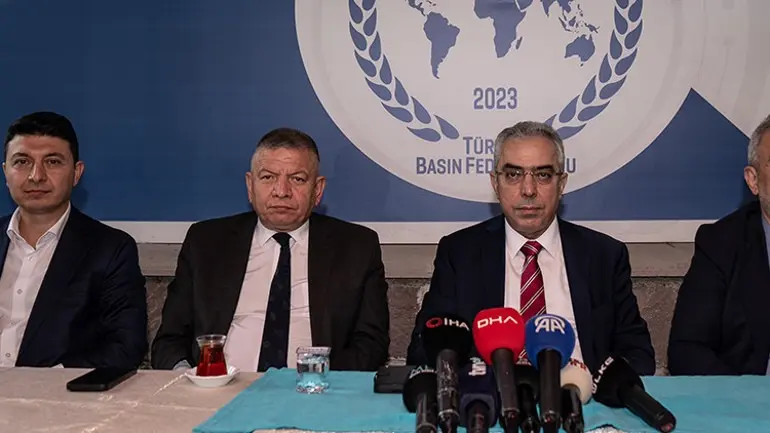
In a comprehensive briefing held with the Ankara representatives of major news organizations, Mehmet Uçum, the Chief Advisor to the President and Deputy Chairman of the Presidential Legal Policies Board, provided significant insights into the future of the Turkish political calendar and the government’s ongoing security strategies. During the session, Uçum addressed two of the most pressing topics on the national agenda: the timing of the next general elections and the specific nature of the current dialogue efforts regarding the liquidation of terrorist elements. His remarks effectively outlined the administration’s roadmap leading up to the end of the current term, while also addressing public speculation concerning the detention conditions at İmralı Prison.
The briefing, which took place in the capital, served as a platform for Uçum to articulate the legal and symbolic frameworks guiding the government’s decision-making processes. As a key figure in the development of the Presidential Government System, Uçum’s statements are viewed by observers as a definitive clarification of the Presidency’s stance on constitutional transitions and the long-term objectives of the state’s security policies.
Election Timing and the Candidacy of President Erdoğan
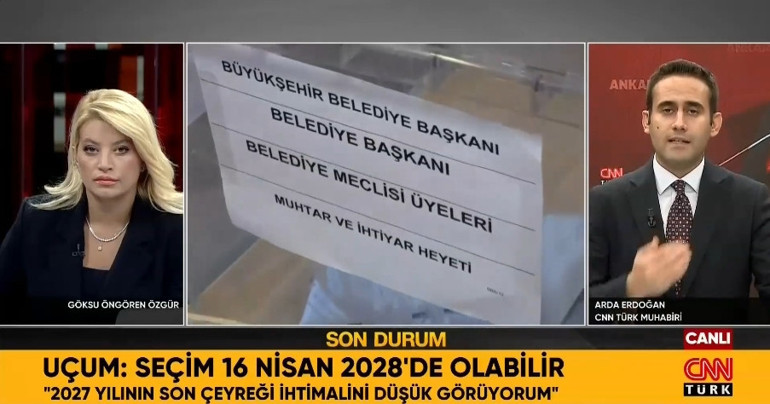
One of the most anticipated aspects of the meeting was Uçum’s assessment of the election cycle. Amidst various political rumors suggesting the possibility of early elections, the Chief Advisor offered a grounded projection based on both logistical considerations and historical symbolism. Uçum stated that he views the probability of holding elections in the final quarter of 2027 as being notably low. Instead, he pointed toward the spring of 2028 as the most likely period for the nation to head to the polls.
Specifically, Uçum identified April 16, 2028, as a date of particular significance. He noted that this date aligns with the anniversary of the 16 April 2017 referendum, which marked the historic transition of Turkey from a parliamentary system to the Presidential Government System. According to Uçum, holding the elections on this anniversary would carry a profound symbolic meaning, representing a decade of the system’s implementation and its institutionalization within the Turkish democratic framework. He suggested that either March or April 2028 would be the most appropriate window for the electoral process, thereby dismissing the notion of a rushed or significantly advanced election date.

In conjunction with the timing of the vote, Uçum also touched upon the future of the nation’s leadership. He stated unequivocally that President Recep Tayyip Erdoğan would seek candidacy for the final time in the 2028 elections. This statement clarifies the administration’s interpretation of the constitutional limits and the President’s personal political trajectory. By framing the 2028 election as the President’s final campaign, Uçum underscored a period of transition and the completion of a specific era in Turkish governance, emphasizing that the focus remains on fulfilling the current mandate and ensuring the stability of the state through the end of the term.
The discussion regarding the election date is not merely a matter of logistics but is deeply intertwined with the legal architecture of the Presidential Government System. Uçum, in his capacity as a legal policy expert, emphasized that the timing must reflect the stability of the executive branch. By leaning toward a date in 2028, the administration signals its intent to prioritize the completion of its economic and social programs without the interruption of an early campaign cycle, which often brings about market volatility and administrative pauses.
The Dialogue Process and the Status of the İmralı Annex

Beyond the electoral calendar, the briefing delved into sensitive matters regarding national security and the ongoing efforts to end the threat of terrorism. Uçum addressed recent reports and public discourse regarding Abdullah Öcalan and the facilities at İmralı. He was careful to contextualize the construction of a new residence on the island, explaining that it should not be misinterpreted as a move toward the prisoner’s release or a softening of judicial standing.
Uçum clarified that the structure in question was built as an "annex unit" (ek ünite) to the existing prison facility. He emphasized that this development was a functional measure designed to facilitate the "dialogue process" currently being managed by the state. The Chief Advisor explained that providing such a space is an opportunity created to allow Öcalan to better perform his purported role within the framework of the state’s objectives. However, he was firm in stating that no one should conclude that this implies "he has been set free" or that his status as a convict has changed.
The primary goal of the state in this dialogue, Uçum explained, is the total liquidation of the terrorist organization. He described the process as a "dialogue process with a price and a target." The "price" or the condition for any progress in these talks is the definitive dissolution of the PKK and the cessation of its armed activities against the Turkish state. Uçum’s remarks suggest that the government is utilizing every available channel—including the influence of the imprisoned leader—to achieve a final and lasting end to the decades-long conflict, but only within a framework that prioritizes the security and sovereignty of the Republic.

This distinction is crucial for the administration’s communication strategy, as it seeks to balance the complexities of a peace-oriented dialogue with the strict requirements of the Turkish penal code and national security interests. Uçum reiterated that the process is focused on a specific outcome: the disarmament and removal of the terrorist threat from the region. By defining the İmralı annex as a tool for this specific mission, the Chief Advisor sought to quell concerns that the government might be deviating from its established counter-terrorism protocols.
The "dialogue process," as described by Uçum, is a calculated strategic move aimed at achieving a result that has long eluded the Turkish political landscape. By focusing on the "liquidation" of the organization, the government is framing its actions not as a negotiation between equals, but as a state-led initiative to bring about the surrender and dissolution of an armed group. Uçum’s transparency regarding the functional nature of the İmralı annex serves to demystify the state’s methods while maintaining a firm stance on the ultimate objective.
As the briefing concluded, it became clear that the government’s strategy for the coming years is one of consolidation and resolution. By setting a clear expectation for a 2028 election, the administration aims to foster an environment of political predictability. Simultaneously, by clarifying the parameters of the dialogue process in İmralı, the state is signaling its commitment to resolving the country’s most persistent security challenge through a combination of firm legal standing and strategic communication.
Uçum’s role as the intermediary for these messages highlights the importance the Presidency places on the legal and structural integrity of its policies. As Turkey moves toward the symbolic milestone of the 2028 elections, the interplay between constitutional law, political symbolism, and national security will continue to be the defining feature of the country’s trajectory. The Chief Advisor’s remarks provide a foundational understanding of how the current administration intends to navigate the final years of its current mandate, ensuring that the transition to the next electoral cycle is handled with a focus on institutional continuity and the finality of the state’s security goals.