

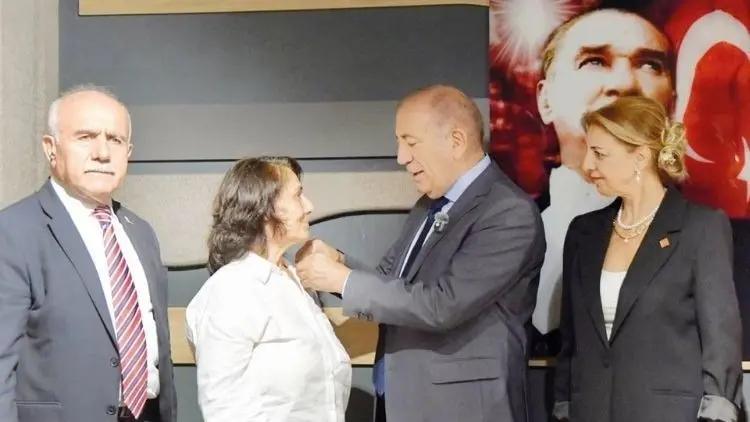
In a significant gathering held at the Republican People’s Party (CHP) Istanbul Provincial Headquarters in Sarıyer, Provincial Chairman Gürsel Tekin delivered a powerful address marking the party’s 16th traditional badge-pinning ceremony. The event, which serves as a symbolic welcoming of new members into the party’s ranks, became a platform for Tekin to reflect on the challenges of his tenure and his vision for the future of the organization. Addressing a crowd of party faithful and new recruits, Tekin used vivid metaphors to describe the arduous process of internal purification, famously likening the removal of problematic elements within the party to the delicate task of sorting white stones from white rice.
The ceremony was not merely a celebratory event for the influx of new blood into the CHP; it served as a stark status report on the provincial branch’s struggle against internal factions and financial instability. Tekin’s remarks highlighted a period of intense transition, characterized by both physical and metaphorical reconstruction. He spoke candidly about the "gang-like" structures (çeteleşme) he encountered upon taking office and the personal sacrifices required to keep the provincial organization afloat during its most turbulent times.
The Metaphor of the White Stones: A Difficult Path to Purification
Central to Gürsel Tekin’s speech was a compelling analogy that resonated deeply with the audience. He spoke of the ongoing efforts to cleanse the party of elements that do not align with its core values. Tekin noted that while some problems are obvious, others are dangerously subtle. "It is very difficult to pick out the white stones from within the rice," Tekin explained to the gathered members. "You can easily see the black stones; we have already selected and removed them. But now, it is the turn of the white stones."
This metaphor served to illustrate the complexity of political reform. In Tekin’s view, the "black stones"—the obvious detractors or those whose interests were clearly at odds with the party—were the first to be addressed. However, the "white stones" represent a more insidious challenge: those who appear to belong but who subtly undermine the organization from within. Tekin admitted to experiencing "great disappointment" regarding these hidden obstacles, suggesting that the process of internal vetting had revealed deeper issues than initially anticipated. By framing the reform in this way, Tekin signaled to the party membership that the "cleansing" process is entering a more nuanced and perhaps more painful phase, where loyalty and integrity will be scrutinized with even greater precision.
Confronting "Gang-like" Structures and Internal Conflict
Tekin’s retrospective on his time as Provincial Chairman painted a picture of a party branch that had been under siege from within. He described a state of affairs where the party had been pushed toward "çeteleşme," or the formation of gang-like cliques that sought to prioritize private interests over the collective mission of the CHP. According to Tekin, the situation had become so dire that the physical infrastructure of the party had suffered. He recounted instances where the very furniture of the headquarters—the stairs and chairs—had been broken during internal disputes or through neglect.
"We saw that while we were trying to solve problems, we were faced with a major movement toward gang-like structures," Tekin stated. He emphasized that the CHP could never be "delivered" or "surrendered" to outside entities such as bar associations or other specific interest groups. He argued that the party must remain an independent political force, beholden only to its principles and the public. To reclaim the party’s dignity and assets, Tekin noted that the leadership had to resort to legal channels, including the use of enforcement (icra) to recover what rightfully belonged to the organization. This battle for control was presented as a necessary struggle to ensure the party’s survival as a democratic institution.
Financial Sacrifices and the Fight Against Defamation
One of the most striking revelations in Tekin’s speech concerned the financial desperation the Istanbul Provincial Branch faced during his leadership. He addressed rumors and allegations that had circulated regarding the source of the party’s funding, specifically refuting claims that the CHP had received financial support from the ruling AK Party. Tekin was firm in his denial, highlighting the personal toll the financial crisis had taken on him and his colleagues.
"I am speaking to those who say we received salaries from the AK Party," Tekin declared. "I will never forget: I sold my own car to pay the salaries of our employees." He further explained that the party had to rely on bank credits to remain operational. This narrative of personal sacrifice was used to underscore his commitment to the party’s independence. By selling personal assets to meet the organization’s payroll, Tekin sought to demonstrate that his loyalty was beyond reproach and that the party’s survival was achieved through the grit of its members rather than through backroom deals with political rivals.

Tekin also took aim at "informants" and "contractors" who he suggested had tried to embed themselves within the party for personal gain. He vowed that as long as he had the strength, he would not allow the "pieces" or influences of these individuals to remain within the CHP. This rhetoric of total removal suggests a zero-tolerance policy toward those who view political involvement as a business opportunity.
Legal Survival and the Shield of the Party
Beyond internal politics and finances, Tekin touched upon the existential legal threats the CHP has faced. In the Turkish political landscape, the threat of party closure is a recurring theme, and Tekin claimed that the Istanbul leadership had acted as a "shield" to prevent such a legal catastrophe. He noted that they had fought hard to ensure the party was not shut down based on any legal pretext, positioning the provincial branch’s struggles as a vital part of the national party’s survival strategy.
This defensive posture, according to Tekin, was maintained even when the branch was at its most vulnerable. The effort to remain legally viable while undergoing such intense internal turmoil was presented as a testament to the resilience of the Istanbul organization.
A Future Defined by Restructuring
As the 16th badge-pinning ceremony drew to a close, questions inevitably turned to the future of the provincial leadership and Tekin’s own role. When asked about the duration of his term and his standing with the central leadership, Tekin remained composed and optimistic. He emphasized that there is a continuous and healthy line of communication with the General Chairman.

"We are in contact with our General Chairman; we have no problems," Tekin remarked. He indicated that the next steps for the party would be determined by the central headquarters. "In the coming days, our General Chairman and the general headquarters will make a decision regarding the issue of restructuring," he added. This statement suggests that the "purification" process mentioned earlier is likely a precursor to a broader, more formal reorganization of the party’s Istanbul apparatus, intended to align it more closely with the national leadership’s strategic goals.
The Badge-Pinning: A Symbol of Renewal
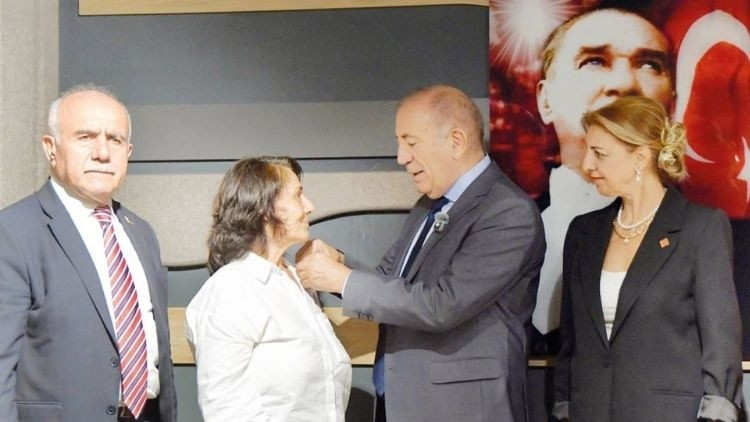
The event concluded on a high note with the physical act of pinning badges onto the lapels of the party’s newest members. Throughout the ceremony, the hall echoed with the slogan "Arına arına iktidara" (To power through purification). This chant encapsulated the core message of Tekin’s speech: that the path to electoral success is paved with internal integrity and the removal of corruptive influences.
As Gürsel Tekin moved through the crowd to welcome the new recruits, the atmosphere was one of determined renewal. By sharing the hardships of the past—the broken chairs, the sold cars, and the "white stones" in the rice—Tekin sought to forge a stronger, more transparent bond with the new generation of CHP members. The ceremony served as a reminder that while the party looks toward national power, it remains deeply focused on the integrity of its own foundation in Istanbul. The 16th traditional badge-pinning ceremony thus ended not just as a recruitment event, but as a definitive statement of intent for the future of the CHP in Turkey’s largest city.