
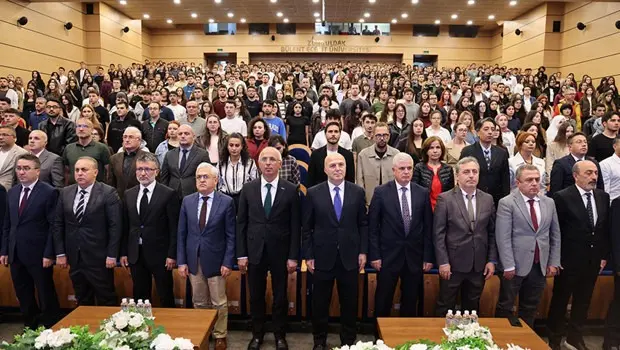
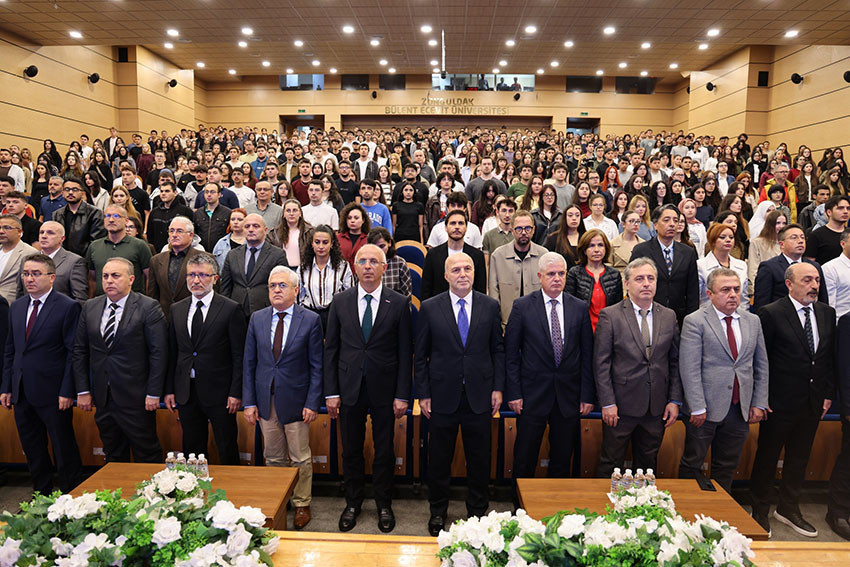
ZONGULDAK — The 2026–2027 academic year at Zonguldak Bülent Ecevit University (BEUN) has officially commenced, marked by a series of comprehensive, multi-campus orientation programs welcoming approximately 30,000 newly enrolled students. The university’s central orientation event, held at the Sezai Karakoç Culture Center, set a profound tone for the incoming cohort as university administrators, faculty, and students gathered to mark the beginning of their higher education journey. Simultaneous programs were also conducted across various other campuses of the university to ensure all incoming students were integrated smoothly into the academic community.
Addressing the thousands of young minds embarking on this pivotal chapter of their lives, BEUN Rector Prof. Dr. Ahmet Ulusoy delivered a powerful keynote address. His speech transcended typical academic welcomes, focusing instead on the intersection of modern technology, ethical responsibility, personal character, and civic duty. Prof. Dr. Ulusoy urged students to embrace the rapidly evolving digital landscape, particularly artificial intelligence, but issued a stern warning against allowing technological tools to erode their capacity for independent, critical thought.
"Use artificial intelligence effectively," the Rector advised the young audience, "but do not surrender your ability to think to technology. Always ask yourself, ‘What is my contribution to this country?’"
The Spirit of Zonguldak: Labor, Sweat, and Perseverance
To fully appreciate the academic journey ahead, Rector Ulusoy emphasized that students must first understand the unique cultural, historical, and economic fabric of the city they now call home. Zonguldak, historically celebrated as the industrial engine of Turkey due to its rich coal mining heritage, carries a legacy deeply rooted in hard work, resilience, and communal solidarity.
The Rector spoke eloquently about how the city’s identity should shape the character and work ethic of the student body. He noted that studying at BEUN is not merely about attending classes in a scenic coastal Black Sea city; it is about absorbing the values of a community built on the physical and emotional sacrifices of generations of miners and workers.
"To study at a university in this city without understanding the spirit of Zonguldak is to miss an important, fundamental truth," Prof. Dr. Ulusoy remarked. He painted a vivid picture of the city’s heritage, explaining that its collective memory is defined by qualities that parallel the academic journey itself. "Because in the memory of this city, there is as much labor as coal, as much patience as darkness, and as much honor as sweat."
By drawing this parallel, the Rector encouraged students to view their academic challenges through the lens of Zonguldak’s historical endurance, urging them to match the city’s legendary work ethic with their own intellectual pursuits.
Show Loyalty to Your Youth, Your Families, and Your Nation
A central theme of the Rector’s address was the concept of gratitude and loyalty—specifically, acknowledging the collective effort required to bring each student to the threshold of higher education. Prof. Dr. Ulusoy reminded the incoming class that their presence at the university was not an isolated achievement, but the culmination of years of dedication, sacrifice, and hope from their families, teachers, and communities.
He urged students to remain mindful of these foundations as they navigate the distractions and freedoms of university life. "This city is a loyal, hardworking city," Ulusoy stated, connecting the values of Zonguldak back to the personal lives of the students. "Never forget the immense efforts your families made to bring you to these university benches. Years from now, when you depart from this place, make sure you have shown loyalty to your youth."
The Rector defined this loyalty not as a passive feeling, but as an active, daily commitment to self-improvement and societal contribution. He challenged the students to envision their graduation day and the reflections they should have upon receiving their degrees.

"When you graduate, you should be able to say, ‘I have done justice to the opportunities provided to me; I have shown loyalty to my family’s labor, to my nation’s sacrifices, to my professors’ efforts, and to my own youth.’"
In doing so, Prof. Dr. Ulusoy sought to redefine the purpose of higher education. He argued against the prevailing modern view that treats a university degree solely as a vehicle for personal financial gain or career advancement. While professional success is a natural outcome, he insisted that the true measure of education lies in its social utility.
"University education should not be viewed merely as a tool for securing a good profession and earning an income," the Rector explained. "Throughout your educational life, continuously ask yourself this crucial question: ‘What is my contribution to my homeland?’"
He went on to elaborate on the true nature of patriotism, steering students away from superficial displays of national pride toward constructive action. "Loving your country is not merely looking at the flag and feeling proud," Ulusoy declared. "True love of country means adding tangible value to the lives of the people who live under the shadow of that flag. This nation expects effort, dedication, and genuine contribution from you."
Do Not Leave Your Thinking to Technology
Turning his attention to the technological landscape of the late 2020s, Rector Ulusoy addressed the rapid integration of advanced digital tools and artificial intelligence into academic and professional spheres. He acknowledged that the current generation of students is entering a global environment where digital literacy and foreign language proficiency are no longer optional luxuries but fundamental prerequisites for survival and success.

"In this era, knowledge is the most strategic power that transcends all national borders," Ulusoy observed, emphasizing the geopolitical and economic dimensions of modern education. "Strive to acquire the equipment and skills necessary to compete on a global scale. Learn foreign languages, continuously develop your digital competencies, and integrate artificial intelligence effectively into your workflows."
However, this encouragement of technological adoption was accompanied by a crucial caveat regarding intellectual autonomy. The Rector warned against the dangers of intellectual complacency, noting that over-reliance on automated systems and generative AI could lead to a decline in critical thinking and original problem-solving.
"But do not hand over your ability to think to technology," he warned. He explained that while technology can process vast amounts of data and generate rapid outputs, it lacks the human capacity for ethical judgment, creative synthesis, and deep comprehension.
Looking toward the future job market and societal landscape, Prof. Dr. Ulusoy predicted a paradigm shift in how human capability is valued. He suggested that in an age of infinite, easily accessible information, the traditional model of education—which prioritizes the memorization and accumulation of facts—is becoming obsolete.
"In the future, it will not be those who simply possess a vast amount of information who stand out," the Rector asserted, "but those who possess the intellectual depth to ask the right questions."

To help students achieve this level of cognitive mastery, Ulusoy offered practical advice on the nature of academic success. He dispelled the myth that excellence is achieved through sudden, dramatic breakthroughs, emphasizing instead the power of consistency and routine. He told the audience that lasting success is built on the accumulation of small, disciplined, and daily efforts rather than sporadic bursts of intense activity.
A Shared Table on the First Day
Following the formal proceedings and speeches of the orientation program, the event transitioned from the lecture halls to a more personal, community-oriented setting. In a gesture aimed at breaking down traditional academic hierarchies and fostering a sense of belonging, Rector Ulusoy joined the newly arrived students for lunch at the university cafeteria.
Sitting side-by-side with the freshmen, many of whom had traveled from various provinces across Turkey to study in Zonguldak, the Rector shared a meal and engaged in informal conversations. This setting allowed him to hear firsthand about the expectations, hopes, and concerns of the new student body.
For many of the young students, the transition to university represents their first prolonged period away from home, bringing a mix of intense excitement and natural anxiety. Those who had traveled from distant cities shared their initial apprehensions about adapting to a new geographic and cultural environment. However, they expressed that the warm, welcoming atmosphere they encountered on their very first day on campus—exemplified by the Rector’s approachable presence—significantly eased their anxieties and made them feel at home.
The simultaneous orientation programs across BEUN’s various campuses successfully concluded, leaving the incoming class of approximately 30,000 students not only equipped with practical information about their academic programs but also inspired by a shared vision of personal growth, social responsibility, and intellectual independence.