Across the vast culinary landscapes spanning Anatolia and the Caucasus, few culinary staples command as much cultural reverence, craft, and communal affection as filled dumplings. Universally celebrated within dough-based culinary traditions, dumplings present an intricate balance of delicate, thinly rolled dough enveloping seasoned fillings that range from rich ground meats to spiced root vegetables. Far from being a uniform dish, this beloved family of foods reflects wide-ranging culinary geographies, with preparation methods shifting dramatically from gentle boiling in seasoned broths to deep-frying in shimmering hot oil.
A closer look at the expansive heritage of dumpling making reveals dishes that transcend everyday sustenance, transforming humble pantry items into elaborate dining centerpieces. From the micro-folded parcels of Kayseri and the crisp, golden crusts of oil-fried variations to the towering, pleated broth-filled pockets of Georgian tradition and the nut-garnished specialties of the Black Sea coast, five regional dumpling styles stand out for their distinct craftsmanship, historical continuity, and enduring appeal on modern dinner tables.
Hingel
Widely cherished across Eastern Anatolia and neighboring regions, hingel—often known regionally as hengel or hinkal depending on the local dialect—occupies a singular place in the spectrum of traditional dough specialties. While meat-filled variants exist throughout the highlands, the potato-filled rendition of hingel has garnered widespread renown as one of the most comforting and satisfying traditional preparations in regional gastronomy.
The allure of potato hingel lies fundamentally in its interplay of contrasting textures. The exterior begins with a firmly kneaded flour-and-water dough, rolled out with considerable care to maintain structural integrity while avoiding heaviness. Inside rests a velvety filling dominated by boiled, mashed potatoes seasoned thoughtfully with aromatics, traditionally incorporating finely minced onions softened in butter alongside cracked black pepper and regional spices.

When shaped, hingel parcels are typically folded into distinctive, decorative patterns—often braided or pinched into substantial half-moon pockets that securely seal the delicate filling inside. Cooked gently in boiling salted water, the dumplings emerge tender yet distinct. The dish achieves its signature culinary identity at the moment of serving, when generous amounts of foaming, browned butter—frequently infused with dried mint, crushed red pepper flakes, or tomato concentrate—are drizzled directly over the mounded pasta. The result is a visually captivating and deeply hearty dish, celebrated both for its presentation and its capacity to open the appetites of entire dinner gatherings.
Kayseri Mantısı
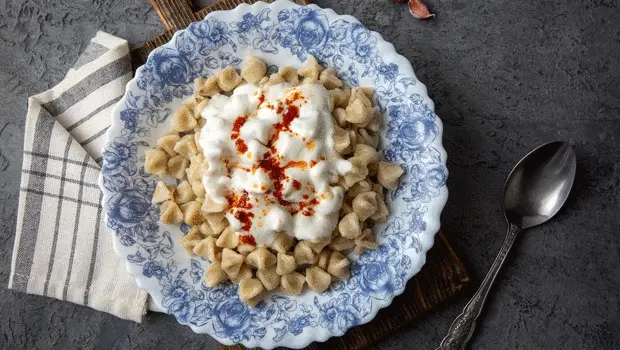
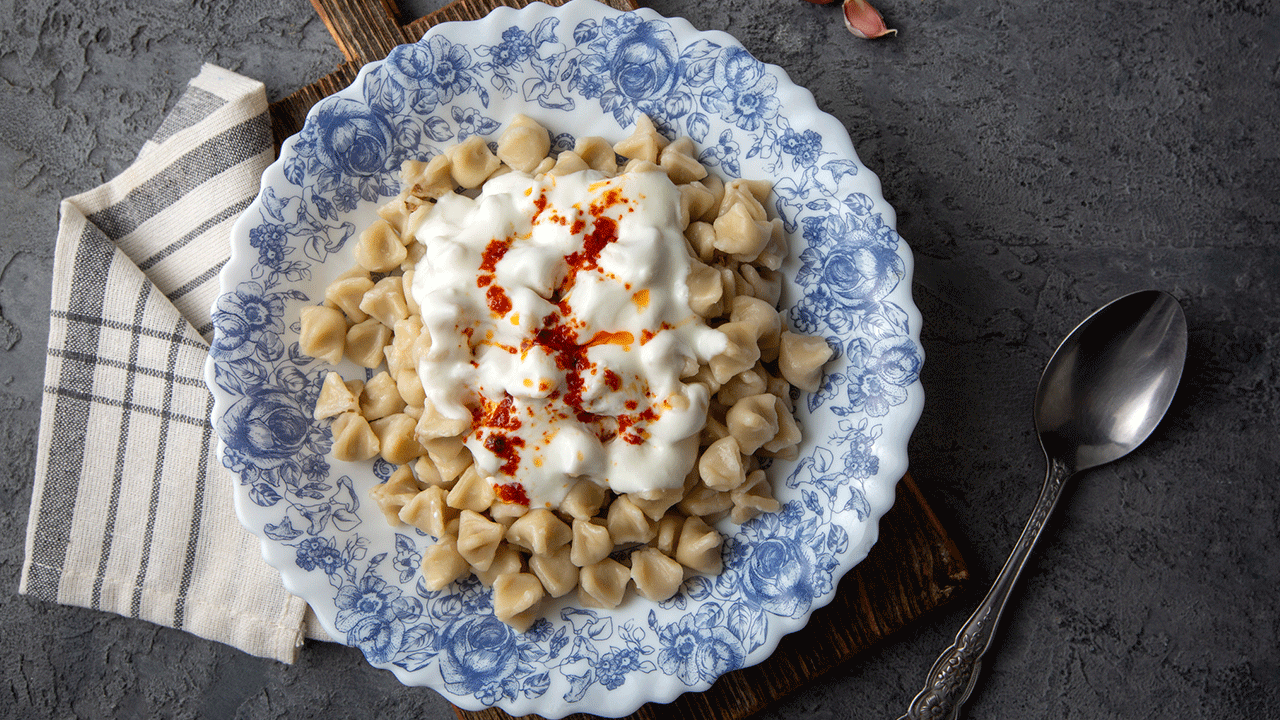
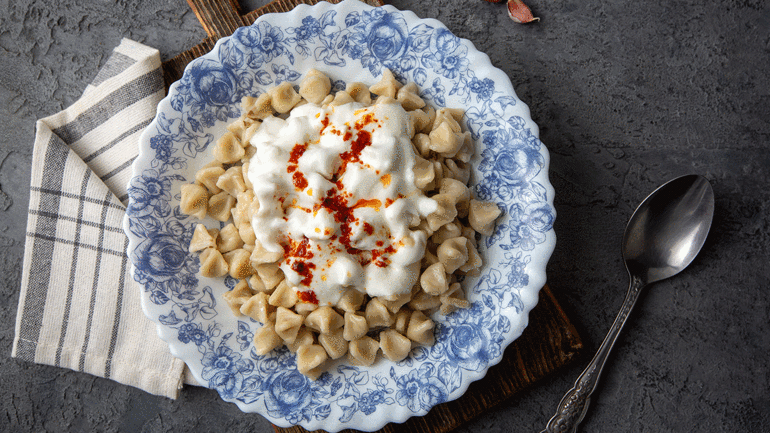
Within the rich canon of Turkish gastronomy, Kayseri mantısı stands as an undisputed benchmark of culinary skill, patience, and cultural pride. Hailing from the Central Anatolian province of Kayseri, this preparation represents one of the most prized dishes of traditional household cooking, famously transforming a weekend family affair into an intricate demonstration of manual dexterity.

The reputation of Kayseri mantısı rests primarily on its diminutive scale. Tradition holds that the hallmarks of true culinary mastery require each individual dumpling to be folded so small that forty pieces can fit comfortably within a single wooden soup spoon. Achieving this level of precision demands an exceptionally thin, elastic dough that must be rolled evenly across a broad wooden board using a thin rolling pin known as an oklava. Once divided into minuscule squares, each tiny segment is crowned with a pinpoint amount of raw, spiced ground meat filling—predominantly beef or mutton mixed with grated onion, salt, and black pepper.
The folding process demands quick, deft pinches of opposite corners, forming tiny, boat-shaped or cross-folded packets that retain their structural form through the cooking process. Simmered until tender in a light broth, the dumplings are plated with an exacting balance of toppings: a generous layer of garlic-infused plain yogurt followed immediately by a glossy, crimson sauce made by sizzling butter with sweet or spicy pepper paste and dried mint. Transforming ordinary family gatherings into lavish banquets, Kayseri mantısı remains an irreplaceable classic that consistently yields dependable, celebratory dining experiences.

Yağ Mantısı
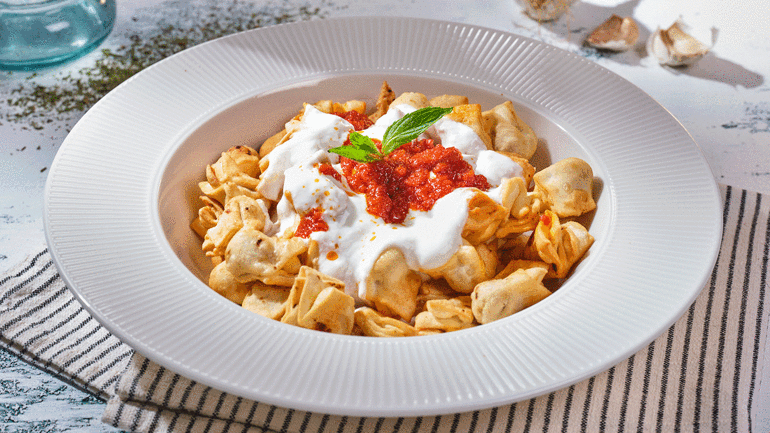
While boiled preparations dominate the broader mantı narrative, the province of Kayseri also lays claim to a radically different, indulgent variation: yağ mantısı, or oil mantı. Distinct from its tiny, water-boiled sibling, yağ mantısı offers a contrasting textural dimension characterized by an audibly crisp shell and an exceptionally succulent interior.
The preparation of yağ mantısı diverges from the start through its dough composition and shaping. Unlike the strictly unleavened sheets used for miniature boiled mantı, yağ mantısı frequently employs a dough with a slight touch of yeast or a slightly richer structure, which allows it to puff, blister, and turn an even, golden amber when submerged in hot oil. The dough squares are rolled noticeably larger to accommodate a more substantial portion of spiced ground meat filling, which must remain tender and juicy as the exterior cooks rapidly.
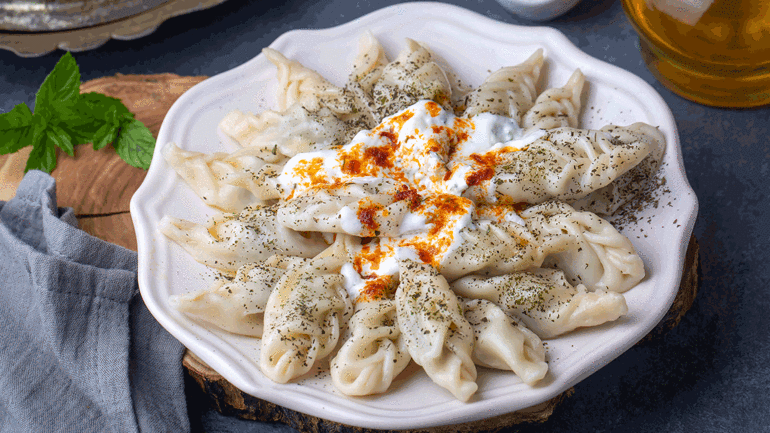
Once carefully assembled and pinched shut, the dumplings are deep-fried in hot vegetable oil until they achieve a deep, blushing crispness described in traditional cooking as becoming red like a pomegranate. Immediately upon leaving the oil, the crisp dumplings are transferred to serving plates, where they are accompanied by cool garlic yogurt and a warm, spiced tomato sauce. The thermodynamic interplay between the piping-hot, crunchy dough, the juicy meat inside, and the cool tang of the garlic-infused dairy makes yağ mantısı an exceptionally memorable entry in the regional dumpling repertoire.
Hinkali
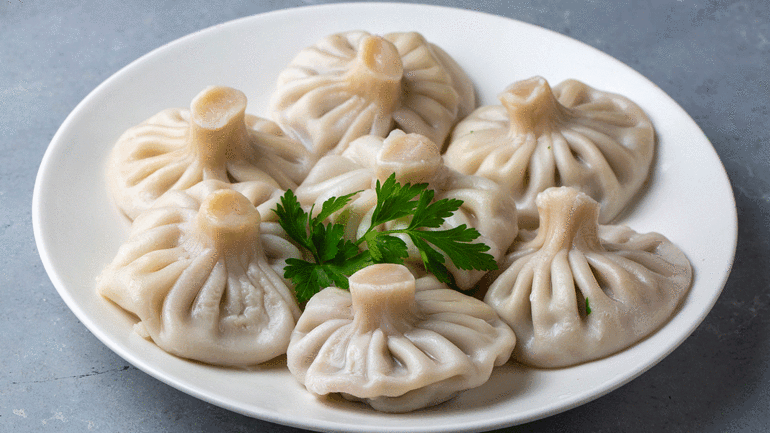
Crossing into the majestic mountainous landscapes of the Caucasus, Georgian cuisine contributes one of the world’s most formidable and celebrated dumpling styles: the monumental hinkali. Instantly recognizable by its generous proportions, elegant accordion pleats, and distinctive dough stem, hinkali is far more than a simple culinary treat; it is an enduring dining ritual.
At the heart of hinkali is an ingenious structural concept designed to capture and concentrate flavor. The filling, traditionally composed of raw, finely minced beef and pork—or mountain mutton—is blended with cold water or rich broth, crushed black pepper, finely chopped onions, and occasionally mountain herbs like wild caraway or cilantro. When the large circular dough wrappers are pleated together—often requiring up to twenty or more fine folds gathered neatly at the crown—they fully encase the meat and its moisture.
As the hinkali simmer gently in boiling water, the liquid and meat fat within the tightly sealed parcel heat up, transforming into an intensely flavorful, aromatic internal broth. This physical transformation dictates the time-honored etiquette for eating the dish. Hinkali are traditionally consumed entirely by hand, never with a knife and fork. Diners grasp the thick, top knot of cooked dough—known colloquially as the handle or stem—lift the dumpling carefully, take a small, strategic initial bite from the tender side, and sip out the scalding broth before finishing the remainder of the pocket. The thick handle itself is frequently left behind on the edge of the plate, functioning both as a tool to hold the dumpling and as a tally of how many the diner has managed to enjoy.
Sinop Mantısı
Positioned along the shores of the central Black Sea coast, the maritime city of Sinop offers a geographic and textural variation that bridges savory richness with earthiness: the celebrated Sinop mantısı. Esteemed throughout Turkey for its distinct finishing touches, this coastal variation distinguishes itself through an iconic pairing of freshly ground walnuts and garlic-spiked yogurt.
The foundation of Sinop mantısı begins with an exquisitely thin, hand-rolled sheet of unleavened dough. Skilled makers roll the dough with extraordinary lightness, slicing it into medium-sized squares that are filled generously with well-seasoned ground meat. Unlike the microscopic scale associated with Central Anatolia or the massive proportions found in Caucasian traditions, Sinop mantısı adopts a balanced, triangular or envelope-style fold that highlights the quality of its thin wrapper and savory interior in equal measure.
The true distinctiveness of the dish reveals itself during the final plating. After emerging from a quick boil in salted water, the tender parcels are arranged on a platter. Depending on regional preferences and diner inclination, the dish can be served entirely topped with finely crushed walnuts tossed in sizzling melted butter, entirely blanketed with creamy garlic yogurt, or—most famously—presented half-and-half, allowing diners to alternate between the crisp, nutty crunch of the walnuts and the cool, creamy acidity of the yogurt sauce. The earthy sweetness of the walnuts cuts effortlessly through the rich meat, giving Sinop mantısı a refined, multi-layered profile that highlights the enduring versatility of regional dumpling traditions.