
The global box-office triumph of the cinematic spectacle ‘Odyssey,’ written and directed by Christopher Nolan, has already secured the film’s place among the most memorable releases in modern cinema. Beyond its record-breaking commercial performance, the production has ignited a worldwide resurgence of interest in Homer’s 3,000-year-old epic poem, Greek mythology, and the breathtaking Mediterranean geography in which the legendary narrative unfolds.
From packed museum halls and sprawling archaeological parks to skyrocketing classical literature sales, the film’s cultural footprint is proving immense. Tourism boards and travel specialists across the Mediterranean are now bracing for an unprecedented wave of heritage-driven travel, as audience members seek to trace the footsteps of King Odysseus from the ancient plains of Anatolia to the rocky shores of the Ionian Sea.
Evaluating the profound societal impact of the film, Prof. Dr. Rüstem Aslan—Head of the Troy Ancient City Excavation Team and author of the recently published book Homer for Beginners—attributes the phenomenon to the timeless resonance and philosophical depth of Homer’s original text. According to Aslan, Homer’s Odyssey stands as the most captivating maritime navigation narrative in human history, carrying universal truths that continue to reflect the core of human nature.
"Following the fall of Troy, King Odysseus of Ithaca embarks on a journey back to his homeland that spans ten arduous years," Prof. Dr. Aslan explains. "However, this return is far more than a mere nautical expedition. It is a symbolic journey that tests human intellect, courage, patience, and willpower. Every island Odysseus lands upon and every harbor he enters represents a distinct stage and dimension of human life. The epic of Odysseus powerfully demonstrates what it truly means to be human. Greed, forgetfulness, hubris, temptation, the relentless pursuit of knowledge, and an unyielding longing for home constitute the foundational themes of this voyage."
As moviegoers leave theaters captivated by these themes, many are inspired to undertake the voyage themselves. Serda Büyükkoyuncu, a prominent travel writer for Hürriyet Travel and author of Ancient Greek Mythology: The Love Life of the Gods, notes that the film acts as an irresistible catalyst for wanderlust.

"From the formidable ramparts of Troy and the volcanic landscapes of Sicily to the Amalfi coastline where sirens were believed to sing, and finally to Ithaca where Odysseus was at last reunited with his home, this route represents perhaps the oldest cultural and travel itinerary in the world," Büyükkoyuncu says.
Guided by the insights of Prof. Dr. Rüstem Aslan and Serda Büyükkoyuncu, travelers can explore the historical and mythological geography of Odysseus’s journey, encountering the iconic landscapes, archaeological treasures, and divine figures that defined the ancient world.
The Wooden Horse and a Victory That Sparked a Decade-Long Odyssey
Troy Ancient City, Troy Museum, and Bozcaada (Tenedos) — Çanakkale, Turkey

The legendary expedition begins on the wind-swept coastline of northwestern Turkey. Prof. Dr. Rüstem Aslan highlights the Troy Ancient City in Çanakkale as one of the most critical archaeological sites on Earth. Visitors walking through the site can observe distinct archaeological strata representing different eras of Trojan history, alongside ancient defensive walls and monumental city gates.
Directly adjacent to the ruins stands the acclaimed Troy Museum, which houses thousands of artifacts excavated from the site, offering an intimate look at the bronze-age civilization that inspired Homer.
Crucial to this initial phase of the journey is the nearby island of Bozcaada, known in antiquity as Tenedos, situated at the entrance of the Dardanelles Strait.

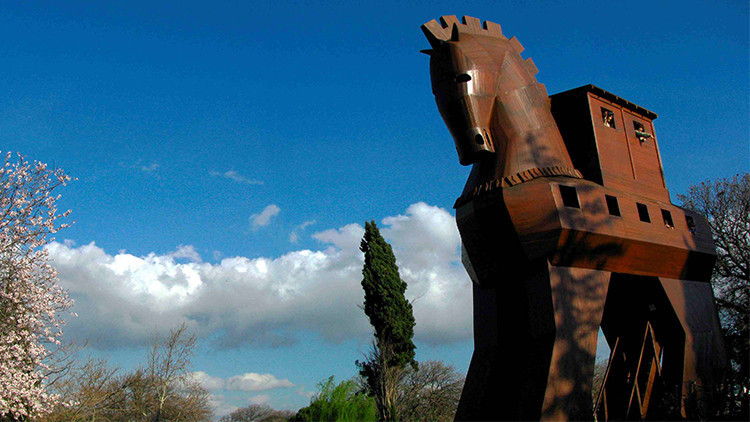
"According to Homer, the ingenious concept of the Trojan Horse was conceived by Odysseus himself," notes Aslan. "The hollow wooden structure was constructed and deployed near the island before being left outside the gates of Troy. In a very real sense, this island serves as the true starting point for Odysseus’s ten-year journey home."
For travelers visiting Çanakkale, Büyükkoyuncu recommends taking time at dusk to look out over the ancient Troas Plain from Hisarlık Hill.
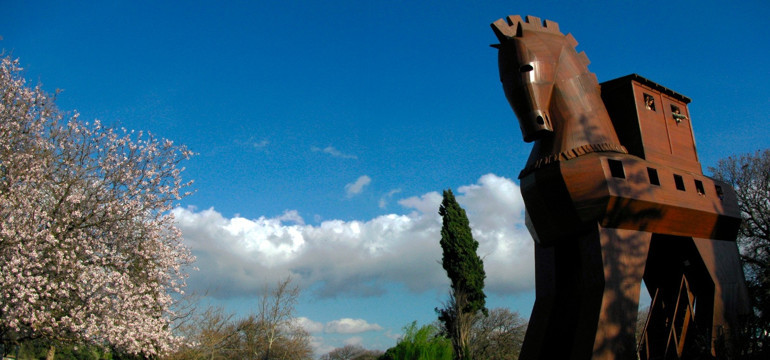
"Watching the sunset from Hisarlık Hill allows you to truly feel why this epic war was waged on this exact landscape," Büyükkoyuncu remarks. She suggests capturing a photograph with the wooden horse replica displayed in Çanakkale’s city center—originally created for the 2004 Hollywood epic Troy—before venturing to Bozcaada.
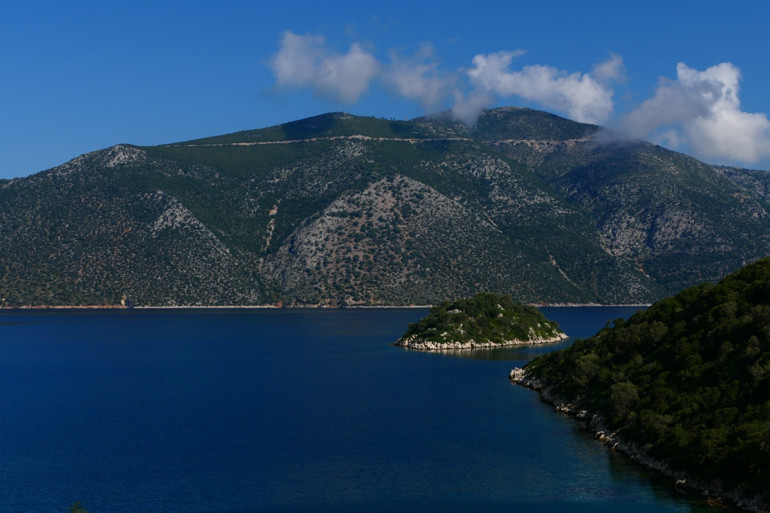
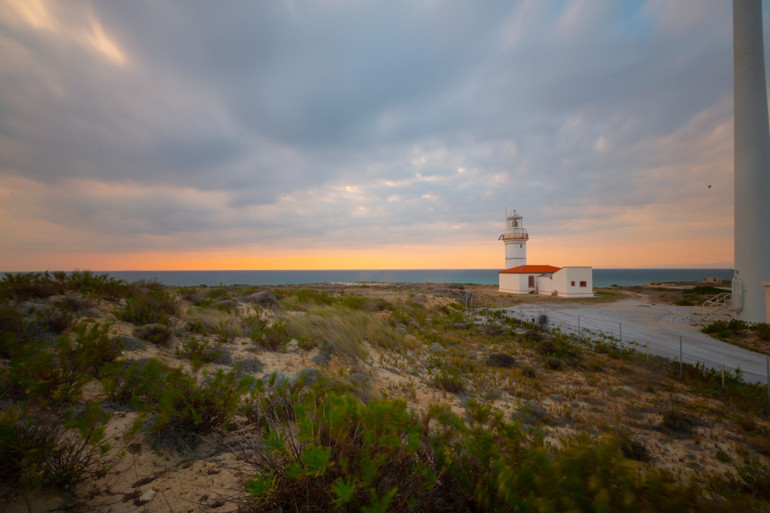
Today, Bozcaada stands as one of the most romantic islands in the Aegean Sea. Travelers can explore the imposing Bozcaada Castle, wander through the historic Greek quarter adorned with vibrant bougainvillea, and travel to Polente Lighthouse at the island’s western tip. "Polente Lighthouse is one of the finest locations to witness the sunset," Büyükkoyuncu adds, "and it is the place where you can best feel the powerful sea winds described so vividly by Homer."
- Mythological Figure of the Stop: Poseidon — The ruler of the seas, creator of violent waves, instigator of ocean tempests, and ultimate decider of mariners’ fates.
Clash of Intellect and Hubris in the Cave of the Cyclops
Taormina, Catania, and Mount Etna National Park — Sicily, Italy
After departing the ruined city of Troy, Odysseus and his surviving crew face a series of catastrophic maritime disasters before washing ashore on the island of the Cyclopes. Exploring the island, they venture into the cavern of Polyphemus, a monstrous one-eyed giant, where they consume his provisions. Upon his return, Polyphemus seals the cavern entrance with a colossal boulder and begins systematically devouring the trapped sailors.
Recognizing that physical force cannot overcome the brute strength of the monster, Odysseus relies on his superior intellect. He devises a cunning strategy to blind the giant and escape beneath the bellies of Polyphemus’s sheep.
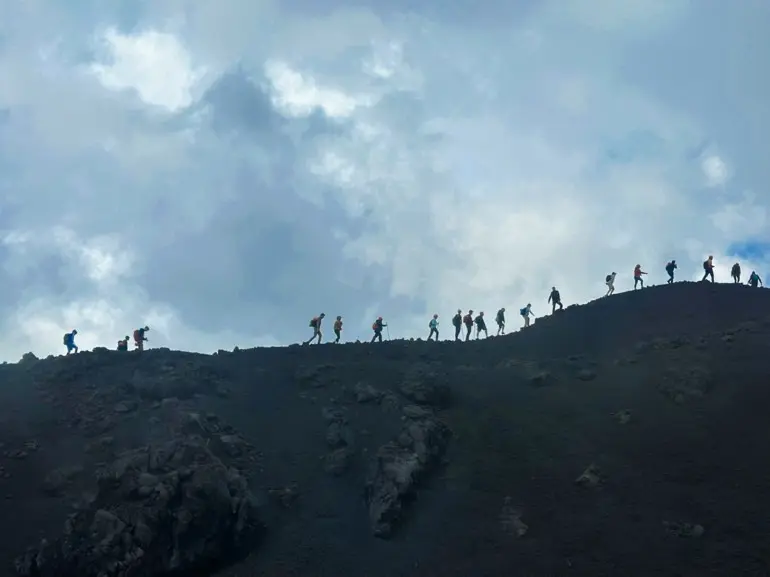
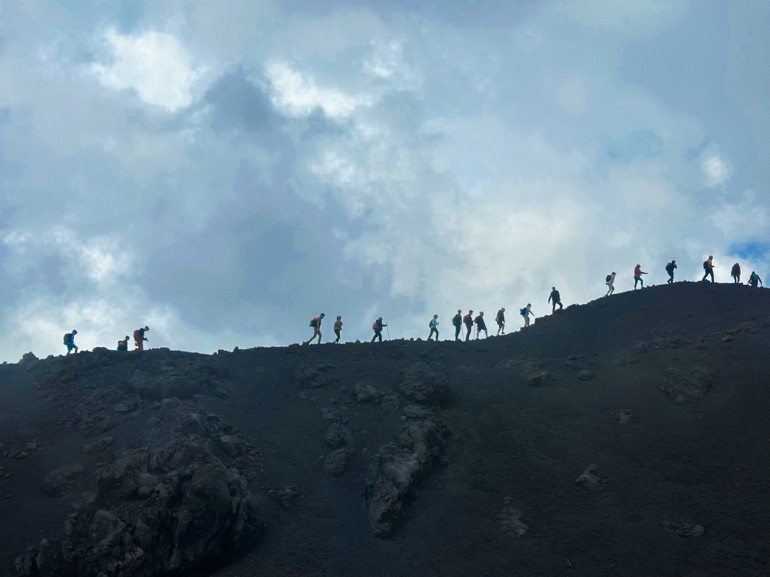
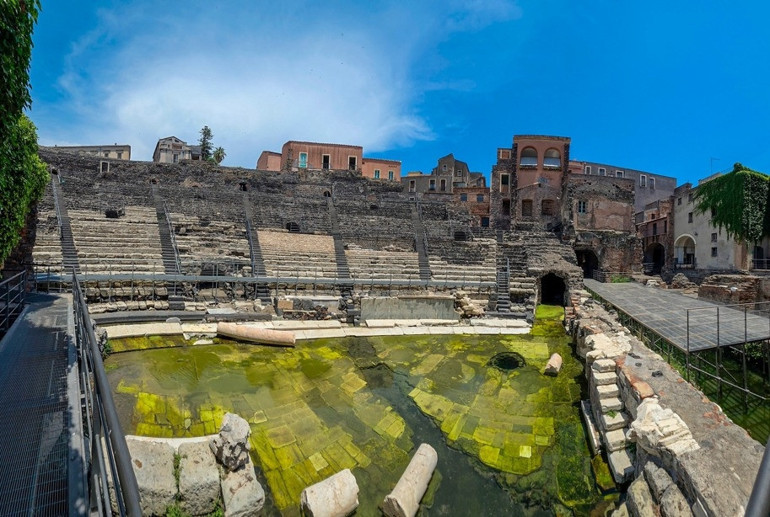
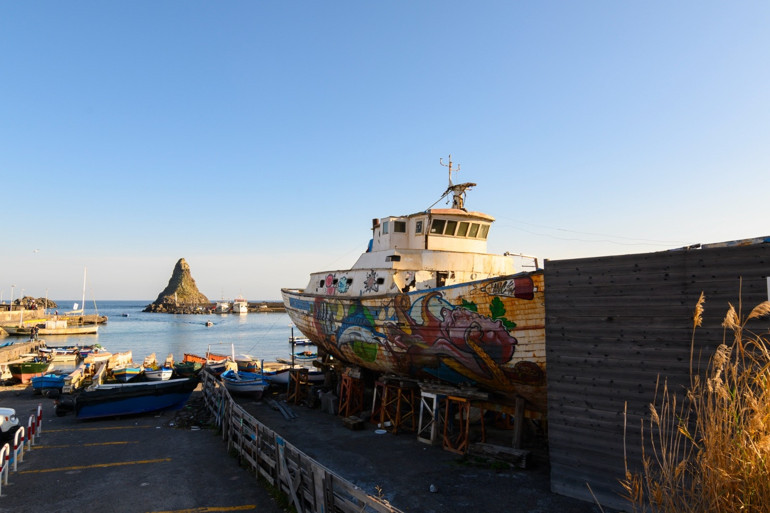
Prof. Dr. Rüstem Aslan points out that scholars historically associate this harrowing episode with the eastern coast of Sicily around Mount Etna. The jagged black basalt rock formations rising off the coast of Aci Trezza are locally celebrated as the "Rocks of the Cyclops." The perpetual plumes of smoke rising from Mount Etna likely fueled ancient sailors’ imaginations, inspiring tales of monstrous giants inhabiting volcanic mountains.
Today, Taormina, Catania, and Mount Etna National Park form a premier tourism corridor for travelers seeking this mythic connection.
"Taormina is a destination where you can deeply sense the atmosphere of the epic," says Büyükkoyuncu. "Its ancient Greek theater is among the most breathtaking historic structures in the world. The main thoroughfare, Corso Umberto, is lined with historic palaces, picturesque plazas, charming boutiques, and outdoor cafes. Just below the town lies Isola Bella, one of Sicily’s most spectacular coves."
Further south at the foot of Mount Etna lies Catania, a city defined by its relationship with the volcano. Nestled between the azure waters of the Mediterranean and Europe’s most active volcano, Catania was largely destroyed by a devastating earthquake in 1693. During its reconstruction, architects utilized dark volcanic lava stone, creating a distinctive black-and-white Baroque architecture that earned the city center UNESCO World Heritage status.
Büyükkoyuncu suggests visiting the vibrant Piazza del Duomo, admiring the iconic Elephant Fountain carved from basalt, and exploring Catania’s bustling open-air fish market.
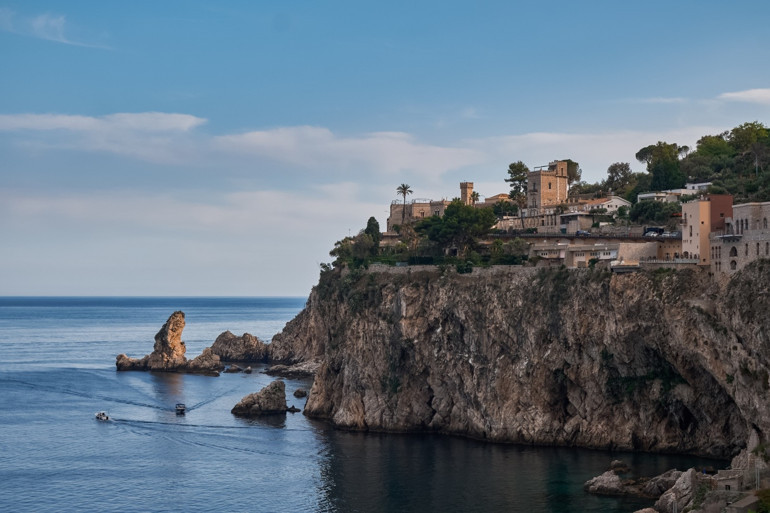
"Aci Trezza, situated between Catania and Taormina, must also be on your itinerary," Büyükkoyuncu emphasizes. "The dramatic black basalt sea stacks rising just offshore are known as the Cyclops Rocks. Local lore has held for centuries that these are the very boulders hurled by Polyphemus at Odysseus’s fleeing ship."
- Mythological Figures of the Stop:
- Hephaestus — God of fire and blacksmithing, whose subterranean forge was believed to lie beneath Mount Etna, with volcanic eruptions representing the strikes of his hammer.
- The Cyclopes — One-eyed giant blacksmiths serving as assistants to Hephaestus.
- Polyphemus — Son of Poseidon, a savage shepherd Cyclops who harbored deep contempt for mankind.
- Enceladus — A defeated giant buried beneath Mount Etna, whose restless movements were believed by ancient Greeks to cause earthquakes.
Wisdom, Temptation, and Transformation Along the Italian Coast
Monte Circeo, the Strait of Messina, Amalfi-Capri Coastlines, Italy — Bonus: Corfu, Greece
Continuing their voyage across the Western Mediterranean, Odysseus’s fleet reaches the elusive island of Aiaia, home to the enchantress Circe. Inviting the crew into her grand palace, Circe serves them a potion that transforms the men into swine. Only Eurylochus escapes to alert Odysseus. Armed with divine insight, Odysseus confronts Circe, forces her to lift the spell, and restores his crew to human form.
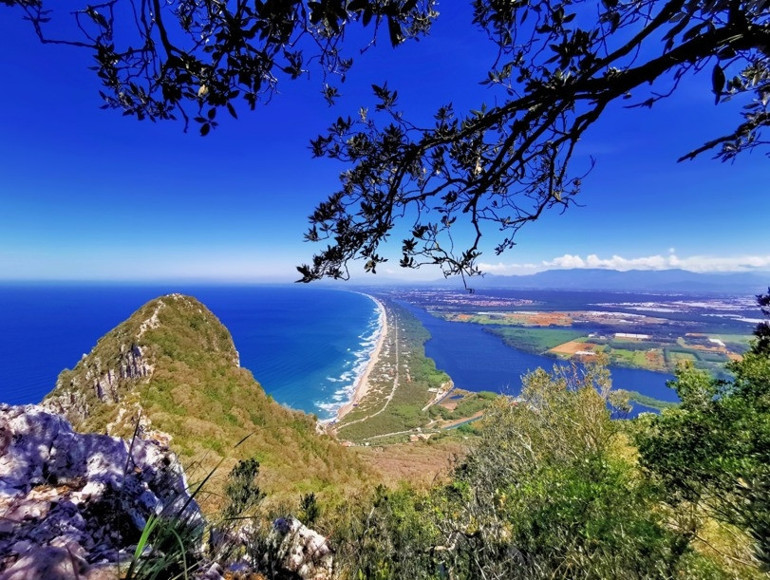
Prof. Dr. Rüstem Aslan notes that this encounter marks a crucial transition in the narrative, shifting the journey from a physical struggle against the elements into a profound psychological and spiritual quest. Since antiquity, Cape Circeo (Monte Circeo) on the western coast of mainland Italy has been identified as Circe’s legendary realm.
Following their departure from Circe, Odysseus faces the perilous trial of the Sirens. Forewarned by the enchantress, Odysseus orders his crew to plug their ears with beeswax while he binds himself tightly to the ship’s mast, allowing him to hear their intoxicating, fatal song without succumbing to temptation.
Beyond the Sirens lies an even deadlier nautical bottleneck: the narrow passage flanked by Scylla, a six-headed sea monster, and Charybdis, a catastrophic whirlpool. "This perilous passage illustrates the agonizing burdens of command, where a leader must sometimes make devastating choices to ensure overall survival," Aslan explains.
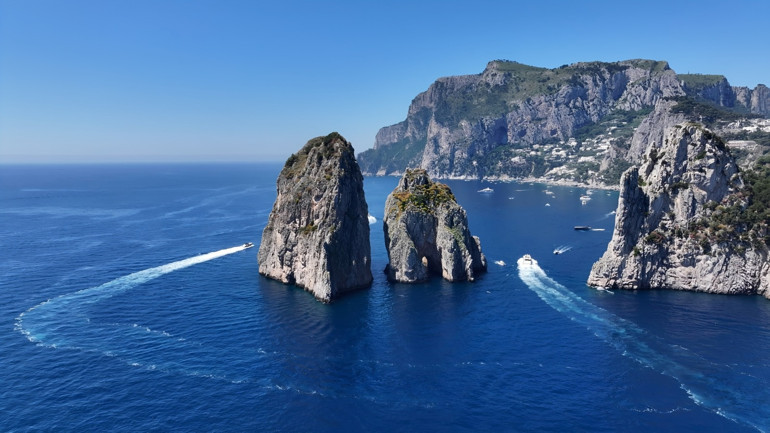
Geographers and historians associate the Sirens with the Li Galli Islands off the Amalfi Coast, while Scylla and Charybdis correspond to the treacherous currents of the Strait of Messina. Today, towns such as Positano, Amalfi, Capri, Messina, and Reggio Calabria rank among the most scenic destinations in the Mediterranean.
Büyükkoyuncu highlights the unique thrill of navigating these waters: "The Strait of Messina, separating Sicily from mainland Italy, narrows to just three kilometers. In antiquity, navigating this passage was terrifying; today, modern ferries cross it in minutes. From scenic overlooks along Messina’s coastline, you can marvel at the dramatic currents before taking a ferry toward Reggio Calabria."
She also recommends taking boat excursions around the Li Galli Islands from Positano or Amalfi, particularly during the calm early morning hours when the sea appears crystalline. On the nearby island of Capri, must-see sights include the famous Blue Grotto, the panoramic heights of Monte Solaro, the historic Gardens of Augustus, and the vibrant harbor at Marina Grande.
-
Regional Bonus Stop (Corfu, Greece): Numerous scholars identify Homer’s land of Scheria—where Odysseus washes ashore near the end of his wanderings—as modern-day Corfu. Visitors can explore Corfu’s UNESCO-listed Old Town, defined by its Venetian fortresses, French arcades, and British colonial architecture, before traveling to the pristine coves of Paleokastritsa, widely believed to be the exact shore where Odysseus made landfall.
-
Mythological Figures of the Stop:
- Circe — A powerful goddess of magic, herbalism, and transformation, regarded as one of the earliest sorceresses in classical literature.
- The Sirens — Dangerous, ethereal creatures whose alluring voices lured unsuspecting mariners to shipwreck and death.
Returning Home: The Real Meaning of the Journey
Ithaca Island, Greece
After twenty years of total absence—ten spent fighting at Troy and ten spent navigating the treacherous Mediterranean—Odysseus finally washes ashore on his native island of Ithaca. Reunited with his son Telemachus, he reclaims his throne, restores order to his kingdom, and secures long-awaited peace.
Located in the Ionian Sea, the modern island of Ithaca remains one of Greece’s most serene and unspoiled destinations. "Ithaca’s rugged topography, ancient olive groves, and secluded coves faithfully mirror the modest yet tranquil homeland depicted in Homer’s verses," remarks Prof. Dr. Rüstem Aslan.
Büyükkoyuncu points out a touching detail from the return narrative: "When Odysseus finally steps onto his native soil, the goddess Athena disguises him as an impoverished old beggar so he can inspect his court in secret. As a result, no one recognizes him except his faithful old dog, Argus."
Today, Ithaca offers visitors a peaceful sanctuary away from mass tourism. The capital city, Vathy, nestled around a deep natural harbor, showcases traditional Greek island architecture. On the northern coast lies Polis Bay, an inlet deeply tied to the Odysseus myth, alongside the sacred Loizos Cave. Near the central ridge of Aetos, ongoing excavations at a site dubbed "Odysseus’s Palace" represent some of the most exciting contemporary archaeological work in the region.
- Mythological Figure of the Stop: Athena — The goddess of wisdom, tactical warfare, and intellectual strategy, who served as Odysseus’s divine protector and steadfast counselor throughout his twenty-year ordeal.