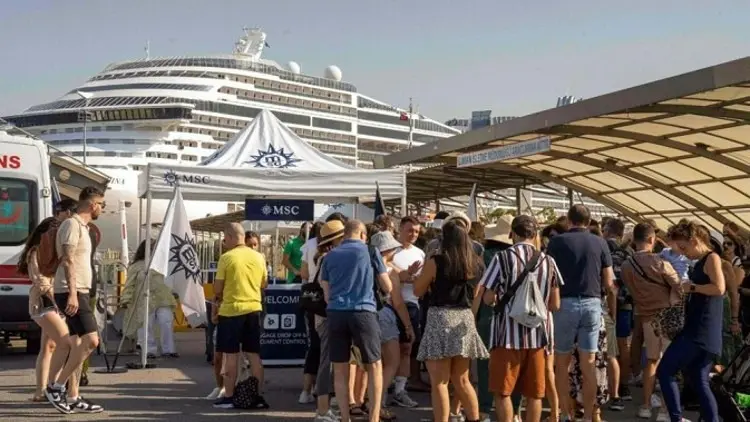
A substantial surge in international cruise passenger arrivals across the primary maritime gateways of İzmir Province has delivered a major boost to the regional tourism sector, according to official data covering the first seven months of the year. Between January and July, the central Aegean province welcomed a total of 90,907 cruise tourists across its three key operational facilities: Alsancak Port in metropolitan İzmir, Çeşme Port on the western peninsula, and Dikili Port along the northern coastline.
The incoming passenger figures demonstrate a notable upward trajectory for the area’s cruise shipping industry when compared to the same period in the prior year. During the corresponding seven-month window of the previous year, the three regional port facilities collectively processed 77,133 cruise passengers. This year’s gain of nearly 13,774 visitors represents a clear expansion in passenger throughput, reflecting broader demand for Aegean maritime itineraries and increased vessel deployments by regional and international cruise operators.
The statistical performance across the three port hubs underscores the diverse appeal of İzmir’s coastal geography. By utilizing a multi-port approach that spans urban, resort, and historical destinations, the region has effectively captured different segments of the cruise travel market. While large ocean liners dock directly within the metropolitan center, boutique and mid-sized cruise vessels frequently berth at specialized terminals situated in high-end resort towns and heritage-adjacent coastal settlements.
Highest Increase Recorded at Alsancak Port
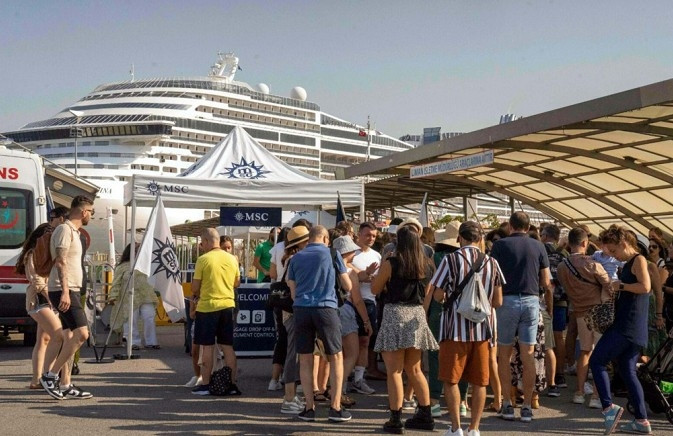
Among the three active passenger terminals in the province, Alsancak Port achieved the most dramatic growth in scheduled ship calls. Situated near the urban center of İzmir, the facility served as the berthing location for 35 cruise ships during the seven-month reporting period. This represents a significant rise from the previous year’s performance, when 28 cruise ships docked at the central terminal during the same timeframe.
The jump in ship arrivals at Alsancak Port highlights its strategic position as a primary urban cruise hub along Turkey’s western coast. Located within close proximity to major commercial districts, cultural venues, transit lines, and historic neighborhoods, the port provides passenger ships with direct access to the municipal heart of the city. When large vessels berth at Alsancak, thousands of disembarking visitors enter the immediate metropolitan ecosystem, creating concentrated foot traffic across downtown retail centers, traditional markets, waterfront promenades, and local dining places. The increase from 28 to 35 vessel calls underscores a growing preference among major cruise lines to include metropolitan İzmir as a central port of call on Eastern Mediterranean itineraries.
While Alsancak recorded the sharpest relative growth in ship traffic, Çeşme Port secured the highest total volume of individual cruise vessel dockings in the region. Located on the far western point of the İzmir peninsula, Çeşme hosted 39 cruise ships throughout the first seven months of the year.
Çeşme’s robust performance is tied to its established reputation as a luxury maritime destination. The town’s modern port facilities, combined with its immediate proximity to Aegean maritime routes, historic architecture, coastal resorts, and high-end marinas, make it a natural port of call for cruise lines catering to lifestyle and boutique travel markets. Passengers landing at Çeşme are typically offered immediate access to the town’s seaside streets, historic fortress, and nearby coastal attractions, contributing to localized economic vitality throughout the spring and summer tourism seasons.
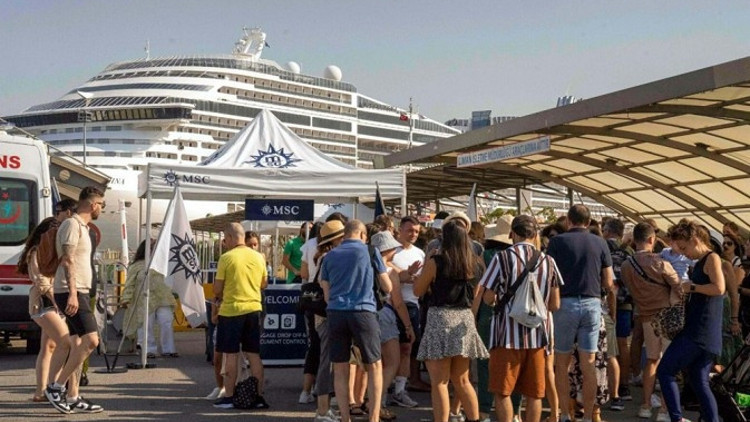
Further north along the province’s Aegean coastline, Dikili Port functioned as an essential tertiary maritime hub, welcoming 10 cruise ships during the seven-month period. Although smaller in scale compared to the high-density operations at Alsancak and Çeşme, Dikili plays a specialized role within the regional cruise infrastructure. The port serves as a primary coastal gateway for passengers visiting northern historical sites, most notably the ancient city of Pergamon in neighboring Bergama. Cruise ships stopping at Dikili provide travelers with access to archaeological landmarks, regional museum sites, and rural coastal landscapes, broadening the geographical reach of İzmir’s cruise footprint beyond the main urban center and western beach resorts.
The combined operational footprint of 84 total cruise ship arrivals across Alsancak, Çeşme, and Dikili illustrates the integrated nature of the province’s maritime transport framework. Rather than relying on a single mega-terminal, the local cruise economy benefits from a distributed network of ports capable of accommodating varying vessel sizes, passenger capacities, and itinerary themes.
From a statistical standpoint, the growth from 77,133 to 90,907 passengers represents an overall passenger increase of roughly 17.8 percent across the three ports combined. Simultaneously, the increase in vessel calls at Alsancak Port—rising from 28 to 35 dockings—reflects a 25 percent expansion in main urban liner visits. These combined increases point toward both higher average guest occupancies on visiting ships and a higher frequency of scheduled dockings by cruise management companies throughout the spring and early summer period.
The economic implications of this passenger influx extend across multiple sectors of the local economy. Unlike stay-over land tourists who remain in fixed accommodations, cruise ship visitors generate high-density, localized economic activity within concentrated daily timeframes. Upon disembarking, cruise passengers utilize local ground transportation networks, engage shore excursion operators, visit cultural sites and museums, buy local goods, and frequent local cafes and restaurants.

For commercial vendors, transportation providers, and hospitality operators in downtown İzmir, Çeşme, and Dikili, the arrival of scheduled cruise vessels provides predictable customer volumes. The steady arrival of 90,907 passengers over seven months has provided valuable revenue streams for small businesses and service providers operating near the port zones and major excursion corridors.
The dynamic growth recorded across the three ports also highlights the operational coordination required to manage maritime visitor flows effectively. Port authorities, customs officials, local municipalities, and tourism operators work in tandem to coordinate harbor pilotage, terminal processing, security screening, passenger transport, and city guiding services. Efficient port operations ensure that large passenger volumes can disembark smoothly, maximize their time on land, and return to their vessels according to strict itinerary schedules.
As documented by news agency reports covering the regional transportation figures, the performance of İzmir, Çeşme, and Dikili during the first seven months of the year reflects a broader pattern of strength in maritime travel across the Eastern Mediterranean. With total passenger numbers crossing the 90,000 threshold and vessel calls showing consistent gains, the province continues to solidify its role as a key contributor to national cruise tourism totals.
The detailed metrics gathered from January through July establish a solid baseline for the remainder of the cruising season. As maritime carriers continue their scheduled sailings through the autumn months, local port facilities and coastal businesses remain positioned to accommodate ongoing passenger arrivals, supporting the broader economic and cultural life of İzmir’s coastal communities.