

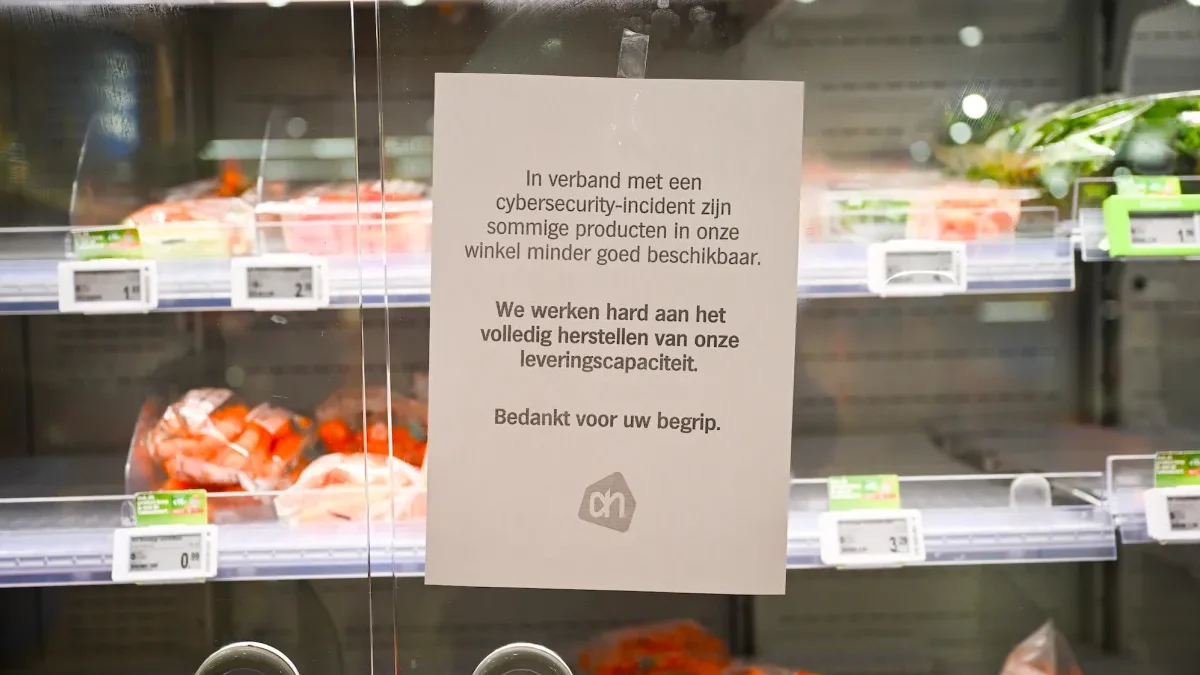
A second wave of targeted cyberattacks has struck European grocery chains, forcing commercial refrigeration systems in dozens of supermarkets out of service and causing extensive losses of perishable food items. The latest intrusions have impacted retail locations across Belgium, Ireland, Luxembourg, and Sweden, demonstrating the growing vulnerability of essential food distribution networks to remote digital sabotage.
The incidents involved malicious actors gaining unauthorized access to networked industrial cooling systems, overriding normal operating parameters, and intentionally raising temperatures inside commercial freezers and refrigerated display cases. As internal temperatures surged, vast quantities of fresh meat, dairy products, frozen foods, and temperature-sensitive inventory deteriorated on retail shelves, forcing store managers to dump tons of spoiled merchandise and temporarily close affected departments.
This multi-nation breach represents a significant escalation in attacks against operational technology, following a nearly identical wave of cyber intrusions that targeted hundreds of grocery stores across France.
Major Retailers Confirm System Breaches and Defrost Manipulation
European retail giants Ahold Delhaize and Colruyt confirmed late at night that their systems had been compromised in the cyber incident. The breach affected multiple store locations across the impacted countries, leaving store personnel scrambling to manage failing cooling units and salvage what inventory they could before it exceeded safe consumption limits.
A Belgian operational services company that manages system logistics for Delhaize told reporters that cyberattackers succeeded in accessing the central management software governing store cooling units. According to representatives from the service provider, the intruders remotely reconfigured the operational settings of commercial cooling systems, forcing them into a continuous defrost mode.
Under normal operating conditions, commercial refrigeration units execute brief, scheduled defrost cycles to prevent ice buildup on evaporator coils while maintaining ambient air temperatures within strict parameters. By forcing units into a constant defrost state, the attackers effectively disabled the primary cooling functionality. Air temperatures inside display cases and walk-in freezers rose dramatically within hours, creating conditions where food safety thresholds were rapidly breached.
Because health and safety regulations across the European Union strictly mandate that cold-chain integrity must be maintained from processing to point of sale, retail locations had no choice but to clear entire aisles. Items that had thawed or warmed beyond permissible thresholds were rendered completely unusable and discarded into disposal containers. The financial damages extended beyond lost inventory to include the cost of emergency technician callouts, deep cleaning, system re-flashing, and lost retail revenue during peak shopping hours.
The scope of the incident highlights that this was not a localized technical failure or an isolated system glitch, but a coordinated campaign that compromised enterprise-level infrastructure connected across multiple national borders.
The Role of Legacy Danfoss Controllers and Unpatched Systems
The recent breaches in Belgium, Ireland, Luxembourg, and Sweden follow an initial wave of cyber intrusions in France, where hundreds of supermarkets experienced identical operational disruptions. In those cases, central control networks were breached to deliberately drive up cooling temperatures, resulting in severe losses for French grocery operators.
Cybersecurity researchers investigating the origin of the intrusions linked the vulnerabilities to internet-connected refrigeration control equipment manufactured by Danfoss, a major Danish producer of industrial heating, cooling, and climate management solutions. Modern commercial refrigeration installations rely on networked controllers—often integrated into centralized Energy Management Systems (EMS) or Building Management Systems (BMS)—to allow facility operators to monitor cooling performance, adjust temperature setpoints, and diagnose hardware faults remotely over the internet.
According to security analysts, the primary vulnerability stems from legacy, internet-exposed Danfoss controller models that are no longer supported by the manufacturer with software updates or security patches. While these industrial controllers were designed for long operational lifespans typical of physical building hardware, their digital connectivity components have fallen behind modern cyber defense standards.
The risks associated with these connected devices were highlighted prior to the attacks. Industrial cybersecurity firm Claroty issued a public advisory detailing critical security vulnerabilities present in unpatched Danfoss refrigeration units. Claroty warned that exposed controllers could be discovered by malicious actors using public internet scanning tools. The advisory noted that attackers could exploit these unpatched interfaces to execute remote commands, manipulate operational parameters, or trigger extended system outages without requiring elevated administrative credentials.
The incident underscores a persistent challenge in industrial operational technology (OT): while commercial refrigeration hardware is built to remain operational for decades, software support cycles for built-in connectivity hardware are often far shorter. When legacy devices remain connected to live corporate networks without access to security patches, they become low-hanging fruit for threat actors seeking entry into critical operational environments.
Growing Vulnerabilities Across the Global Food Supply Chain
The sabotage of European supermarket cooling infrastructure illustrates how digital attacks can produce immediate, destructive physical outcomes in the real world. Rather than focusing solely on data theft or digital extortion through ransomware, threat actors are increasingly targeting the operational technologies that underwrite daily economic activity and public safety.
The incident echoes previous high-profile disruptions within the global food and agriculture sector. A major cyberattack compromised the systems of United Natural Foods, Inc. (UNFI), one of the primary food distribution network operators in North America. The attack disrupted warehouse management logistics, inventory tracking, and order fulfillment systems across the United States. The operational paralyzation left retail grocery shelves depleted for extended periods, drawing international attention to the fragile digital dependencies underpinning modern food supply chains.
When industrial control systems and cold-chain infrastructure are linked to corporate networks, they open new attack surfaces for state-sponsored entities, hacktivists, and cybercriminals. The disruption of temperature-controlled storage poses a unique threat because food distribution operates on tight, just-in-time schedules with minimal tolerance for temperature fluctuations.
The broader geopolitical implications of critical infrastructure targeting are currently being evaluated by defense officials internationally. Officials within the U.S. Department of Defense have actively investigated whether industrial dondurucu and freezer installations across military bases were targeted or compromised by Iranian-backed cyber threat groups. Iranian-affiliated threat actors were previously linked to cyber operations targeting municipal water treatment facilities and public utility providers in the United States, where unpatched programmable logic controllers (PLCs) were accessed remotely to alter operational settings.
As European grocers work alongside industrial security experts to audit their operational technology networks, isolate exposed control units, and disconnect vulnerable legacy controllers from public internet exposure, the retail sector faces a mandatory reassessment of its digital infrastructure. The European incidents demonstrate that basic industrial systems—once considered isolated operational components—are now active targets in an increasingly hostile cyber threat landscape.