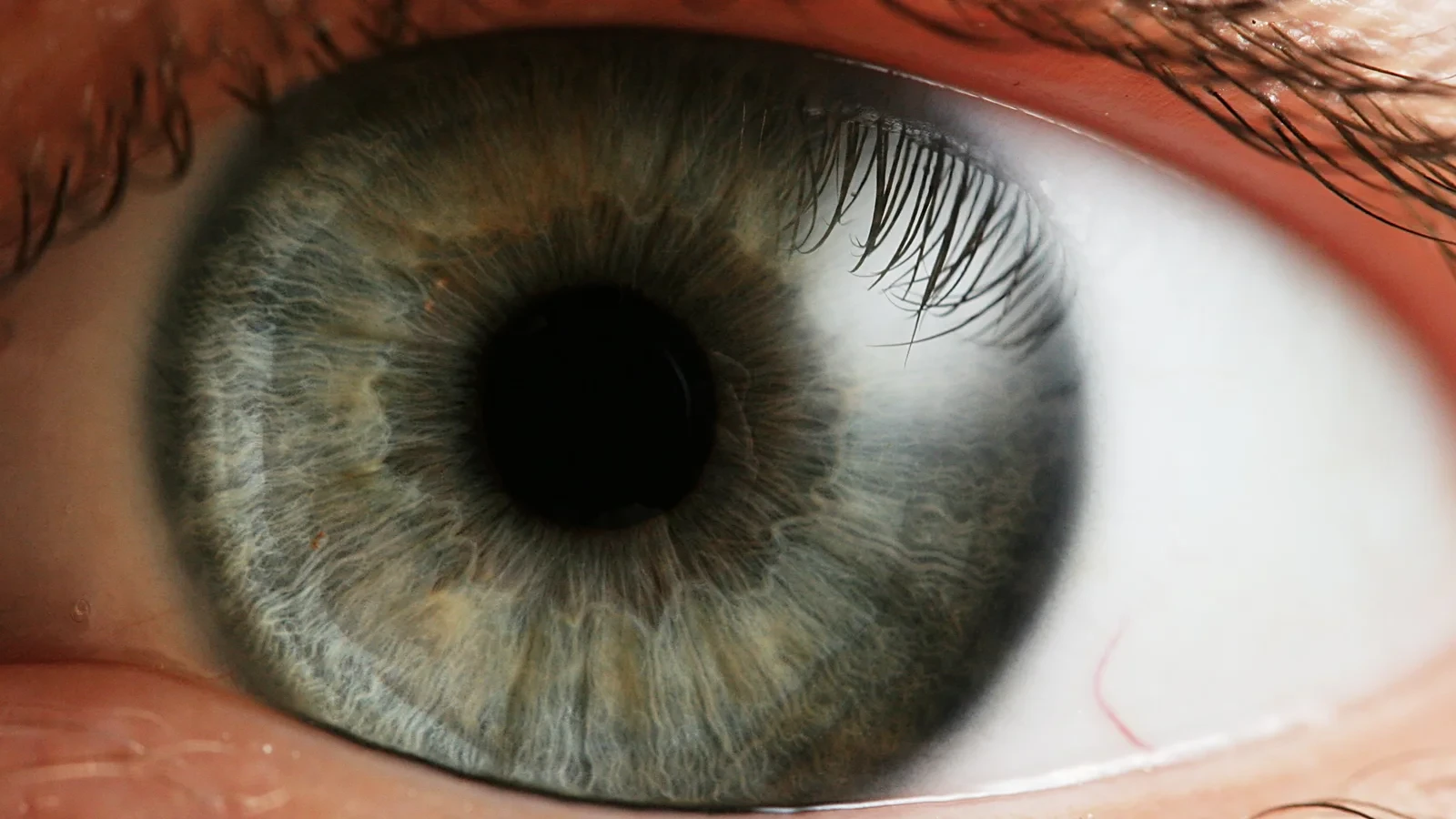
In a significant advance for vision restoration, an experimental gene therapy combining molecular engineering and light-projecting smart goggles has successfully restored light sensitivity in seven out of ten patients suffering from severe retinitis pigmentosa. The results of the clinical trial, published in The New England Journal of Medicine (NEJM), demonstrate that six of these participants achieved improvements that reached clinically meaningful thresholds, offering new possibilities for individuals facing irreversible blindness caused by inherited retinal degeneration.
Retinitis pigmentosa represents a group of rare genetic disorders characterized by the progressive breakdown and loss of photoreceptor cells—the specialized rod and cone cells in the retina responsible for converting ambient light into visual signals. As these photoreceptor cells die, patients experience a gradual constriction of their visual field, beginning with night blindness and tunnel vision, ultimately culminating in severe vision loss or complete blindness. Because human photoreceptors cannot naturally regenerate once destroyed, blindness resulting from advanced retinitis pigmentosa has historically been considered permanent.
The novel therapeutic strategy evaluated in the trial employs a two-part optogenetic system. First, patients receive a single genetic injection directly into the eye to modify surviving nerve cells within the retina, rendering them sensitive to light. Second, patients wear customized electronic goggles fitted with an integrated camera and projector system. The goggles capture real-time visual information from the environment, process the visual imagery, and project precisely calibrated light signals onto the modified retinal tissue to stimulate the engineered cells.
Targeting Retinal Ganglion Cells Over Photoreceptors
The international research team leading the study was co-directed by Dr. José-Alain Sahel of the University of Pittsburgh and Dr. Botond Roska of the Institute of Molecular and Clinical Ophthalmology Basel (IOB). Rather than attempting the extraordinarily complex task of repairing or replacing destroyed photoreceptors, the investigators directed their strategy toward a different population of retinal neurons: retinal ganglion cells.
In a healthy eye, photoreceptors capture incoming light and convert it into electrical impulses. These impulses are transmitted through intermediate bipolar cells to retinal ganglion cells, which serve as the final output neurons of the retina. The axons of retinal ganglion cells bundle together to form the optic nerve, carrying visual data directly to the visual cortex of the brain.
In patients with severe end-stage retinitis pigmentosa, natural light-sensing photoreceptors are entirely lost. However, structural studies have shown that a significant number of retinal ganglion cells often survive and remain structurally intact, even though they no longer receive input from photoreceptors. Under normal physiological conditions, these ganglion cells are not inherently light-sensitive; they function strictly as conduits for neural signals. The researchers hypothesized that if surviving ganglion cells could be bioengineered to express light-sensitive proteins, they could effectively bypass the dead photoreceptors and act as surrogate light detectors, directly transmitting visual signals to the brain.
How the Optogenetic Gene Therapy and Smart Goggles Function
To transform surviving retinal ganglion cells into light-sensitive units, the research team utilized an optogenetic approach. Optogenetics is a biological technique in which genetic material encoding light-sensitive proteins, known as opsins, is introduced into target cells, allowing their electrical activity to be controlled using specific wavelengths of light.
In this clinical trial, each participant received a single intravitreal injection—an injection into the vitreous humor, the clear gel filling the space between the lens and retina—in their worse-seeing eye. The injection delivered a modified, non-pathogenic adeno-associated viral (AAV) vector carrying the gene for ChrimsonR, an engineered light-sensitive opsin protein. Once inside the eye, the viral vector transfected surviving retinal ganglion cells, instructing them to produce the ChrimsonR protein on their cell membranes. With ChrimsonR expressed, these ganglion cells gained the ability to depolarize and fire neural signals when exposed to amber light.
However, natural ambient light is generally insufficient in intensity and spectrum to trigger ChrimsonR reliably without risking light-induced damage to delicate ocular tissues. To overcome this challenge, the treatment relies on customized external goggles equipped with a visual processing system.
The goggles feature a high-resolution camera that continuously captures images of the patient’s immediate surroundings. An onboard processor analyzes the visual scene in real time, detecting variations in contrast, edges, and object boundaries. The system then translates this visual data into localized pulses of high-intensity amber light, which are projected directly onto the patient’s retina by a built-in micro-projector. When these engineered light pulses hit the ChrimsonR-expressing retinal ganglion cells, the cells fire electrical impulses along the optic nerve, enabling the brain to perceive visual patterns.
The primary goal of this intervention is not to restore natural, high-resolution visual acuity, but rather to grant functional visual perception to individuals who have lost all light awareness. By translating ambient visual scenes into neural impulses, the system allows patients to detect contrast, recognize shapes, and identify the spatial presence of objects.
This approach builds directly upon earlier milestone findings published by the same research team in 2021. In that earlier study, a patient treated with the optogenetic therapy demonstrated the ability to perceive, locate, count, and touch distinct objects placed on a table in front of him—marking the first reported evidence of functional visual recovery following optogenetic gene therapy in a human patient.
Safety Profile, Adverse Events, and Trial Scope
The study reported in The New England Journal of Medicine was an open-label, Phase 1/2 clinical trial involving 10 participants affected by severe retinitis pigmentosa. Because early-phase clinical trials are fundamentally designed to evaluate safety and tolerability alongside preliminary efficacy, candidate monitoring was rigorous throughout the post-injection period.
Overall, 34 ocular adverse events were documented across nine of the ten participants. The vast majority of these events were mild to moderate in severity. Specifically, 23 events were classified as mild, and 10 were recorded as moderate. These included transient ocular inflammation and temporary increases in intraocular pressure, which are recognized clinical side effects associated with intravitreal viral vector injections and were managed successfully with standard ophthalmic care.
A single severe adverse event was recorded during the trial. Following the intravitreal injection, one participant experienced a temporary occlusion of the central retinal artery, restricting blood flow to the inner retina. The clinical team immediately administered medication designed to reduce intraocular pressure, successfully restoring normal retinal arterial blood flow within a few minutes. The patient suffered no permanent vascular or neurological damage from the incident.
Despite the occurrence of expected ocular adverse events, the investigators concluded that the safety profile of the treatment was manageable and acceptable for patients with end-stage retinal degeneration. The trial demonstrated that intravitreal administration of the ChrimsonR viral vector was generally well tolerated, paving the way for continued refinement of the technology.
The Broader Promise of Optogenetics and Next Steps
The development of clinical optogenetics represents the translation of basic biological discoveries into human therapeutics. The fundamental light-sensitive proteins that underpin optogenetic engineering were originally discovered and isolated from single-celled microorganisms, including green algae. Research into how these primitive organisms sense and navigate toward light laid the groundwork for modern neurobiology.
The profound impact of these foundational discoveries was formally recognized on October 5, 2026, when the Nobel Prize in Physiology or Medicine was awarded to Karl Deisseroth, Peter Hegemann, and Georg Nagel for their pioneering contributions to the development and application of optogenetics. While optogenetics was initially utilized primarily as a research tool to map neural circuits in laboratory settings, its adaptation into ocular gene therapy marks one of its most promising direct clinical applications in human medicine.
For individuals suffering from end-stage retinitis pigmentosa, whose photoreceptors have completely degenerated, optogenetics offers a practical pathway to partial sight restoration that does not rely on preserving native sensory cells. By treating surviving inner retinal neurons as surrogate light receptors, the therapy effectively re-wires the degenerated retina to communicate with the visual cortex once again.
The authors of the NEJM study emphasized that while the findings from this 10-patient trial are highly encouraging, further research remains essential. Because the study was an open-label early-phase trial, larger and more comprehensive clinical studies involving broader patient cohorts will be required to fully evaluate long-term safety, optimize the functional resolution provided by the smart goggles, and establish optimal dosing parameters for viral vector delivery. Subsequent stages of clinical testing will aim to refine both the genetic vector and the optoelectronic projection hardware, bringing functional vision restoration closer to real-world clinical availability.