
In a significant political move that highlights the ongoing tensions between the Turkish judiciary and the country’s pro-Kurdish political movement, the Co-Chair of the Peoples’ Equality and Democracy Party (DEM Party), Tülay Hatimoğulları, conducted an official visit to the Edirne F-Type High-Security Closed Penal Institution on Monday. The visit was centered on a meeting with Selahattin Demirtaş, the former Co-Chair of the Peoples’ Democratic Party (HDP), who has been held in the facility for several years. The meeting, which took place amid a complex political climate in Turkey, was followed by a comprehensive press statement that addressed the legal status of imprisoned politicians, the role of international human rights law, and the prospects for a renewed peace process in the country.
Hatimoğulları was accompanied by a high-level delegation, reflecting the collaborative nature of the current political opposition. Joining her were Seyit Aslan, the Chairman of the Labour Party (EMEP), and Kezban Konukçu, a DEM Party Member of Parliament representing Istanbul. The presence of leaders from different wings of the Turkish left underscored a unified stance regarding the detention of political figures and the demand for democratic reforms. Following the conclusion of their meeting with Demirtaş, the delegation gathered outside the prison gates to relay the details of their discussion and to issue a formal call to the Turkish government regarding its international legal obligations.
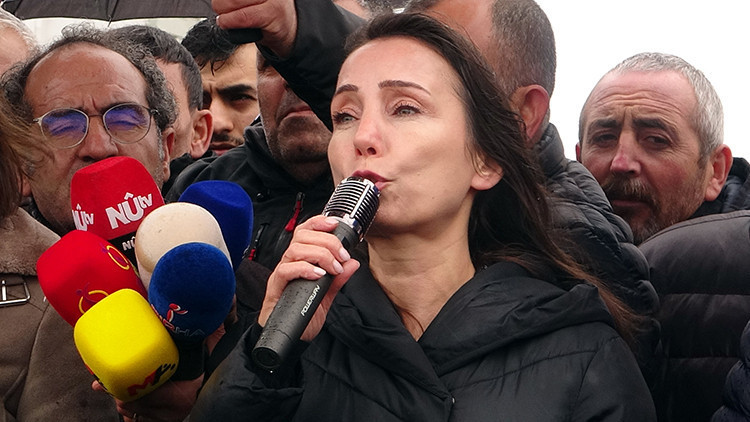
The focal point of the visit was the physical and mental well-being of Selahattin Demirtaş, as well as the broader legal struggle surrounding his continued incarceration. Hatimoğulları began her address to the media by providing an update on Demirtaş’s condition, describing him as being in high spirits despite the rigors of high-security imprisonment. She noted that he remains intellectually active and deeply engaged with the political developments currently unfolding across Turkey and the wider region. According to the Co-Chair, the meeting was not merely a social call but a "highly productive" exchange of ideas concerning the future of the country and the path toward a more inclusive democracy.
During the press conference, Hatimoğulları emphasized that the detention of both Selahattin Demirtaş and Figen Yüksekdağ, the former HDP Co-Chair currently held in Kandıra Prison, is fundamentally a legal and human rights issue that transcends domestic politics. She argued that their ongoing imprisonment stands in direct contradiction to the rulings of the European Court of Human Rights (ECHR). Hatimoğulları reminded the gathered journalists and the public that the ECHR Grand Chamber has issued definitive rulings calling for the immediate release of these figures, citing violations of their rights to freedom of expression and political participation.
"The decisions issued by the European Court of Human Rights regarding Mr. Selahattin Demirtaş and Ms. Figen Yüksekdağ are not based on personal preference or political bias," Hatimoğulları stated during the briefing. "The court did not issue these rulings because it has a particular affinity for Selahattin or Figen, or for our colleagues currently held in relation to the Kobani case. These are legal decisions made by the highest human rights authority in Europe, which recognized that the judicial proceedings against our friends are legally flawed and politically motivated."

The DEM Party Co-Chair further elaborated on the legal responsibilities of the Turkish state, pointing out that Turkey is a founding member of the Council of Europe and a signatory to the European Convention on Human Rights. She argued that the refusal to implement ECHR rulings is not just a political choice but a breach of Turkey’s constitutional and international legal duties. "Turkey has a duty and a responsibility to implement these decisions," she added. "This is a legal obligation. By ignoring these rulings, the state is moving away from the universal principles of law and justice."
The discussion within the prison walls also touched upon the broader "Kobani Case," a massive trial involving dozens of former HDP officials. Hatimoğulları linked the fate of Demirtaş and Yüksekdağ to the wider group of political prisoners, suggesting that the resolution of these cases is essential for any genuine attempt at democratization in Turkey. She stressed that the legal arguments presented by the ECHR apply broadly to the nature of the evidence and the charges brought against these politicians, which the party maintains are based on their legitimate political activities and speeches.
Turning to the personal message from Demirtaş, Hatimoğulları conveyed his greetings to the various communities across Turkey. She described him as "vibrant, upright, and standing strong with his convictions." According to the delegation, Demirtaş specifically requested that his regards be sent to "all the peoples of Turkey," a phrase often used by the DEM Party to signify the diverse ethnic and social fabric of the country. This message was intended to signal that, despite his years of isolation, Demirtaş remains committed to a politics of pluralism and social peace.

"Selahattin Chairman is, as always, quite lively and full of creative ideas," Hatimoğulları told the press. "When we visited him today as a delegation, we had the opportunity to evaluate the current political process together. He shared his views and suggestions with us, and it was an extremely fruitful meeting. His intellectual energy and his focus on finding solutions to the country’s problems remain undiminished."
A significant portion of the press statement was dedicated to the concept of a "peace process" and the struggle for a "Democratic Turkey." Hatimoğulları referenced a timeline of the last two years, during which various efforts have been made by civil society and political actors to advocate for a peaceful resolution to the Kurdish issue and a general democratic opening. She asserted that the struggle for these goals would continue with increased vigor, both inside the prisons and out in the public sphere.
"For the past two years, there has been a concerted effort toward a peace process and the development of a democratic society," Hatimoğulları explained. "Our friends in prison are continuing this struggle with all their might, and their resilience is a testament to their belief in a better future. Similarly, we on the outside are committed to continuing this struggle in a way that is worthy of the long history of this movement. Our goal remains the construction of a democratic Turkey that fulfills the longings of all its peoples."

The inclusion of Seyit Aslan, the Chairman of the Labour Party (EMEP), in the delegation highlights the importance of the "Labor and Freedom Alliance" in the DEM Party’s strategy. Aslan’s presence served to reinforce the idea that the demand for the release of political prisoners is not solely a concern for the pro-Kurdish movement but is a shared objective for the broader Turkish left and democratic opposition. The alliance argues that the erosion of judicial independence and the imprisonment of political leaders affects the rights and freedoms of all citizens, regardless of their political affiliation.
As the press conference concluded, the delegation reiterated their call for the government to take concrete steps toward justice. They argued that the path to social peace and economic stability in Turkey is inextricably linked to the restoration of the rule of law and the release of those they deem political hostages. The visit to Edirne, while a routine part of the party’s outreach to its imprisoned leaders, took on an added layer of urgency given the current debates in the Turkish Parliament regarding constitutional changes and potential new political initiatives.
Hatimoğulları’s remarks suggested that the DEM Party views the release of Demirtaş and his colleagues not as a concession to be negotiated, but as a prerequisite for any meaningful democratic dialogue. By emphasizing the "legal responsibility" of the state and the "creative ideas" of the imprisoned leaders, the delegation sought to frame the situation as a choice between adhering to international democratic standards or continuing a policy of judicial confrontation.
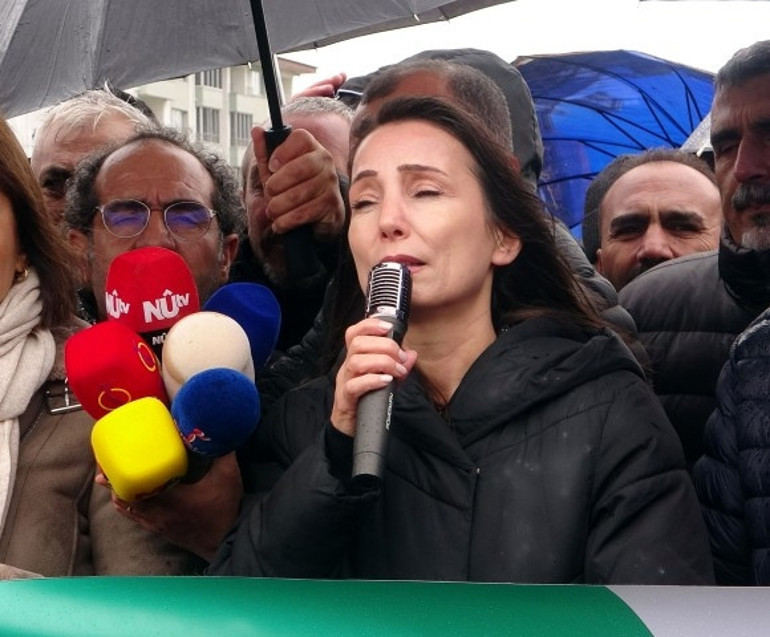
The visit ended with the delegation departing from Edirne, but the messages conveyed outside the prison walls are expected to resonate in the coming weeks as the DEM Party continues its nationwide campaign for democratic reform. The insistence on the vibrancy and intellectual contributions of Selahattin Demirtaş serves to remind the public and the political establishment that, despite his physical absence from the parliamentary floor, he remains a central figure in the Turkish political landscape.
In the final moments of her address, Hatimoğulları emphasized that the "struggle for peace" is a long-term commitment that requires persistence and a unified front. She stated that the party would continue to use every legal and political platform available to advocate for the rights of the imprisoned and for the broader goal of a society where political differences are settled through dialogue rather than detention. The delegation’s visit to Edirne stands as a stark reminder of the deep political divisions that remain in Turkey, but also of the persistent efforts by opposition figures to keep the hope for a democratic transition alive.