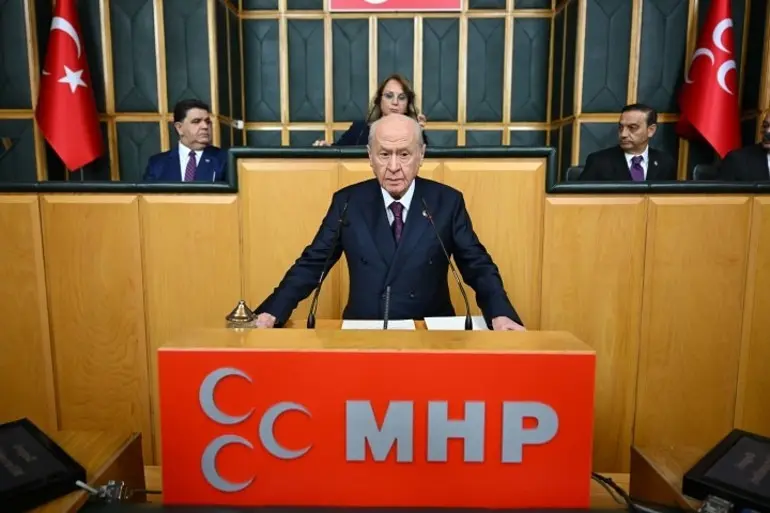
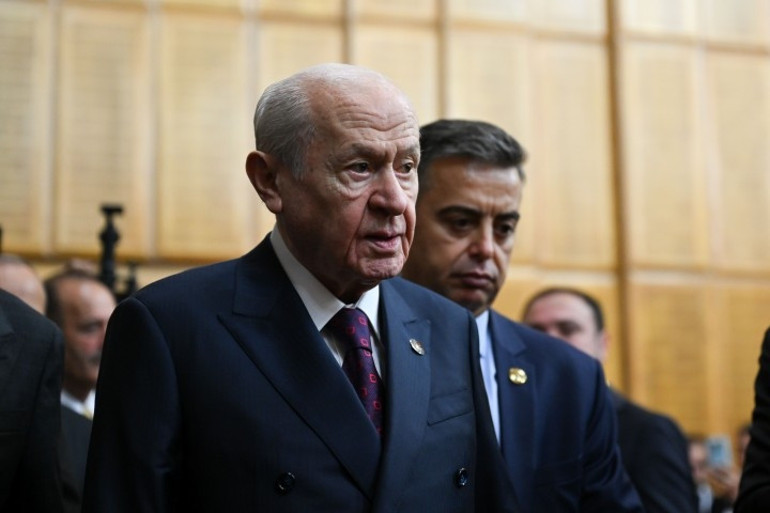
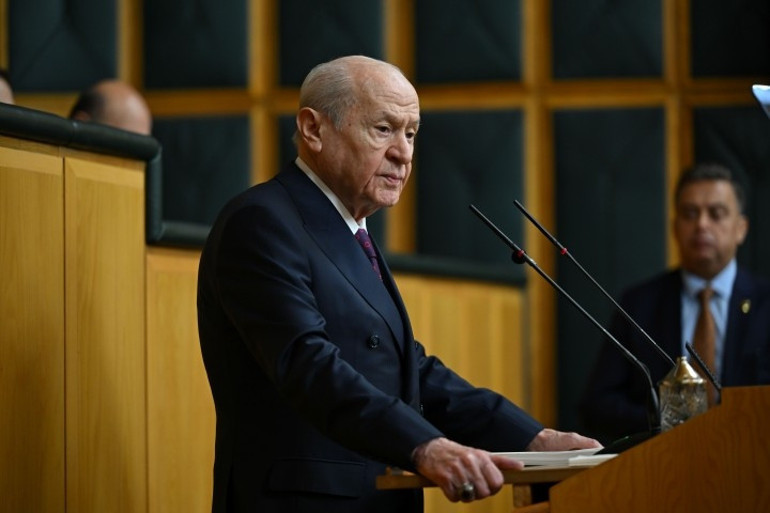
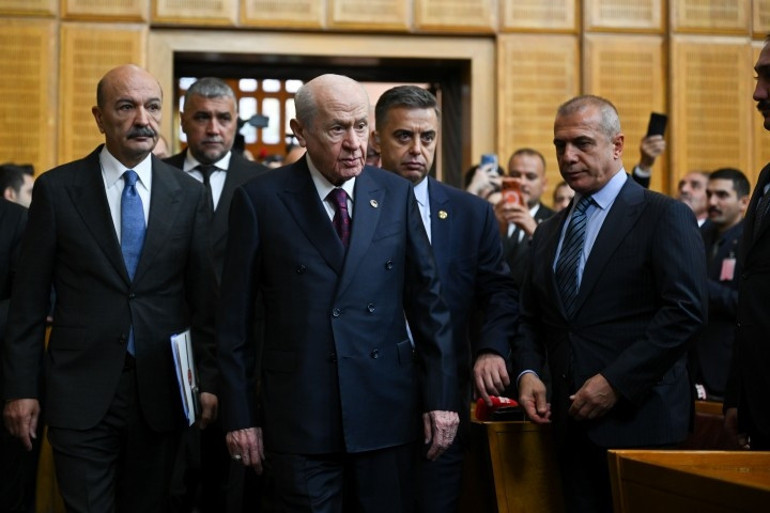
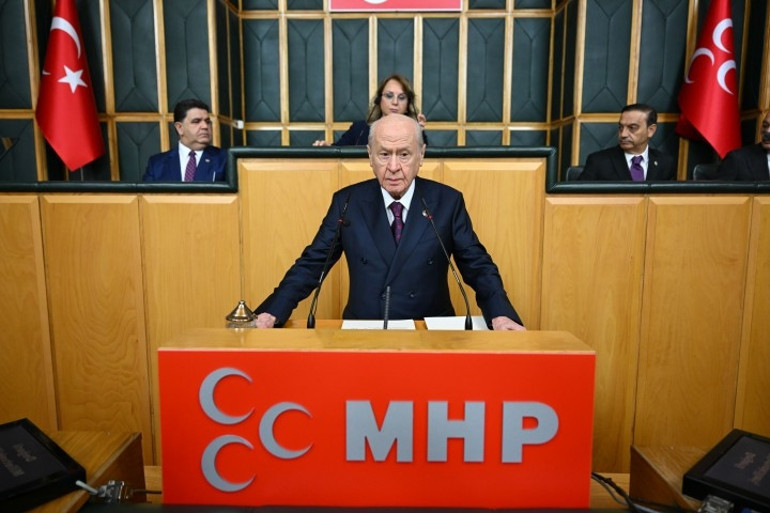
Devlet Bahçeli, the Chairman of the Nationalist Movement Party (MHP), delivered an expansive and multi-faceted speech during his party’s parliamentary group meeting, touching upon critical issues ranging from national sovereignty and the centennial legacy of the Turkish Republic to the shifting geopolitical dynamics in the Mediterranean and the Middle East. Addressing MHP deputies and the nation, Bahçeli underscored Turkey’s unwavering stance against regional "faits accomplis" and called for a renewed focus on national unity and ethical politics.
During the session, Bahçeli placed particular emphasis on the maritime rights of Turkey and the Turkish Republic of Northern Cyprus (TRNC), asserting that no unilateral actions in the Mediterranean would be tolerated. He also addressed the ongoing normalization and cooperation efforts in the region, offering a stern critique of European social policies and a visionary roadmap for what he described as a "Terror-Free Turkey and Terror-Free Region."
“Turks Have Written a Second Ergenekon Epic in Anatolia”
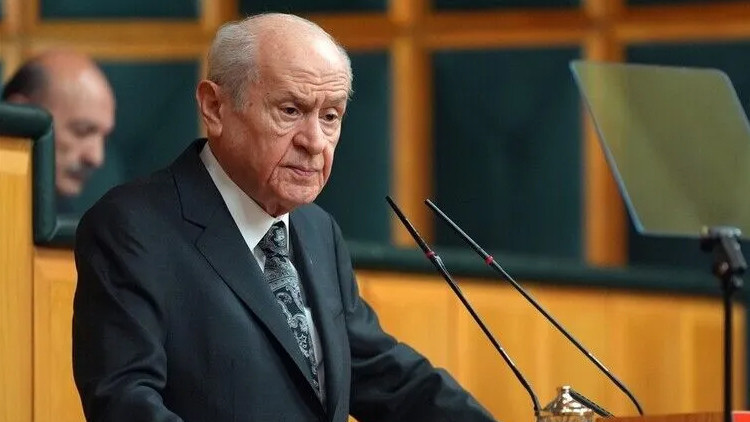
Commencing his speech with a deep historical reflection, Bahçeli marked the 103rd anniversary of the Turkish Republic. He framed the founding of the modern state not merely as a political transition, but as a monumental struggle for survival against the imperialist ambitions of the late 19th and early 20th centuries. He specifically referred to the "Eastern Question"—the strategy employed by the great powers of that era to divide and manage Turkish territories.
"The Republic is the dawn of a difficult struggle that rose on the horizons of independence 103 years ago," Bahçeli stated. He remarked that the Turkish nation, rallying behind Mustafa Kemal Atatürk and his comrades-in-arms, had authored what he termed the "second Ergenekon epic" in Anatolia. This reference to the foundational Turkic myth of rebirth and liberation served to highlight the magnitude of the War of Independence.
Bahçeli described the Republic as the "healing of the wounded lands of the Ottoman Empire" and the "remedy for exhausted hearts." He defined it as the fortress of Turkish reason, the fortification of the Turkish will, and the sanctuary of the Turkish heart. By grounding his speech in these historical terms, the MHP leader sought to remind the current generation that their freedom was the result of unprecedented sacrifice.
“Turkish Youth, the Republic is Entrusted to You”

Directing his attention to the younger generation, Bahçeli characterized the Republic as a sacred trust rather than a passive inheritance. He urged the youth to sustain this legacy through intellect, morality, and perseverance. "O Turkish youth; the Republic is not just a legacy left to you, but a trust that you will keep alive with your mind, your character, and your sacrifice," he proclaimed.
He extended this message to children as well, calling them the "guarantors of independence and the future of tomorrow." Bahçeli’s rhetoric emphasized that the Republic’s survival is intrinsically linked to the unity and solidarity of the Turkish people, describing the state as a structure where justice protects the rights of the righteous regardless of status or rank.
“MHP Holds the Principle and Vision”
Addressing the role of the Nationalist Movement Party in the modern political landscape, Bahçeli argued that the MHP remains the primary custodian of national and moral values in an era where traditional norms are increasingly being eroded. He suggested that the party represents the "eye of the Republic looking toward the future" and the "will that strides toward tomorrow."

Bahçeli positioned the MHP as the "North Star" of Turkish politics—a force that does not fight with history or turn its back on geography but draws inspiration from its roots to illuminate the path forward. He emphasized that the party’s "Country and Nation First" approach serves as the bedrock for national consensus and responsible governance.
“Terror-Free Turkey Vision Holds Historic Importance”
One of the most significant portions of Bahçeli’s address focused on the national security challenges facing Turkey. He reiterated the goal of reaching the level of contemporary civilizations as set by Atatürk, which includes advancing democratic standards and ensuring that foreign policy is not dependent on the "mercy or intellect" of outside powers.
Bahçeli articulated a vision for Turkey as a "harbor of trust and stability" in a world increasingly characterized by chaos and conflict. Central to this vision is the complete eradication of radical elements. "We believe that the realization of the ‘Terror-Free Turkey’ and ‘Terror-Free Region’ vision—which will make it possible to get rid of all radical elements, especially terrorism, that pollute the atmosphere of peace in our country and region—is of historical importance," he said.

He dismissed the criticisms and "smear campaigns" of political rivals, asserting that the Turkish nation has already made its decision. According to Bahçeli, the end of terrorism is inevitable, and its disappearance will allow brotherhood, peace, and prosperity to flourish in lands previously parched by instability.
Message on the Organization of Turkic States
Turning to international cooperation among Turkic nations, Bahçeli expressed high expectations for the Organization of Turkic States (OTS). He highlighted the potential for member states to increase their global influence and contribute to world peace through enhanced collaboration.
His vision for the Turkic world was expressed in poetic terms, calling for the "reunion of the Caspian with the Mediterranean," the "meeting of Issyk-Kul with Lake Van," and the "merging of the Selenga and Sakarya rivers." He emphasized the importance of the "unity in language, thought, and action" (Dilde, fikirde, işte birlik) motto, suggesting that a common development strategy would allow Turkic nations to shape their own destinies.
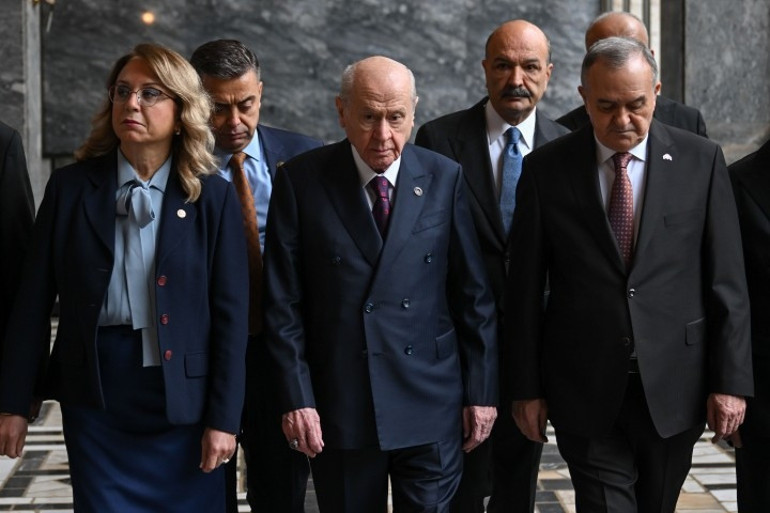
Bahçeli expressed satisfaction with the results of the 13th Summit of the Organization of Turkic States held in Ankara. He noted that the 167-item final declaration, which focuses on strengthening institutional ties and increasing economic, technological, and military cooperation, would significantly contribute to the security and welfare of all sovereign member states.
“The Seeds of Fitna Have Returned to Their Sowers”
Bahçeli launched a sharp critique of contemporary European politics, specifically citing France and other nations currently grappling with social unrest and violent protests. He argued that the fundamental causes of these disturbances must be correctly understood by European leaders, whom he accused of pursuing political gain through xenophobia, Islamophobia, and Turkophobia.
"The seeds of fitna (discord) that Europe has been sowing for a long time… have started to return to them," Bahçeli remarked. He suggested that Europe is now facing unprecedented security concerns, fueled by rising costs, declining social welfare, and economic hardships. He warned that Europe has lost the dynamism of the Industrial Revolution and is losing ground in global competition.
Using a well-known metaphor, he compared Europe to a bicycle that must keep moving to stay upright, but noted that "Europe seems to have no strength left to pedal." He advised the European Union to focus on its own collapsing social and economic orders rather than questioning Turkey’s sovereign rights and international legal initiatives.
“Libya Agreement Approval is Crucial”
Regarding maritime sovereignty, Bahçeli welcomed the recent approval of the Memorandum of Understanding on the delimitation of maritime jurisdiction areas between Turkey and Libya by the Libyan House of Representatives. He described this as a vital development for Turkey’s strategic interests in the Mediterranean.
He reiterated that Turkey would never allow a "fait accompli" in its own or the TRNC’s maritime zones. While Turkey seeks to strengthen friendly relations with its neighbors and establish cooperation mechanisms based on mutual consent, Bahçeli noted that certain actors—namely Greece, the Greek Cypriot Administration, and Israel—remain deeply unsettled by Turkey’s partnership with Libya. He criticized the European Union for siding with Greek-Cypriot theses, describing the EU’s approach as "full of contradictions and helplessness."
Importance of the R4 Meeting and the Mekke Agreement
Bahçeli also highlighted Turkey’s active role in multilateral diplomacy, pointing to the recent meeting in Istanbul involving the foreign ministers of Turkey, Egypt, Pakistan, Saudi Arabia (the R4), as well as representatives from Germany, the UK, France, and Italy. He stated that this meeting showcased Turkey’s role as a key player in regional stability, particularly concerning the Palestinian issue and conflicts in Yemen.
Furthermore, he discussed the "Mekke Agreement" signed in August 2026 between Turkey, Pakistan, and Saudi Arabia. This trilateral defense pact, currently before the Turkish Grand National Assembly for ratification, is intended to increase trust and cooperation while neutralizing external interventions in regional problems. Bahçeli urged for the swift mobilization of all resources under this agreement to end aggression and prevent civilian casualties.
“Elections Have Split Israel in Two”
Analyzing the recent elections in Israel, Bahçeli observed that the results demonstrated a deeply polarized society where no single party could secure a majority. He found the strengthened position of Arab parties to be a particularly noteworthy development, suggesting it reflects a significant segment of Israeli society’s dissatisfaction with the policies of the Netanyahu government regarding Gaza and Palestine.
Bahçeli proposed that this political deadlock could be turned into an opportunity for regional peace. He called for the formation of a broad-based government that includes Arab parties, which he termed a "Jerusalem Alliance." He argued that such a move would not only contribute to Israel’s internal social peace but also open new avenues for resolving conflicts with Iran and Yemen. He called on international Jewish organizations and the U.S. administration to support such an inclusive government.
The Significance of the Development Road Project
On the topic of Iraq and Syria, Bahçeli noted positive developments, particularly the Iraqi Prime Minister’s stated commitment to ensuring that all weapons remain under state control. He viewed this as a sign that the vision of a "Terror-Free Region" is yielding results.
He emphasized that the "Development Road Project" between Turkey and Iraq would take bilateral relations to a new level, fostering trade, human contact, and economic growth. He congratulated President Recep Tayyip Erdoğan and those involved in these diplomatic efforts, noting that Turkey has become a trusted address for peaceful solutions.
“No One Should Make False Calculations”
Closing his address, Bahçeli issued a warning against those who seek to exploit national issues for political gain or attempt to incite social tension. He emphasized that the duty of politics is to unite and embrace, not to provoke or polarize.
"No one should make false calculations. No one should expect benefit from social unrest, chaos, or division," he warned. He stated that Turkey’s primary need is to strengthen common sense, the rule of law, and the democratic ground. He called for an end to political corruption and the "shadow of personal accounts," urging a return to ethical politics that prioritizes the peace and hope of the citizens.
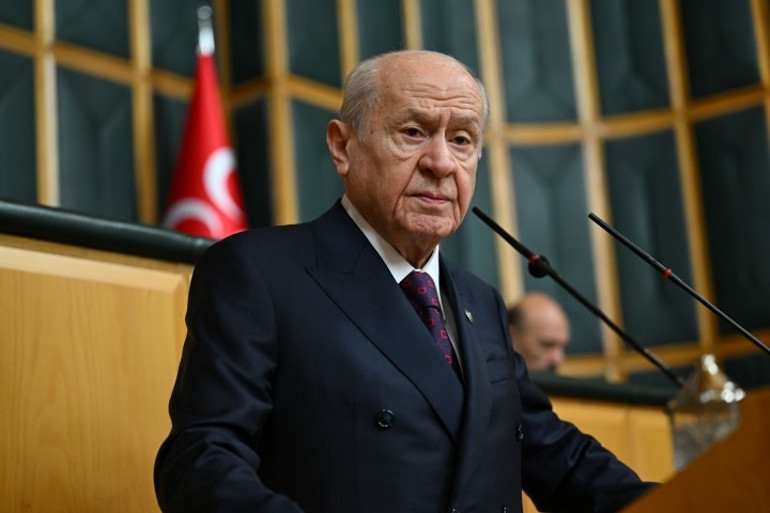
Bahçeli concluded by stating that human values must stand above all political maneuvering. He warned that when reason is abandoned for anger and decency for rudeness, humanity itself dies. Reaffirming that Turkey is a "sacred word" and a "precious jewel," he called for a period of purification and transparency in the political sphere before entrusting the nation to God’s protection.