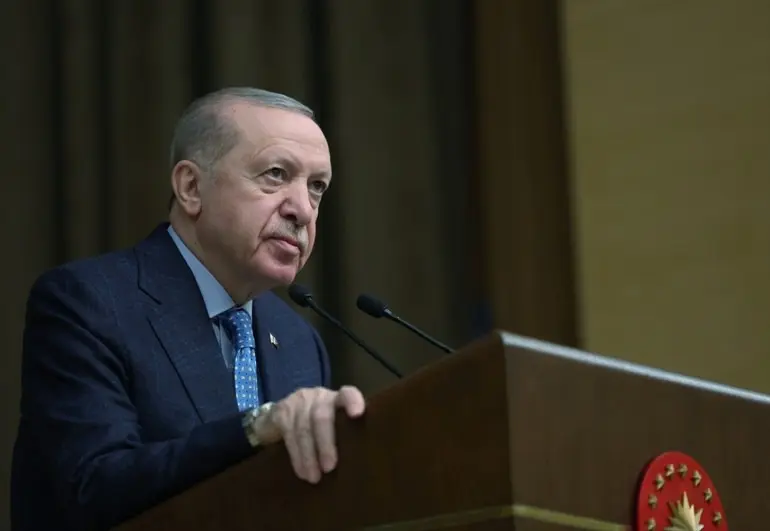
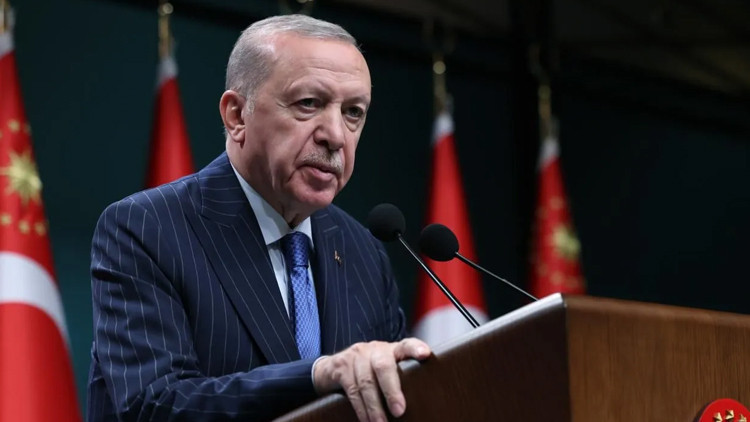
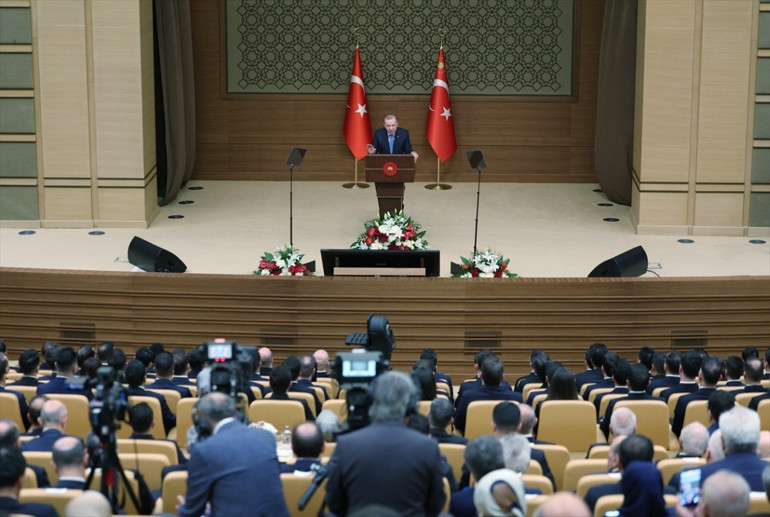
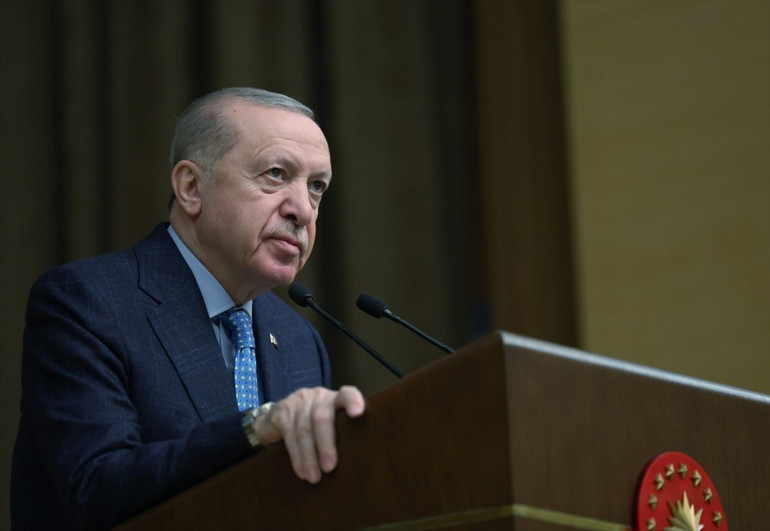
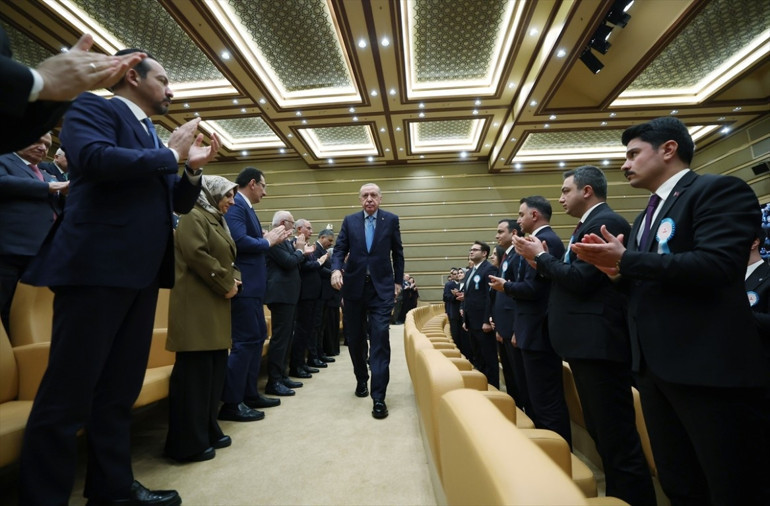
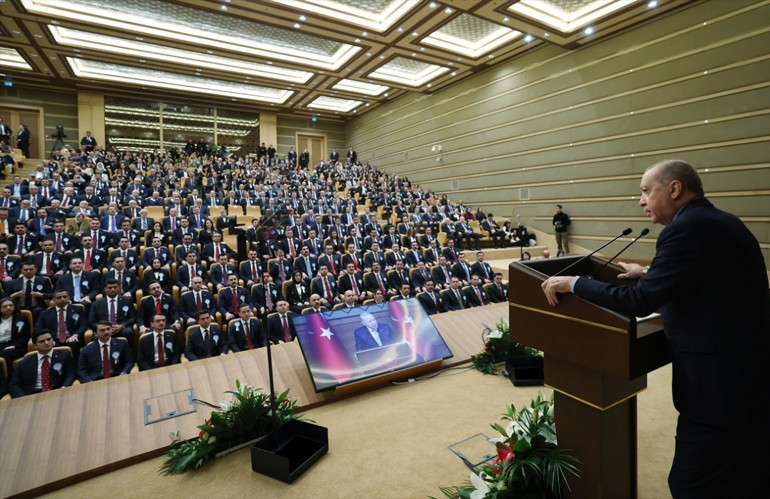
ANKARA — President Recep Tayyip Erdoğan addressed a new generation of Turkish civil servants on Wednesday, delivering a comprehensive mandate for local governance during the 111th Term District Governor Appointment Ceremony. Speaking at the Presidential Complex in Ankara, the President underscored the profound responsibilities inherent in the role of a "Kaymakam" (District Governor), describing the profession not merely as a career, but as a "shirt of fire"—a metaphor for the heavy and often sacrificial burden of serving the state and its people.
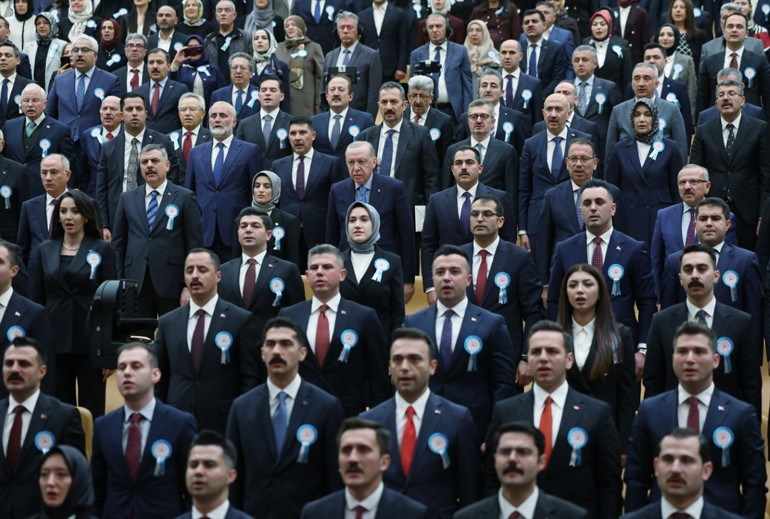
The ceremony marked the culmination of an intensive 42-month training and preparation period for 96 district governor candidates, including 16 women. As these officials prepare to take up their posts across Turkey’s diverse provinces, the President’s speech served as both a philosophical guide to the Turkish state tradition and a practical set of instructions for modern administration. President Erdoğan shared in the excitement of the candidates, offering his heartfelt congratulations to the new officials and expressing gratitude to the families, mentors, and senior administrators who guided them through their nearly four-year journey of preparation.
A Legacy of Service and Sacrifice
In a poignant moment of reflection, President Erdoğan paid tribute to those who served the state throughout history, specifically honoring those who lost their lives in the line of duty. He made a special mention of Muhammed Fatih Safitürk, the district governor of Derik who was martyred in a terror attack in 2016. By invoking Safitürk’s name, the President reminded the new appointees that the path they have chosen is one of ultimate commitment.
"I pray for the mercy of Allah upon all our civil administrative officers and martyrs who sacrificed their lives for the sake of their duty," the President stated. "May the Lord grant us and you the ability to worthily carry their trust and legacy. I wish each of you outstanding success and hope that your new places of duty will be auspicious and prosperous for our nation."

The President contextualized the role of the district governor within the broader scope of Turkish history, noting that Turkey possesses one of the world’s most rooted state traditions, spanning over 2,000 years. He traced the evolution of Turkish governance from the Orkhon inscriptions through the Seljuk and Ottoman eras, leading up to the National Struggle and the founding of the Republic.
"Our history is simultaneously a history of great organization and state-building," Erdoğan remarked. "Throughout the centuries, our institutions have changed and our methods of management have evolved, reshaped according to the needs of the era. However, within all this change, the fundamental qualities that our nation expects from an administrator have largely remained the same. Providing trust, refusing to allow injustice, ensuring justice, protecting the trust of the people, and standing by the citizen in difficult times—these are the priorities."
The Philosophy of the ‘Mülk’ and Justice

Central to the President’s address was the concept of "Mülk," a term in Turkish administrative thought that encompasses sovereignty, political authority, and the order of the state. He referenced the famous Turkish legal maxim, "Justice is the foundation of the state" (Adalet mülkün temelidir), explaining that the power of the state only gains prestige through justice.
"According to this principle, authority is maintained through loyalty to the law," the President explained. "Sovereignty only finds its meaning to the extent that it protects the nation. Administration is the fulfillment of this great responsibility within the flow of daily life. It means meeting needs with resources, ensuring harmony between institutions, and taking the right decisions at the right time while following through on the results."
Erdoğan emphasized that for the average citizen, the state is not a collection of abstract buildings or titles in the capital city of Ankara. Instead, the state is embodied in the treatment a citizen receives at the door of the local government house. It is the will, effort, dignity, and sincerity reflected in the person of the district governor and the governor.

A Call for 24/7 Dedication
President Erdoğan was explicit in his expectations regarding the work ethic of the new appointees. He rejected the notion of civil administration as a standard "nine-to-five" job, asserting that a district governor must be a person who feels the concerns of their district every hour of the day.
"Let me speak very clearly: in my eyes, a district governor does not have fixed working hours," Erdoğan declared. "There is no night or day, no holiday, and certainly no weekend. If you have chosen the civil administration as your profession, if you have shouldered a heavy responsibility such as representing the state and the President, if you have put on the ‘shirt of fire’ to carry the responsibility of the nation, then you must give it its due and not cast a shadow on that trust."
He urged the candidates to avoid being confined to their offices in the government mansions. Instead, he encouraged them to be present in the villages, the coffeehouses, the streets, and the marketplaces. "The door of the state is a door of necessity, a door of need, and a door of solutions," he said. He instructed the governors to listen to every citizen’s grievance to the end, even if every request cannot be met. He stressed the importance of explaining the reasons for any inability to help in a way the citizen can understand, ensuring that no one is left in a state of uncertainty.
Prioritizing the Vulnerable and National Education
A significant portion of the President’s speech focused on social justice and the protection of the most vulnerable members of society. He specifically mentioned the disabled, the relatives of martyrs, veterans, and those who have no one to turn to but God and the state.
Quoting the late poet Abdurrahim Karakoç, who wrote, "Let no dust settle on you; the people’s right passes to you," Erdoğan warned against the dangers of arrogance (kibir) and building walls between the administration and the public. "If you neglect your work, succumb to pride, make yourself unreachable, or build walls between yourself and the brothers and sisters living in your district, then the people’s right will pass to you. If you only seek the benefits of the profession and not its burdens, the same applies."
The President also placed a heavy emphasis on education, identifying it as the top priority. He tasked the new governors with supporting teachers and identifying the talents of children in their districts. He noted that discovering a single child’s potential could lead to a service that benefits the entire country years later.
Furthermore, in the age of social media, the President cautioned against "exhibitionism" in public service. While acknowledging the need for visibility in communication, he reminded the officials that kindness and service only gain value when human dignity and privacy are protected.
A Vision for a ‘Terror-Free Turkey’
Turning to matters of national security, President Erdoğan reaffirmed the government’s zero-tolerance policy toward any structure that threatens the peace and security of the people. This includes terrorist organizations, drug traffickers, and street gangs.
"It is our debt of honor to eradicate these entities within the framework of the law," the President said. He spoke about the "Terror-Free Turkey" project as a state initiative aimed at strengthening brotherhood and belief in a shared future.
"God willing, with your efforts, we will remove this issue from the agenda—a problem that has cost Turkey 40 years and 2.3 trillion dollars in economic resources," Erdoğan stated. "I believe this with all my heart."
The Importance of Continuity and Coordination
As the candidates prepared for the lottery that would determine their first assignments, the President offered final advice on administrative efficiency. He stressed that continuity in the state is essential, noting that completing a good project started by a predecessor is just as valuable as starting a new one.
He encouraged the new governors to analyze the potential of their districts—identifying which products can be developed, which investments can create employment, how women’s participation in production can be increased, and how historical and cultural heritage can be preserved.
"Every akce (penny) you spend contains the sweat of the farmer, the labor of the worker, and the earnings of the tradesman," the President reminded them. "It is vital that you feel the responsibility of this labor in every penny you spend. The most effective advice is one’s own behavior. If you live with moderation, moderation will strengthen in your institution. If you follow your work closely, seriousness will increase in your work order."
The ceremony concluded with the lottery process, where the 96 candidates learned the names of the districts where they would begin their official duties. As they move to their new posts, they carry with them the President’s mandate to act as the "compass of justice" and the "compassionate hand" of the state across the various corners of the Republic.