A comprehensive educational initiative launched in the northern Turkish province of Bartın is bringing hands-on scientific discovery, environmental awareness, and artistic expression directly to middle school students living in rural communities. Titled the "Village Academy: From Nature to Science, From Life to Art Project" (Köy Akademisi: Doğadan Bilime, Hayattan Sanata Projesi), the program uses interactive village-based educational camps to transform traditional learning environments and foster multi-disciplinary literacy among rural youth.
The project was developed by Dr. Bekir Güler, a research assistant in the Faculty of Education at Bartın University. Supported official funding through the Scientific and Technological Research Council of Türkiye (TÜBİTAK) under its 4009 Support Program for Village Schools, the initiative officially went into operation this month. By bringing university researchers, academic experts, and prospective teachers into village settings, the program aims to broaden the horizons of rural middle school students through experiential learning workshops that bridge the gaps between nature, scientific inquiry, and creative arts.
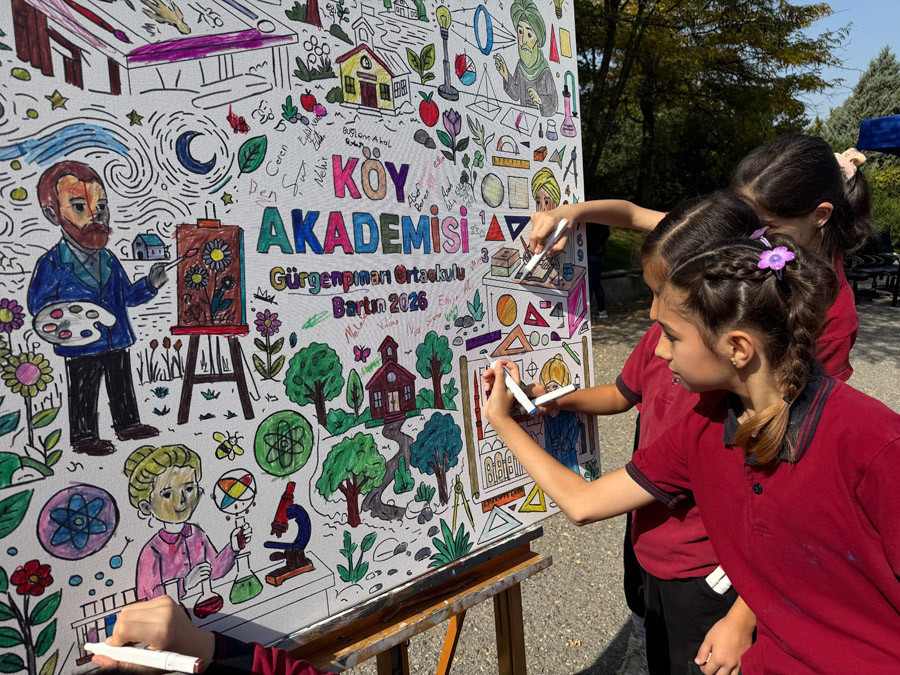
The inaugural camp event was held at Gürgenpınarı Middle School in Bartın, gathering approximately 100 participants, including local middle school students, teachers, and members of the surrounding village community. The launch marks the beginning of an expansive effort to establish immersive learning camps in rural settlements across the region, encouraging young learners to explore diverse academic and artistic fields outside the conventional classroom environment.
Connecting Students with Science, Nature, and Art
The "Village Academy" initiative is operated through a formal partnership between Bartın University and the Bartın Provincial Directorate of National Education. To execute the program on the ground, project organizers assembled a specialized 15-member instruction team composed of faculty members, academic researchers, and student teachers from Bartın University’s Faculty of Education. This team travels directly to rural schools to set up mobile workshops and conduct intensive learning sessions.
According to Dr. Bekir Güler, the primary objective of the initiative is to ensure that children, educators, and community members in isolated rural areas gain direct access to enriching educational activities that might otherwise be unavailable in standard rural curricula. By integrating scientific concepts with artistic creation and environmental observation, the project seeks to cultivate higher levels of curiosity, critical thinking, and foundational literacy across multiple academic disciplines.
Dr. Güler explained that the conceptual framework of the Village Academy draws upon successful educational models developed in previous years, including nationwide initiatives such as the "Nature Education and Science Schools" program and the local "That Village is Our Science Village" initiative. Building on the core lessons of those earlier efforts, the new project expands the pedagogical scope by deliberately combining natural science with visual and performing arts, framing them as interconnected components of daily life rather than isolated academic subjects.
The presence of the 15-person mentor team also creates a dual-purpose learning environment. While village students benefit from specialized instruction and modern educational tools, prospective teachers from Bartın University gain valuable field experience in rural pedagogy, public engagement, and community-based education.

Furthermore, the active participation of local village residents during the inaugural camp highlights the project’s broader social objective: establishing a shared culture of learning that involves the entire community. By inviting parents and neighbors to observe and join in the educational activities alongside students, the program aims to strengthen ties between local populations and academic institutions while demonstrating the practical relevance of scientific and artistic pursuits.
Interactive Workshops and Hands-On Discovery
The educational structure of the Village Academy camps is built around interactive, small-group workshops designed to translate abstract theoretical concepts into tangible, physical experiences. Rather than relying on traditional textbook lectures, the curriculum encourages students to construct, experiment, observe, and create using everyday materials alongside specialized equipment brought to the villages by the university team.
In the domain of natural sciences, the workshops address topics from physics, chemistry, and biology that students typically encounter in their standard middle school science classes. However, the camp setting allows them to explore these topics through direct experimentation. Students use compound microscopes to examine microscopic biological structures, inspect natural specimens collected from their local environment, and perform safe chemical reactions to observe changes in matter firsthand.
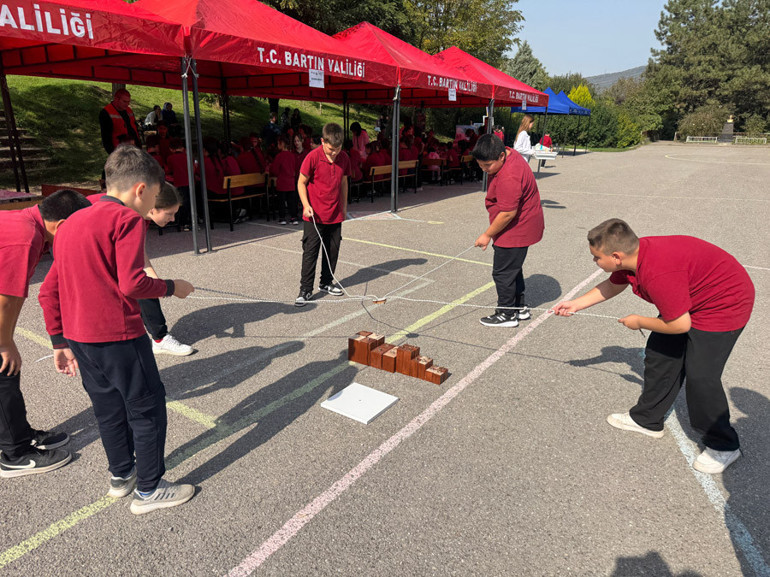
Physical science principles are further reinforced through engineering and design challenges. Participants construct simple mechanical catapults to explore concepts of torque, energy transfer, and trajectory, and build structural balance towers to test center-of-mass dynamics and spatial physics. These activities are paired with kinetic sculpture and clay modeling sessions, where students apply physical principles such as balance, motion, and structural integrity to artistic creations.

Artistic workshops form a central pillar of the academy’s interdisciplinary methodology. In visual arts sessions, students engage in drawing and painting exercises that encourage them to observe the natural landscapes surrounding their villages through an artistic lens. In sculpture workshops, participants work with natural clay to mold functional household objects and expressive forms, linking traditional crafts with physical creation.
Music education is similarly integrated through both theoretical and practical components. In the music workshops, students learn about acoustic principles, sound wave transmission, and the structural design of musical instruments. Following these explanations, participants build simple working instruments using accessible materials, allowing them to directly observe how physical dimensions and material properties influence sound production and musical pitch.
Dr. Güler emphasized that this integrated structure is intended to help students perceive the fundamental unity underlying different academic fields. By exploring math, physics, biology, chemistry, art, and music within a single cohesive setting, students learn to recognize scientific and mathematical principles in the natural world around them while using artistic methods to express their understanding.
Enthusiasm Among Village Students
The practical impact of the initiative was evident among the young participants at Gürgenpınarı Middle School, who expressed strong enthusiasm for the diverse range of activities and the opportunity to engage in hands-on creation.

Nehir Sarıkaya, a sixth-grade student at Gürgenpınarı Middle School, shared her experience participating in the various workshop modules offered during the camp. She noted that the program provided an engaging platform to acquire new skills and experiment with creative techniques that were new to her educational routine. Sarıkaya explained that over the course of the camp, she created paintings, worked with clay to craft sculptures, and learned the basic mechanics of constructing a musical instrument. She described the camp environment as a positive and dynamic space that made learning exciting and memorable.
Similarly, Semanur Sinoplu, another sixth-grade participant at the school, highlighted the variety of activities available throughout the day. Sinoplu recounted drawing multiple pictures and using natural clay to craft functional personal items, including a specialized bowl and a small dish designed to hold her school pens and pencils. She noted that she was also looking forward to finishing her custom musical instrument in the music workshop, adding that every activity offered at the camp presented something distinct and enjoyable.
Feedback from students and educators at the inaugural camp underscored the value of bringing experiential learning opportunities directly into rural school grounds, where specialized laboratory equipment, art supplies, and musical instruments may not always be readily accessible in standard classrooms.
Expanding Educational Outreach across Remote Communities
Following the initial launch at Gürgenpınarı Middle School, the project organizers are preparing to expand the reach of the "Village Academy" to other rural settlements throughout Bartın province. The project plan calls for setting up additional mobile camps in increasingly remote village schools over the coming months, ensuring that geographically isolated students receive equal access to enrichment programs.
By maintaining a sustained schedule of village visits, the project team aims to establish long-term educational continuity and build lasting connections between rural schools and the regional university network. Dr. Güler reiterated that the project’s ultimate ambition is to reach every corner of the province where rural middle school students reside, ensuring that distance from urban centers does not limit a child’s opportunity to discover science, nature, and art.
As the "Village Academy: From Nature to Science, From Life to Art Project" continues its rollout across Bartın, it serves as a functional model for university-community collaboration, demonstrating how targeted academic outreach and multi-disciplinary learning can revitalize rural education and inspire the next generation of scientific and artistic thinkers.