
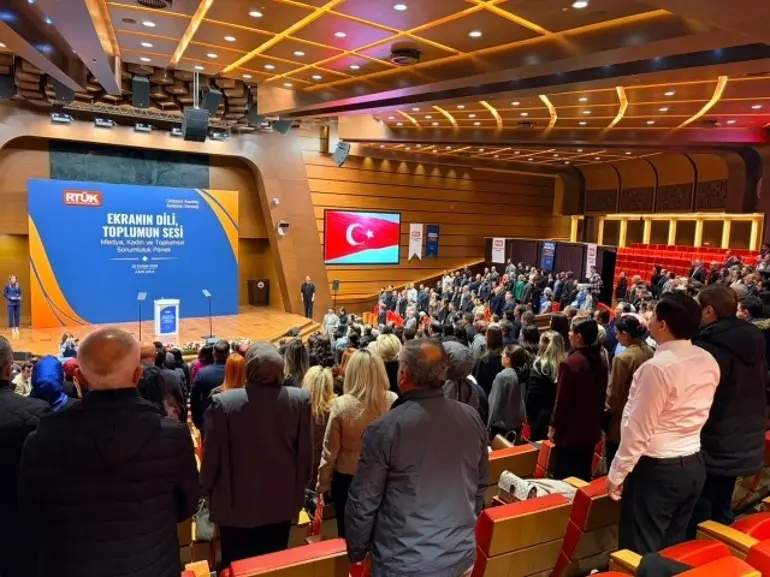
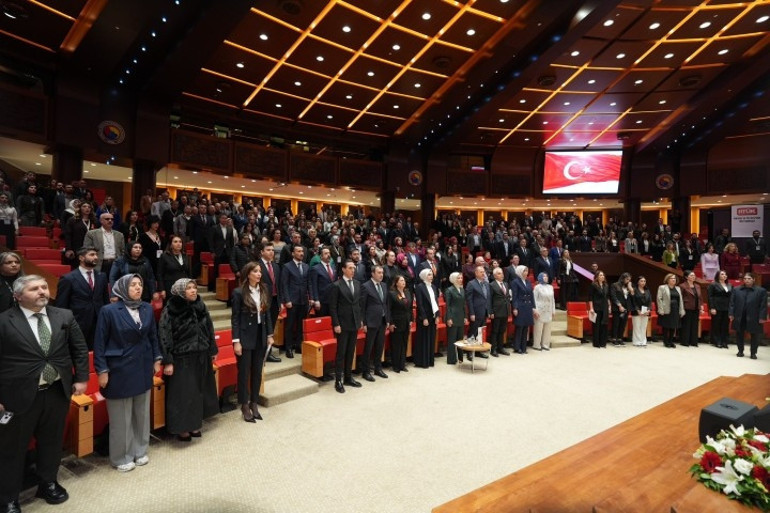
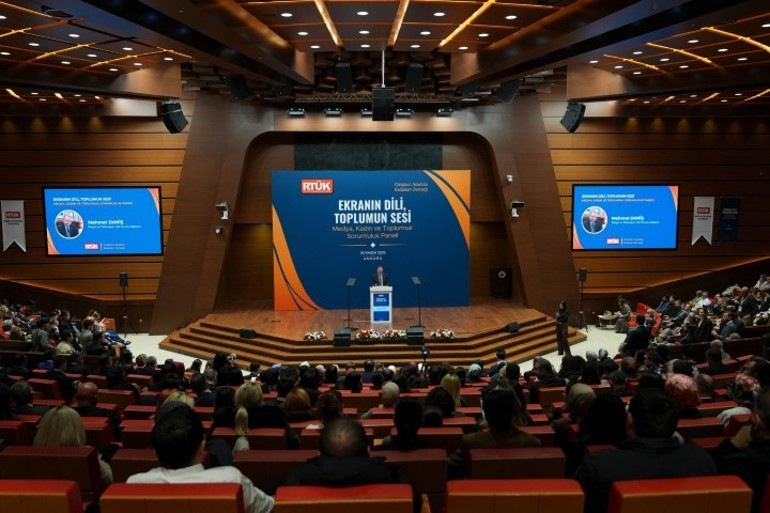
ANKARA — In a significant gathering marking the International Day for the Elimination of Violence against Women, senior Turkish officials and media representatives convened in the capital city of Ankara to address the profound influence of broadcasting on social norms. The panel, titled "The Language of the Screen, the Voice of the Society: Media, Women and Social Responsibility," served as a platform for a high-level discussion on how the media can transition from a vehicle that sometimes inadvertently normalizes violence to a powerful tool for its eradication.
The event was organized through a strategic partnership between the Radio and Television Supreme Council (RTÜK) and the Entrepreneurial Anatolian Women’s Association. Held at the TOBB Conference Hall, the program brought together a diverse group of stakeholders, including Mahinur Özdemir Göktaş, the Minister of Family and Social Services; Mehmet Daniş, the Chairman of RTÜK; Çiğdem Erdoğan, the Chairperson of the Parliamentary Commission on Equal Opportunities for Women and Men; and Saba Gizem Utlu, the President of the Entrepreneurial Anatolian Women’s Association.
The discussions focused heavily on the ethical obligations of content creators, journalists, and digital platforms in shaping a society where violence against women is met with "zero tolerance."
"The Language of the Screen Becomes the Voice of Society"
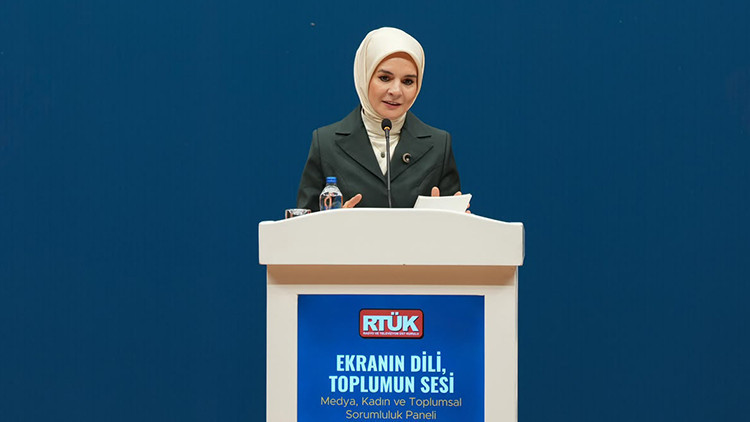
Minister Mahinur Özdemir Göktaş opened her address by acknowledging a somber national event, expressing her deepest condolences to the families of the soldiers who were martyred in a recent helicopter crash in Eskişehir. This moment of reflection set a serious tone for the proceedings, emphasizing the gravity of national service and social responsibility.
Turning to the core theme of the panel, Minister Göktaş highlighted the media’s indispensable role in the cultural transformation required to end violence. She argued that the prevention of violence is not merely a matter of legal enforcement but a fundamental shift in mindset. According to the Minister, this shift requires the dismantling of discriminatory thought patterns and the transformation of social acceptances that have historically allowed violence to be trivialized or ignored.
"We know very well that preventing violence requires the transformation of the thought patterns that feed discrimination and the social acceptances that normalize violence," Minister Göktaş stated. "In this transformation, the media holds a decisive influence and responsibility. The title of today’s panel summarizes this perfectly: ‘The Language of the Screen, the Voice of the Society.’ Indeed, the language used on the screen eventually becomes the voice of the society. We want that language to be one that does not trivialize violence, but rather exhibits a strong stance against it."

The Minister emphasized that every effort made to refine the narrative around women and violence is a valuable component of a broader, collective struggle. She noted that when the media adopts a principled stance, it reinforces the state’s efforts to protect its citizens and foster a culture of mutual respect.
Strategic Roles for Responsible Journalism
As the digital age continues to evolve, the reach of communication networks has become unprecedented. Minister Göktaş pointed out that from traditional television screens to emerging digital platforms, and from news websites to social media, the media is present in nearly every facet of modern life. This ubiquity, she argued, means that the language of a news report, the plot of a fictional series, or the message of an advertisement can influence the thoughts, behaviors, and worldviews of millions of people simultaneously.
"Every story told on the screen leaves a trace in the collective memory of society," Göktaş explained. "How that story is told is at least as important as its content. For this reason, we place great importance on the media adopting a broadcasting approach based on accuracy, privacy, and social sensitivity when dealing with violence against women."

The Minister called for a commitment to "responsible journalism," which she identified as a cornerstone for strengthening common consciousness. By prioritizing the dignity of victims and avoiding sensationalist narratives that might encourage imitation or desensitization, media outlets can serve as a shield against the proliferation of violent imagery and rhetoric.
She further noted that the Ministry is closely monitoring technological developments and the new needs they create. As digital spaces become more central to daily interaction, they also introduce new risks, such as cyber-violence and digital harassment. The Ministry’s policies are being updated to address these modern challenges, ensuring that protective and preventive services extend into the digital realm.
National Action Plans and Future Visions for 2030
The fight against violence is not an isolated effort but a core pillar of Turkish state policy. Minister Göktaş attributed the strength of these initiatives to the determined leadership of President Recep Tayyip Erdoğan, who has made the eradication of violence against women a national priority. She noted that every step taken to ensure women live in safety is a reflection of this political will.

A key milestone in this journey was the implementation of the "5th National Action Plan for Combating Violence Against Women," which was put into effect on November 25 of the previous year. This comprehensive roadmap, covering the period from 2026 to 2030, identifies five fundamental goals:
- Achieving a violence-free life for all women.
- Improving and accelerating access to justice.
- Strengthening the socio-economic status of women.
- Increasing social participation and representation.
- Integrating the fight against violence into culture, art, and media policies.
In the context of media, the action plan focuses on promoting ethical broadcasting standards and supporting the professional development of media employees. The Minister explained that the government is implementing measures to ensure digital security and to curb the emergence of new forms of violence in the digital sphere.
Furthermore, the Minister highlighted the importance of education in this cultural shift. The Ministry is collaborating with universities to reach the next generation of communicators. By organizing seminars on communication that is sensitive to gender equality, the government aims to instill a professional understanding in young journalists and producers that values equality and makes women’s contributions to society more visible.
"Our goal is to ensure that young communicators gain a professional perspective that observes equality and highlights women’s successes," Göktaş said. Looking even further ahead, she mentioned the "2026-2035 Family and Population Ten-Year Vision," which aims to carry the culture of a violence-free life and strong family bonds into the next decade.
A Principle of Zero Tolerance
Following the Minister’s remarks, RTÜK Chairman Mehmet Daniş took the floor to reiterate the regulatory body’s commitment to these goals. He defined the struggle against violence as a vital indicator of the will to protect human dignity, fundamental rights, and social peace.
"Violence is a grave violation directed at human dignity," Daniş asserted. "Violence against women, in particular, is a social wound that targets a woman’s life, her freedom, her safety, and her future. This wound does not only affect women; it affects the family, children, social peace, and the common conscience of humanity. Protecting the dignity of women is protecting the dignity of humanity."
Daniş was clear about the regulatory stance regarding content that violates these principles. He emphasized that RTÜK operates under a strict "zero tolerance" policy when it comes to the depiction of violence against women in the media. He noted that the council is not only focused on monitoring and sanctions but also on encouraging proactive, positive content that promotes a healthy societal fabric.

The Chairman stressed that the media must be an ally in the quest for social harmony. By adhering to the principles of "zero tolerance," broadcasters can help ensure that the "voice of society" reflected on the screen is one of compassion, justice, and safety.
Collaborative Efforts for a Safer Future
The panel concluded with a consensus among the participants that the path toward a violence-free society requires the active participation of all sectors—government, civil society, and the media. The presence of Çiğdem Erdoğan and Saba Gizem Utlu underscored the multi-dimensional nature of this effort, bridging the gap between legislative oversight and grassroots activism.
The Entrepreneurial Anatolian Women’s Association, through its partnership with RTÜK, signaled the importance of empowering women economically and socially as a preventive measure against violence. By providing women with the tools to be independent and influential, the association contributes to the broader goal of societal strengthening.
As the event drew to a close, the recurring message was one of hope backed by strategic action. With the 5th National Action Plan and the ten-year family vision providing a clear framework, and with media regulators and ministries working in tandem, the speakers expressed confidence that the "language of the screen" would continue to evolve, eventually fostering a society where every woman can live with dignity and without fear.