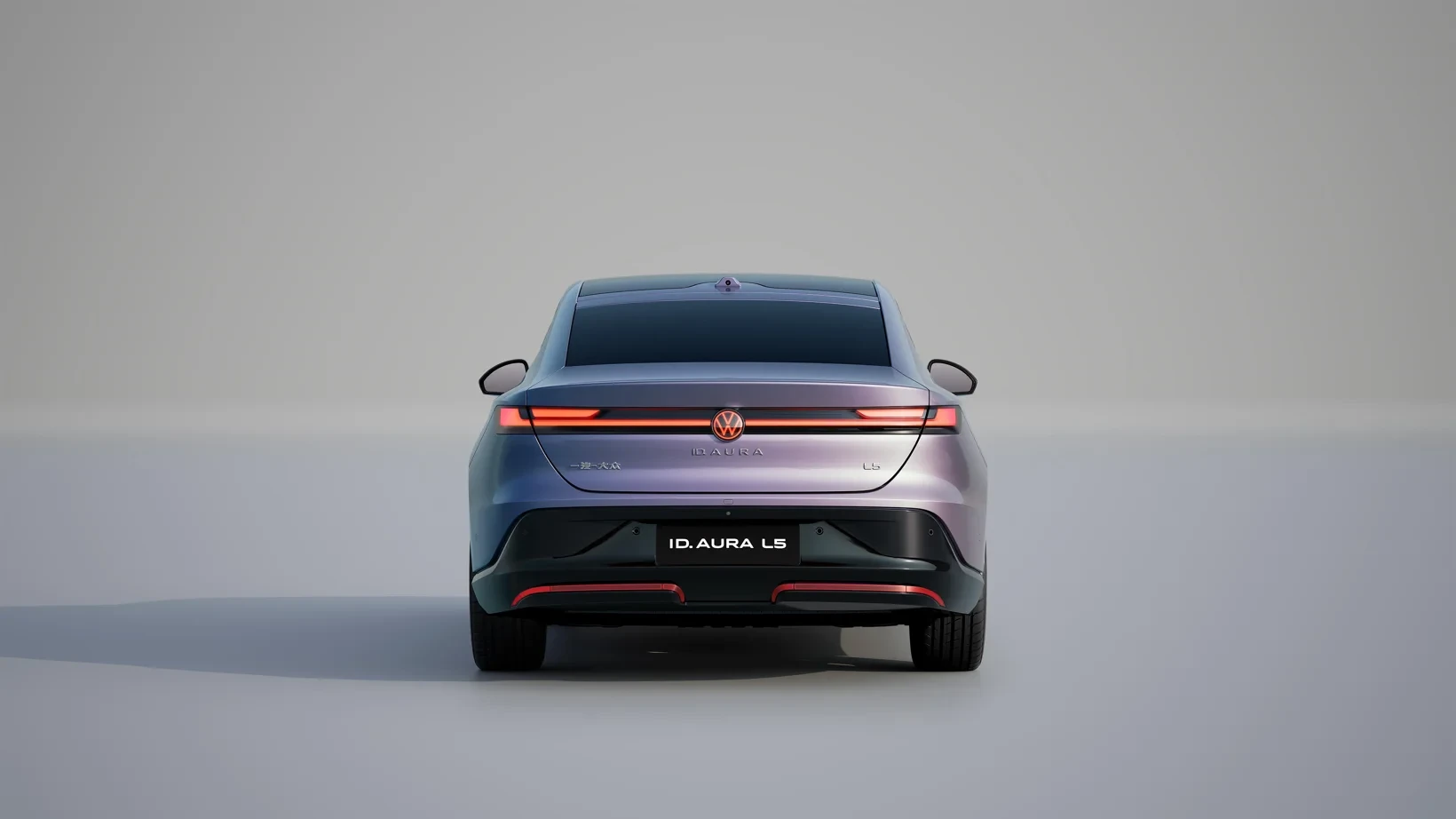
Volkswagen has expanded its electric vehicle lineup in the Chinese market with the official presentation of the ID. AURA L5, a technologically advanced electric sedan designed to strengthen the automaker’s competitive standing in the world’s largest zero-emission vehicle market. Manufactured under the long-standing FAW-Volkswagen joint venture, the new model marks the second major project within the brand’s specialized ID. AURA series, transitioning from a design concept into a production-ready vehicle.
The vehicle traces its design roots directly back to the concept car displayed at the Shanghai Auto Show. Volkswagen engineers and designers have preserved nearly all of the key aesthetic and structural characteristics of that conceptual model, transforming it into a functional, serial-production vehicle. Featuring a sporty liftback body structure, a high-tech sensor suite, and an optimized platform architecture, the ID. AURA L5 illustrates the manufacturer’s efforts to cater to local market preferences through targeted engineering solutions.
Built specifically for the requirements of modern electric mobility, the sedan is constructed on Volkswagen’s CMP platform, short for Compact Main Platform. This specialized vehicle architecture was engineered specifically for the Chinese automotive ecosystem. By utilizing the CMP platform, engineers were able to optimize the placement of the battery pack within the floor section, lowering the center of gravity while simultaneously tuning the chassis geometry for enhanced ride dynamics and acoustic comfort. The platform serves as the structural foundation for Volkswagen’s localized electric vehicle initiative, allowing for efficient interior spatial management and modern chassis integration.
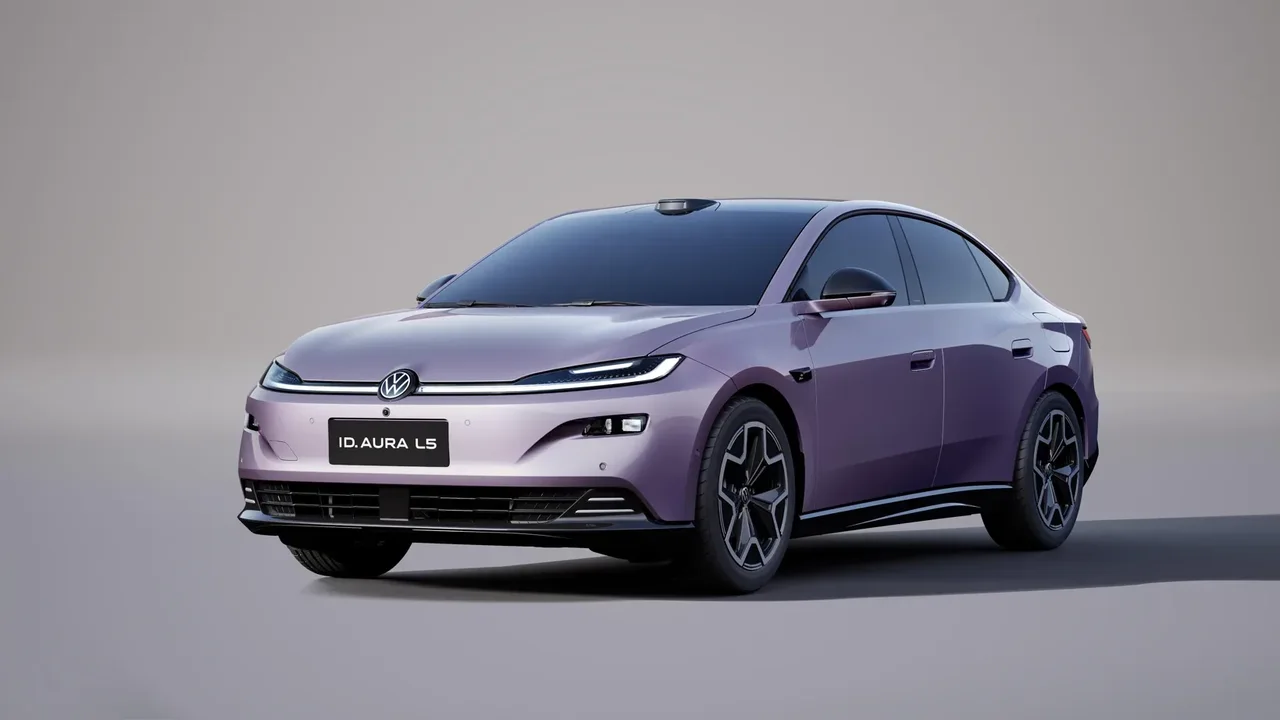
In terms of physical dimensions, the ID. AURA L5 occupies a substantial footprint on the road. The vehicle measures 4,883 millimeters in total length, 1,881 millimeters in width, and stands 1,506 millimeters high. These exterior proportions place the vehicle in a highly competitive segment, balancing the maneuverability needed for dense urban navigation with the stability and space required for long-distance highway traveling.
Within the overall Volkswagen electric product hierarchy, the ID. AURA L5 is positioned directly beneath the flagship ID.7 sedan. Despite occupying a position lower in the lineup than the flagship model, the vehicle offers a generous wheelbase measuring 2,820 millimeters. This extended distance between the front and rear axles translates into a spacious passenger cabin, yielding significant knee and legroom for rear-seat occupants, a factor that remains an essential metric for car buyers in the segment.
The exterior visual identity of the ID. AURA L5 incorporates several contemporary design elements aimed at maximizing aerodynamic efficiency while projecting a modern silhouette. The vehicle features a gently sloping roofline that transitions smoothly into the rear end, generating a coupe-like profile. This sweeping roof silhouette is complemented by frameless side doors and semi-recessed, semi-hidden door handles, both of which serve to reduce aerodynamic drag while creating a clean, continuous lateral surface line.
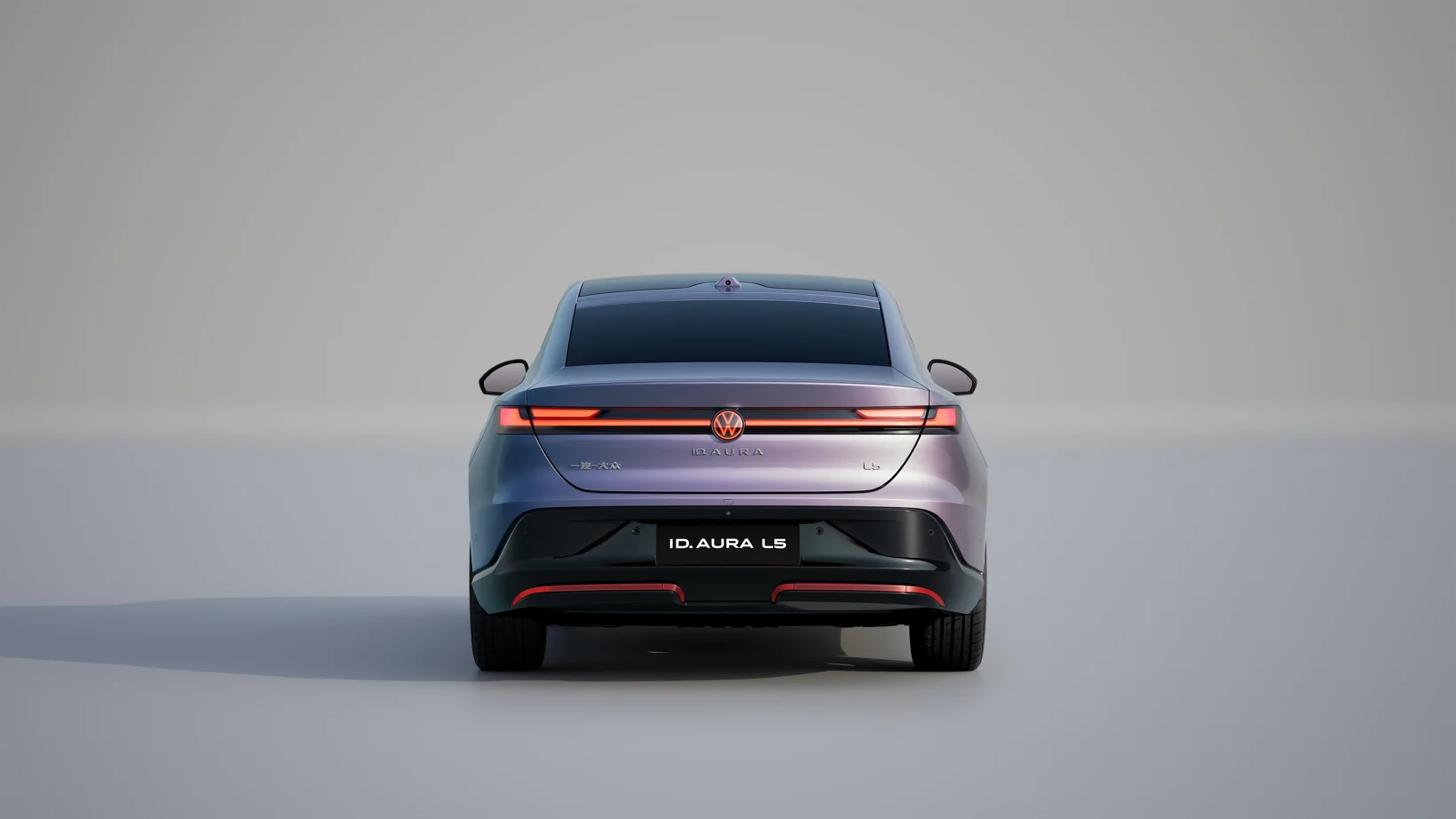
At the front of the vehicle, the light signature is defined by a continuous, U-shaped LED lighting strip that extends across the entire front fascia, visually broadening the stance of the car and establishing an immediate visual link with Volkswagen’s broader family of electric vehicles. At the rear, the lighting arrangement consists of a three-dimensional LED light bar that mirrors the design language of the front lamps, creating a cohesive visual appearance from all angles.
Unlike traditional three-box sedan designs, the ID. AURA L5 utilizes an electrically operated liftback trunk arrangement where the rear glass hinged mechanism lifts together with the trunk lid as a single unified assembly. This power-operated tailgate opens to an angle of up to 70 degrees, creating a wide cargo aperture that drastically simplifies the loading and unloading of bulky items, luggage, or commercial gear. The combination of an aerodynamic coupe profile with the functional utility of a wide-opening liftback hatch highlights the practical engineering behind the model’s design.
Technology and Performance Details
Beneath its aerodynamic exterior, the ID. AURA L5 incorporates a versatile electric propulsion system designed to accommodate multiple performance tiers. The powertrain configuration offers buyers a choice between single-motor rear-wheel-drive configurations and higher-performance dual-motor setup options.
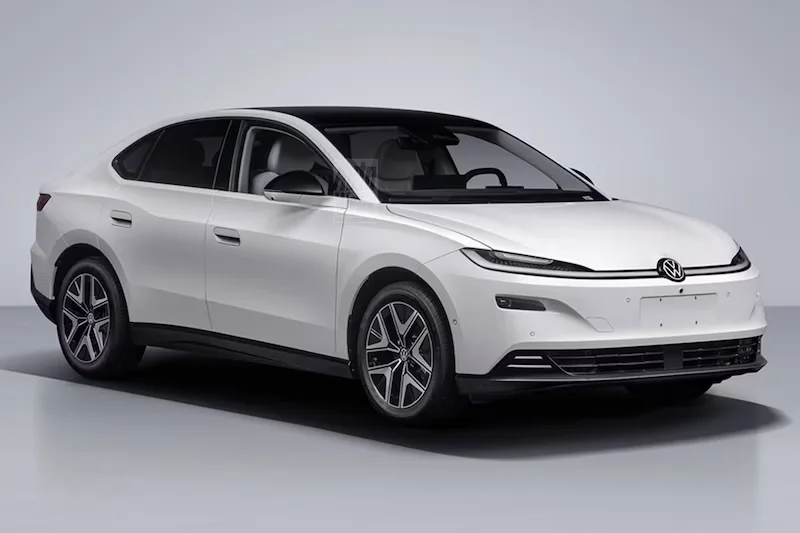
The entry-level model relies on a rear-mounted single electric motor that generates an output of 155 kW, which converts to approximately 211 horsepower. This single-motor variant is configured to deliver a balance between responsive acceleration and energy conservation, providing sufficient power for daily driving scenarios. For buyers seeking enhanced acceleration and improved traction under varied driving conditions, Volkswagen will also offer an all-wheel-drive performance variant. This high-tier model features two separate electric motors—one mounted on the front axle and one on the rear axle—with each individual motor unit rated at 155 kW. Across both powertrain layouts, Volkswagen engineers have electronically capped the maximum vehicle speed at 175 km/h for safety considerations and energy management efficiency.
Energy storage for the vehicle’s powertrain is handled by a battery system utilizing Lithium Iron Phosphate, commonly referred to as LFP chemistry. LFP battery technology is widely recognized across the automotive industry for its thermal stability, long cycle life, and resistance to degradation over repeated charging cycles. While Volkswagen has confirmed the selection of LFP cell chemistry for the ID. AURA L5, the manufacturer has reserved detailed specifications regarding exact battery capacity, usable kilowatt-hour metrics, and official driving range figures under standardized testing cycles for a later announcement.
The technological cornerstone of the ID. AURA L5 lies in its underlying electronic architecture. The model introduces Volkswagen’s new CEA electronic platform, an advanced system designed to manage high-data processing demands and enable complex driver assistance capabilities. The integration of this architecture allows the vehicle to feature roof-integrated LiDAR sensor technology, placing the ID. AURA L5 among the most advanced models in Volkswagen’s electric portfolio regarding perception hardware.
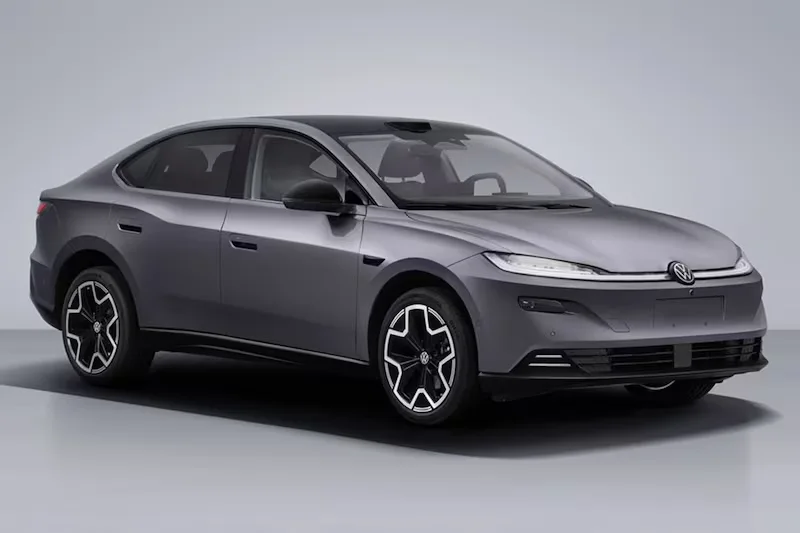
The inclusion of LiDAR hardware provides the vehicle with precise three-dimensional mapping of its surrounding environment, allowing the onboard computer systems to detect obstacles, pedestrians, and surrounding vehicles with high accuracy, even in low-visibility or challenging weather conditions. This sensor suite is further augmented by fender-mounted cameras positioned around the vehicle perimeter, providing complete surround-view monitoring and supplying real-time visual data to the onboard safety electronics. Together, the LiDAR unit, camera array, and advanced sensor modules form the hardware backbone for an array of enhanced autonomous driving functions and active safety systems designed to navigate complex traffic conditions.
Despite the comprehensive unveiling of the vehicle’s design, platform architecture, and core technical metrics, Volkswagen has not yet finalized or announced the official commercial launch date or retail pricing structure for the ID. AURA L5. Additionally, the automaker has not indicated whether the model will remain exclusive to the Chinese domestic market or if there are long-term plans to export the electric liftback sedan to international markets outside of Asia.