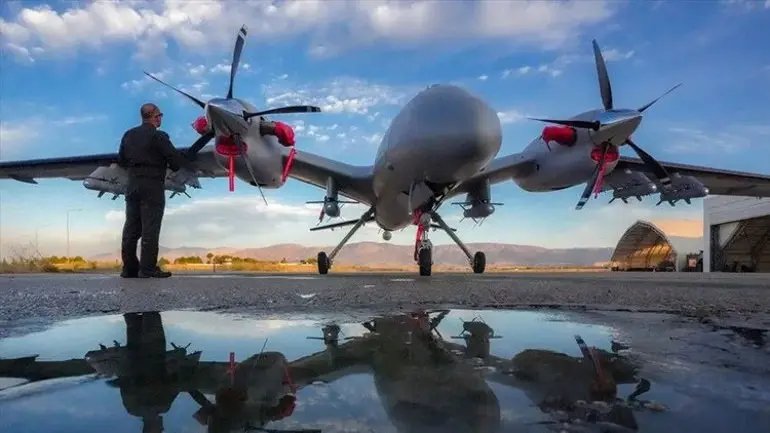
Analysis by US-based Al-Monitor Highlights Ankara’s Surging Military-Industrial Footprint, Projecting Contract Values to Reach $20 Billion by Year-End While High-Tech Exports Yield Forty Times the National Average Value
The Turkish defense industry has experienced an unprecedented surge in international demand and domestic manufacturing momentum in 2026, securing approximately $15 billion in new contracts since the start of the year. The milestone, which has garnered extensive coverage in international defense and foreign policy circles, was prominently detailed in a comprehensive analysis by the United States-based media platform Al-Monitor. According to industry assessments and projections cited in the report, the total volume of newly finalized defense contracts is anticipated to cross the threshold of $20 billion before the end of the year, underscoring Ankara’s accelerating transition into a top-tier global defense supplier.
The analytical report highlighted that Türkiye’s defense exports are not merely expanding in aggregate dollar figures, but are also fundamentally altering the composition of the nation’s export economy. In a key finding, the analysis noted that high-technology defense and aerospace items generate roughly forty times more revenue by weight than the country’s overall export goods average. This extraordinary value-added metric reflects decades of targeted state planning, research and development investments, and industrial restructuring aimed at shifting the national manufacturing base toward high-margin technological self-sufficiency.
Citing official statements from Haluk Görgün, the President of Türkiye’s Defence Industry Agency (SSB), Al-Monitor reported that the $15 billion in new contracts booked during 2026 demonstrates sustained international confidence in Turkish military hardware across multiple domains. The analysis emphasized that this expansion extends far beyond traditional arms trade, observing that "the expansion of Türkiye’s defense industry has strengthened Ankara’s geopolitical influence; major arms deals are increasingly paving the way for technology transfers, joint production, and broader military cooperation with regional partners."
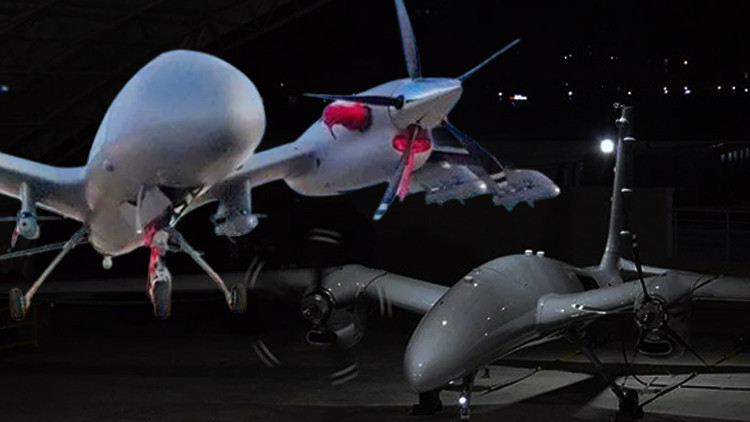
A critical indicator of the sector’s structural durability outlined in the report is the volume of unfulfilled orders placed with domestic suppliers. Active, ongoing delivery commitments and backlogged production orders distributed across Turkish sub-contractors and tier-one defense companies have exceeded $13.4 billion. Al-Monitor observed that this substantial backlog reflects an industry driven not simply by sporadic or opportunistic export deals, but by a resilient, deeply integrated long-term production and procurement ecosystem capable of sustained industrial output over multi-year horizons.
Türkiye’s Goal of Strategic Autonomy in the Defense Industry
The analytical study framed Ankara’s recent commercial and operational breakthroughs as the direct outcome of a long-term strategic doctrine focused on overcoming external dependencies. For decades, Turkish security planning faced vulnerabilities stemming from foreign procurement restrictions, export embargoes, and changing geopolitical alliances among Western partners. In response, national authorities embarked on a concerted, state-backed drive to foster indigenous development across air, land, naval, and electronic warfare systems.
Al-Monitor emphasized that this deliberate policy framework was designed to shield national defense policy from external leverage: "Türkiye has significantly expanded its defense industry in recent years to reduce its dependence on foreign suppliers, making large-scale investments in domestically produced unmanned aerial vehicles, missiles, and other military hardware."

The systemic investments in unmanned systems, precision-guided munitions, air defense architectures, and armored vehicles laid the groundwork for rapid commercial scaling. The Al-Monitor review reviewed official data released at the start of the year, tracking the steep upward trajectory of Turkish defense turnover. In 2021, the Turkish defense sector recorded an annual turnover of $10.16 billion. By 2024, that figure had nearly doubled, climbing to $20.2 billion.
This domestic industrial capacity increasingly translated into outward-facing export performance. By 2025, Türkiye’s defense and aerospace export volume surpassed the $10 billion benchmark for the first time in history. Rather than peaking, the momentum carried forward seamlessly into 2026, propelled by a maturing ecosystem of state-owned entities, private defense contractors, and specialized engineering firms capable of taking products from conceptual design to battle-tested deployment.
The ’40-Fold Revenue’ Advantage and Economic Impact
Among the most striking elements highlighted in the Al-Monitor report is the disproportionate economic contribution of the defense sector to the broader Turkish economy. Defense manufacturing operates at the highest tier of engineering complexity, requiring advanced microelectronics, composite materials, proprietary software, and precision mechanics. Consequently, Turkish defense products yield approximately forty times more export revenue per unit of weight when contrasted with the broad baseline of the country’s general industrial, textile, and agricultural exports.

This qualitative shift provides Türkiye with a potent tool for macroeconomic stabilization. While conventional industrial exports are heavily dependent on raw material import costs and global consumer demand cycles, high-technology defense exports command premium pricing, generate sustained downstream service revenue, and foster high-skilled domestic employment.
The empirical data recorded throughout 2026 underscores this trend. During the first nine months of 2026, Turkish defense and aerospace exports reached $6.93 billion, marking a 15.6 percent increase compared to the exact same period in the previous year. Crucially, the growth rate of defense exports consistently outstripped the expansion pace of Türkiye’s overall national export figures over the same timeframe.
The expanding gap between defense export growth and standard commercial export growth indicates that defense hardware is serving as an essential engine of advanced industrialization. Al-Monitor noted that this performance validates Ankara’s strategy of utilizing defense technologies as a lever to transform the structural nature of its external trade balance, transitioning the nation from an importer of expensive foreign military equipment into a net exporter of high-value systems.

Deepening Strategic and Regional Military Partnerships
Beyond commercial and industrial metrics, the Al-Monitor analysis underscored how the defense industry has evolved into one of the most effective instruments of Turkish foreign policy and regional diplomacy. The ability to design, manufacture, and deliver advanced combat systems with relatively few political preconditions has enabled Ankara to cultivate deep bilateral and multilateral security partnerships, particularly throughout the Middle East and South Asia.
The report specifically pointed to Türkiye’s burgeoning defense relationship with Saudi Arabia as a primary example of this dynamic. Bilateral defense engagement reached a historic milestone in 2023 when Riyadh signed a procurement agreement valued at more than $3 billion for the acquisition of Turkish-made Bayraktar Akıncı high-altitude, long-endurance unmanned combat aerial vehicles (UCAVs). At the time, the deal represented the single largest defense export agreement in the history of the Turkish republic.
Rather than remaining a standard supplier-buyer relationship, the Akıncı transaction served as the foundation for an expansive, institutionalized military-industrial alliance. Following the primary procurement deal, the two nations concluded supplementary agreements establishing local manufacturing facilities for unmanned aerial vehicle components directly within Saudi Arabia, coupled with extensive frameworks for technology transfer and manufacturing expertise.
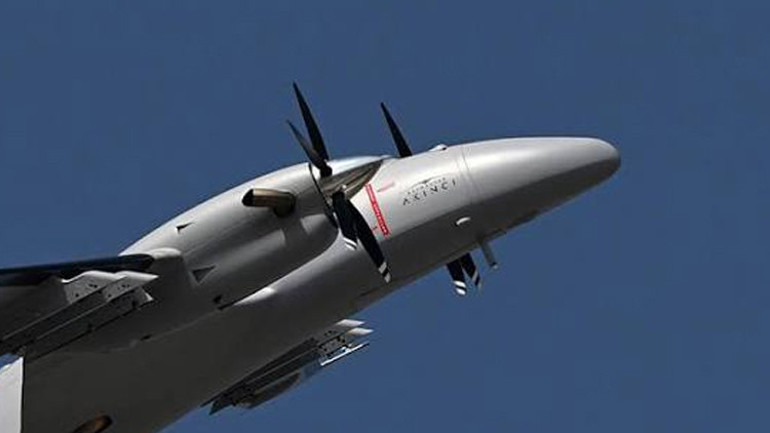
Operational integration has progressed in parallel with industrial cooperation. In September, a cohort of thirty Saudi naval personnel formally concluded an extensive operational and technical training program conducted by the Turkish defense manufacturer Baykar. This specialized instruction prepared Saudi military operators to maintain, deploy, and integrate Turkish-built unmanned systems into their maritime and joint operational command structures.
According to the Al-Monitor analysis, this multi-layered defense collaboration reached a strategic peak in August with the formal execution of the Mecca Joint Defense Agreement signed by Türkiye, Saudi Arabia, and Pakistan. The trilateral agreement solidified a broader security architecture uniting three major regional military powers, formally integrating technological sharing, defense production synchronization, and long-term joint security commitments.
As Turkish defense manufacturers continue to sign multi-billion-dollar deals across global markets, the combination of growing domestic production backlogs, unmatched export value-added metrics, and high-level intergovernmental security agreements indicates that Ankara’s defense industrial rise has become an enduring feature of the international security landscape. With new contracts projected to hit the $20 billion threshold by the end of 2026, the sector continues to anchor both national economic growth and geopolitical influence across key regional theaters.