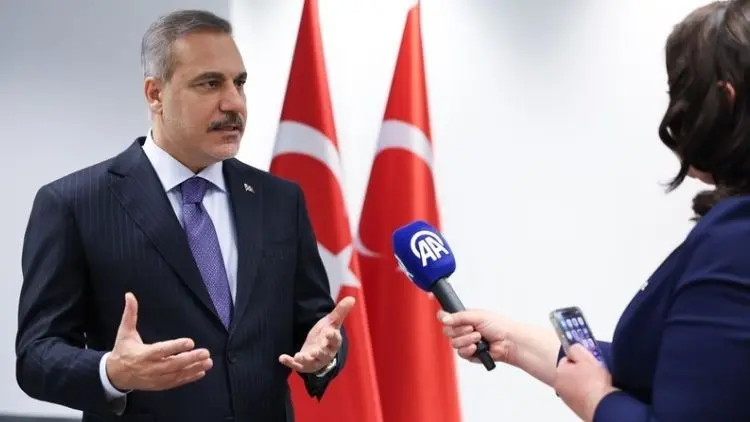
Turkish Foreign Minister Hakan Fidan has issued an uncompromising defense of the 2019 maritime boundary agreement between Turkey and Libya following its formal acceptance by the Libyan House of Representatives, declaring the accord fully legitimate under international law and politics, and asserting that its validity is beyond dispute.
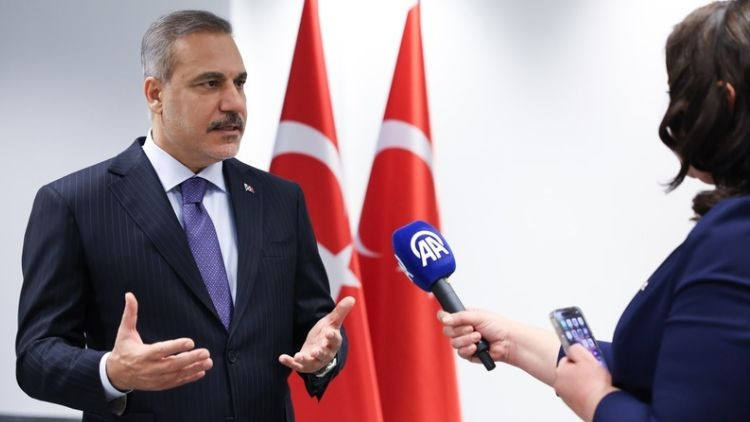
Speaking to reporters with the Anadolu Agency during an extensive diplomatic mission to Brussels, Fidan addressed the parliamentary development in Libya, framing it as a major validation of Turkish foreign policy and a milestone for regional equilibrium. Fidan underscored that Ankara has regarded the landmark maritime boundary delimitation as fully operative and legally sound since its initial signing five years ago, viewing the recent parliamentary step in Libya as an endorsement of an already established reality.
The foreign minister’s remarks on maritime boundaries in the Eastern Mediterranean formed part of a comprehensive assessment of his intensive round of talks in the Belgian capital. Over several days, Fidan engaged in high-level consultations covering bilateral relations with the Belgian government, direct coordination with the leadership of NATO, and strategic discussions with the European Union’s topmost external relations and executive figures.
"Legally and Politically Legitimate Beyond Debate"
Addressing the Libyan House of Representatives’ decision to accept the 2019 Memorandum of Understanding on the Delimitation of Maritime Jurisdiction Areas in the Mediterranean, Fidan emphasized that Turkey views the development through both historical and legal prisms. The minister recalled that he had tracked the dossier closely since 2019 under his earlier state responsibilities, observing its evolution into a signature diplomatic achievement accomplished under the leadership of President Recep Tayyip Erdoğan.
Fidan dismissed external objections that have repeatedly been leveled against the maritime boundary accord by third-party states in the region. According to the foreign minister, Turkey understands the underlying motives of foreign critics, distinguishing between governments that object purely as a matter of obligatory political posture and those whose opposition stems from broader strategic friction with Ankara.
"We know why they are reacting," Fidan said. "Some react merely because they feel they have to react. Others have genuine strategic issues regarding this matter. However, from both a legal perspective and a political perspective, this is an exceedingly legitimate agreement. There is simply no need to debate this."
Fidan further detailed the legal mechanics of the pact from the standpoint of Turkish legal authorities. He pointed out that, under the technical legal parameters recognized by Turkish jurists, the memorandum of understanding signed in 2019 had already entered into force and possessed full legal efficacy from the moment of its original conclusion.
Consequently, Fidan characterized the recent parliamentary development in Libya as an act of formal acceptance rather than an initial granting of legal validity.
"According to our legal experts, what took place in the parliament was essentially an act of acceptance, not a ratification process required to bring it into effect," Fidan explained. "From 2019 onward, we had already regarded this as a valid, binding agreement."
Fidan maintained that the accord reflects the core doctrines of Turkish foreign diplomacy, which he described as oriented around conflict prevention, regional stability, and mutual benefit. He highlighted the trust that Libyan counterparts place in Turkey, arguing that this mutual confidence provides an essential foundation for long-term tranquility across the Eastern Mediterranean basin.
"What is exceptionally important here is the trust our Libyan brothers place in Turkey, alongside the stability that will be brought to the Eastern Mediterranean," Fidan stated. Reaffirming Ankara’s wider maritime posture, he added: "Our objective in the Mediterranean, as everywhere else, is to bring stability, peace, serenity, and well-being. Our diplomacy possesses no purpose other than this."
Comprehensive Trilateral and Bilateral Engagements in Belgium
Beyond Mediterranean maritime files, Fidan used his presence in Brussels to conduct wide-ranging discussions on European security, bilateral governance, and community affairs. He described his schedule in the Belgian capital as an exceptionally demanding period of diplomacy that integrated foreign affairs, domestic security, and judicial coordination.
"We experienced a very intensive working period centered on our bilateral relations with the Belgian government, our relations with NATO, our ties with the European Union, as well as matters concerning our citizens and civil society organizations here," Fidan said.
A central element of the bilateral track was the convening of the Turkey-Belgium ministerial coordination mechanism. Fidan was accompanied on the trip by Turkish Justice Minister Akın Gürlek and Interior Minister Mustafa Çiftçi for joint ministerial consultations with their Belgian counterparts. The format brings together the foreign affairs, justice, and interior portfolios of both nations to examine security cooperation, counter-terrorism, judicial assistance, and administrative challenges simultaneously.

Fidan noted that this "3+3" inter-ministerial platform, first created in 2016, continues to prove highly effective in handling multidimensional issues that require cross-departmental synchronization. The ministerial delegations reviewed all files directly falling under the three ministries’ purview, as well as secondary matters connecting bilateral law enforcement, legal cooperation, and diplomatic outreach.
The foreign minister also pointed to the positive commercial momentum generated between Turkey and Belgium, citing the recent official visit of Queen Mathilde of Belgium to Turkey. The Queen had traveled accompanied by an extensive economic and trade delegation, a visit that Fidan credited with elevating bilateral ties.
"This visit clearly carried our bilateral relations to another level," Fidan remarked, adding that current diplomatic and ministerial contacts are aimed at actively building upon the economic foundations established during that royal engagement.
Alliance Strategy and Crisis Management with NATO Leadership
During his consultations at NATO headquarters, Fidan met with NATO Secretary General Mark Rutte to assess alliance priorities, institutional issues, and pressing international security crises.
The talks served in part as a formal follow-up to the NATO Summit hosted by President Erdoğan in Ankara in July. Fidan and Rutte reviewed the implementation of decisions taken during that summit, evaluating alliance readiness and the defense postures agreed upon by allied leaders.
The discussion between Fidan and Rutte encompassed key geographic areas of conflict and tension, focusing primarily on the ongoing war between Russia and Ukraine, as well as broader stability in the Gulf region. They examined internal institutional matters confronting NATO and conducted a thorough review of various crisis zones where the alliance maintains active monitoring or operational responsibilities.
Strategic Dialogue with European Union Leadership
The third pillar of Fidan’s Brussels mission consisted of extensive, high-level engagements with top European Union officials, addressing longstanding friction points and geopolitical bottlenecks between Ankara and the bloc.

Fidan held comprehensive discussions with Kaja Kallas, the European Union’s High Representative for Foreign Affairs and Security Policy. The meeting focused on navigating the systemic obstacles that have slowed Turkey-EU relations, alongside joint reviews of critical international challenges where the interests of Turkey and the European Union intersect.
Among the regional and global security matters raised with Kallas were the trajectory of the Russia-Ukraine war and maritime security in strategic international transit chokepoints. Fidan and Kallas addressed mounting disruptions around the Strait of Hormuz and the Bab-el-Mandeb Strait, examining the direct implications of these maritime vulnerabilities for global energy markets and international shipping corridors.
The foreign minister also highlighted the persistent logistical challenges facing agricultural trade in the Black Sea basin. Persistent hostilities and maritime risks in the Black Sea have continuously prevented essential grain supplies from reaching international markets smoothly. Fidan and Kallas evaluated potential policy frameworks and diplomatic interventions capable of addressing these agricultural supply chain failures.
"We conducted an accounting of Turkey-EU relations—the points of progress as well as the bottlenecks," Fidan explained regarding his session with Kallas. "How can these bottlenecks be overcome? There are regional and global matters followed closely by both the EU and Turkey, including the Russia-Ukraine war, the Strait of Hormuz, the Bab-el-Mandeb Strait, and the energy problems arising from them. We reviewed the question of grain products that cannot reach world markets due to tensions in the Black Sea: what will happen to them, how we will act, and what types of solutions we can introduce."
Following his discussions with Kallas, Fidan met with European Commission President Ursula von der Leyen for a detailed, extensive review of institutional Turkey-EU cooperation. Fidan stated that the lengthy meeting offered an important opportunity to systematically reassess the political, structural, and economic dimensions of relations between Ankara and the Union.
Fidan underscored that Turkey’s candidate status and existing institutional mechanisms require structured, deliberate, and sustained political dialogue if concrete progress is to be achieved.
"There are very important issues at stake, encompassing both commercial and political matters," Fidan said. "There are matters relating to our existing status and matters relating to our candidacy status. For these files, it is absolutely essential that qualified, planned, and persistent negotiations continue."