The unanimous decision by Libya’s House of Representatives to ratify the maritime jurisdiction agreement signed with Turkey has sent severe geopolitical shockwaves through Athens. Greek media and political figures have characterized the parliamentary approval as a "major national defeat," warning that the development fundamentally alters the strategic architecture of the Eastern Mediterranean. The endorsement by the eastern-based parliament, which had long stood as the primary domestic obstacle to the accord, has left Greece facing an increasingly complex diplomatic landscape while igniting sharp domestic political controversy over the government’s foreign policy conduct.
The ratified memorandum of understanding, initially signed in late 2019 between the government of Turkey and Libya’s former Government of National Accord (GNA), establishes an exclusive maritime boundary connecting the Mediterranean coasts of Turkey and Libya. The agreement has now received the full backing of lawmakers in the eastern Libyan parliament based in Benghazi and Tobruk, who voted unanimously to accept the text. The legislative endorsement closes a prolonged period of political ambiguity regarding the status of the pact, cementing Ankara’s maritime boundaries in an international agreement acknowledged across Libya’s political divide.
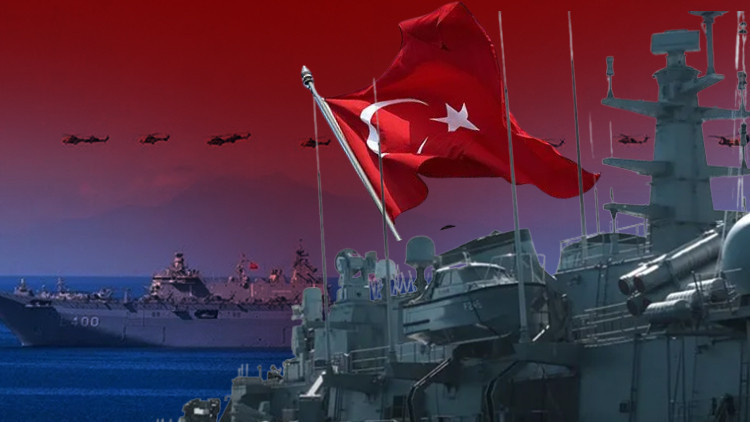
In response to the vote, the Greek Ministry of Foreign Affairs issued an immediate rejection, maintaining that the memorandum violates fundamental provisions of international maritime law and insisting that Athens will not recognize its validity. The European Union reiterated its message of solidarity with Greece and the Republic of Cyprus, reiterating earlier positions that the accord infringes upon the sovereign rights of third states. However, Greek commentators and strategic analysts widely observed that rhetorical rejections and diplomatic condemnations do little to obscure what they describe as a substantial diplomatic triumph for Ankara. Mainstream Greek media coverage underscored that Turkey operates on the world stage with the reach and leverage of an emerging heavyweight, possessing military, defense-industrial, and economic assets that Athens cannot readily match.
Banking News: Balances in the Region Overturned
Financial and political outlet Banking News framed the vote in stark terms, running the development under the headline "Major National Defeat." The outlet reported that by formally endorsing the maritime delimitation memorandum, the Libyan House of Representatives chose direct, structured cooperation with Turkey over Western and Greek overtures, upending the delicate balance of power across the Eastern Mediterranean basin and leaving Athens strategically exposed.

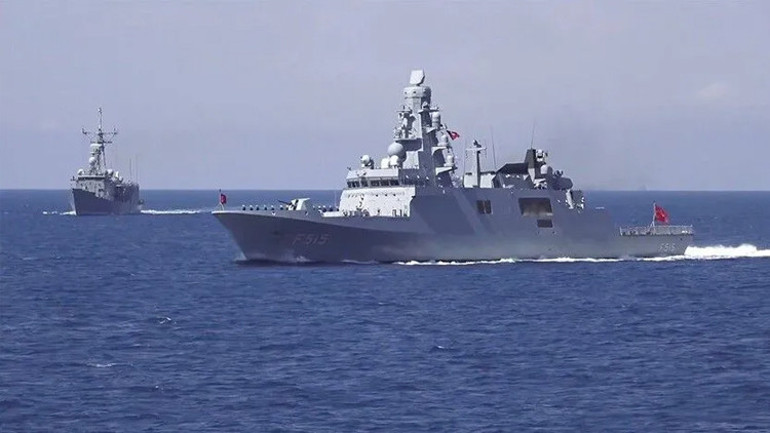
According to Banking News, the parliamentary ratification effectively formalizes and legitimizes Turkey’s maritime claims across an expansive maritime corridor, projecting Ankara’s influence directly into areas south and east of Crete. The publication emphasized that this encirclement poses immediate complications for Greece’s own long-standing territorial and maritime ambitions. "Turkey has succeeded in legitimizing its claims in the Eastern Mediterranean, establishing a dangerous cordon around Crete and across the wider waters of the region," the outlet warned. The analysis concluded that the challenges confronting Greek sovereignty and maritime boundary claims have entered an exceptionally perilous and decisive phase.
CNN Greece: A Decisive Turning Point for the Eastern Mediterranean
CNN Greece characterized the parliamentary ratification as a critical juncture for regional stability and maritime politics. The network highlighted that the vote carries profound political weight because it emanated from eastern Libya—the very power center that had spent years opposing the Tripoli-based administration that originally negotiated the agreement with Ankara. By securing the endorsement of the eastern parliament, Turkey has unified both halves of Libya’s fractured political landscape behind the maritime pact, significantly strengthening Ankara’s hand in future regional negotiations.

The network noted that the enduring disputes between Ankara and Athens regarding the delimitation of the continental shelf and exclusive economic zones have deepened substantially at Greece’s expense. Athens has consistently rejected the Turkish-Libyan memorandum on the grounds that it ignores the presence of major Greek islands, most notably Crete, Rhodes, and Karpathos, which Greece maintains are entitled to their own continental shelves and exclusive economic zones under the United Nations Convention on the Law of the Sea.
Conversely, Turkey has long maintained that islands cannot cut off broad coastal states from expansive maritime access, arguing that sea boundaries should be determined primarily by continental mainlands. Through the endorsement of the Libyan legislature, Ankara has anchored its legal and geographical thesis into a ratified bilateral instrument that cuts across maritime zones claimed by Athens, thereby creating an operational reality on the water that Greek diplomacy will struggle to dismantle.

Former Prime Minister Samaras: The Lies Have Been Exposed
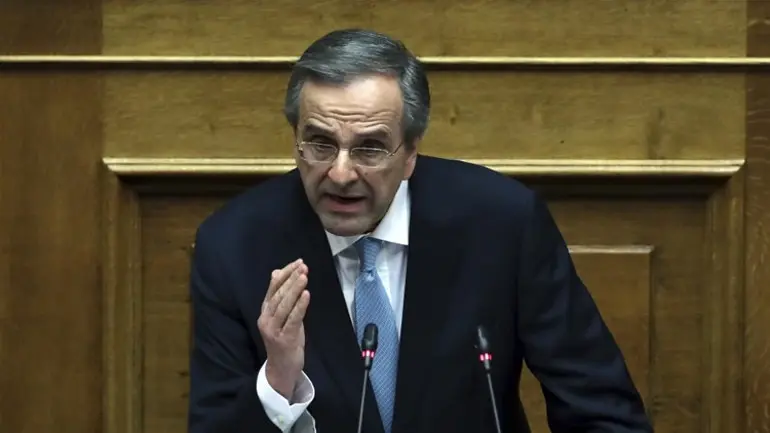
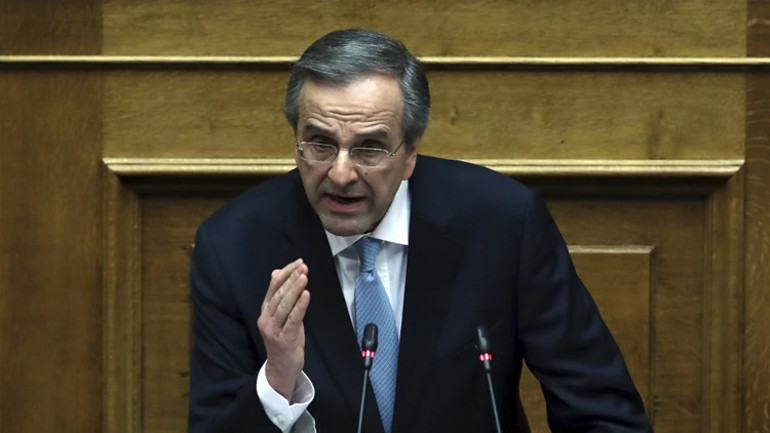
The fallout from the vote quickly manifested in Greek domestic politics, precipitating a sharp public clash within the political establishment. Former Greek Prime Minister Antonis Samaras issued a blistering critique of Prime Minister Kyriakos Mitsotakis and Foreign Minister George Gerapetritis, accusing the administration of misleading the Greek public regarding the true state of relations with both Turkey and regional neighbors.
"The dramatic events in Libya have exposed the irreparable lies of Mr. Gerapetritis, who only recently gave us assurances to the exact contrary," Samaras stated. He criticized the Prime Minister for failing to hold the foreign minister accountable, pointing to what he described as an alarming complacency in Greek foreign policy while Turkey methodically expanded its influence across the region.
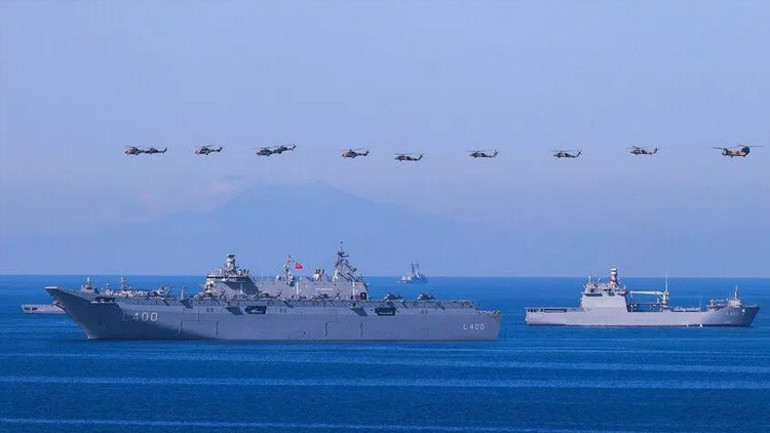
Samaras expanded his criticism to address Greece’s broader neighborhood, highlighting Ankara’s strengthening ties with regional players. "At the same time, we see Albania embracing Turkey, while we, asleep, pretend to navigate tranquil waters with Ankara," Samaras remarked. He demanded that the government acknowledge the gravity of the deteriorating geopolitical climate, stating, "Mr. Mitsotakis must understand the magnitude of the new geopolitical crises that he and Mr. Gerapetritis have created for Greece."
Open TV: An Extremely Negative Turn for Greek Diplomacy
Greek television broadcaster Open TV described the development as an "extremely negative development" that fundamentally undermines Athens’ long-term diplomatic strategy. The network observed that for years, Greek officials had pointed to eastern Libya’s rejection of the 2019 Tripoli agreement as a primary diplomatic argument to demonstrate the illegitimacy and domestic invalidity of the maritime boundaries. The sudden reversal by the eastern parliament thoroughly dismantles that core Greek talking point.
Open TV underscored the sharp irony of the outcome, recalling that Greece had provided explicit diplomatic and political support to eastern commander Field Marshal Khalifa Haftar during his 2020 military offensive against Tripoli. Despite Athens’ historical investments in cultivating the eastern Libyan leadership, that same political establishment has now embraced Ankara’s maritime architecture.
The broadcaster warned that relations between Athens and Libya are poised for a dramatic deterioration, cautioning that bilateral negotiations between Greece and Libya over maritime boundaries are now facing total collapse. Furthermore, Open TV reported that the political rapprochement between Ankara and eastern Libya is already translating into economic realities, with the Libyan Foreign Ministry actively signaling upcoming commercial, infrastructure, and energy agreements with Turkish firms.
Naftemporiki: Greece Lacks Turkey’s Instruments of Influence
Financial and political daily Naftemporiki analyzed the structural imbalances between Turkish and Greek foreign policy capabilities, reporting that Ankara’s systematic engagement with eastern Libya went far beyond standard diplomatic pleasantries. The outlet concluded that the vote in Benghazi was not an accident, but rather the planned culmination of a calculated, multi-layered Turkish strategy designed to reshape regional alignments at Greece’s expense.
The newspaper highlighted that while the Greek Foreign Ministry immediately issued a statement of non-recognition and secured expressions of European Union solidarity alongside the Greek Cypriot administration, these measures were largely symbolic and did not counterbalance Turkey’s practical leverage on the ground. "Turkey is a regional power capable of delivering significant defense-industrial assistance and mobilizing large-scale capital investments," Naftemporiki observed. "Greece simply lacks these instruments of influence."
Naftemporiki traced the roots of the parliamentary endorsement directly to high-level diplomatic outreach spearheaded by Turkish Foreign Minister Hakan Fidan. Fidan conducted high-stakes visits to Tripoli and subsequently made a historic first official visit to Benghazi, engaging directly with eastern Libya’s principal decision-makers. During that visit, Fidan held comprehensive discussions with Field Marshal Khalifa Haftar, his influential sons Saddam Haftar and Belkasem Haftar, and the speaker of the House of Representatives, Aguila Saleh. The paper emphasized that Ankara conceptualized these visits as the execution of its "One Libya" strategy, seeking to engage all factions simultaneously to secure institutional backing for Turkish national security interests.
Libyan affairs expert Jalel Harchawi told Naftemporiki that the parliamentary approval constitutes a historic and transformative milestone in Eastern Mediterranean politics. "The significance of these developments is immense," Harchawi stated. "This step possesses an exceptionally strategic and profound character, inaugurating an entirely new chapter in the regional balance of power."
A Decisive Victory for Ankara’s Regional Vision
International analysts and observers have similarly assessed the outcome as an unambiguous strategic triumph for Turkey. Eurasia analyst Ahmed Hahshan noted that Ankara has managed to realize its strategic ambitions in eastern Libya without incurring substantial geopolitical or economic costs. "Turkey has secured virtually everything it envisioned, desired, and sought after in eastern Libya almost entirely without resistance," Hahshan observed. He explained that Turkey’s military footprint in western Libya, established during the 2019–2020 conflict, has now been reinforced by political legitimacy granted by the eastern-based authorities and tacit international acceptance of Ankara’s enduring role across the entirety of the North African nation.
Echoing this perspective, international relations expert Dr. Walid Phares underscored the geopolitical magnitude of the development, writing that the decision by the parliament in eastern Libya to officially embrace the economic zone connecting Turkey to Libya creates a solidified corridor across the Mediterranean seabed. Phares described the move as a major, consequential victory for Ankara, cementing Turkey’s status as a central arbiter of Mediterranean energy, security, and maritime jurisdictions.