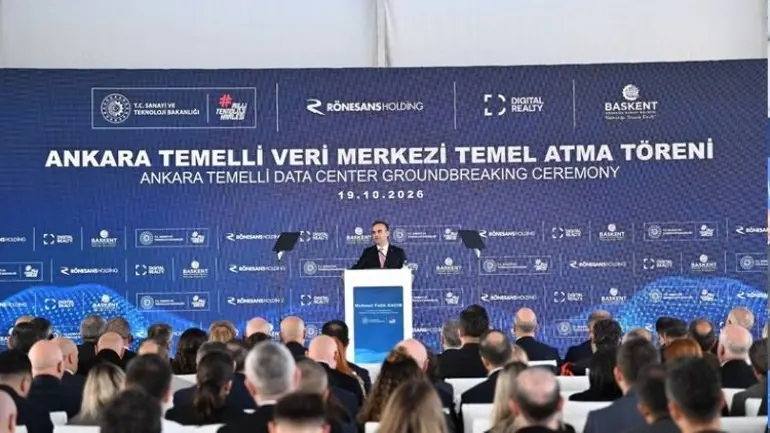
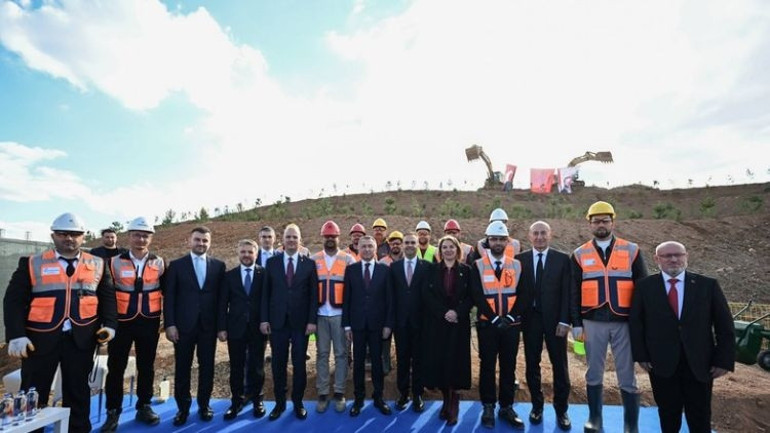
ANKARA — Türkiye has officially commenced construction on a major new digital infrastructure project in the capital, breaking ground on a state-of-the-art data center complex in the Temelli district of Ankara. Developed through a strategic partnership between Rönesans Holding and global data center operator Digital Realty, the campus at the Başkent Organized Industrial Zone (Başkent OSB) will ultimately represent a cumulative fixed capital investment of $4.1 billion once all development phases are complete.
The project began with a groundbreaking ceremony attended by Minister of Industry and Technology Mehmet Fatih Kacır, who outlined the facility’s phased rollout and underscored its central role in anchoring Türkiye’s broader digital sovereignty and artificial intelligence ambitions.
The initial phase of the Ankara Temelli Data Center involves an expenditure of $450 million dedicated to core building and civil infrastructure, establishing an initial operating capacity of 22 megawatts (MW). This deployment will be followed by a subsequent $900 million phase focused on integrating advanced liquid and high-efficiency cooling architectures alongside high-performance computing hardware. Together, these installations will cater to the rapidly expanding data storage, processing, and computational requirements of both public institutions and private technology enterprises.
Addressing attendees at the ceremony, Kacır framed the investment not merely as a commercial infrastructure project, but as a cornerstone of Türkiye’s long-term economic and technological security.
Technological Infrastructure and the New Value of Data
In his address, Minister Kacır highlighted the profound structural changes reshaping international business, manufacturing, and governance, noting that computational infrastructure now underpins modern statecraft and economic growth. He pointed to advancements across artificial intelligence, cloud architectures, big data analytics, and the Internet of Things (IoT) as primary drivers fundamentally altering production methodologies, operational paradigms, and day-to-day life.
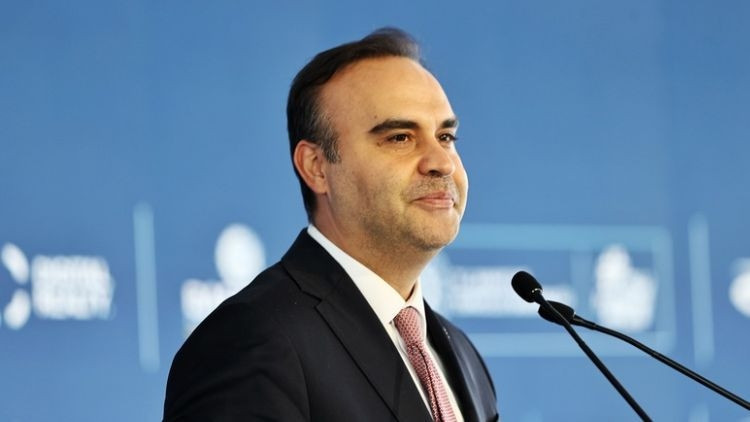
Reflecting on historical economic transitions, Kacır drew a comparison between earlier industrial revolutions and the current digital epoch. He noted that while access to basic raw materials and fossil fuel reserves dictated global geopolitical power and economic influence in preceding centuries, access to data—widely referred to as the "oil of the 21st century"—now serves as the benchmark of strategic capability for sovereign states and corporate enterprises alike.
However, Kacır stressed that the traditional analogy equating data to crude petroleum provides only an incomplete understanding of modern economic realities. Unlike physical commodities, the true value of data does not stem merely from accumulation, but from the ability to process, organize, and transform raw inputs into actionable economic value and scientific breakthroughs through advanced computational pipelines.
Transforming the Traditional Role of Data Centers
Unlocking this latent value, the minister explained, requires sorting complex and heterogeneous data streams, deploying sophisticated algorithms to uncover undiscovered correlations, and translating synthesized intelligence into scientific discoveries, technological innovations, and high-margin economic output.
Consequently, the operational scope of data centers has experienced a fundamental transformation. Historically deployed primarily as secure facilities for passive data storage and the uninterrupted delivery of basic digital services, modern installations have evolved into complex compute hubs. Today’s hyperscale and advanced data centers integrate massive processing power, specialized hardware accelerators, cutting-edge thermal management, and ultra-high-speed network fabrics.
Kacır noted that these next-generation facilities serve as the foundational laboratories where extensive datasets are analyzed, complex generative and analytical AI models are trained, and frontier digital applications are deployed. From industrial manufacturing automation and banking networks to scientific research initiatives and citizen-facing digital public services, modern data infrastructure has become indispensable. As a result, capital commitments toward data center infrastructure are accelerating worldwide at an unprecedented velocity.

Global Technology Race and Infrastructure Competition
Putting the domestic push into an international context, Kacır presented statistics showing the sheer scale of the global shift toward compute capacity. In 2025, announcements for newly planned cross-border and international investment projects saw more than one-fifth of their cumulative capital value allocated specifically to data center ventures.
Independent market analyses further project that worldwide data center power capacity will expand rapidly, rising from approximately 103 gigawatts (GW) in 2025 to 200 GW within the next five years.
According to Kacır, these figures show that international technological competition is no longer fought solely on software development, algorithmic design, or the creation of end-user digital applications. Instead, global leadership has transformed into a strategic struggle to secure the underlying computational capacity, high-density physical infrastructure, and reliable power required to run those technologies. Nations capable of safeguarding, processing, and governing their domestic data through dependable, sustainable, and highly energy-efficient facilities will capture a disproportionate share of digital-era prosperity while preserving their technological autonomy.
National Technology Initiative and Digital Sovereignty
The minister reiterated that Türkiye is fully conscious of both the geopolitical vulnerabilities and the economic potential inherent in this technological transition. Under the umbrella of the National Technology Initiative (Millî Teknoloji Hamlesi), championed by President Recep Tayyip Erdoğan, the country has sought to overhaul its engineering capabilities and industrial baseline.
Kacır noted that the engineering competencies and self-reliance demonstrated across the Turkish defense sector, aerospace programs, automotive industry, and advanced industrial manufacturing are now being channeled into digital technologies, artificial intelligence architectures, and high-throughput computational platforms.

He reiterated the government’s stance that digital sovereignty is fundamentally intertwined with national independence. Preserving data integrity, ensuring uninterrupted operations across critical institutional networks, and elevating Türkiye into an influential actor in global artificial intelligence require computational infrastructure aligned with the overarching "Century of Türkiye" (Türkiye Yüzyılı) vision. To this end, the Ministry of Industry and Technology has structured a supportive regulatory and fiscal framework specifically designed to attract cross-border tech capital and expand local hyperscale capacity.
Research Infrastructure and State Investment Incentives
Highlighting progress already achieved in national compute capacity, Kacır pointed to the expansion of the Turkish National Science e-Infrastructure (TRUBA). Serving an active academic and technical community of more than 8,900 researchers, TRUBA’s high-performance computing (HPC) resources have expanded to incorporate over 80,000 central processing unit (CPU) cores, 504 specialized graphics processing units (GPUs), and 26 petabytes (PB) of high-speed data storage capacity.
Furthermore, Türkiye has integrated its researchers into regional computational architectures by joining the European High Performance Computing Joint Undertaking (EuroHPC JU). Through this partnership, Turkish researchers, scientists, and entrepreneurs have gained access to distributed supercomputing resources across Europe, including access to MareNostrum 5, one of the world’s most powerful supercomputers.
On the domestic industrial front, Kacır stated that targeted government investment incentives implemented since 2012 have paved the way for 42 billion Turkish Liras ($1.2+ billion equivalent historically) in data center developments across the country. Building upon this base, the administration has recently inaugurated the HIT-30 program, recognized as the largest industrial and technological incentive package in the nation’s history. Providing $30 billion in state resources and support mechanisms through 2030, HIT-30 aims to establish Türkiye as a magnet for high-technology fixed investments through dedicated, sector-specific project calls.
Targeted Calls for Data Centers, AI, and Quantum Technologies
Within the parameters of the HIT-30 architecture, the ministry has deployed specific funding windows aimed at bottlenecks in the digital pipeline:

- HIT-Data Center Call: Backed by an allocated incentive budget of $1.5 billion, this initiative aims to accelerate the deployment of high-capacity, resilient, and energy-efficient facilities. To qualify for this support framework, projects must demonstrate an installation threshold of at least 30 MW in certified compute capacity.
- HIT-Artificial Intelligence Call: Featuring a dedicated budget of $1.6 billion, this program focuses on spurring the construction of localized, cloud-native computing fabrics. The program seeks to drive digital modernization across core economic sectors, including manufacturing, clinical healthcare, financial systems, logistics, and transportation.
- HIT-Quantum Call: Structured to position Türkiye in post-classical computing paradigms, this initiative focuses on research, physical infrastructure, and algorithmic readiness within quantum mechanics, addressing computational challenges beyond the capability of existing silicon microprocessors.
Kacır stated that these coordinated interventions are designed to establish Türkiye as an influential regional hub for cross-border data storage and processing, ensuring the domestic economy captures the maximum possible value from AI integration.
The 2030 Artificial Intelligence Action Plan
These capital support initiatives operate in tandem with the strategic priorities codified in the 2030 Türkiye Artificial Intelligence Action Plan. The roadmap outlines quantifiable capacity targets to ensure the national economy possesses the compute infrastructure necessary to power commercial AI implementations and expand its market presence within the international digital services landscape.
Central to the 2030 plan is a formal commitment to scale Türkiye’s total nationwide operational data center capacity to a minimum of 1 GW by the end of the decade.
Kacır remarked that state policy remains focused on reducing bureaucratic hurdles, incentivizing private-sector participation, and actively facilitating joint ventures. Guided by this pro-enterprise orientation, the Ministry of Industry and Technology projects that total investments in commercial data centers, enterprise cloud platforms, and supporting AI hardware will exceed $10 billion by 2030, driven primarily by private capital allocations.
Building an Inclusive Artificial Intelligence Ecosystem
Beyond macro-scale campus infrastructure, Kacır emphasized measures designed to democratize high-performance computing resources across academia and the entrepreneurial ecosystem. The establishment of dedicated Artificial Intelligence Growth Zones (Yapay Zekâ Büyüme Bölgeleri) aims to co-locate academic researchers, venture-backed startups, and corporate investors within environments equipped with high-bandwidth network fabrics and localized compute access.
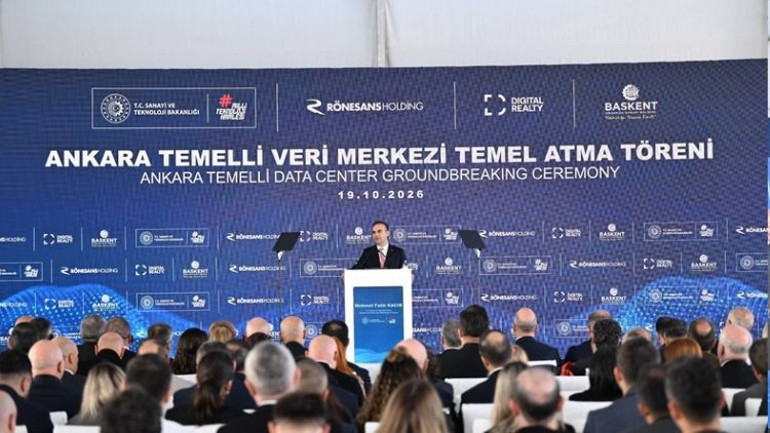
Complementing this geographical clustering is the "GPU for Everyone" (Herkes İçin GPU) program, an initiative created to ensure that capital constraints do not inhibit early-stage technology enterprises or scientific researchers from acquiring processing resources. Kacır observed that technological breakthroughs and scientific discoveries must not be hindered by hardware shortages or prohibitive cloud compute costs. The programmatic goal remains to provide an equitable pipeline whereby intellectual property generated across Turkish universities and incubators can transition smoothly into enterprise products capable of competing globally.
Scope and Architecture of the Ankara Temelli Facility
The groundbreaking at Ankara Temelli’s Başkent OSB represents a concrete milestone within this broader digital agenda. The joint venture between Rönesans Holding and Digital Realty establishes an enterprise facility designed to meet Tier-standard resiliency, providing critical redundancy for both domestic public infrastructure and international enterprise clients.
The initial $450 million building phase will erect the foundational structural campus, high-voltage electrical interconnects, and primary processing suites delivering the opening 22 MW payload capacity. The follow-up allocation of $900 million will furnish the facility with dense compute racks, advanced environmental controls, high-density distribution lines, and next-generation liquid cooling systems optimized for handling thermal dissipation from AI processing workloads.
As successive modular construction phases proceed toward the projected $4.1 billion cumulative investment total, the Temelli campus will expand its available floor space and electrical distribution, functioning as a high-capacity node for international hyperscale cloud operators and software-as-a-service providers looking to localize their regional footprints within Türkiye.
Energy Efficiency and the Broader $10 Billion Investment Horizon
A primary design element highlighted by Kacır is the complex’s efficiency architecture. Citing projections from the International Energy Agency (IEA), Kacır noted that the global electricity consumption of data center facilities is set to double by 2030.
Consequently, future market leadership will not be defined solely by gross compute capacity, but by operational energy efficiency—specifically, the ability to deliver maximum floating-point operations with the lowest feasible power usage effectiveness (PUE) and minimal water footprint. Kacır stated that the Temelli project incorporates energy management systems directly aligned with Türkiye’s broader decarbonization and green economic transition roadmaps.
The partnership between Rönesans Holding and Digital Realty at Başkent OSB also serves as an anchor for a wider operational pipeline. The two entities have signaled intentions to spearhead combined data center investments exceeding $10 billion across multi-site campuses located in Ankara and Istanbul.
These planned regional hubs are projected to deploy a combined 200 MW of computational load capacity. That output alone would fulfill 20 percent of Türkiye’s aggregate 1 GW national capacity goal outlined for 2030.
Concluding his remarks, Kacır pointed to Türkiye’s geographic position bridging Europe, the Middle East, and Asia, its diversified electrical transmission system, its growing portfolio of utility-scale renewable power installations, and its expanding base of young software and hardware engineers. These structural advantages, combined with targeted incentive programs like HIT-30, make the country an attractive destination for global infrastructure capital. The minister reaffirmed that the government will continue to extend institutional backing to all enterprise partners who invest in Türkiye’s manufacturing base, computational assets, and high-technology ecosystem.