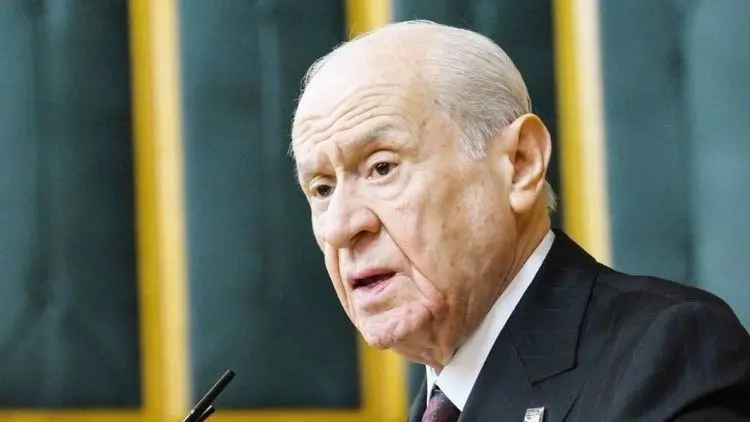
ANKARA — In a comprehensive address to his party’s parliamentary group on November 4, 2026, Devlet Bahçeli, the Chairman of the Nationalist Movement Party (MHP), delivered a multifaceted speech centered on the urgent need for ethical renewal within the Turkish political landscape and a steadfast commitment to national security. Addressing lawmakers and party members, Bahçeli articulated a vision where the "purification and exoneration" of the political sphere are no longer optional but have become an "undelayable necessity" for the health of the republic.
The MHP leader’s remarks come at a pivotal moment for Turkey, as the nation navigates complex regional dynamics and internal efforts to solidify social cohesion. Bahçeli’s rhetoric focused heavily on the transition from a period of political friction toward one characterized by moral integrity, national unity, and a strategic focus on the "Century of Turkey" project, which seeks to elevate the country’s global standing through 2026 and beyond.
The Duty of Politics: Unity Over Provocation
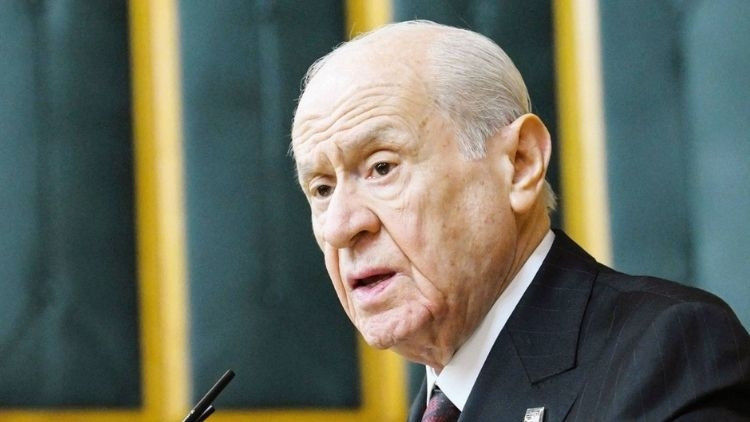
A significant portion of Bahçeli’s address was dedicated to the internal conduct of political actors. He argued that the primary function of political engagement should be the unification of the citizenry rather than the exploitation of societal fault lines. Bahçeli issued a stern warning against rhetoric that encourages street-level unrest, suggesting that such tactics are incompatible with the responsibilities of democratic representation.
"The goal of a Turkey free from terrorism is a strategic matter concerning the security of our future generations," Bahçeli stated, emphasizing that the elimination of terror is a vital national objective. He cautioned that in an era where such existential goals are within reach, calling the public to the streets through "irresponsible discourse" serves no purpose other than to jeopardize the collective future of the nation. For Bahçeli, the streets must not be viewed as the theater for political conflict or tension, as such an environment undermines the stability required for national progress.
Expanding on this theme, Bahçeli called for a fundamental shift in how politics is practiced in Turkey. He urged all political entities to move beyond the "shadow of personal calculations, party bigotry, and sterile bickering." According to the MHP leader, the time has come to leave behind the burdens of corruption and "pollution" that have historically weighed down the political system. By replacing these elements with ethical standards, he argued, the nation could finally meet the public’s demand for a social life defined by "peace, security, and hope."
He further noted that the patience of the Turkish citizens should not be tested by those seeking to disrupt the climate of brotherhood and solidarity. This climate, he emphasized, has been carefully cultivated under the leadership of the President through the framework of the People’s Alliance (Cumhur İttifakı). Bahçeli’s call for "purification" was presented as a prerequisite for maintaining this alliance’s momentum and ensuring that the government’s strategic objectives are not derailed by internal discord.

A Strategic Vision for the Turkic World
Shifting his focus to international relations and cultural diplomacy, Bahçeli outlined a grand vision for the Turkic world. He expressed a deep-seated desire for "unity and vitality" among Turkic nations, positioning the Organization of Turkic States (OTS) as a cornerstone of Turkey’s 21st-century foreign policy. The MHP leader believes that by mobilizing the shared potential of these states, the OTS can significantly increase its global influence and contribute more effectively to international peace and stability.
Bahçeli used evocative geographical imagery to describe the desired integration of the Turkic world, speaking of a future where the Caspian Sea and the Mediterranean are no longer separated by geopolitical barriers. "Our intent is to end the longing between the Caspian and the Mediterranean, to bring together Lake Issyk-Kul with Lake Van, and to unite the Selenga River with the Sakarya River," he said. This poetic framing underscores the MHP’s long-standing ideological commitment to the concept of "unity in language, thought, and action"—a principle originally championed by the intellectual İsmail Gasprinski.
The MHP Chairman argued that the path forward for Turkic states must be illuminated by this shared identity. He called for the "seeds of hope" currently being sown to grow into "saplings of affection" and eventually into a "forest of brotherhood." In Bahçeli’s view, the destiny of the Turkic world depends on a common development strategy where nations that "turn toward the same Qibla" and "think and call out in Turkish" can collectively shape their own fate in the modern era. This strategic alignment is seen not just as a cultural endeavor, but as a necessary geopolitical counterweight in an increasingly multipolar world.

Mediterranean Sovereignty and Rejection of External Interference
Bahçeli also addressed recent developments in the Eastern Mediterranean, specifically regarding Turkey’s maritime and security agreements with Libya. He expressed satisfaction with the Libyan House of Representatives’ approval of the Memorandum of Understanding between the two nations, viewing it as a victory for Turkish sovereign interests.
However, this development was accompanied by a sharp rebuke of the European Union (EU) and regional actors like Greece, Southern Cyprus, and Israel. Bahçeli accused these entities of attempting to provoke sentiment against Turkey and criticized the EU for adopting "Greek-Cypriot theses" under the guise of "union solidarity."
In a clear message to Brussels, Bahçeli asserted that Turkey would not take instructions from foreign powers regarding its maritime boundaries or its strategic choices. "All officials in Brussels must understand that wagging a finger at Turkey, attempting to determine our direction, or giving instructions on what we can and cannot do is not within the capacity of the European Union, nor anyone else," he declared. This stance reinforces the MHP’s position that Turkey’s rights in the "Blue Homeland" (Mavi Vatan) are non-negotiable and that any attempt to infringe upon these rights will be met with firm diplomatic and political resistance.

Regional Stability and the Houthi Conflict
The final segment of Bahçeli’s address touched upon broader Middle Eastern stability, specifically highlighting the importance of the "Mecca Agreement." This agreement is seen as a critical step toward de-escalating the ongoing Houthi aggression in the region, which has had devastating consequences for civilian populations and maritime security.
Bahçeli emphasized that all available resources and diplomatic channels must be mobilized within the framework of this agreement to end the violence and prevent further loss of life. By bringing up the Houthi conflict, Bahçeli highlighted Turkey’s role as a concerned regional power that views its own security as inextricably linked to the stability of the surrounding geography. The mention of the Mecca Agreement serves as a call for a coordinated international response to one of the region’s most persistent humanitarian and security crises.
As the parliamentary session concluded, Bahçeli’s speech was seen as a comprehensive roadmap for his party’s priorities heading into the latter half of the decade. By linking domestic political "purification" with a robust, independent foreign policy and a pan-Turkic strategic vision, the MHP leader has reinforced the ideological pillars that support the current governing coalition. The emphasis on a "terror-free Turkey" and the rejection of "street politics" suggests a continued focus on law and order as the country approaches future electoral cycles and navigates the complexities of the 2026 geopolitical environment.