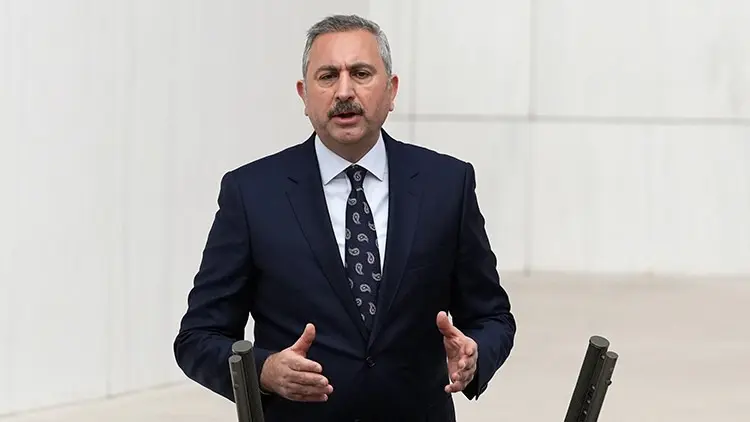
ANKARA — In a wide-ranging address that touched upon the most pressing issues on Turkey’s domestic agenda, AK Party Group Deputy Chairman Abdulhamit Gül has provided critical insights into the government’s upcoming economic moves, legal investigations, and the nation’s long-term political trajectory. Speaking during the "Anadolu Sohbetleri" (Anatolia Conversations) program organized by the Turkish Press Federation, Gül addressed journalists’ questions regarding the financial welfare of retirees, the integrity of the judicial system in the face of high-profile fraud investigations, and the constitutional path for President Recep Tayyip Erdoğan’s potential re-election.
The Deputy Group Chairman’s remarks come at a time when the Turkish public is closely monitoring the government’s efforts to mitigate the effects of global inflation and the rising cost of living. Central to this discussion is the status of retirees, a demographic that has been vocal about the need for structural improvements to their monthly stipends. Gül’s statements suggest that a significant legislative effort is currently underway to address these concerns, driven by direct mandates from the highest levels of the Turkish state.
Government Mobilizes for Retiree Wage Increases
Addressing the highly anticipated issue of pension adjustments, Abdulhamit Gül confirmed that the government’s economic team is working under strict instructions from President Erdoğan to ensure that retirees receive what he described as a "deserved" wage. According to Gül, the President has utilized both Cabinet meetings and sessions of the AK Party’s Central Decision and Management Board (MKYK) to prioritize this issue, signaling a multi-ministerial approach to the problem.
"The work on this matter is ongoing," Gül stated, emphasizing the seriousness with which the administration is treating the economic welfare of the elderly. "Our President has given powerful instructions to the economic management, both within the Cabinet and the MKYK. There is a strong directive for our retirees to attain a salary that they truly deserve."
Gül further elaborated that the technical aspects of this adjustment are being handled by a coordinated effort between the Ministry of Treasury and Finance and the Ministry of Labor and Social Security. The objective, he noted, is to create a result that is both equitable and satisfactory for the citizenry. Once the technical framework is finalized by the economic management team, the proposal is expected to be converted into a legislative bill and brought before the Turkish Grand National Assembly (TBMM) for approval. Gül underscored that the President’s primary concern remains ensuring that no segment of society is "crushed" by the weight of inflation or the high cost of living.
Accountability and the Integrity of Judicial Investigations
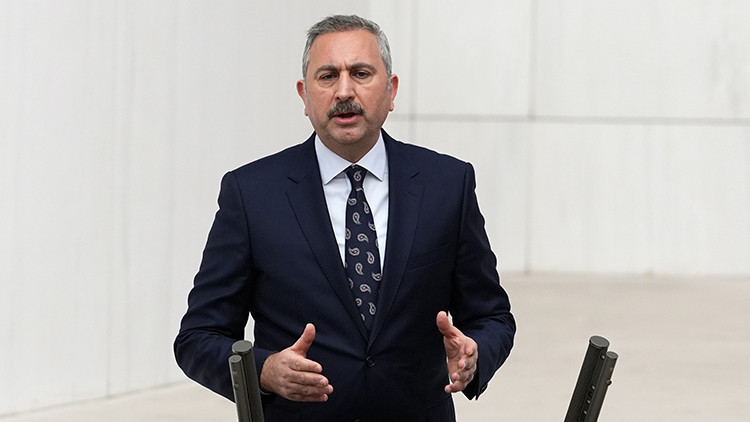
Beyond economic policy, Gül turned his attention to the ongoing legal proceedings surrounding high-profile "fund investigations" currently being conducted by the Istanbul Chief Public Prosecutor’s Office. These cases, which have captured public attention due to the involvement of various well-known figures, serve as a litmus test for the Turkish judicial system’s impartiality.
Gül was firm in asserting that the AK Party maintains a zero-tolerance policy toward any form of wrongdoing, regardless of the status of the individuals involved. He revealed that President Erdoğan has issued clear orders to all relevant authorities to hold those who have erred accountable to the law.
"The AK Party’s stance on this issue is crystal clear," Gül said. "Our President has instructed all concerned parties to demand an account from those who have done wrong." He reminded the audience that both judicial and administrative investigations are proceeding with meticulous care, and that the legal process will be followed to its conclusion to ensure that those responsible face justice.
In a poignant moment, Gül framed the AK Party not merely as a political organization but as a "movement of a cause" (dava hareketi) built on the prayers and struggles of the Turkish people. He stressed that the integrity of this movement would not be sacrificed to protect a few individuals. "This is a political movement that has earned the support of the people by visiting every village, every neighborhood, and every coffeehouse. We will not sacrifice this cause—which the nation built with its tears and prayers—to three or five people, or to whoever has committed a crime or a mistake. We will demand an account until the very end."
Gül also called for transparency in the legal process, suggesting that the names of those involved in the investigation should be disclosed to the public as the process allows. He emphasized that in the eyes of the law and the party, the "office or position" of a suspect holds no weight, and the only priority is maintaining the trust of the nation.
No Legal or Constitutional Obstacle to Re-Candidacy
As the political calendar moves closer to the 2028 general elections, the question of President Erdoğan’s eligibility for another term has become a focal point of debate. Gül addressed these speculations by clarifying the constitutional mechanisms that could allow the President to run for office again.
Under the current Turkish Constitution, a President is generally limited to two terms. However, Gül pointed out a specific constitutional provision: if the Turkish Grand National Assembly (TBMM) decides to renew the elections, the incumbent President is permitted to stand as a candidate once more. Such a decision requires a "supermajority" of 360 votes in the 600-seat parliament.

"As the election time approaches, it is natural for these topics to be discussed," Gül noted. "Normally, the election will be in May 2028. However, according to the current Constitution, if the Parliament takes a decision to hold an election, our President can become a candidate again. This decision must be taken with 360 votes. Therefore, if the Parliament makes such a decision, there is no legal or constitutional obstacle to our President being a candidate again."
Gül refrained from speculating on specific dates for such an early election, stating that doing so would be disrespectful to the "legal personality of the Parliament and the national will." However, he expressed his personal conviction that Turkey still requires Erdoğan’s leadership for a "stronger future." He argued that there is a significant public expectation and a national need for the President to continue his service, citing the remaining problems that the administration aims to solve.
Regarding the opposition’s strategy and their potential candidates, Gül remained indifferent. "The candidate of the nation is Recep Tayyip Erdoğan," he said. "Who the other side nominates is not on our agenda. We have seen many attempts before—six-party, seven-party, ten-party alliances, both internal and external—but our nation has always put its support forward. We are focused on our own agenda."
Our Desire is the Successful Completion of the Process
The Deputy Group Chairman also provided an update on the "Terror-Free Turkey" initiative, a long-term strategic process aimed at ending the threat of terrorism and fostering regional stability. Gül indicated that this process has been quietly and successfully managed for approximately two years, with significant developments occurring across the borders in Iraq and Syria.
He highlighted that the public is aware of certain milestones, such as the evacuation and disarmament of terrorist hideouts and caves. In Iraq, he noted that "important and correct developments" are continuing, while in Syria, he pointed to the integration of non-state actors who have surrendered their weapons to the state.
"The biggest handicap in this process was the Syria desk," Gül explained. "The Syria desk was the most important issue affecting our ‘Terror-Free Turkey’ desk. Thankfully, there has been a very important development in Syria together with the Shara administration; integration was achieved there. Similarly, this process is continuing successfully in Iraq."
Gül emphasized that despite these diplomatic and integration efforts, Turkey’s active fight against terrorism remains undiminished. Security forces remain on high alert, and military operations continue where necessary. To further oversee this transition, Gül announced that a monitoring commission would be established within the TBMM to track the progress and provide recommendations. "We believe that in the near future, weapons will fall silent completely, and the voice of democracy will rise even more strongly," he added.

Wholesale Market Law to be Handled This Term
Finally, Gül addressed the economic discrepancy between agricultural producers and end consumers, a gap that has led to "exorbitant" prices in markets despite lower costs at the farm level. To combat this, he announced that the "Hal Yasası" (Wholesale Market Law) would be a priority for the current legislative term.
The Deputy Group Chairman noted that there are too many intermediaries between the farmer in the field and the consumer in the market, adding unnecessary costs to essential goods. "A product that is 5 lira in the field is being sold at exorbitant prices in the market. This is a burden on our citizens," Gül said.
He confirmed that the Ministry of Trade is currently conducting the technical work required for the new law. The goal is to streamline the supply chain, reduce the influence of unnecessary middle-men, and ensure that price stability is maintained from the point of production to the point of sale. Gül expressed his commitment to bringing this work to a conclusion during this parliamentary session, providing much-needed relief to the Turkish household budget.
As the program concluded, Gül reiterated the government’s commitment to solving the nation’s remaining challenges, ranging from economic reforms to national security, under the continued leadership of President Erdoğan.