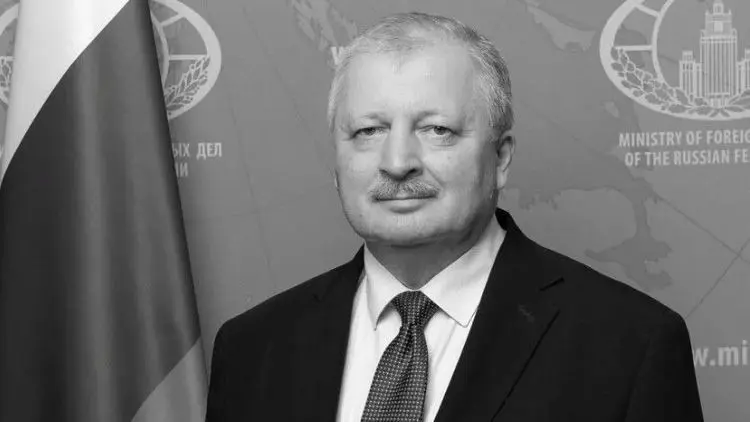
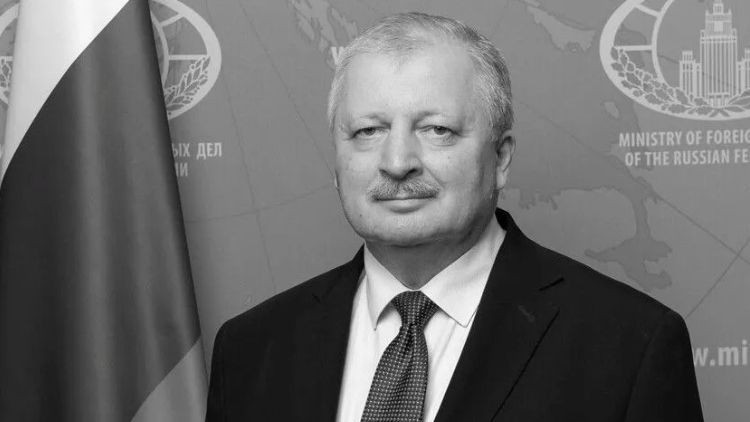
The Russian Ministry of Foreign Affairs has announced the passing of Aleksandr Darchiyev, a senior diplomat and a pivotal figure in the complex web of relations between Moscow and Washington. Darchiyev, who was 66 years old at the time of his death, was widely regarded as one of the Kremlin’s most seasoned experts on North American affairs. His sudden departure comes at a moment of significant transition and heightened diplomatic activity, leaving a void in the leadership of Russia’s diplomatic efforts toward the United States.
According to a statement released by Maria Zakharova, the spokesperson for the Russian Foreign Ministry, Darchiyev passed away in Moscow on November 11, 2026. Zakharova attributed the diplomat’s death to a "chronic illness," though she did not provide specific details regarding the nature of the ailment. Despite the official explanation citing a long-term health condition, the timing and the suddenness of the announcement have generated intense interest within the international community, particularly given Darchiyev’s active role in ongoing high-level negotiations.
At the time of his passing, Darchiyev was serving as a cornerstone of the Moscow-Washington diplomatic axis. His career, spanning several decades, was defined by his deep understanding of the American political landscape and his ability to navigate the often-turbulent waters of U.S.-Russia relations. His death is being viewed not merely as the loss of a public servant, but as the removal of a primary architect of Russia’s current strategy toward the West.
A Critical Loss Amid Intensifying Diplomatic Maneuvers
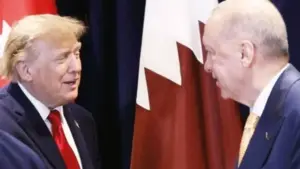
The timing of Aleksandr Darchiyev’s death has raised eyebrows across global capitals. It occurred precisely as the diplomatic climate between the Kremlin and the White House was entering a new and potentially transformative phase. Reports indicate that relations between the two nuclear powers have been developing with renewed intensity, particularly through the direct and personal channels established between U.S. President Donald Trump and Russian President Vladimir Putin.
Darchiyev was a central figure in this evolving dynamic. He was known for his pragmatism and his ability to maintain open lines of communication even when formal diplomatic channels were strained. Observers noted that his death coincided with a critical day of tripartite negotiations in Abu Dhabi. On the day Darchiyev was reported to have died, high-level delegations from Russia, the United States, and Ukraine had gathered in the United Arab Emirates to return to the bargaining table. These discussions, aimed at addressing the ongoing conflict in Ukraine and the broader security architecture of Eastern Europe, were seen as a litmus test for the possibility of a lasting geopolitical settlement.
The veteran diplomat’s absence from such a critical juncture is notable. Darchiyev had previously demonstrated his leadership in these types of high-stakes environments. In February 2025, he had successfully chaired the Russian delegation during a series of intensive diplomatic talks held in Istanbul. Those meetings were focused on the normalization of relations between Washington and Moscow, and Darchiyev was credited with steering the conversation toward a framework for mutual understanding. His role as the head of the Russian team in Istanbul solidified his reputation as the Kremlin’s go-to envoy for managing the most sensitive aspects of the Western relationship.
The loss of such an experienced interlocutor at a time when Russia, the U.S., and Ukraine are attempting to find common ground in Abu Dhabi presents a challenge for the Kremlin’s foreign policy apparatus. Darchiyev was not just a representative of the state; he was a repository of institutional memory and a skilled negotiator who understood the nuances of the "Istanbul process" that he helped initiate. His death necessitates a recalibration of the Russian team at a moment when continuity is often the most valuable asset in international diplomacy.
Looking Back: A Pattern of Unexplained Diplomatic Departures
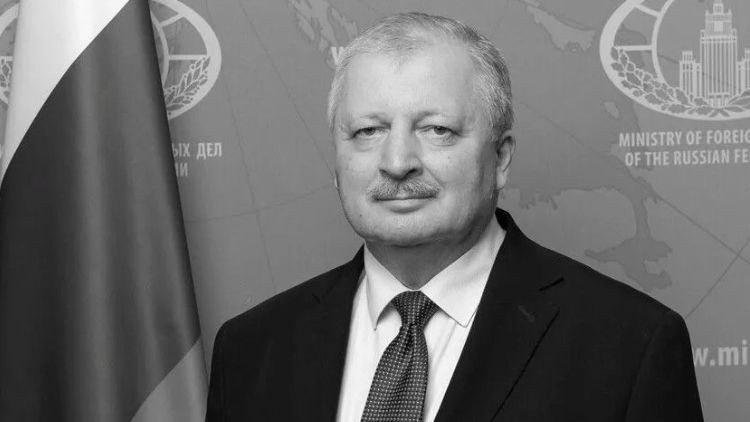
While the Russian Foreign Ministry has been quick to point toward a chronic illness as the cause of Darchiyev’s death, the event has inevitably invited comparisons to the deaths of other high-ranking Russian diplomats in recent years. The Russian government has a history of maintaining a high degree of privacy regarding the health and circumstances of its officials, particularly those serving in sensitive roles abroad or dealing with Western powers.
In many instances, the specific medical details surrounding the deaths of these diplomats are never fully disclosed to the public, leading to persistent questions and speculation within the international press and intelligence communities. The case of Aleksandr Darchiyev is the latest in a series of similar occurrences that have marked the last decade of Russian foreign service.
In 2025, the sudden death of Aleksandr Matsegora, the Russian Ambassador to North Korea, sent shockwaves through the diplomatic corps. Like Darchiyev, Matsegora was a specialist in a high-tension region and was considered a vital link for the Kremlin’s interests. His death remains a subject of discussion among analysts who monitor Moscow’s influence in Asia.
The pattern extends further back. In 2023, Nikolay Kobrinets, a high-ranking official within the Ministry of Foreign Affairs, was found dead in a hotel room while on a diplomatic mission. Despite official statements, the circumstances of his passing were never clarified to the satisfaction of many international observers. Perhaps the most famous instance in this series occurred in 2017, when Vitaly Churkin, Russia’s Permanent Representative to the United Nations, died suddenly in New York City. Churkin was a towering figure in global diplomacy, and his death on the eve of his 65th birthday was met with both shock and a flurry of unanswered questions regarding the specific cause of his heart failure.
The recurring nature of these sudden losses among the Russian diplomatic elite has created a backdrop of uncertainty. For Aleksandr Darchiyev, his death at 66 adds another name to this list of seasoned professionals who passed away while still actively engaged in the highest levels of statecraft. Each of these individuals held keys to the Kremlin’s most sensitive international portfolios, and their sudden removals from the board have often occurred at moments of significant geopolitical friction or transition.

The Future of the Moscow-Washington Dialogue
As the Kremlin mourns the loss of one of its most capable diplomats, the focus now shifts to who will succeed Darchiyev and how his death will impact the momentum of the current talks. The "normalization" of relations that Darchiyev championed remains a complex and fraught goal. Under the leadership of Presidents Putin and Trump, there has been a visible shift toward a more direct form of engagement, but the underlying tensions regarding Ukraine, NATO expansion, and economic sanctions remain unresolved.
Darchiyev’s work in Istanbul in 2025 was seen as a foundational step in creating a roadmap for these issues. He was a proponent of a "step-by-step" approach to diplomacy, where small concessions could build the trust necessary for larger agreements. His ability to articulate the Russian position without closing the door on American concerns made him a rare asset in the current political climate.
The Russian Foreign Ministry has not yet named a permanent successor for Darchiyev’s specific role in the ongoing negotiations. In the interim, it is expected that Maria Zakharova and other senior officials will take on a more prominent role in communicating the Kremlin’s stance to the international media. However, the technical and strategic work that Darchiyev performed behind closed doors will be difficult to replace.
The death of Aleksandr Darchiyev marks the end of an era for a specific school of Russian diplomacy—one that was deeply rooted in the Cold War experience but adapted to the realities of the 21st-century multipolar world. As delegations continue their work in Abu Dhabi and elsewhere, the shadow of his influence will likely remain over the proceedings. The international community will be watching closely to see if the spirit of the "Istanbul talks" survives his passing, or if the loss of such a central figure leads to a hardening of positions on both sides of the Atlantic.

For now, the official word from Moscow remains one of mourning for a dedicated servant of the state. The flags at the Ministry of Foreign Affairs will fly at half-mast as the Russian government prepares to bid farewell to a man who, for better or worse, was one of the most significant figures in the long and complicated history of Russian-American relations. His sudden death, regardless of the cause, serves as a stark reminder of the fragile human element that underpins the massive machinery of global geopolitics.