EDİRNE — In a significant move highlighting the ongoing legal and political tensions surrounding the detention of prominent political figures in Turkey, Tülay Hatimoğulları, the Co-Chair of the Peoples’ Equality and Democracy Party (DEM Party), conducted a high-profile visit to the Edirne F-Type High Security Closed Penal Institution on Monday. The visit was centered on a meeting with Selahattin Demirtaş, the former Co-Chair of the Peoples’ Democratic Party (HDP), who has been held in the facility since November 2016.
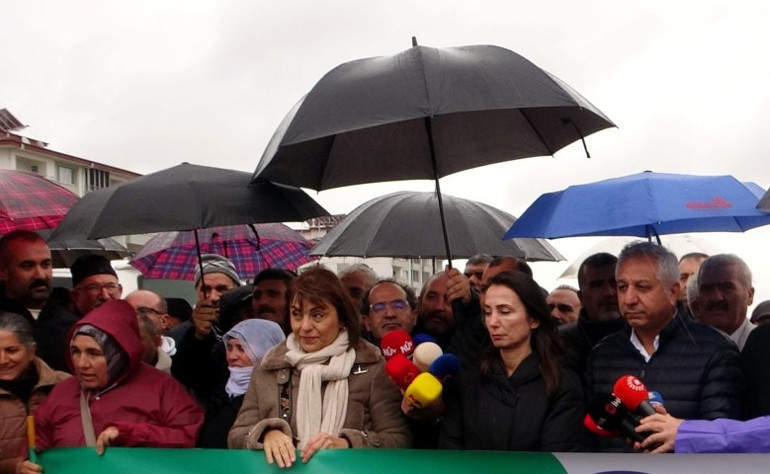
Following the meeting, Hatimoğulları was joined by a delegation of prominent political allies, including Seyit Aslan, the General Chairman of the Labor Party (EMEP), and Kezban Konukçu, a DEM Party Member of Parliament representing Istanbul. Together, they held a press conference outside the prison walls, addressing a wide range of issues including the legal status of political prisoners, the necessity of adhering to international human rights standards, and the broader struggle for democratization and peace within Turkey.
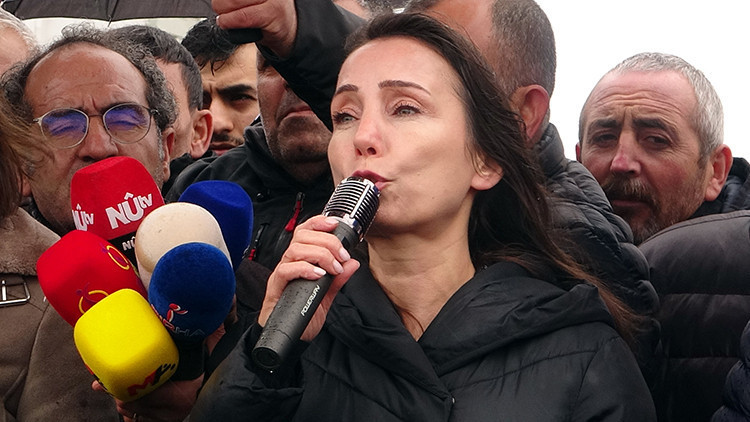
The visit comes at a time when the Turkish judiciary’s handling of political cases remains under intense international and domestic scrutiny. Hatimoğulları’s statements emphasized a firm stance on the illegitimacy of the continued detention of Demirtaş and his former colleague, Figen Yüksekdağ, asserting that their imprisonment is not based on criminal culpability but on political considerations.
The Legal Imperative: ECHR Rulings and International Obligations
A primary focus of Hatimoğulları’s address to the media was the legal framework surrounding the detention of Demirtaş and Yüksekdağ. She pointedly referenced the rulings issued by the European Court of Human Rights (ECHR), specifically those from the Grand Chamber, which have repeatedly called for the immediate release of the former HDP leaders.
“We must be clear that the detention of Selahattin Demirtaş and Figen Yüksekdağ is without legal basis,” Hatimoğulları stated. “The European Court of Human Rights has issued definitive rulings regarding their cases. Despite the various objections raised by the Turkish state, those objections were systematically reviewed and rejected by the ECHR, which reaffirmed its initial decision. This is not a matter of personal preference or political affinity.”

Hatimoğulları sought to demystify the narrative often surrounding these international rulings. She argued that the ECHR’s stance is not a reflection of a particular "affection" for Demirtaş, Yüksekdağ, or those imprisoned in connection with the Kobani trials. Instead, she framed it as a strictly objective judicial assessment.
“The ECHR did not reach this conclusion because it ‘loves’ Selahattin or Figen, or because it has a particular fondness for our friends held in relation to the Kobani case,” she explained. “These decisions were reached because the court recognized that the legal proceedings against them were fundamentally flawed and that their detention constitutes a violation of rights. It is a purely legal decision based on universal principles of justice.”
The DEM Party Co-Chair further reminded the public and the government of Turkey’s status as a signatory to the European Convention on Human Rights. She underscored that compliance with ECHR rulings is not optional but a binding legal obligation for any member state of the Council of Europe.

“Turkey is a party to the European Convention on Human Rights. As such, the state has a clear duty and a profound responsibility to implement the decisions of the ECHR. This is not merely a political suggestion; it is a legal requirement that the government must fulfill to uphold the rule of law,” Hatimoğulları added.
A Message of Resilience from Edirne Prison
Beyond the legal arguments, the visit served as a moment to provide an update on the condition and morale of Selahattin Demirtaş. Despite nearly a decade of incarceration, Hatimoğulları described Demirtaş as remaining intellectually sharp and politically engaged.
“I can say with full confidence that Selahattin Demirtaş remains incredibly vibrant and resilient, both in his spirit and his intellectual stance,” Hatimoğulları told the gathered reporters. “He stands strong, with a clear mind and a steadfast heart. He asked us specifically to convey his warmest greetings and his love to everyone who has been asking after him. He sent his regards to all the peoples of Turkey, expressing his continued commitment to the shared struggle for a better future.”

The meeting, which lasted for a significant duration, was described by the DEM Party leadership as "highly productive." Hatimoğulları noted that Demirtaş continues to generate creative ideas and strategic insights regarding the current political landscape in Turkey. The delegation discussed various proposals for the ongoing peace and democratization efforts, with Demirtaş sharing his views on how to navigate the complexities of the current era.
“Selahattin President, as always, is full of life and possesses a wealth of creative ideas,” Hatimoğulları remarked. “When we visited him today as a delegation, we had the opportunity to evaluate the current political processes together. He shared his perspectives, suggestions, and insights with us, making for an extremely fruitful exchange of ideas.”
The Struggle for Peace and a Democratic Turkey
The press conference also touched upon the broader political goals of the DEM Party and its allies. Hatimoğulları linked the struggle for the release of political prisoners to the wider objective of establishing a truly democratic society. She referenced a specific period of renewed effort toward peace and democratic social transformation that has gained momentum over the past two years.
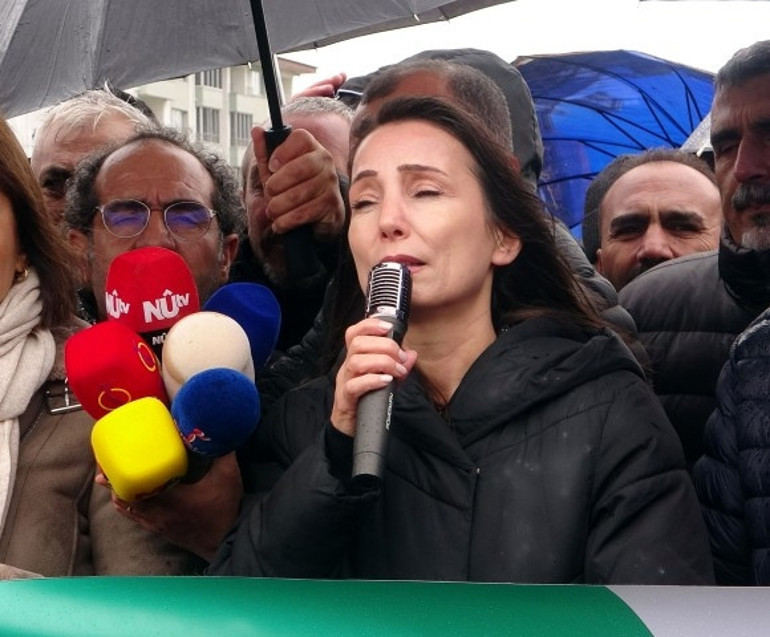
“For the past two years, there has been a concerted effort to ensure that the process for peace and a democratic society reaches a successful conclusion,” Hatimoğulları said. “Our friends behind bars are continuing this struggle with all their might, and we, on the outside, are equally committed to this cause. We are working to build a democratic Turkey that is worthy of the long and difficult struggle that has been waged throughout history.”
The presence of Seyit Aslan, the Chairman of EMEP, alongside the DEM Party leadership, signaled a unified front among Turkey’s left-wing and pro-democracy forces. The coalition emphasized that the demand for justice for Demirtaş and Yüksekdağ is inseparable from the demand for labor rights, social justice, and the peaceful resolution of the Kurdish issue.
Hatimoğulları concluded her remarks by reiterating that the path to a "Democratic Turkey" requires a fundamental shift in the state’s approach to dissent and judicial independence. She stated that the "longing" of the Turkish people for a stable and fair democracy can only be satisfied through the implementation of genuine reforms and the cessation of politically motivated prosecutions.
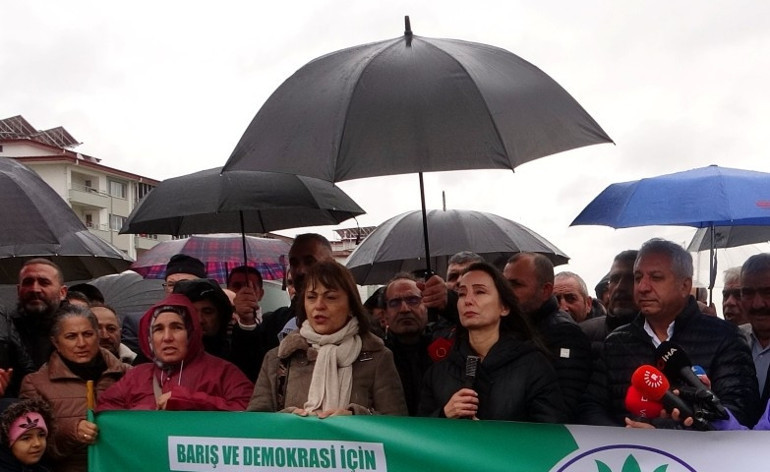
“Our struggle will continue until we have constructed a Turkey where the law applies equally to all, and where the democratic aspirations of all its peoples are realized,” she declared. “The resilience shown by our colleagues in prison serves as an inspiration for the work we do every day on the streets, in the parliament, and in every corner of this country.”
Background and Context of the Detentions
The detention of Selahattin Demirtaş and Figen Yüksekdağ remains one of the most contentious issues in Turkish politics. Both were arrested on November 4, 2016, as part of a massive crackdown on HDP leadership following the collapse of the peace process between the state and the PKK and the subsequent attempted coup in July 2016.
Demirtaş, a former lawyer and human rights activist, rose to international prominence as the charismatic leader who brought the HDP into the Turkish Parliament as a standalone party in 2015, effectively challenging the parliamentary majority of the ruling party. His legal battles have involved numerous cases, most notably the "Kobani Case," which involves hundreds of defendants accused of inciting violence during protests in 2014.
The international community, including various UN bodies and the European Parliament, has frequently called for his release, citing the "political nature" of the charges. The visit by Hatimoğulları and the EMEP leadership reaffirms that for the pro-Kurdish and leftist opposition in Turkey, the status of these prisoners remains the ultimate litmus test for the country’s democratic health.
As the delegation departed Edirne, the message left behind was one of persistent opposition and a refusal to accept the judicial status quo. With the DEM Party continuing its organizational efforts across the country, the call for the implementation of ECHR rulings is expected to remain a central pillar of their political platform heading into the next legislative session.