WASHINGTON — United States officials have indicated that President Donald Trump is considering putting potential military strikes against Iran on hold, provided that neither Tehran nor Iranian-backed Houthi forces in Yemen engage in any fresh provocations directed at the United States or its interests in the Middle East.
According to reports citing anonymous sources familiar with the matter, the strategic reassessment emerged following recent high-level consultations and intelligence briefings held between President Trump and his national security advisors. The discussions point toward a cautious approach as Washington navigates ongoing tensions in the Persian Gulf and broader Middle Eastern region, balancing deterrence against the risks of wider escalation.

No Provocation, No Strikes
The core of the evolving stance centers on a conditional approach to military engagement: as long as the status quo remains free of new hostile actions from Iran or its regional proxies, the administration is reportedly disinclined to initiate a new wave of military operations.
British-based news agency Reuters, citing sources close to the administration, reported that Trump informed his senior advisors that military actions against Iran would remain suspended or under review so long as Tehran and the Houthis refrain from launching new provocations. The policy reflects a delicate balancing act within the upper echelons of the White House, where military readiness is continuously weighed against the potential fallout of a prolonged regional conflict.
Listening to Allies Urging Caution on War
The reported shift in tone also comes as the Trump administration increasingly weighs appeals from regional allies who have voiced profound concern over the dangers of a full-scale war breaking out in the Middle East.

Sources familiar with the internal deliberations noted that Trump’s national security team factored in warnings and diplomatic appeals from key regional partners during their recent intelligence reviews. These allies have consistently pressed Washington to prioritize diplomatic off-ramps and economic containment over military escalation, arguing that an all-out military confrontation would destabilize global energy markets, security architectures, and local economies alike.
Remembering Calls with Erdoğan and Bin Salman
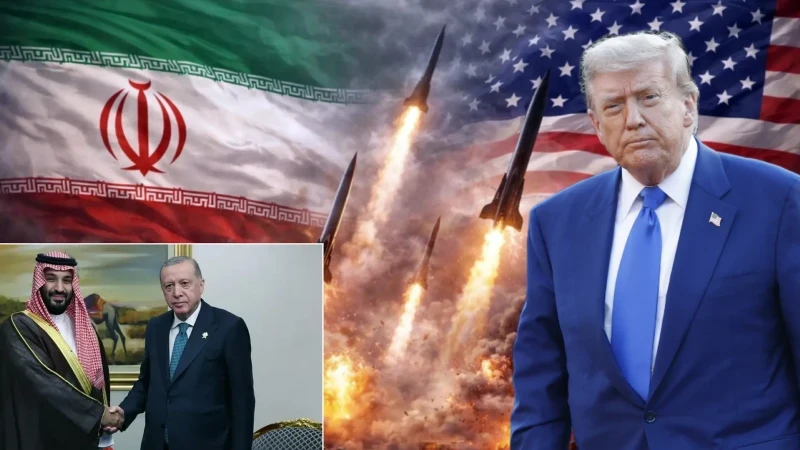
In evaluating these diplomatic appeals, sources recalled phone conversations held over the preceding two weeks between President Trump, Turkish President Recep Tayyip Erdoğan, and Saudi Crown Prince Mohammed bin Salman.
During these diplomatic exchanges, regional leaders directly urged the US president against continuing or escalating military strikes against Iran, emphasizing the critical need for regional stability. While sources emphasized that Trump did not issue any formal or binding commitments during these calls, the perspectives shared by key partners appear to have contributed to the administration’s ongoing internal debate regarding the pace and scope of its Iran strategy.

Trump: "Saudi Arabia Asked Me to Let the Situation Play Out"
In recent public remarks addressing the broader geopolitical landscape, President Trump shed light on the diplomatic dynamics shaping US policy. US media reports have detailed how Washington, alongside regional partners including Saudi Arabia, Qatar, and the United Arab Emirates (UAE), has previously focused on maintaining economic pressure and enforcing maritime measures, such as monitoring Iranian ports, to observe whether diplomatic pathways could yield results.
Speaking on the matter, Trump offered a candid assessment of the interplay between US military capabilities and the wishes of regional partners. "If I wanted to, I could end this situation immediately," Trump stated. "We are handling it the long way, the more civil way, in line with the requests of the countries I want to protect. Saudi Arabia asked me to let the situation play out as it is, given that Iran is fracturing. Qatar, Kuwait, the UAE, Bahrain—all of them prefer this waiting period."
The remarks underline the complex web of regional interests influencing Washington’s decision-making process, where key Gulf partners have advocated for sustained economic pressure and strategic patience rather than immediate military interventions that could trigger unpredictable retaliatory cycles across the Middle East.