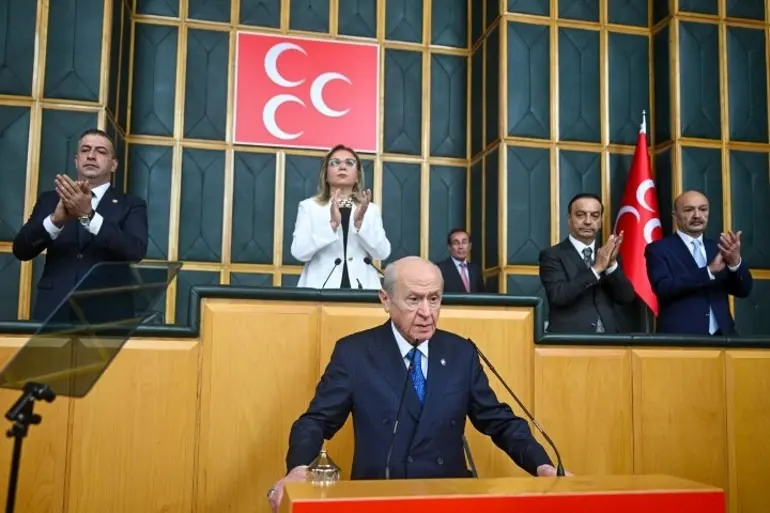
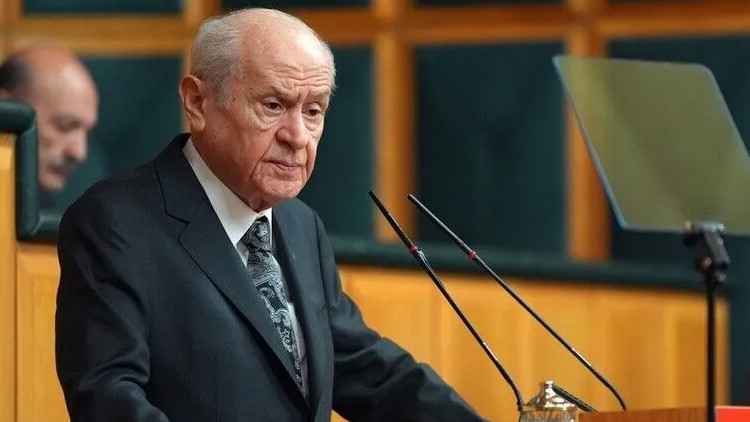
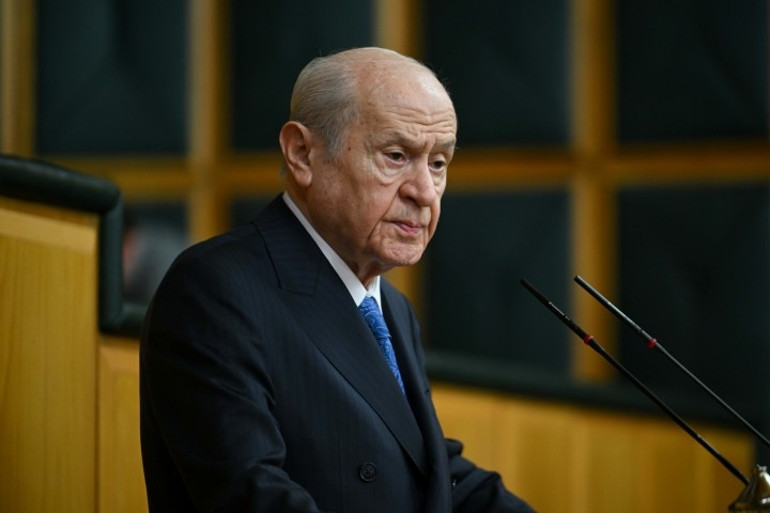
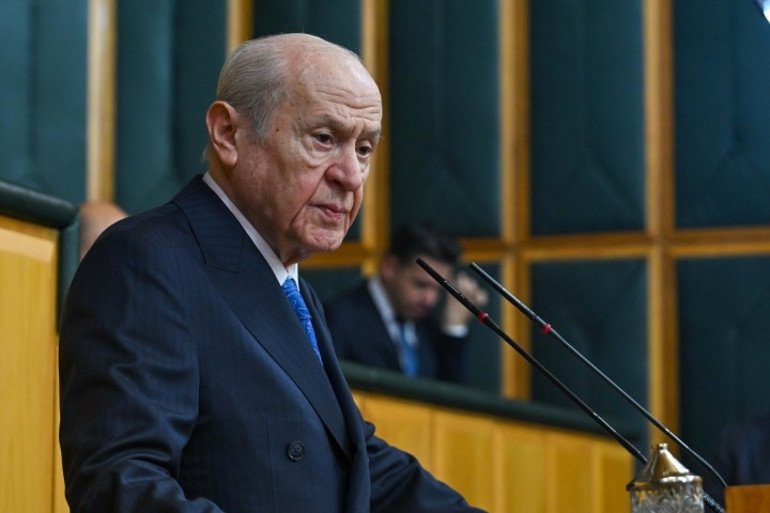
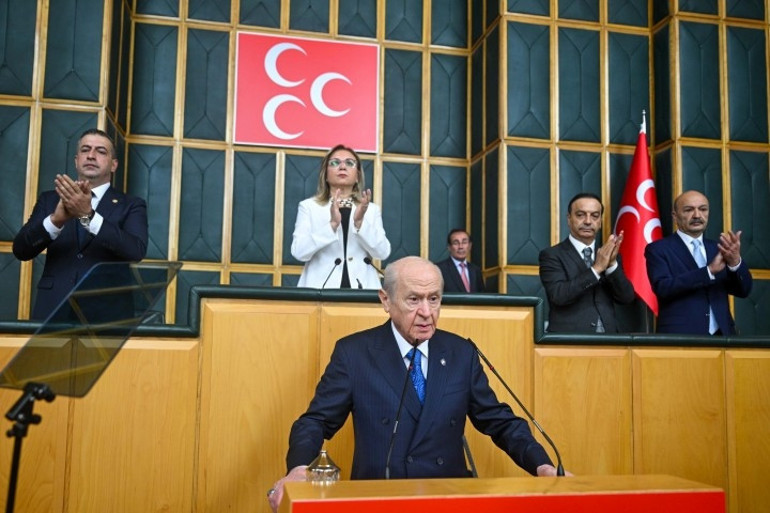
In a comprehensive and wide-ranging address to his party’s parliamentary group at the Grand National Assembly of Turkey (TBMM), Devlet Bahçeli, the Chairman of the Nationalist Movement Party (MHP), set forth a vision for a "Terror-Free Turkey" and a "Terror-Free Region." His speech, which touched upon domestic tragedies, international maritime disputes, and the moral foundations of the Turkish state, underscored a firm commitment to national sovereignty and regional stability. Bahçeli emphasized that Turkey would not deviate from its determined path, regardless of external pressures or internal provocations.
The MHP leader began his address with a message of solidarity and hope, greeting his fellow deputies and citizens watching across various media platforms. He expressed his desire for a week filled with success and prosperity for the nation, invoking a spiritual call for abundance in every household and healing for those in need. This opening set a tone of national unity that would persist throughout his subsequent evaluations of the country’s most pressing challenges.
National Tragedies and the Urgency of Urban Safety
Before diving into the political and geopolitical agenda, Bahçeli took a moment to address a series of tragic incidents that have recently shaken the Turkish public. He expressed deep sorrow over a building collapse in the Maltepe district of Istanbul, which resulted in five fatalities and eleven injuries. This event served as a somber reminder of the vulnerabilities inherent in the nation’s aging urban infrastructure.
Furthermore, Bahçeli extended his condolences to the families of those lost in significant traffic accidents in Manisa’s Akhisar district and Kahramanmaraş. Among the injured in the Kahramanmaraş accident was MHP Deputy Zuhal Karakoç. "We pray for God’s mercy upon our citizens who lost their lives and wish a speedy recovery to the injured," Bahçeli stated.

In light of these tragedies, the MHP leader called for a renewed focus on public safety. He emphasized that the state’s ongoing mobilization for urban transformation must be completed with the utmost urgency. Bahçeli stressed that constructing resilient and secure buildings, particularly in earthquake-prone regions, is not merely a policy goal but a fundamental duty to protect the lives of the Turkish people.
The Civilizational Role of Turkey: "Our Political Center is Turkey"
Shifting to a more philosophical and strategic perspective, Bahçeli described Turkey as a state whose power and influence are recognized globally. He argued that Turkey is not just a geographic entity but the heir to a magnificent civilization and a rich Turkish-Islamic tradition. According to the MHP leader, the path forward for the nation lies in embracing these root values while integrating them with contemporary progress and innovation.

"Turkey is the address for new global encounters and reconciliations," Bahçeli remarked. He asserted that a Turkey-centered approach would not only serve the interests of the Turkish nation but also provide a beacon of hope for oppressed nations seeking a life of dignity and freedom.
Bahçeli urged the political class to move beyond trivial and socially disconnected debates. He argued that the nation’s energy should be channeled into the construction of a prosperous and happy country, built upon high moral values. Reaffirming his stance from previous weeks, he declared, "Even if our ideological coordinates differ, our political center is Turkey." He expressed unwavering confidence in the Turkish people’s ability to create a great civilization once again by blending historical experience with universal democratic achievements.
The Resolute Path Toward a Terror-Free Future

A central pillar of Bahçeli’s speech was the initiative to create a Turkey and a region entirely free of terrorism. He described this goal as a conscious effort to build a new civilization that preaches a just order for humanity. However, he noted that this vision has caused anxiety among Turkey’s adversaries and those harboring ambitions of regional dominance.
The MHP leader pointed out that throughout history, various methods—ranging from economic sabotage to political polarization and direct violence—have been employed to weaken the Turkish state. He warned that those who wish to sabotage the current environment of peace and security are once again active.
"Let us say this upfront: Turkey will not turn back from its path, and the Turkish nation will not turn back from its decision," Bahçeli proclaimed. He assured the assembly that the steps toward a terror-free Turkey would be taken with seriousness and sincerity, bringing the long-standing struggle to a definitive conclusion in the shortest possible time.
Regional Volatility: Israel’s Provocations and the Defense of the Holy Lands
Turning his attention to the Middle East, Bahçeli condemned the rising level of provocation by Israel. He characterized the actions surrounding Al-Aqsa Mosque, the "first qibla" of Islam, as a display of barbarism. He suggested that such escalations are often used as tools for domestic political gain ahead of elections, but warned that they carry grave consequences for regional peace.
Simultaneously, Bahçeli addressed the Houthi attacks originating from Yemen, particularly those targeting Saudi Arabia. He described these attacks as another element in the broader strategy to destabilize the region. "As the Nationalist Movement Party, we cannot remain silent or tolerant toward attacks on Al-Aqsa, the Kaaba, or the holy sanctuary of the Prophet," he stated.
Bahçeli reminded his audience of Turkey’s historical role as the "Servant of the Two Holy Mosques" (Hadimü’l-Haremeyn). He cited the legendary Defense of Medina by Fahreddin Pasha as a testament to the Turkish soldier’s enduring commitment to protecting these sacred sites. He argued that Turkey must use all diplomatic means and, if necessary, deterrent force to prevent violations of international law and threats to the sovereignty of its allies.
Specifically, Bahçeli called for Turkey to provide all necessary military support to Saudi Arabia within the framework of mutual defense agreements. He condemned the Houthi attacks on civilian infrastructure, such as the strikes on King Khalid International Airport, which have resulted in heavy civilian casualties. He called for an immediate end to these hostilities and urged all parties in the region to act with common sense and restraint to prevent further bloodshed among Muslims.
Tensions in the Eastern Mediterranean: A Message to Athens
The MHP leader also delivered a stern warning to Greece regarding its recent strategic maneuvers in the Eastern Mediterranean. He criticized the Greek administration’s attempts to seek security through close alignment with Israel and the pursuit of ambitious energy projects, such as the proposed electrical connection between Greece, Southern Cyprus, and Israel.
Bahçeli asserted that Greece is making a grave mistake if it believes it can bypass Turkey’s maritime jurisdiction rights by gaining the support of third parties like the United States. He emphasized that Turkey’s stance on the coordination of such routes is clear and non-negotiable.
"If the Greek government is arming itself to protect itself from us, they should instead take refuge in Turkish peace," Bahçeli advised. "If they are arming themselves to scare us, they should never forget that no power can intimidate us." He urged Greek politicians to realize that the respect and friendship of Turkey are far more valuable than any weapons or ammunition they might purchase from Israel. He called for an end to "unnecessary shows" and a return to a dialogue based on recognizing the sovereignty of the Turkish Republic of Northern Cyprus and Turkey’s established rights in the region.
Domestic Integrity: The Fight Against Corruption and the "Fund" Controversy
On the domestic front, Bahçeli spoke of a period of "purification and clearing" for Turkey. He acknowledged that as Turkey strengthens its internal brotherhood and national unity, attempts to sow discord through "fitna" (sedition) and provocation naturally increase. He emphasized that the state must remain vigilant across all institutions to protect the public interest.
The MHP leader touched upon ongoing investigations into municipal corruption, insisting that no one who reaches for the "rights of the orphan" or damages public property should be shielded by politics. He also called for thorough investigations into irregularities within the capital markets, the football world, and the refereeing community.
A significant portion of his domestic evaluation focused on what has been dubbed the "Fund Investigation"—a high-profile financial scandal. Bahçeli warned the opposition against using this crisis as a "runway for escape" to cover up their own moral failures or municipal corruption. He accused the opposition of trying to distract the public with a "synthetic agenda" while shielding their own problematic cadres from scrutiny.
"Morality is the center of gravity for economic activity and social life," Bahçeli explained, citing thinkers like Ziya Gökalp and Sabri Ülgener. He argued that a shift in the moral axis leads to the disintegration of values in everything from the family unit to state institutions. He called for a high moral standard to be established first and foremost within the institution of politics, grounded in conscience, justice, and merit.
European Unrest vs. Turkish Educational Progress
In the final section of his speech, Bahçeli contrasted the current social unrest in Europe with Turkey’s recent successes in education. He pointed to the student protests in France over deteriorating school conditions and inequality as a sign of a breaking social contract in the West. He criticized the "hypocrisy" of European leaders who lecture others on human rights but resort to heavy-handed police tactics against their own youth.
In contrast, Bahçeli highlighted Turkey’s performance in the PISA 2025 results. He noted that Turkey was the OECD country that increased its scores the most in mathematics, science, and reading compared to the previous assessment. This progress, he argued, is a concrete indicator of Turkey’s advancement and a source of hope for the "Turkish Century."
He concluded by calling for continued investment in the nation’s youth, emphasizing that a generation equipped with both modern scientific knowledge and traditional moral values would be the architects of Turkey’s future. Quoting the great folk poet Aşık Veysel, Bahçeli ended his speech with a plea for national unity: "Let us end slander and defamation / Let us love each other like brothers, soul to soul / Let us work together for the Homeland / Let us build many schools and factories, brother."
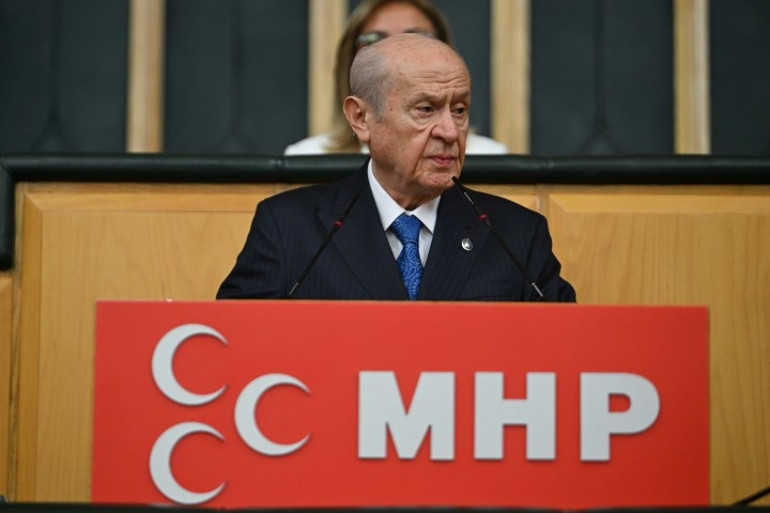
With a final salute to the deputies and guests, Bahçeli reaffirmed that the MHP and the People’s Alliance would continue to work tirelessly to overcome all obstacles, ensuring a stronger state and a happier nation.