ST. PETERSBURG — Turkish tourist traffic to St. Petersburg has expanded dramatically, with visitor figures for the first half of the year already matching the total recorded for the entirety of the previous year. According to recent travel industry data, 69,000 Turkish travelers visited the Russian cultural capital during the first six months of the year—a figure that equals the full-year tourist total recorded in the previous year.
This dramatic growth is supported by a massive expansion in air connectivity between Turkey and St. Petersburg. Airlines currently operate up to ten daily flights from Istanbul, while AJet recently introduced new direct routes from Ankara to accommodate growing traveler interest. When combined with regular charter flights operating out of Antalya, the total volume of air traffic connecting Turkish cities to St. Petersburg has surged to approximately 300 flights per week. For Turkish visitors seeking an accessible European-style cultural experience without the administrative delays associated with Western European visas, St. Petersburg has rapidly emerged as one of the most attractive international destinations.
A City Built Like an Open-Air Stage
To step into St. Petersburg is to experience a destination that feels significantly different from a standard city break. From the first moment of arrival, the urban landscape conveys the distinct sensation of stepping backward in time. Sweeping avenues, pastel-toned palaces, intricate canal networks, historic stone bridges, and world-class museums combine to create an environment that resembles a grand open-air theater rather than a modern metropolis. If motor vehicles were removed from its thoroughfares, the city’s preserved architectural fabric would easily persuade a visitor that they had landed directly in the 19th century.

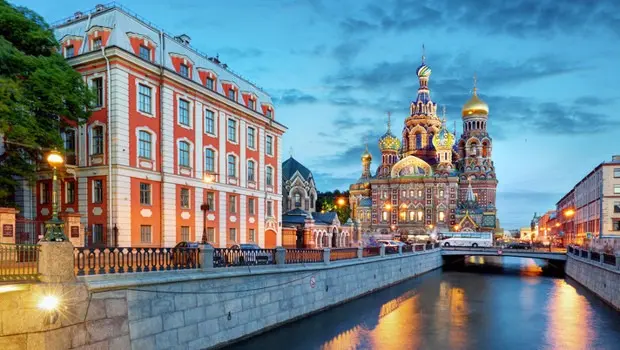
The city’s long-standing designation as the "Venice of the North" is well earned. Intersected by more than 90 rivers and waterways and spanned by hundreds of bridges, St. Petersburg offers constant encounters with water, reflections, and picture-postcard vistas. Boat tours along the Neva River and its connected canals provide visitors with an entirely unique vantage point from which to observe the city’s scale. While the urban architecture presents a refined beauty under daylight, the atmosphere shifts dramatically in the evening as public illumination transforms the waterfronts and facades into a striking nocturnal landscape.
‘Ah, If You Only Knew How Many Times I’ve Fallen in Love!’
The streets of St. Petersburg famously inspired Fyodor Dostoyevsky to pen these dramatic words, capturing the deep emotional connection the city has historically evoked in writers and travelers alike. The phenomenon of the "White Nights"—when the sun barely dips below the horizon during midsummer—exerts a visual pull that many visitors find even more powerful than the classic Dostoyevsky novel bearing the same title.
During this celestial period, twilight merges directly into dawn, bathing the grand neoclassical facades and river embankments in a soft, ethereal glow that lasts throughout the night. The natural phenomenon alters the rhythms of urban life, encouraging late-night strolls along the water and lingering outdoor gatherings long after midnight.

Every Step Reveals a New Surprise
To fully capture the spirit of St. Petersburg, a walk along Nevsky Prospect is essential. Serving as the primary arterial road of the city, Nevsky Prospect remains its most energetic, iconic, and continuously active boulevard. Lined with historic cafes, monumental buildings, independent bookstores, high-end shops, and street performers, the avenue remains alive with activity at all hours of the day and night.
Planned during the early 18th century under the reign of Tsar Peter the Great, Nevsky Prospect gradually developed into the central structural axis of St. Petersburg. Extending approximately 4.5 kilometers in length, the boulevard originates near the Admiralty building and stretches across the urban center to the Alexander Nevsky Monastery. Consequently, it functions not merely as a commercial shopping street, but as an open-air historical corridor where visitors can observe the city’s imperial architecture, historic urban planning, and contemporary daily life simultaneously.
Walking along Nevsky Prospect offers continuous architectural surprises. On one side of the avenue stand the majestic curved colonnades of Kazan Cathedral, modeled after St. Peter’s Basilica in Rome; on the other stands the distinctive Art Nouveau facade of the Singer Building, complete with its famous glass globe tower. Further along the boulevard, historic shopping arcades open into expansive views of intersecting canals. The avenue also maintains deep literary heritage: it served as the direct inspiration for Nikolai Gogol’s famous short story "Nevsky Prospect" and remains a key landmark for readers seeking to experience the urban setting that shaped Dostoyevsky’s literary universe. As pedestrian crowds move along the pavement, the avenue provides a vivid synthesis of the city’s past and present.

A Hassle-Free Route Away from Schengen Stress
A primary driver behind the rapid growth of Turkish tourism to St. Petersburg is the straightforward travel entry process. For Turkish citizens holding special green passports, entry into Russia requires no visa at all. For standard passport holders, the entry process has been streamlined through a simplified digital e-visa system. Travelers can apply online using only their passport details and a digital photograph, eliminating the extensive paperwork, financial documentation, and in-person interviews typical of traditional visa applications.
With e-visa processing times typically taking only a few days, St. Petersburg has become a highly popular alternative for travelers wishing to avoid the lengthy waiting periods, high rejection rates, and administrative stress currently associated with European Schengen visa applications.
Furthermore, economic factors play a major role in the destination’s appeal. Compared to many major Western European capitals, St. Petersburg offers significantly more competitive pricing across key travel expenses, including hotel accommodations, dining, local transport, and cultural tickets. This cost advantage allows travelers to experience a rich, high-end cultural itinerary without encountering the inflated price points currently seen across Western Europe.

Imperial Treasures: Hermitage, Church of the Savior on Spilled Blood, and Peterhof
Among the city’s vast array of historical sights, the State Hermitage Museum stands out as an extraordinary highlight. Far more than a conventional gallery, the Hermitage represents a vast cultural institution of global significance. The museum’s origins trace back to 1764, when Empress Catherine the Great acquired a major collection of Western European paintings. Today, it ranks among the largest and most prestigious art museums in the world. The museum is primarily housed within the Winter Palace, the former official residence of the Russian monarchs. Walking through its gilded reception halls, intricate parquet-floored galleries, and vaulted corridors offers visitors an immediate sense of the immense wealth and power of Imperial Russia.
Another quintessential landmark of St. Petersburg is the Church of the Savior on Spilled Blood. With its brightly colored, intricate onion domes, the cathedral presents a striking, fairytale-like silhouette against the sky. However, its origin is tied to a tragic moment in Russian history: the church was constructed directly on the site where Tsar Alexander II was assassinated in 1881. Construction began in 1883 under Tsar Alexander III as a memorial to his father and was completed in 1907 following decades of meticulous craftsmanship. While the exterior displays complex Russian Revival architecture, the interior is equally astonishing, covered almost entirely from floor to ceiling in millions of intricate glass mosaics detailing biblical scenes and religious iconography.
Located just outside the main urban center along the shores of the Gulf of Finland lies Peterhof, the grand imperial estate frequently referred to as the "Russian Versailles." Commissioned by Peter the Great in the early 18th century as a coastal summer residence to celebrate Russian maritime presence on the Baltic, Peterhof was designed to rival the most opulent royal estates of Europe. The defining feature of the complex is its monumental system of fountains and cascades, anchored by the Grand Cascade and the Samson Fountain, which operate without mechanical pumps using a natural gravity-fed engineering system. Adorned with shimmering golden statues, manicured formal gardens, and sweeping views extending toward the sea, Peterhof served as the primary summer retreat for Russian emperors for nearly two centuries.

History, Art, and Literature Around Every Corner
The enduring charm of St. Petersburg lies in its multi-layered cultural landscape. A visitor can spend the morning exploring imperial palaces, spend the afternoon walking the neighborhood streets that framed classic 19th-century literature, and spend the evening attending a world-class opera or ballet performance at one of the city’s historic theaters.
The city’s culinary scene has also evolved significantly, offering a rich blend of traditional and contemporary dining experiences. Visitors can sample classic northern cuisine—such as traditional soups, savory pastries, and regional seafood—in historic dining rooms, or explore modern restaurants offering innovative takes on Eurasian gastronomy. The relative affordability of dining out makes culinary exploration an accessible and enjoyable aspect of the trip, particularly for those planning extended visits.
A Destination to Remember and Return To
Located approximately four hours by direct flight from Istanbul, St. Petersburg offers an easily reachable long-weekend or extended vacation option for Turkish travelers. While the city retains its charm throughout the year, the summer months of June and July remain the absolute peak travel period due to the magical climate of the White Nights. The prolonged daylight allows visitors to maximize their sightseeing time, keeping the city’s parks, riverbanks, and cafe terraces vibrant well into the late hours.

Combining accessible entry procedures, expanding direct flight capacity, reasonable travel costs, and an unmatched concentration of historic and architectural landmarks, St. Petersburg has successfully carved out a prominent place on the international travel map for Turkish tourists. It remains a destination defined not just by its individual monuments, but by an atmospheric, historic character that invites slow discovery, immersive exploration, and lasting memories.