Tokyo Lowers Risk Classifications Across the Gulf and Levant as Tensions Subside Under Pakistan-Mediated Agreement
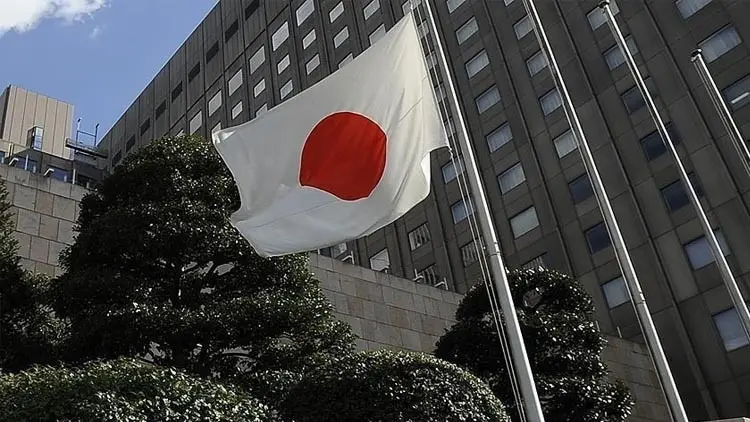
The Japanese Ministry of Foreign Affairs has officially downgraded its travel advisory levels for seven Middle Eastern nations following a decrease in regional security risks brought about by a comprehensive de-escalation agreement between Iran and the United States. The adjustment, initially reported by Japanese public broadcaster NHK, reflects a major recalibration of Tokyo’s security assessment for the region as international diplomatic efforts yield tangible reductions in military posture and political volatility.
The modified travel warnings apply to the United Arab Emirates (UAE), Oman, Qatar, Kuwait, and Bahrain, as well as designated territories within Saudi Arabia and Jordan. Under the updated guidelines released by foreign ministry officials, the risk classifications for these destinations were reduced from Level 3 to Level 2. The policy shift indicates that Japanese authorities view the threat environment across these Persian Gulf and Levantine regions as having stabilized sufficiently to allow for the relaxation of strict travel prohibitions previously imposed on Japanese citizens and corporate entities.
Structural Shift in Regional Security Classifications
The reduction of travel advisories across seven distinct nations marks one of the most extensive revisions to Japan’s Middle East security posture in recent history. The foreign ministry’s directive impacts five member states of the Gulf Cooperation Council (GCC)—the UAE, Oman, Qatar, Kuwait, and Bahrain—alongside specified geographical areas within Saudi Arabia and Jordan.
Prior to this decision, these territories had been placed under a Level 3 advisory during a period of heightened regional volatility, potential armed conflict, and elevated security concerns across major transportation and energy corridors. By lowering the risk designation to Level 2, Japanese foreign policy officials have formally acknowledged that while ongoing vigilance remains mandatory, the immediate systemic risks to civil infrastructure, commercial aviation, and foreign nationals have meaningfully receded in the wake of recent diplomatic developments.
The advisory revision carries substantial operational implications for Japanese citizens, multinational corporations, maritime shipping operators, and non-governmental organizations. Many Japanese commercial enterprises utilize the Ministry of Foreign Affairs’ travel advisory framework to set corporate risk protocols, determine employee travel permissions, configure insurance coverage, and manage regional office deployments. The transition to Level 2 provides Japanese businesses with the regulatory and operational clarity needed to re-establish regular commercial itineraries, regional trade missions, and diplomatic engagements throughout the Arabian Peninsula and the surrounding area.
Breakdown of Japan’s Four-Tier Travel Advisory Framework
To fully understand the practical implications of Tokyo’s latest decision, it is necessary to examine the operational mechanics of Japan’s standardized travel security classification system. The Ministry of Foreign Affairs categorizes foreign countries and territories into four distinct risk tiers based on rigorous evaluations of local security, threat levels, civil stability, and diplomatic conditions:
- Level 1 (Exercise Caution / 十分注意してください): This baseline advisory urges Japanese nationals traveling to or residing in the specified area to exercise standard safety precautions, stay fully informed of local developments through official channels, and maintain general situational awareness regarding potential security risks.
- Level 2 (Avoid Non-Essential Travel / 不要不急の渡航は止めてください): This classification strongly advises Japanese citizens to postpone or cancel non-urgent and non-essential travel. Under Level 2, essential trips—including mandatory corporate engagements, official diplomatic missions, or urgent personal matters—are permitted, provided travelers implement enhanced security precautions, maintain constant communication with local Japanese embassies or consulates, and establish contingency plans.
- Level 3 (Avoid All Travel / 渡航は止めてください): This high-level warning urges all Japanese nationals to refrain from traveling to the designated country or region under any circumstances, regardless of the purpose of the trip. Level 3 is reserved for areas experiencing severe military conflict, extreme risk of terrorist activities, violent civil unrest, or profound administrative collapse.
- Level 4 (Evacuate and Avoid All Travel / 退避勧告): The highest advisory tier urges all Japanese citizens currently present in the affected area to evacuate immediately to a safe location or return to Japan, while warning all other citizens against travel due to catastrophic and immediate risks to human life.
By moving the UAE, Oman, Qatar, Kuwait, Bahrain, and designated portions of Saudi Arabia and Jordan from Level 3 to Level 2, Japanese authorities have formally stepped back from advising complete travel avoidance. Instead, Tokyo is recommending cautious restraint, enabling essential business, trade, and administrative travel to proceed under structured risk management protocols.
The Diplomatic Catalyst: The June 14 U.S.-Iran Agreement
The official catalyst behind Japan’s decision to relax its travel advisories was the milestone diplomatic accord reached between Iran and the United States on June 14. Negotiated through extensive third-party mediation conducted by Pakistan, the 14-point agreement marked a decisive breakthrough in international efforts to halt active conflict and lower regional strategic tensions.
According to official reporting regarding the June 14 deal, the bilateral agreement establishes a concrete operational framework designed to stop hostilities and resolve contentious issues through structured ongoing negotiations. Pakistan’s diplomatic mediation provided an effective channel for direct and indirect exchanges between Washington and Tehran, resulting in a comprehensive 14-item consensus that addresses conflict reduction, the preservation of regional stability, and the establishment of formal diplomatic communication mechanisms.
The successful conclusion of the 14-point framework significantly lessened fears of wider regional spillover, military cross-fire, and disruptions to vital maritime routes such as the Strait of Hormuz and the Gulf of Oman. For energy-dependent nations like Japan, which relies overwhelmingly on secure maritime transit through the Middle East for its energy supplies and trade networks, the accord provided a clear signal of reduced geopolitical risk. Japanese security analysts and foreign ministry officials conducted thorough evaluations of the post-agreement landscape before determining that threat levels in surrounding nations had diminished enough to justify revising official travel warnings.

Differentiated Risk Assessments: Elevated Warnings Maintained for Israel
While Tokyo has taken clear steps to ease travel restrictions across seven Middle Eastern nations, the Ministry of Foreign Affairs emphasized that its security posture remains tailored to localized risk conditions. Notably, Japan continues to maintain a Level 3 advisory ("Avoid All Travel") for the vast majority of Israel.
By keeping Level 3 warnings active for most Israeli territory, Japanese officials have signaled that regional stabilization remains uneven and dependent on specific geopolitical dynamics. While the US-Iran de-escalation framework successfully moderated security risks across the Persian Gulf states and key neighboring countries, ongoing conflict risks and localized security challenges within Israel continue to present severe dangers that preclude any downward modification of travel advisories for that territory.
This selective adjustment underscores the analytical approach of Japan’s foreign ministry, which evaluates security threat environments on a targeted, region-by-region basis rather than applying blanket policy shifts across the Middle East. Japanese authorities continue to urge citizens operating within or near high-risk zones to maintain strict compliance with safety guidelines, maintain regular contact with diplomatic posts, and continuously monitor real-time security updates.
Broader Diplomatic, Corporate, and Strategic Implications
The lowering of travel warnings carries far-reaching benefits for Japan’s broader diplomatic and commercial strategy in the Middle East. As an industrial economy that imports more than 90 percent of its crude oil requirements from Middle Eastern suppliers, maintaining stable bilateral ties and unhindered commercial access across the Gulf region is vital to Tokyo’s national interest.
The transition from Level 3 to Level 2 across the UAE, Oman, Qatar, Kuwait, Bahrain, Saudi Arabia, and Jordan is expected to generate positive operational outcomes across multiple sectors:

- Corporate Mobility and Economic Engagement: Major Japanese trading houses (sogo shosha), engineering syndicates, technology firms, and energy sector enterprises will be able to resume essential on-site operations, executive visits, and infrastructure project management that had been curtailed or suspended under Level 3 restrictions.
- Aviation, Logistics, and Supply Chains: Air carriers, shipping lines, and global freight forwarders connecting East Asia with Middle Eastern transit hubs stand to gain greater operational predictability. Normalized travel advisories streamline crew scheduling, logistics management, and corporate travel protocols.
- Diplomatic and Institutional Operations: Government agencies, trade bodies, and non-governmental institutions can maintain essential personnel deployments at regional operations bases in cities such as Dubai, Abu Dhabi, Riyadh, Doha, Kuwait City, Muscat, and Amman under flexible administrative framework guidelines.
Public broadcaster NHK confirmed that Japanese diplomatic missions throughout the Middle East will continue to track regional security conditions continuously following the implementation of the US-Iran 14-point agreement. Foreign ministry officials retain full authority to re-adjust advisory levels should regional security dynamics fluctuate or experience unforeseen setbacks.
For now, Tokyo’s decision reflects a calculated stance of measured optimism that the Pakistan-mediated accord will maintain regional equilibrium, facilitating the restoration of normalized commercial, diplomatic, and travel activities between Japan and seven key Middle Eastern nations.